



Majolica Plant Stand
These majolica plant stand pieces combine vibrant lead glazes with earthenware bodies to elevate greenery in period interiors.
Majolica Plant Stand
A majolica plant stand serves as a decorative base or combined vessel for indoor foliage, featuring the distinctive colourful lead-based glazes characteristic of the medium. These pieces often arrive as matched pairs or integrated suites comprising a bowl top resting upon a matching pedestal.
The selections recorded here span from the 1870s through the Edwardian era, encompassing Victorian rustic styles, Art Nouveau curves, and Arts and Crafts simplicity. Forms range from naturalistic tree trunks and swans to geometric pedestals intended for conservatories and parlours.
Materials and manufacture
Potters shaped these forms using earthenware and terracotta bodies, which were then coated in opaque tin or coloured lead glazes. The metallic oxides mixed into the glaze created the rich greens, browns, and blues typical of Victorian and later ceramic production.
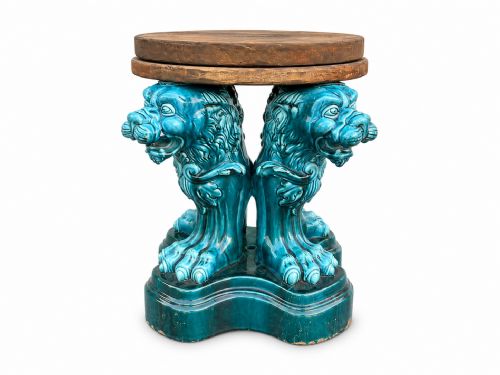
Specialised firing techniques allowed the coloured glazes to pool and run across moulded reliefs, creating the glossy, textured surfaces seen on naturalistic planters and griffin stands. Workshops utilised intricate moulds to achieve high-relief botanical and animal motifs before applying the final glossy finish.
Majolica Plant Stand Retail Price Guide 2026
Typical asking prices for majolica plant stand among the pieces listed under this phrase on Sellingantiques today, from the lower quarter to the upper quarter. They describe what is for sale here now, not the wider market.
Listings feature earthenware and terracotta bodies decorated with coloured lead glazes, lustre finishes, and faience techniques across the nineteenth and early twentieth centuries.
Assessing quality in glazed ceramics
Quality depends upon the crispness of the moulded relief and the depth of the coloured glazes, where finer examples display smooth application without extensive pooling or dry spots. The complexity of the form, such as figural supports or lustre finishes, also distinguishes standard production from more ambitious workshop output.
Condition plays a role in evaluation, as the brittle nature of earthenware and the delicate multi-part construction of combined jardiniere and pedestal sets make them prone to hairline fractures and glaze chips over decades of use.
Clement Massier·Minton Secessionist·Julius Dressler·Woodlesford Art Pottery·Burmantofts
The Majolica Plant Stand Glossary
- Majolica
- Pottery covered in an opaque tin-lead glaze that yields bright, saturated colours. This technique gained immense popularity across Europe during the nineteenth century for both ornamental and utilitarian wares.
- Jardiniere
- An ornamental ceramic flowerpot or container designed to hold potted plants. These vessels frequently sit atop matching pedestals or columns.
- Earthenware
- Porous pottery fired at relatively low temperatures. It forms the structural clay body beneath the colourful glazes of these planters.
- Lustre glaze
- A metallic film applied to ceramics to produce an iridescent sheen. This finish shifts in appearance depending on the angle of the light.
Majolica Plant Stand: Frequently Asked Questions
How are majolica plant stands structured?
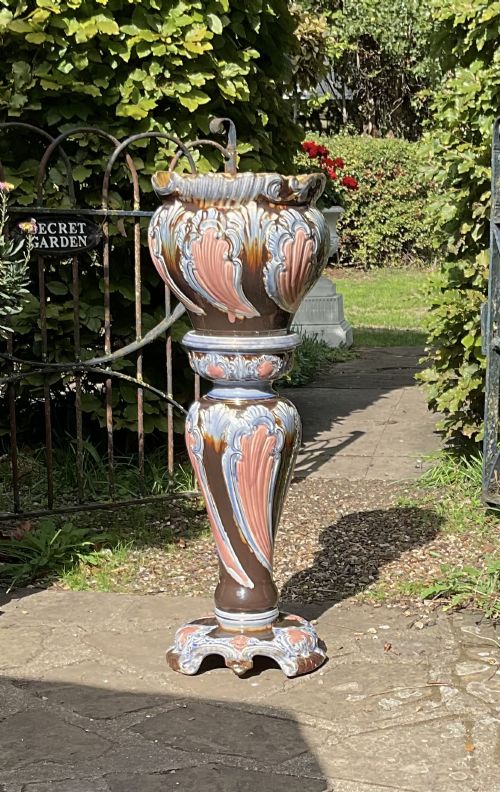
These objects typically consist of two distinct sections: a bowl or jardiniere that rests securely upon a tall columnar pedestal. Some examples are cast as a single unified piece, while others use a dedicated fitting to lock the upper vessel onto the base.
Makers designed this dual structure to elevate heavy foliage to eye level, allowing trailing plants to drape over the sides of the glazed basin.
Where were these stands placed historically?
Victorian and Edwardian households positioned these glazed stands in conservatories, entrance halls, and formal drawing rooms. They served as focal points for large ferns and palms brought indoors during colder months.
Because the earthenware bodies and thick glazes resist moisture, they functioned practically as waterproof display pedestals for living greenery.
How do I distinguish Victorian styles from later pieces?
Victorian examples often lean towards naturalistic themes such as tree bark, birds, and rustic branches with heavy, saturated green and brown glazes. Pieces from the Edwardian period or associated with the Arts and Crafts movement tend to feature simpler geometric lines or stylized floral motifs.
Later works, including those bearing Secessionist or lustre finishes, introduce brighter colour palettes and smoother, more abstracted forms that depart from strict nineteenth-century realism.