
Mahogany Wooden Buffet
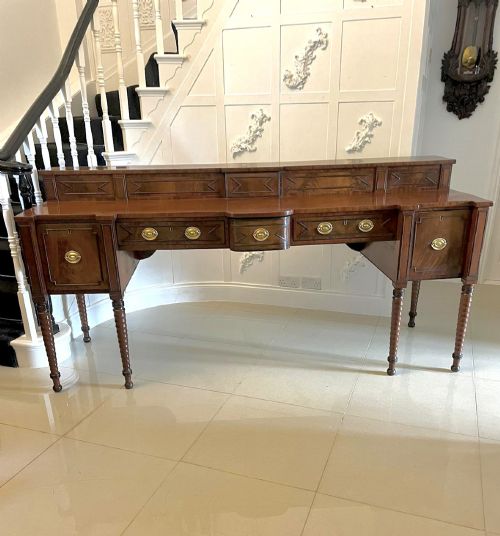
Mahogany wooden buffet pieces are substantial dining room servers crafted in rich timbers, offering practical surface space and concealed storage for formal entertaining.
Mahogany Wooden Buffet
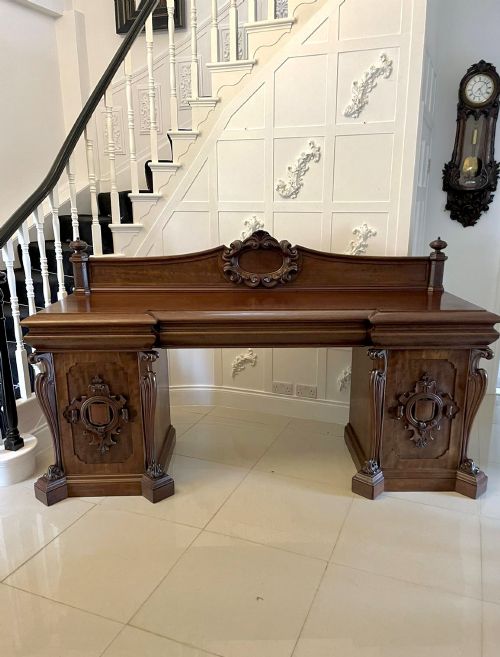
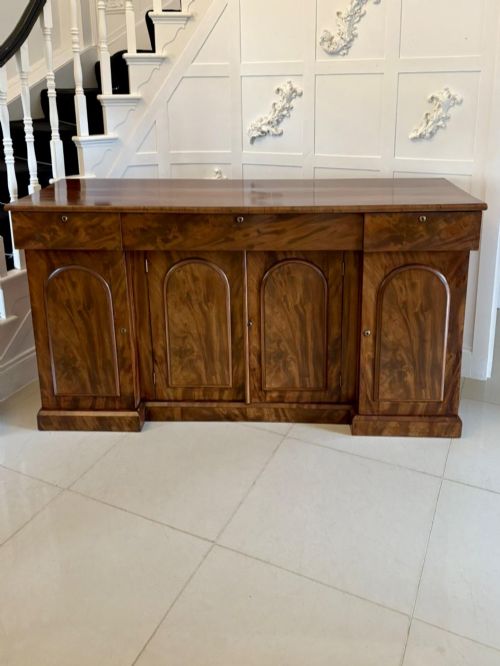
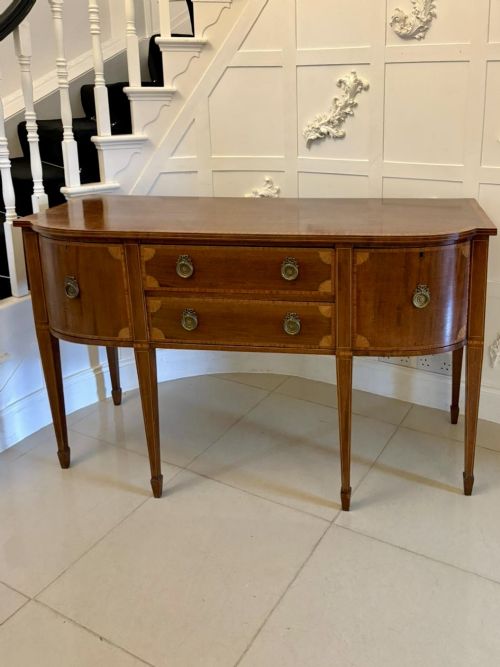
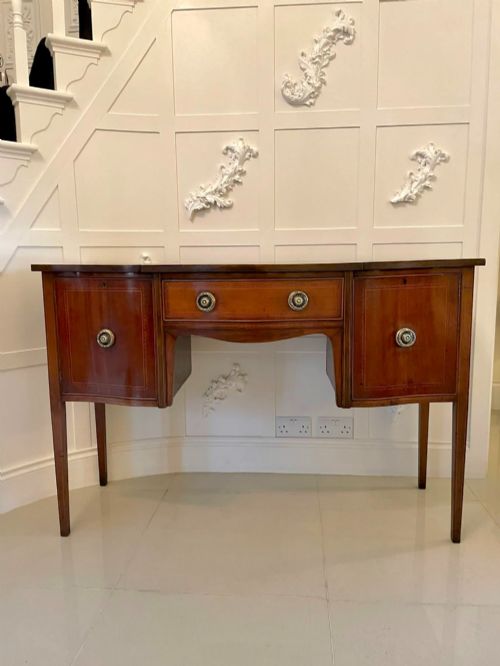
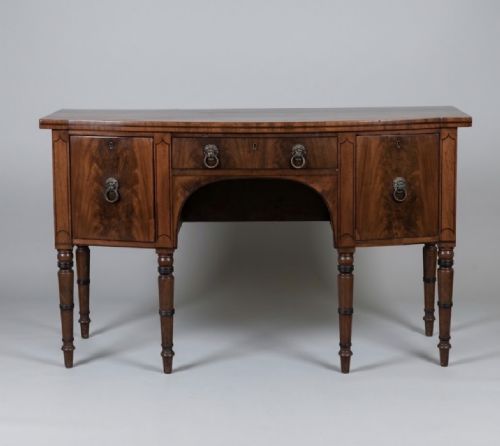
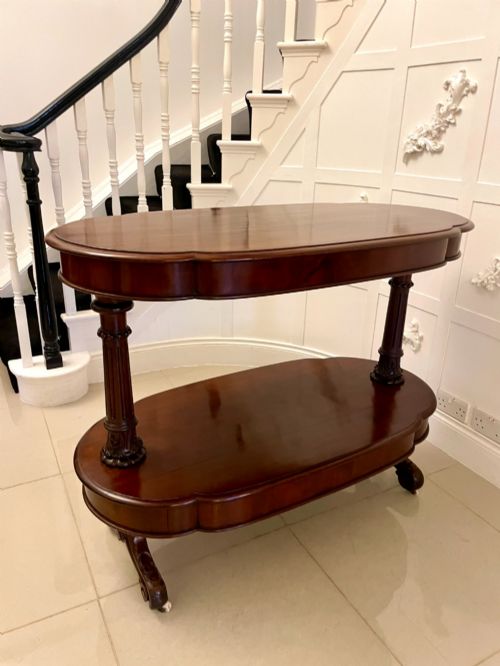
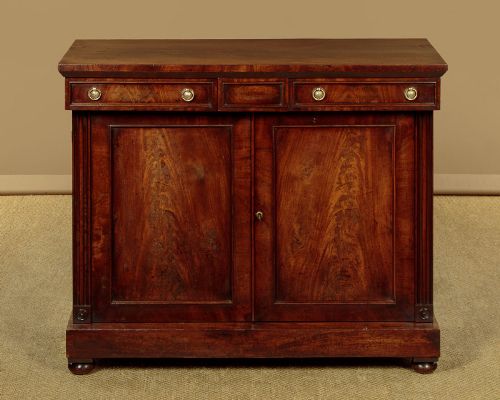
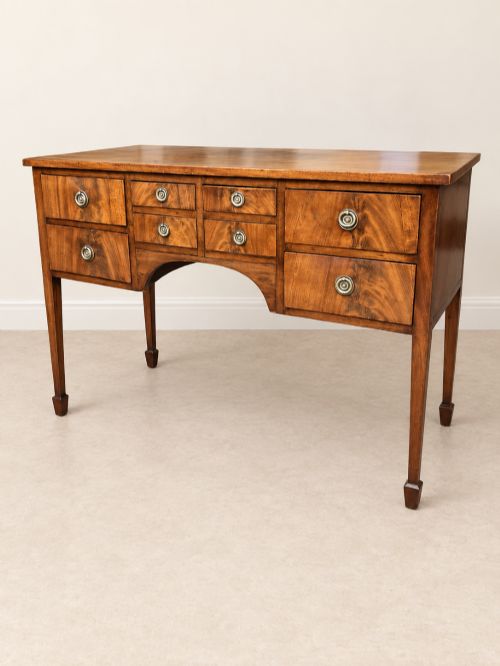
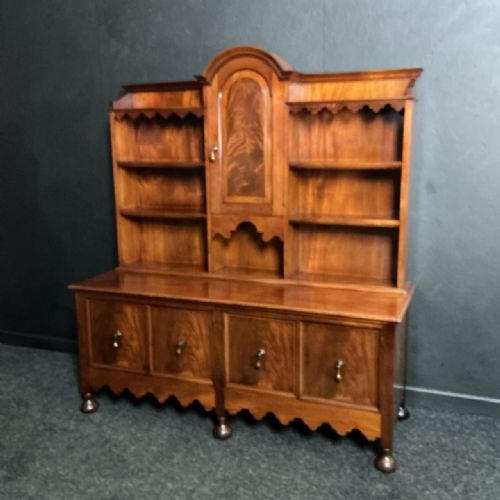
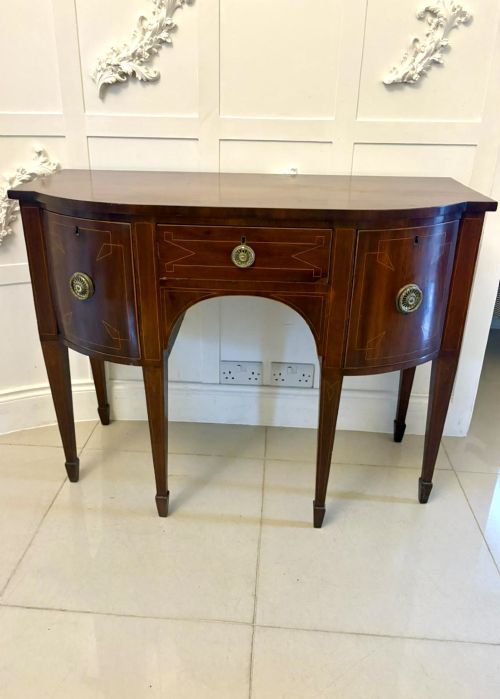
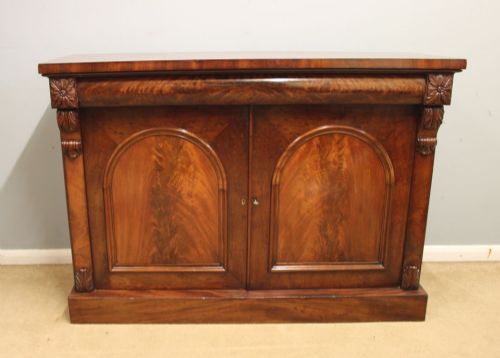
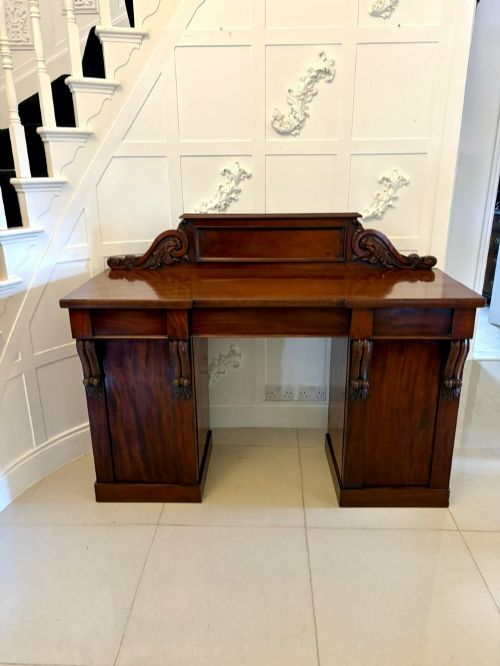
A mahogany wooden buffet encompasses a variety of dining room servers, sideboards, console tables, and chiffoniers originating across the eighteenth, nineteenth, and early twentieth centuries. Pieces range from large Georgian breakfronts and bowfronts to compact Edwardian cupboards and Victorian mirror-backed servers.
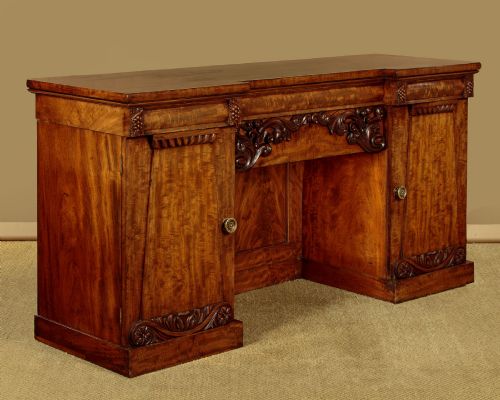
The selection reflects distinct stylistic shifts from the classical symmetry of George III and Regency designs to the ornate carvings of the Victorian era and the lighter inlay work of the Edwardian period. Buyers encounter everything from pedestal sideboards to marble-topped grill-front cabinets.
Originating predominantly from British workshops, these items served as functional dining room furniture designed for organising tableware, serving food, and displaying silverware.
Materials and Technique
Cabinet makers utilised solid mahogany and applied flame mahogany veneers over secondary timbers to create rich, figured grain patterns across large surfaces like drawer fronts and cabinet doors.
Decorative detailing relied on precision craftsmanship, incorporating contrasting stringing and banding in boxwood and satinwood, alongside carved elements such as claw and ball feet or brass mounts and handles.
Listings span from the eighteenth-century Georgian era through the Victorian period to Edwardian designs, utilising solid mahogany and flame veneers.
Craftsmanship and Proportion
The distinction between standard utility items and superior examples lies in the selection of timber figures, where highly prized flame or curl mahogany veneers are matched symmetrically across the facade.
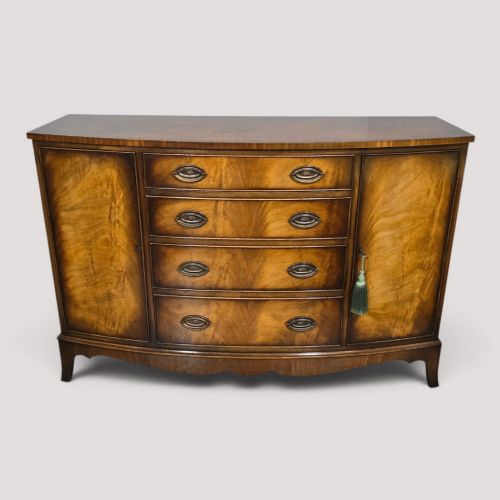
Refined cabinet work shows in the crispness of inlaid stringing, the integration of hand-carved details, and the proportional harmony of serpentine or bowfront shapes.
The Mahogany Wooden Buffet Glossary
- Bowfront
- A convex curved cabinet front that projects outward in a smooth arc, popular in Georgian and Regency dining furniture.
- Serpentine
- A shaped furniture front featuring a concave centre flanked by two convex ends, requiring advanced woodworking skill.
- Chiffonier
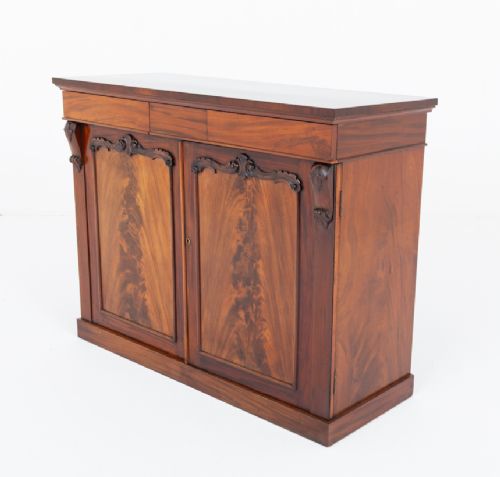
- A compact sideboard or side cabinet developed in the nineteenth century, often featuring enclosed lower shelves and sometimes a raised superstructure.
- Inlay
- A decorative technique where contrasting woods like satinwood or boxwood are inserted into recesses flush with the mahogany surface.
- Pedestal sideboard
- A large dining room server consisting of two distinct pedestals joined by a central table section, prominent in Regency designs.
Mahogany Wooden Buffet: Frequently Asked Questions
Where were these pieces used?
These servers stood in formal dining rooms or entrance halls of substantial houses, designed to assist with the service of meals and the storage of fine dining accessories.
Their practical surfaces held dishes before service, while internal drawers and cupboards kept linens and cutlery secure.
How do I date a sideboard?
Dating relies on identifying characteristic construction methods, hardware, and stylistic traits associated with specific periods like the Georgian or Victorian eras.
Leg shapes, veneer patterns, and secondary timbers inside drawers offer reliable clues to the decade of manufacture.
What is flame mahogany?
Flame mahogany is a highly decorative wood veneer sliced from the point where a branch joins the main trunk, creating a distinctive flamed pattern resembling flickering fire.
Cabinet makers reserved this striking timber for the most prominent display surfaces on high-status furniture.
How do I care for mahogany?
Maintaining mahogany requires keeping pieces away from direct heat sources and strong sunlight to prevent the timber and its polish from drying out.
Regular dusting with a soft, dry cloth preserves the finish without the need for heavy chemical waxes.