



Mahogany Wood Stool
These mahogany wood stool examples bring solid timber framing and traditional seating forms into rooms needing practical, low-profile resting places.
Mahogany Wood Stool
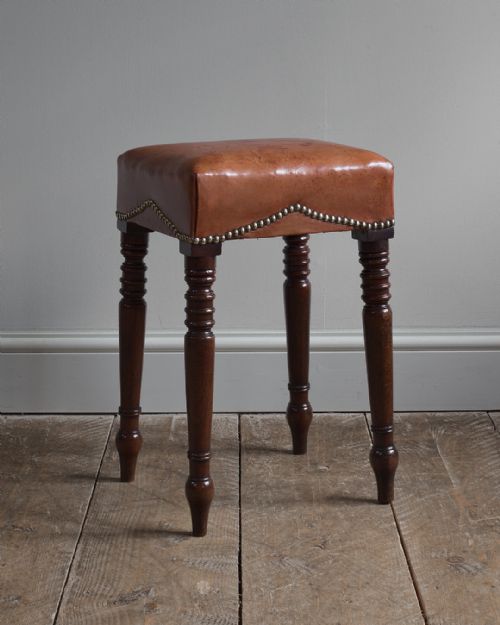
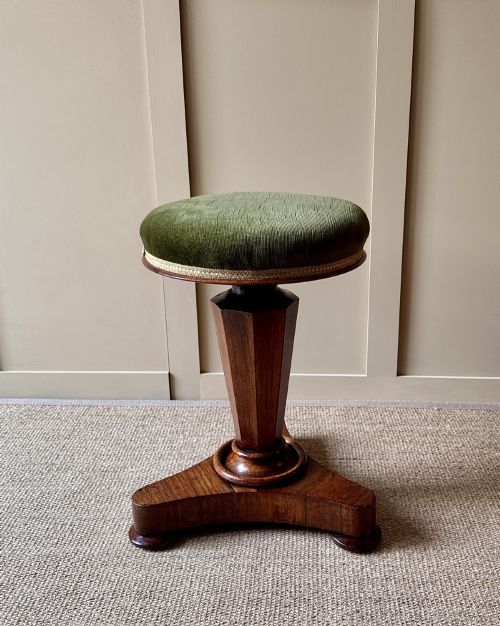
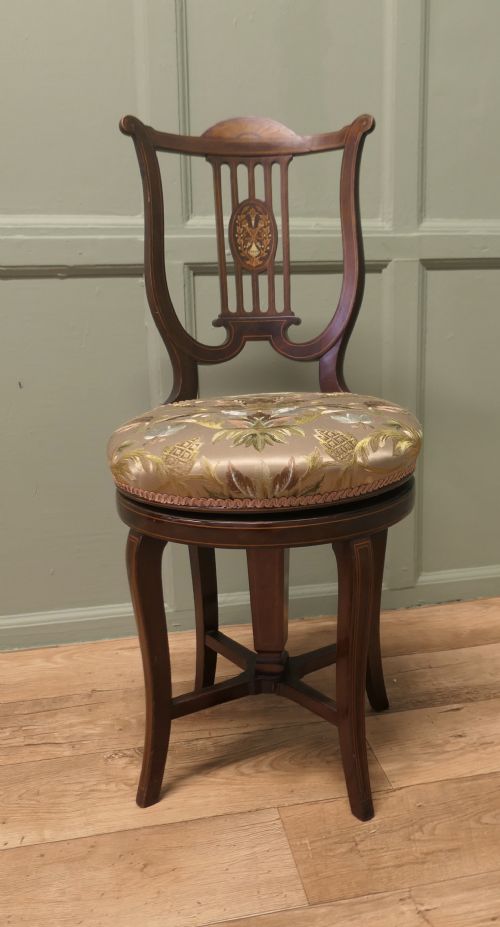
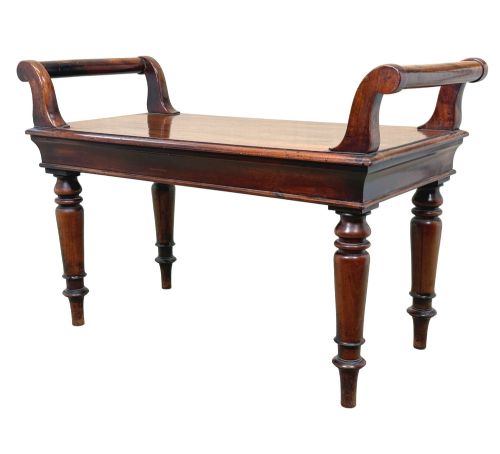
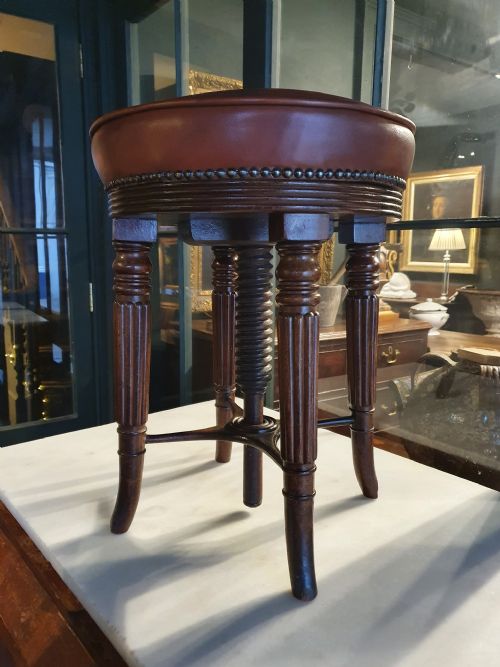
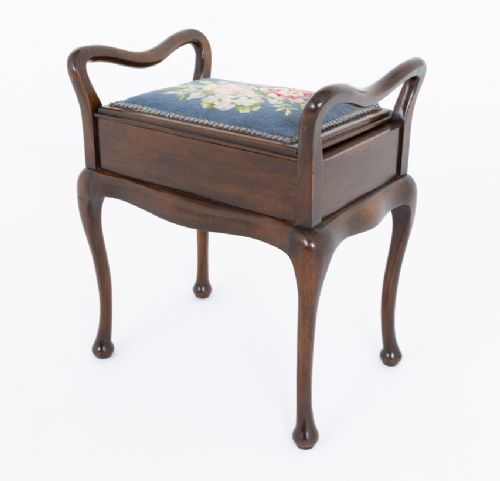
A mahogany wood stool search uncovers seating and step forms spanning Georgian, Regency, Victorian and Edwardian eras. Pieces take many shapes here, from simple footstools and dressing stools to revolving piano stools, music chairs and library steps.
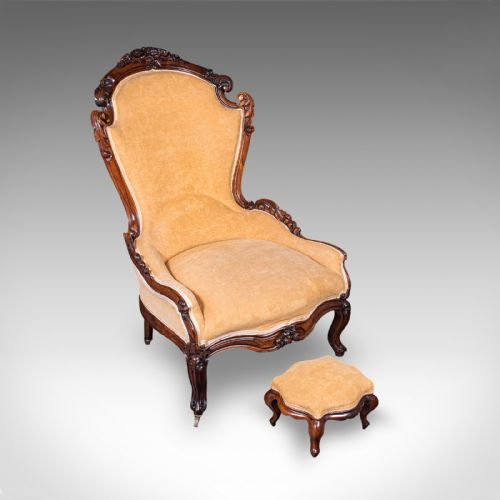
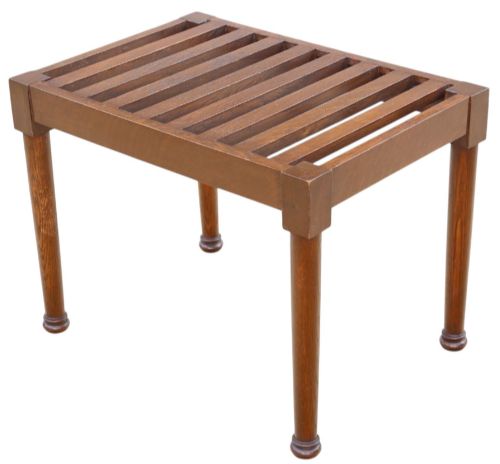
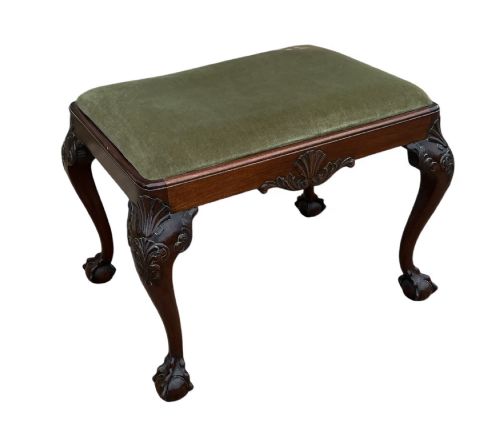
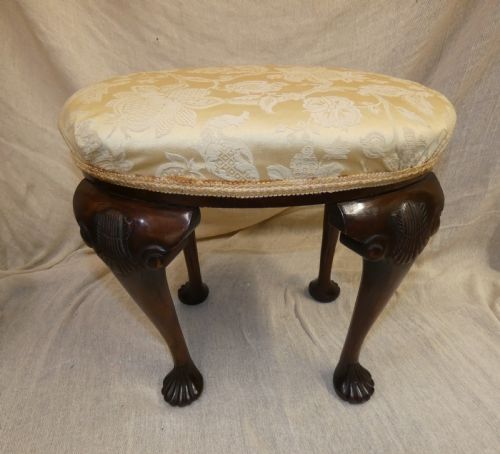
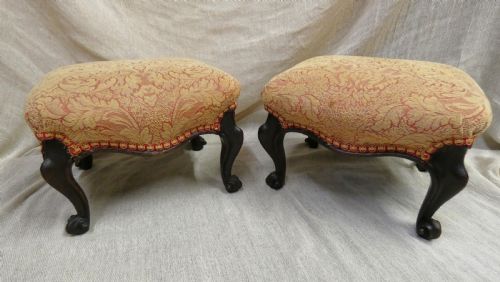
Victorian examples dominate the selection, often featuring cabriole legs, swivel tops or adjustable screw mechanisms. Alongside domestic footrests appear luggage stands, window seats and duet piano stools constructed from the same dark timber.
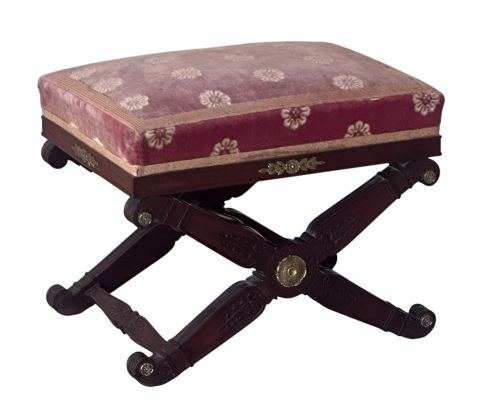
Revivalist designs appear frequently, drawing on Chippendale, Queen Anne and Rococo styles alongside French Empire influences. Makers also produced specialist items like revolving harpist chairs, gout stools and Thebes stools.
Materials and Construction
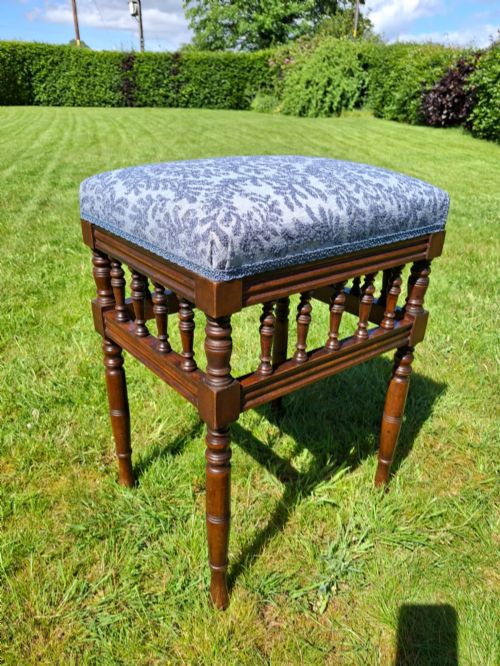
Makers utilised solid mahogany for the structural frames, turning and carving the timber into cabriole legs, spiral supports and X-frames. Brass hardware frequently appears on adjustable swivel stools, library steps and folding luggage racks.
Upholstery defines the upper surfaces, incorporating fabric, leather, velvet, tapestry and textile coverings over padding. Some seats utilise woven bergère panels or incorporate storage compartments within box stool designs.
Mahogany Wood Stool Retail Price Guide 2026
Typical asking prices for mahogany wood stool among the pieces listed under this phrase on Sellingantiques today, from the lower quarter to the upper quarter. They describe what is for sale here now, not the wider market.
Musicians could spin continuously on revolving piano stools while struggling with demanding duet scores.
Judging Quality
The standard of a mahogany wood stool rests on the crispness of carved woodwork and the mechanical integrity of adjustable swivel tops. Fine examples retain original upholstery materials and stable joinery without excessive timber shrinkage.
Attribution to known makers or distinctive regional cabinet-making traditions elevates specific pieces. Original brass fittings, leather treads on library steps and retained tapestry covers separate utilitarian items from finer salon furnishings.
Jennens & Bettridge·Gillows
The Mahogany Wood Stool Glossary
- Cabriole leg
- A furniture leg that curves outward at the knee and tapers inward toward an ankle, common on Victorian and Georgian pieces.
- Revolving piano stool
- An adjustable seat with a screw mechanism allowing the height to alter as the player turned.
- Library steps
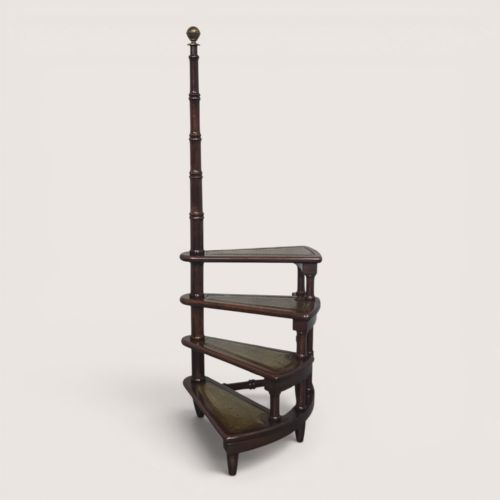
- Multi-tiered portable staircases constructed in mahogany, sometimes featuring leather-topped treads for quiet footing.
- Bergère
- A cane or wickerwork panel set into a wooden frame, found on specialist seating.
- Duet piano stool
- An elongated bench designed to seat two musicians side by side during piano performance.
Mahogany Wood Stool: Frequently Asked Questions
How do I identify a piano stool?
Piano stools usually feature a circular or square top mounted on a threaded wooden or metal screw mechanism. This allows the player to raise or lower the seating height by spinning the top.
Many examples also include revolving movement, and some Victorian versions incorporate upholstered velvet or leather pads designed for extended seating comfort.
What are mahogany library steps used for?
Library steps provided access to high bookshelves in domestic and institutional libraries. Multi-tiered sets often incorporated leather-topped treads to mumble footsteps and secure footing.
Beyond libraries, these sturdy timber structures functioned as small display stands or general household climbing aids.
How do I date a mahogany stool?
Dating relies on stylistic markers combined with construction techniques visible in the mahogany frame. Georgian and Regency pieces display restrained classical lines and fine turning, while Victorian examples often feature heavier cabriole legs, elaborate carving or mechanical height adjusters.
Revival pieces from the Edwardian period imitate earlier Georgian or Chippendale aesthetics but use different secondary woods and modern fixings.
What upholstery materials should I expect?
Surviving upholstery ranges from original leather and horsehair-stuffed velvet to decorative tapestry and woven textiles. Many pieces feature replacement fabric chosen to match later interior schemes.
Specialist items like gout stools retain woven cane panels, whilst dressing stools often utilise simple period-appropriate patterned cloths.