

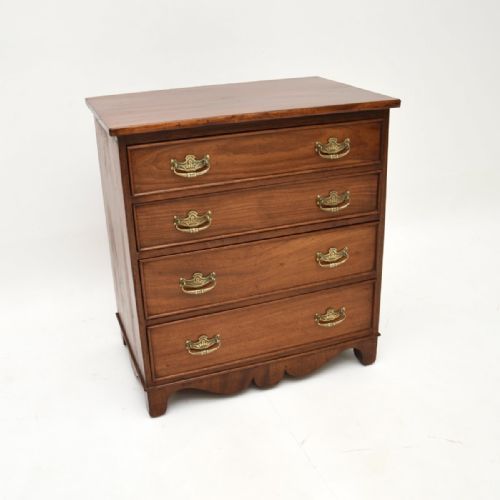
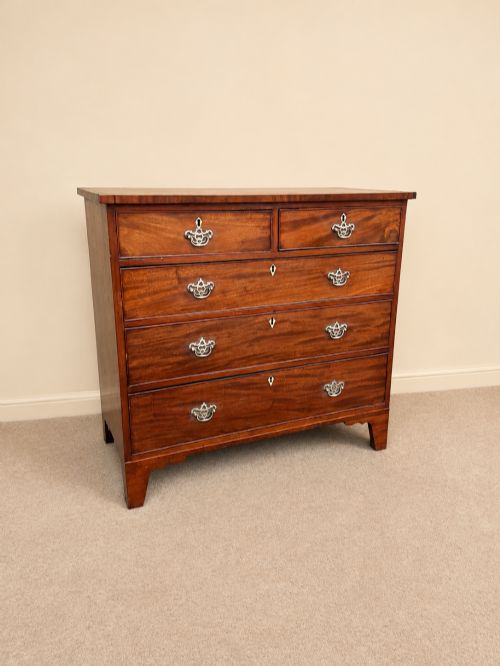
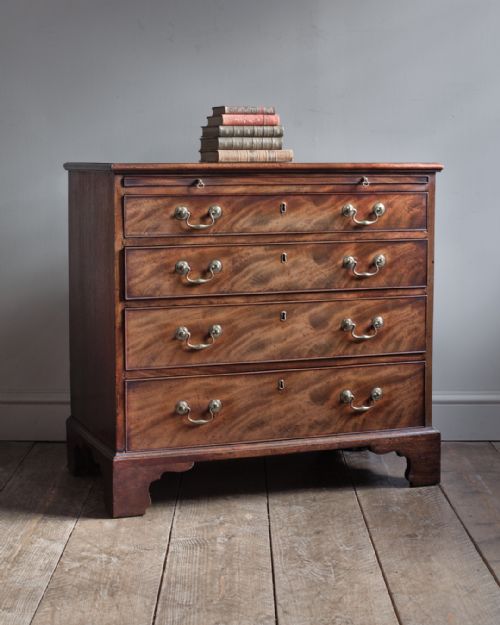
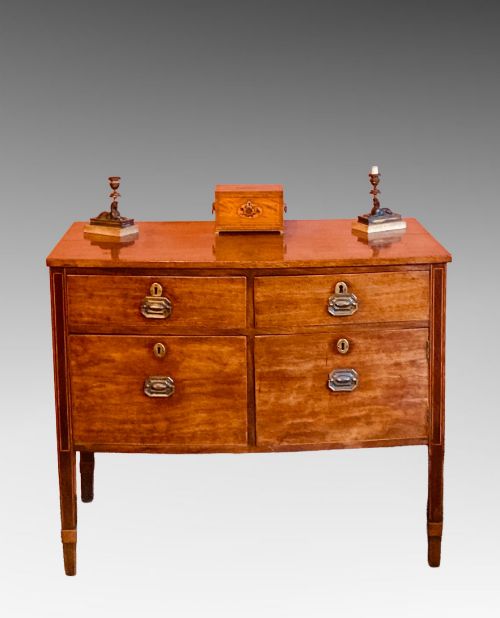
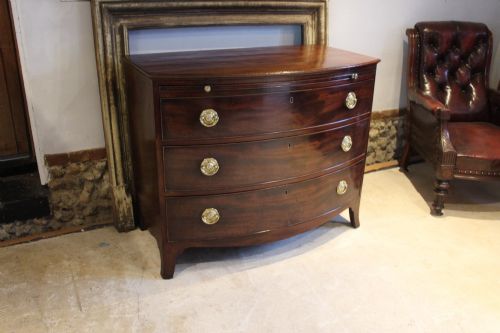
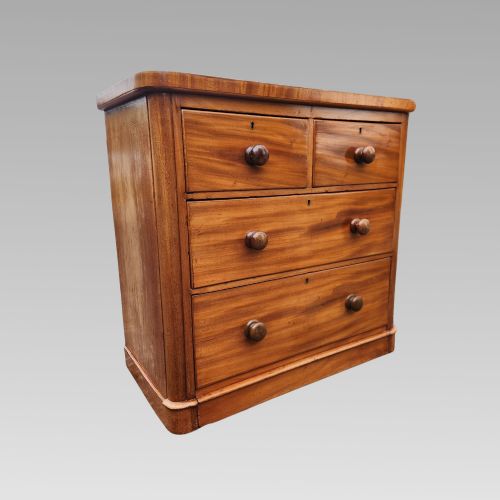
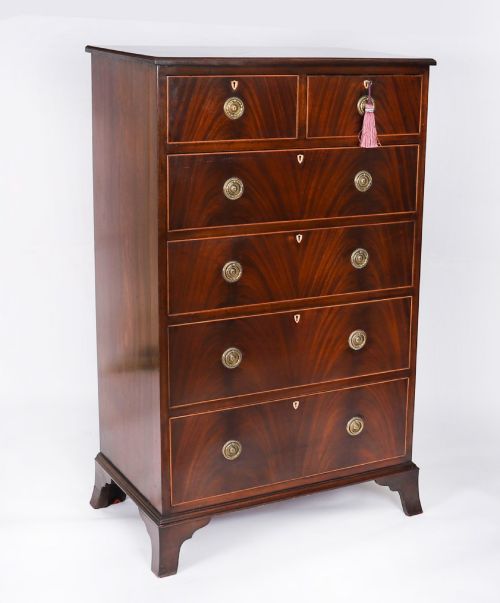
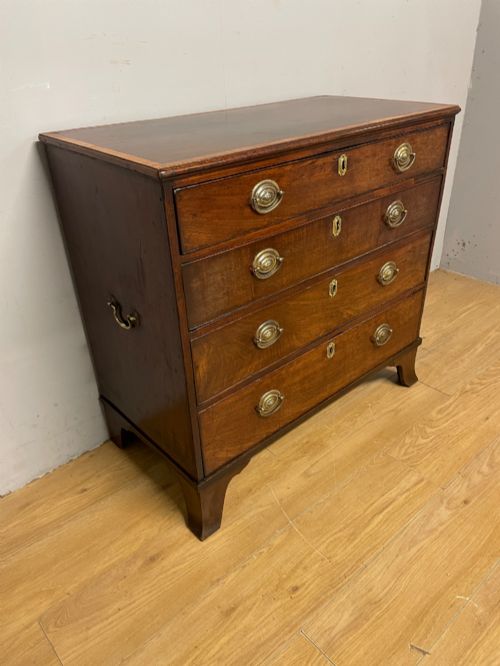
Mahogany Wood Dresser
A mahogany wood dresser offers deep drawers and rich grain, bringing traditional storage into modern rooms.
Mahogany Wood Dresser
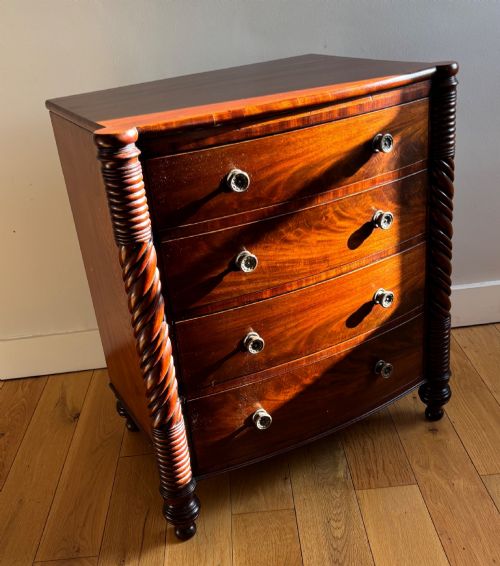
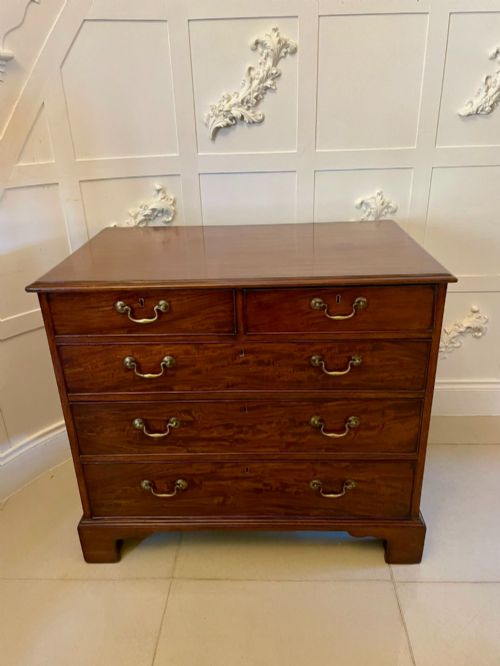
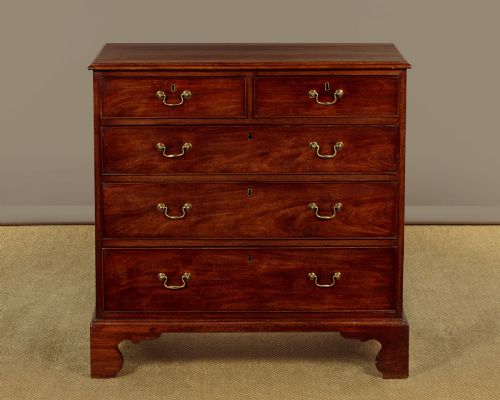
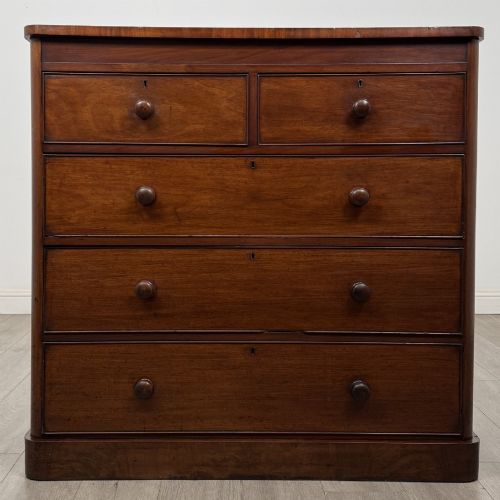
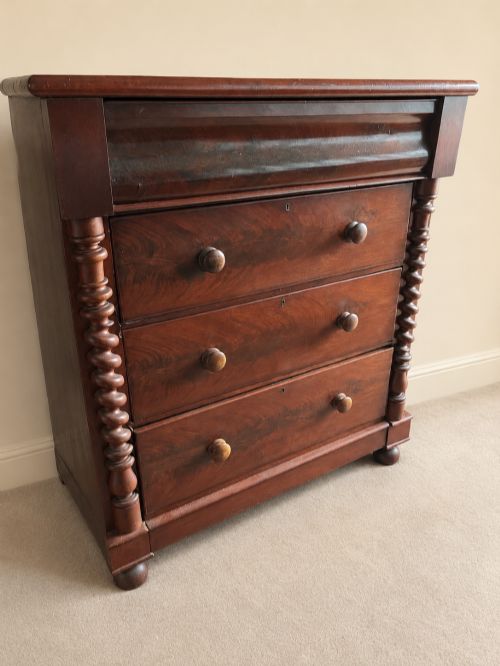
A mahogany wood dresser brings solid construction and generous storage to domestic interiors through centuries of cabinet making. These pieces span Georgian, Victorian, Edwardian, and later twentieth century periods, appearing most often as chests of drawers alongside sideboards and occasional dressers.
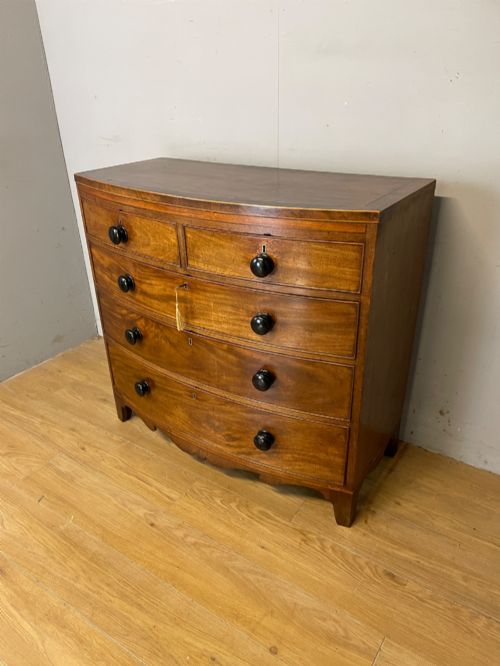
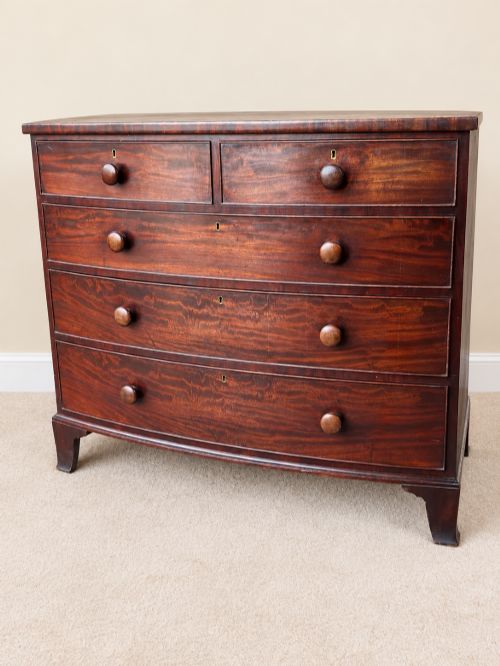
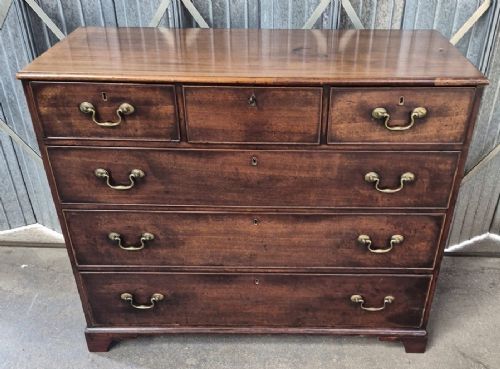
Makers shaped these items in forms ranging from simple rectangular carcasses to bow fronts, serpentine outlines, and campaign styles. Oak and camphor wood occasionally support the primary mahogany structure, whilst brass handles and bone details finish the exteriors.
Materials and construction
Cabinet makers utilised solid mahogany and flame mahogany veneer over secondary timbers such as oak, applying polished finishes to highlight the natural grain figures. Brass provided structural and decorative hardware including handles, cup handles, and bracket feet.
Joinery techniques relied on traditional drawer construction and tongue and groove assembly. Craftsmen added decorative elements like inlay and carved mirror backs to specific Victorian and Edwardian iterations.
Mahogany Wood Dresser Retail Price Guide 2026
Typical asking prices for mahogany wood dresser among the pieces listed under this phrase on Sellingantiques today, from the lower quarter to the upper quarter. They describe what is for sale here now, not the wider market.
Listings feature mahogany wood dressers spanning the eighteenth, nineteenth, and early twentieth centuries, incorporating brass, oak, and camphor wood elements.
Assessing quality and finish
Quality rests in the selection of timber, where figured mahogany and flame veneer demonstrate superior material choice over plain boards. The precision of the drawer dovetails and the retention of original brass hardware indicate the standard of original workshop production.
Proportion and form dictate the distinction between standard items and finer examples, particularly in curved bow fronts and serpentine outlines. Secondary woods and internal construction methods also reveal the care taken during assembly.
Whytock and Reid·T and G Seddon
The Mahogany Wood Dresser Glossary
- Mahogany
- A durable tropical hardwood known for reddish-brown tones and grain stability. It served as the primary material for high quality furniture across the Georgian and Victorian eras.
- Bow front
- A convex curved cabinet front that projects outward in the centre. This shape gained popularity during the Georgian and Regency periods.
- Brushing slide
- A pull-out shelf integrated above the top drawer. Historically used for dusting clothes or writing letters.
- Serpentine
- A front outline shaped with a concave centre flanked by convex curves. This contour requires skilled carpentry to execute properly.
- Campaign chest
- A piece built in sections with brass corners and recessed handles. Designed for easy transport by military officers.
Mahogany Wood Dresser: Frequently Asked Questions
How do I date a mahogany chest?
Examine the timber species, handle style, and construction methods used inside the drawers. Georgian pieces often display hand-cut dovetails and oak linings, whilst later items incorporate machine production.
Hardware styles shifted from brass drop handles on early examples to ring pulls and campaign mounts by the nineteenth century. Secondary woods like oak help distinguish eighteenth century pieces from Edwardian reproductions.
What is a brushing slide?
A brushing slide is a pull-out wooden board positioned just beneath the top surface of a chest. Eighteenth century owners used these retractable shelves for grooming tasks or temporary placement of items.
When pushed in, the slide sits flush against the frame and remains hidden beneath the moulding. Finding an operational slide adds considerable utility to period storage furniture.
Are bow front dressers genuine Georgian?
Bow front chests appeared frequently during the late eighteenth and early nineteenth centuries under Georgian and Regency styles. Makers curved the front facade to soften rigid room geometry and display figured mahogany grain.
Later periods such as the early twentieth century also produced revival bow front designs. Checking the internal drawer construction confirms whether a piece originates from the Georgian era.
How should I care for mahogany furniture?
Keep wooden furniture away from direct heat sources and strong sunlight to prevent veneer cracking and fading. Regular dusting with a soft dry cloth maintains the polished finish without building up residue.
Apply occasional professional wax conditioning to nourish the timber and protect the grain structure. Avoid abrasive cleaners that strip historic wax layers from the surface.