



Mahogany Wine Storage Chest
A mahogany wine storage chest provides secure, temperature-insulated storage for vintage bottles, bringing period character and functional depth to a dining room.
Mahogany Wine Storage Chest
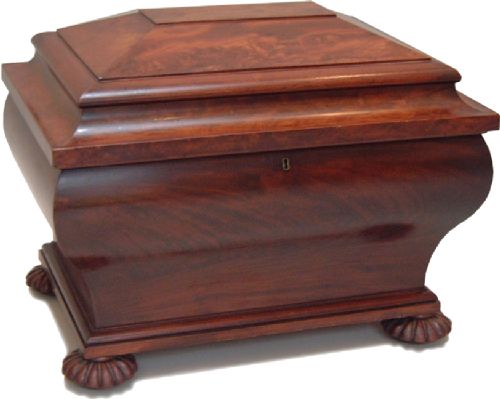
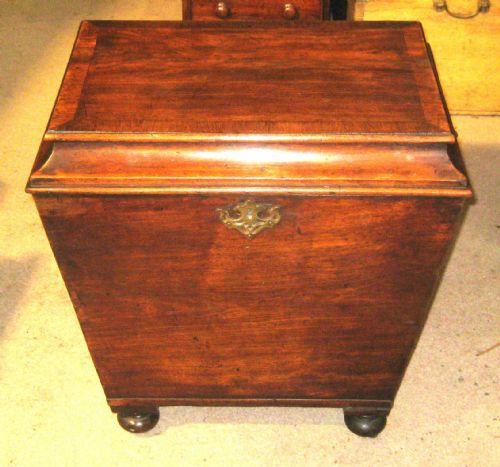
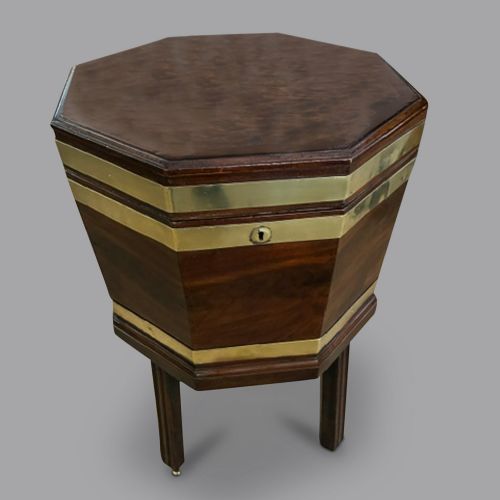
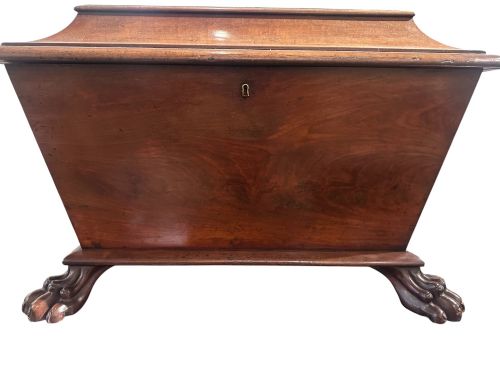
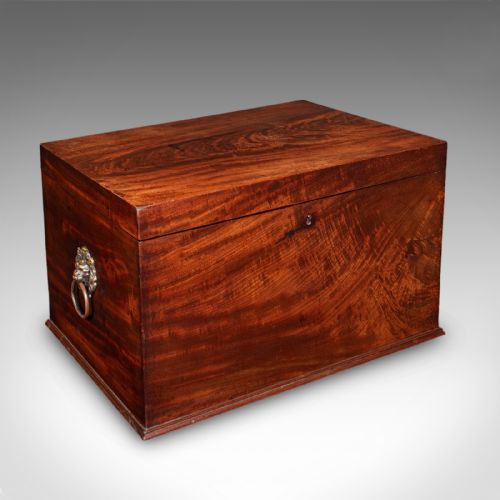
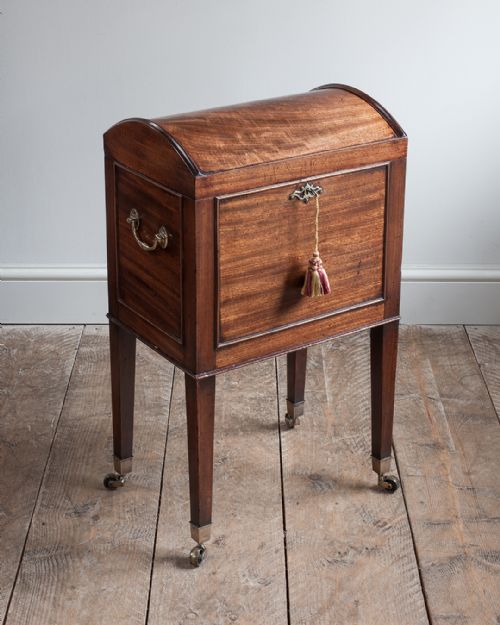
A mahogany wine storage chest typically appears as a cellarette, wine cooler, or bottle storage chest originating from the Georgian, Regency, and Victorian periods. These pieces take various structural forms, with the sarcophagus shape and octagonal box designs representing the most frequent examples encountered on this page.
Cabinet makers designed these containers to hold and chill wine bottles securely in grand dining rooms. The forms range from heavy 18th-century George III boxes to early 19th-century Regency pedestals and later Edwardian variations.
Materials and construction methods
Craftsmen built these chests primarily using solid mahogany and flame mahogany veneers, often incorporating boxwood inlay for decorative contrast. Structural detailing relied on brass carrying handles, castors, and sometimes zinc linings intended to hold ice for cooling bottles.
Joinery methods varied according to the period, utilising precise box construction, framing, and applied mouldings such as ormolu or ebonised wood highlights. The integration of interior partitions kept glass bottles separated and safe during transport or stationary storage.
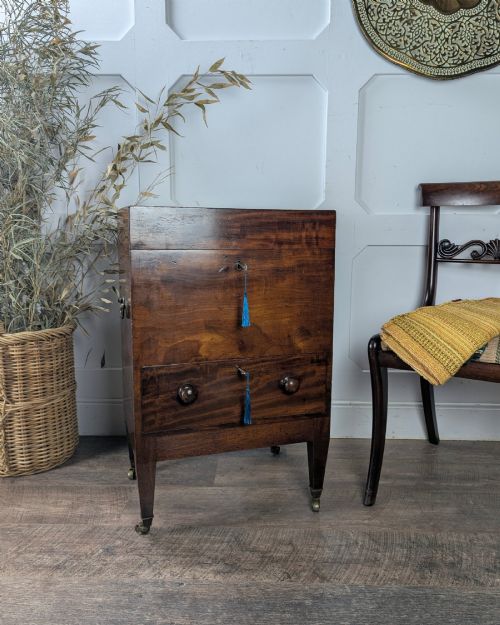
Several chests double as fireside blanket stores, proving that Regency wine drinkers also appreciated a cosy knee.
Assessing quality in period examples
Quality rests upon the selection of timber grain, particularly the depth and movement found in flame mahogany panels. Finer examples display superior execution in boxwood stringing, brass mounts, and original internal divisions rather than later replacements.
Proportion and architectural detailing distinguish the upper tier of pieces, where carvers applied crisp fluting and robust mouldings. The presence of functioning original locks, intact zinc liners, and matching castors elevates the structural integrity of the piece.
Gillingtons·Freemans of Norwich·Gillows of Lancaster and London
The Mahogany Wine Storage Chest Glossary
- Cellarette
- A lockable container or box designed for storing wine bottles near the dining table. They frequently include internal compartments for individual bottles.
- Sarcophagus form
- A stylistic coffin-like shape with a convex lid and sloping sides popular during the Regency period. This profile gives the chest a substantial and classical presence.
- Flame mahogany
- A figured wood veneer showing a distinct flame-like pattern derived from specific cuts of timber. Cabinet makers prized this figure for principal display surfaces.
- Boxwood inlay
- Contrasting pale wood inserted into recesses in the darker mahogany surface to create geometric or floral borders. It provides a sharp decorative outline.
- Ormolu
- Gilt bronze mounts applied to furniture for decorative enrichment. They appear on select French-influenced pieces from the 19th century.
Mahogany Wine Storage Chest: Frequently Asked Questions
How were these chests used?
Servants filled the interior with ice and water to chill wine bottles before serving them in the dining room. Alternatively, they served as secure storage boxes for wine reserves.
The lockable lids ensured that valuable vintages remained protected from staff and household members when not in active use during meals.
Where should I place one?
These chests fit well in dining rooms, living spaces, or hallways as statement furniture pieces with practical storage capacity. Their flat tops allow them to function as side tables or display surfaces.
Ensure they sit away from direct heat sources to protect the mahogany timber and any historic veneer work.
How do I tell Georgian from Regency?
Georgian pieces often display straight-sided or octagonal box forms with restrained carving and bracket feet. They reflect earlier classical restraint.
Regency examples frequently adopt the sarcophagus shape with heavier brass paw feet, bolder mouldings, and classical architectural motifs influenced by the French Empire style.
Do the interiors retain original linings?
Some pieces retain original zinc or lead linings used for holding ice, while others have had their interiors modified or stripped over time. Many surviving examples now feature plain wood partitions or velvet-lined inserts intended for modern bottle storage.
Inspect the internal condition to see whether original dividers or metal liners remain intact beneath any later alterations.