
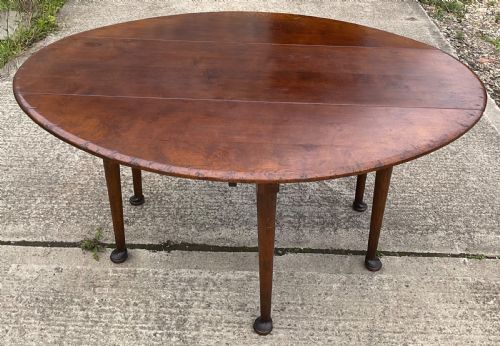


Mahogany Wake Table
A mahogany wake table is a substantial drop-leaf dining piece designed for gathering, offering exceptional surface space and period character for a grand room.
Mahogany Wake Table
When searching for a mahogany wake table, you are looking at large, extended drop-leaf dining furniture built to accommodate many guests. These tables typically feature an oval top with hinged leaves supported by pivoting legs.
The pieces on this page span the eighteenth century and the Georgian period, often associated with Irish craftsmanship. They function as grand dining tables or hunt tables with deep proportions and substantial seating capacity.
Many examples share forms with large drop-leaf and gateleg tables from the eighteenth and nineteenth centuries. They appear in solid mahogany and figured timbers, reflecting formal dining traditions of their era.
What varies in quality
Quality in a mahogany wake table rests upon the choice of timber and the richness of the figured mahogany grain. Superior examples exhibit dense, heavy hardwoods with deep natural colour and careful matching across the leaves.
Proportion and execution of the base separate standard furniture from exceptional pieces. Refined carving on the cabriole legs and the precision of the gateleg movement distinguish the finest work.
These hospitable tables were supposedly built wide enough to host an entire village wake, ensuring everyone had somewhere to rest their elbows.
The Mahogany Wake Table Glossary
- Wake table
- A large drop-leaf dining table designed with extra length for communal gatherings and feasts. These tables often feature multiple folding leaves supported by numerous legs.
- Drop-leaf table
- A table with a fixed centre section and hinged flaps that fold down when not in use. This design allowed furniture to save space against a wall until needed for meals.
- Cabriole leg
- A furniture leg that curves out gracefully and then tapers inward to a foot. This style was popular during the eighteenth century and frequently ends in a pad foot.
- Pad foot
- A simple foot where the leg rests on a flattened disc or pad. It provides a stable base for heavy tables without elaborate carving.
- Gateleg table
- A table with legs that swing outward on hinges like a gate to support raised leaves. This framework bears the weight of large timber flaps safely.
Mahogany Wake Table: Frequently Asked Questions
What is a mahogany wake table?
A mahogany wake table is a large, extendable drop-leaf dining table originating primarily in the eighteenth century and the Georgian era. These pieces were built with wide leaves to seat numerous people for feasts and communal gatherings.
They utilise sturdy gateleg or pivoting frameworks to support the heavy timber flaps. Many fine examples originate from Irish workshops and feature solid mahogany or figured mahogany construction.
How do I style a wake table?
These tables demand a large room with adequate space around them to let the drop leaves extend fully. They work well as central dining room tables or statement pieces in spacious halls.
Pairest with period chairs, a large wake table provides an imposing focal point. Keeping the timber polished highlights the grain and depth of the mahogany surface.
How do I spot an 18th century table?
Eighteenth century tables show distinct construction methods, such as hand-cut joints and heavy Cuban mahogany timber. Look for cabriole legs with pointed pad feet and patination earned through long use.
Hardware, timber density, and structural design help separate Georgian examples from later nineteenth century reproductions or twentieth century pieces.
Why are some called Irish wake tables?
Irish wake tables are particularly noted for their grand scale, robust construction, and deep proportions. Workshops in Ireland produced many of the largest surviving examples in solid mahogany.
These pieces often display strong carving on the cabriole legs and exceptional figured timber quality. They represent a distinct regional tradition within Georgian dining furniture.