



Mahogany Veneer Drawers
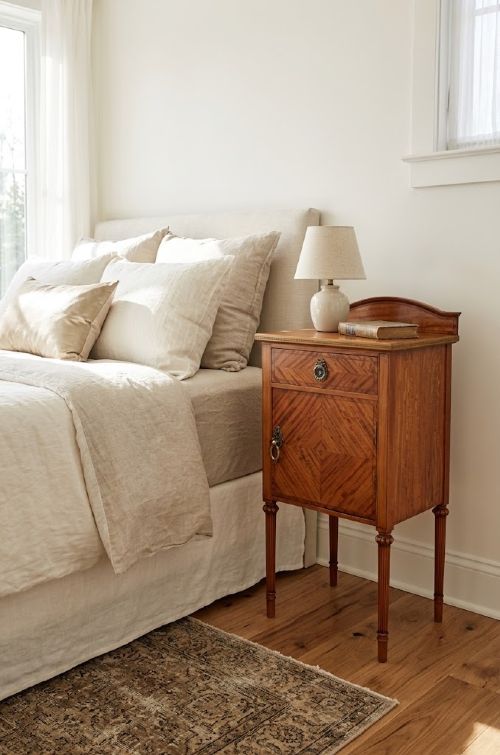
Mahogany veneer drawers bring warm figure and traditional storage into a room, spanning periods from Regency to Art Deco.
Mahogany Veneer Drawers
Mahogany veneer drawers cover a diverse group of case furniture designed for storage, from compact bedside cupboards and low linen presses to large chests of drawers and tallboys. When you search for mahogany veneer drawers, you encounter pieces originating from English, French, Swedish, and Biedermeier traditions across the eighteenth, nineteenth, and early twentieth centuries.
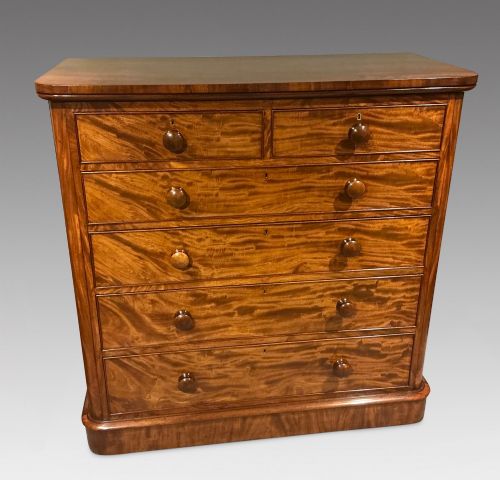
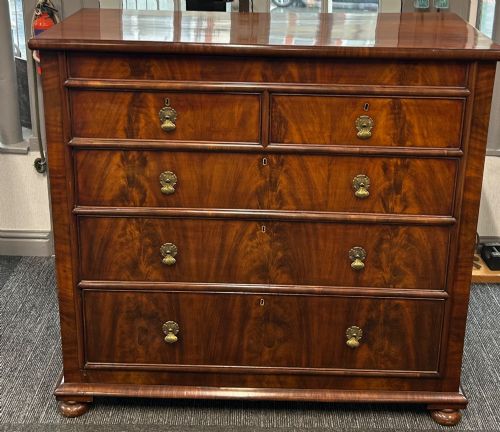
The chests of drawers on this page range from modest five-drawer Victorian tall chests to grand Regency and 1850 examples featuring striking grain patterns. Alongside traditional chests, the selection includes specialised forms such as marble-topped commodes, bedside tables, compactum chests, and cabinets by makers like the Bowman Brothers.
Victorian and Regency pieces dominate the selection, bringing substantial proportions and deep timber tones to domestic interiors. Edwardian satinwood pieces and 1930s Art Deco cabinets offer alternative palettes and lighter modernist lines within the same overarching category of veneered storage.
How they were made
Cabinet makers constructed these pieces using solid secondary timbers like pine for internal carcases and drawer linings, applying thin decorative slices of mahogany to the primary visible surfaces. Flame mahogany veneer and plum pudding mahogany provided dramatic, undulating grain figures that contrasted with simpler framing woods.
Selected pieces integrate contrasting secondary woods such as satinwood for stringing or interior details, while French commodes incorporate heavy marble tops above the veneered drawer structures. Traditional joinery methods secured the carcases, allowing the timber to expand and contract seasonally beneath the polished surface.
Mahogany Veneer Drawers Retail Price Guide 2026
Typical asking prices for mahogany veneer drawers among the pieces listed under this phrase on Sellingantiques today, from the lower quarter to the upper quarter. They describe what is for sale here now, not the wider market.
Some nineteenth-century drawers close with such airtight precision that pulling the top one creates a gentle vacuum in the room.
What varies in quality
Quality rests significantly in the selection and matching of the veneer, particularly where symmetrical flame or plum pudding figures create balanced patterns across drawer fronts. Finer examples display meticulous grain continuity from top to bottom drawer, whereas simpler utility pieces use more uniform stock.
The integrity of the secondary woods and the precision of the underlying construction dictate the structural endurance of each piece. Superior workshops employed seasoned timbers and refined joinery that kept drawer action smooth and carcases square over centuries of use.
R H & J Simpson·Bowman Brothers
The Mahogany Veneer Drawers Glossary
- Flame mahogany veneer
- A thin slice of timber cut from the fork of a mahogany tree where the branch meets the trunk, producing a distinctive flickering flame pattern. Cabinet makers laid this costly veneer across prominent drawer fronts for maximum visual impact.
- Linen press
- A tall piece of case furniture featuring upper cabinet doors enclosing sliding trays for textiles, positioned above a base of lower drawers. These items served an essential storage function in traditional bedrooms.
- Commode
- A low French chest of drawers, frequently finished with a decorative marble top. The term applies to eighteenth and nineteenth-century Continental pieces designed with elegant proportions.
- Biedermeier
- A Central European style spanning the nineteenth century, characterised by utilitarian comfort, clean architectural lines, and rich native veneers. Biedermeier cabinets and chests rely on unadorned wood grain rather than heavy carving.
Mahogany Veneer Drawers: Frequently Asked Questions
What is a compactum chest?
A compactum chest is a combined wardrobe and drawer unit designed to maximise storage within a smaller footprint. These pieces integrate hanging space and multiple drawers into a single piece of case furniture.
They appear across various nineteenth-century periods, offering a practical alternative to separate wardrobes and chests of drawers in period bedrooms.
How do I identify flame mahogany?
Flame mahogany is recognised by its characteristic rippling, feather-like grain pattern that shifts in appearance under changing light. This figuring results from the specific angle at which the veneer is sliced from the tree fork.
Cabinet makers reserved these highly decorative sheets for the most prominent exterior surfaces, such as drawer fronts and principal door panels.
Are marble-topped commodes French?
Marble-topped commodes frequently originate from French nineteenth-century workshops, where heavy stone slabs provided a durable and decorative upper surface. These pieces combine Continental proportions with rich timber veneers.
They function well as bedside tables or hallway storage items, introducing a contrasting stone element to wooden case furniture.
What distinguishes Regency mahogany furniture?
Regency mahogany furniture dates from the early nineteenth century and is defined by classical restraint, architectural proportions, and exceptional timber selection. Pieces from this era often feature subtle brass mounts and dramatic grain figures like plum pudding mahogany.
These items reflect the influence of ancient Greek and Roman design adapted for Regency interiors.