


Mahogany Vanity Chairs
Mahogany vanity chairs are low-seated, timber-framed perches designed for the dressing room, bringing practical comfort and period warmth to a bedroom corner.
Mahogany Vanity Chairs
Mahogany vanity chairs encompass a varied group of low seating built for dressing rooms, bedrooms, and music rooms. When exploring mahogany vanity chairs on this page, the pieces you meet most often date from the Victorian and Edwardian eras, alongside pieces reflecting earlier Georgian and Regency designs.
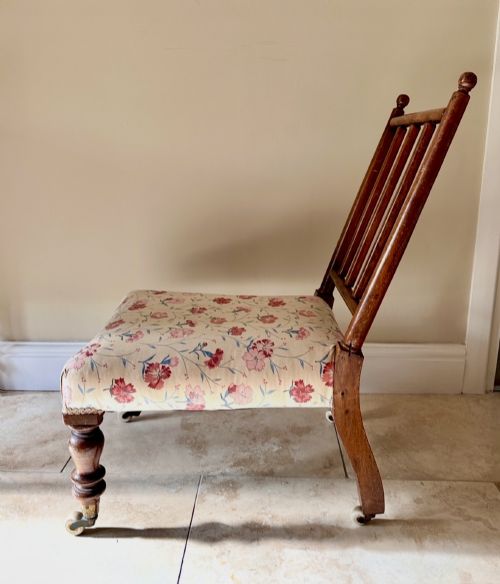
The forms span several specific types of low seating, including dressing chairs, piano stools, nursing chairs, and occasional armchairs. Many examples feature compact proportions, revolving mechanisms, or adjustable heights suited to sitting before a low dressing table or vanity mirror.
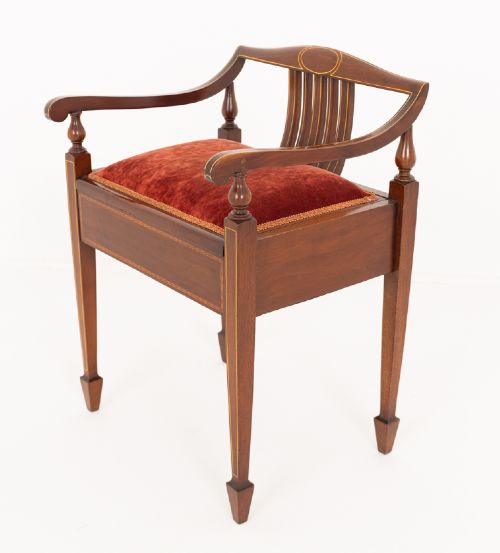
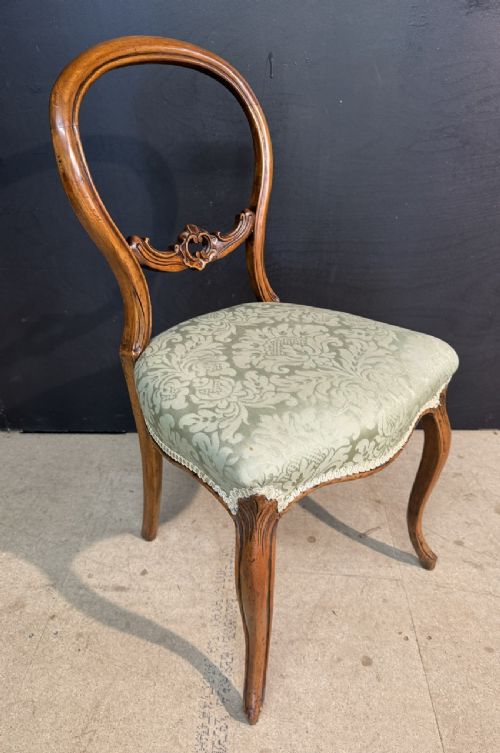
Makers drew on diverse historical styles, ranging from restrained Sheraton Revival crossbandings to elaborate Victorian grotto carvings and curved Queen Anne cabriole legs. These diverse forms share a common heritage in utilising rich timber frames to support functional, upholstered seats.
How they were made
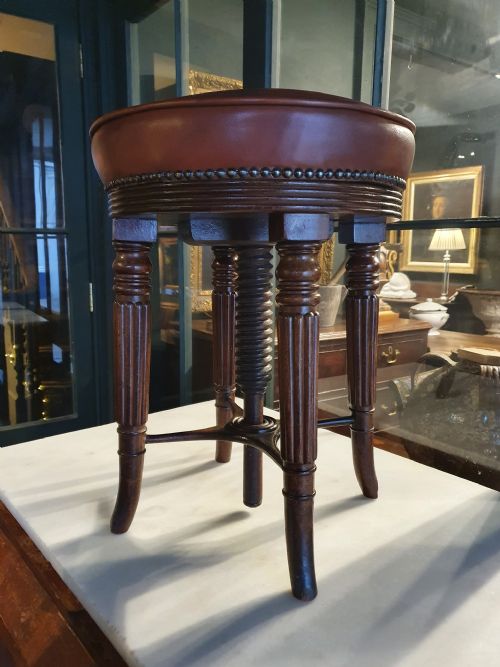
Makers built the structural frames of these pieces using dense mahogany, selected for its strength and rich grain. Carpenters shaped the wood through turning, curving, and intricate carving, particularly on cabriole legs and supportive backrests.
Upholstery completed the seats, employing traditional textiles such as velvet, leather, tapestry, and plain fabric stretched over padded foundations. Brass fittings frequently appeared as hinges, castors, or adjustment screws on revolving piano stools and adjustable dressing chairs.
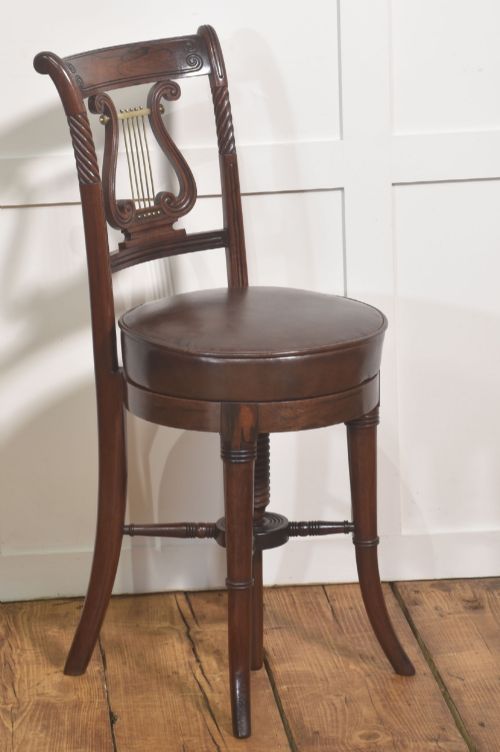
Some nineteenth-century music stools feature hidden wooden screw threads that let you spin the seat up like an old piano stool.
What varies in quality
Quality rests significantly in the execution of the timber work and the integrity of the original frame construction. Pieces with crisp hand-carving, solid joinery, and well-turned legs demonstrate superior craftsmanship compared to simpler, coarser carpentry.
The sophistication of internal mechanical functions, such as smooth revolving screws or sturdy adjustable height mechanisms, marks the difference between standard production items and finer workshops. Original upholstery materials and preserved maker signatures also elevate the standing of a piece.
James Shoolbred
The Mahogany Vanity Chairs Glossary
- Cabriole leg
- A furniture leg that bends outward in a convex curve and tapers inward in a concave curve, ending in a pad or foot. This design originated in antiquity and gained prominence in Queen Anne and Georgian furniture.
- Revolving mechanism
- An internal screw or pivot system allowing the seat top to turn through a full circle. These devices are frequently found on piano stools and music chairs for seated convenience.
- Grotto style
- An ornate Victorian design style drawing on shells, coral, and aquatic motifs. Pieces in this manner often display intricate, naturalistic carving across the wooden frame.
- Tub chair
- A fully upholstered armchair featuring a continuous curved back and arms that form a deep, enclosing shape. The style provides enclosed comfort for bedrooms and dressing rooms.
Mahogany Vanity Chairs: Frequently Asked Questions
What is a vanity chair?
A vanity chair is a small, low seat specifically designed for use at a dressing table or vanity. These pieces provide a comfortable place to sit while grooming or dressing.
The low proportions and compact footprints allow the chair to tuck neatly beneath dressing tables when not in use. Many examples incorporate upholstered seats and supportive backs tailored for shorter periods of sitting.
How do I date a Victorian piece?
Dating Victorian pieces involves examining the timber selection, construction methods, and stylistic cues present in the frame. Mid-nineteenth-century items often display heavier mahogany proportions and hand-turned elements.
Later Victorian and Edwardian examples frequently show lighter framing or integrated revival styles like Sheraton or Queen Anne influences. Secondary woods and fastener types inside the frame also help narrow down the decade of production.
Can I use a piano stool as a vanity seat?
Piano stools and music chairs make excellent vanity seats due to their adjustable heights and compact circular tops. Many historical examples were built with swivel mechanisms that suit the movements required at a dressing table.
The sturdy timber frames and upholstered cushions provide the necessary durability and comfort for daily bedroom use. Their small scale ensures they fit comfortably in rooms where space is limited.
How do I care for mahogany furniture?
Caring for mahogany requires keeping pieces away from direct sunlight and sudden temperature shifts to prevent the timber from drying or cracking. Regular dusting with a soft, dry cloth preserves the polished surface without damaging the finish.
Applying occasional appropriate wax feeds the wood and maintains its deep natural lustre. Avoid placing damp items or harsh chemical cleaners directly onto the antique polish.