





Mahogany Vanity Bench
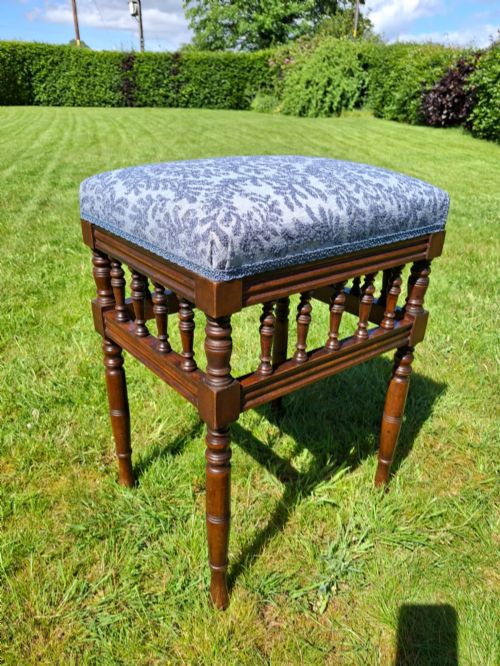
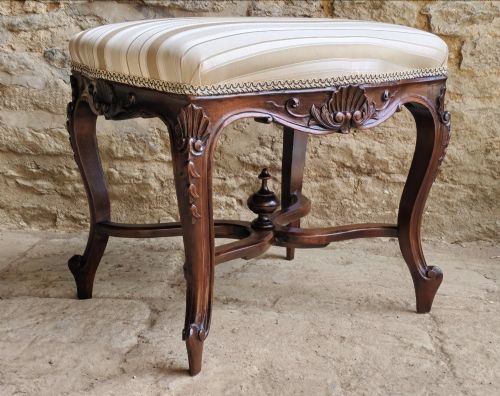
A mahogany vanity bench offers sturdy seating for dressing tables and music rooms, bringing period timber and textiles together in a compact form.
Mahogany Vanity Bench
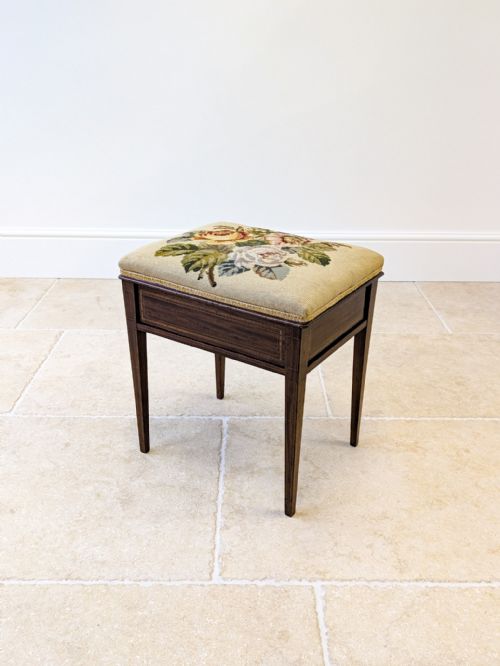
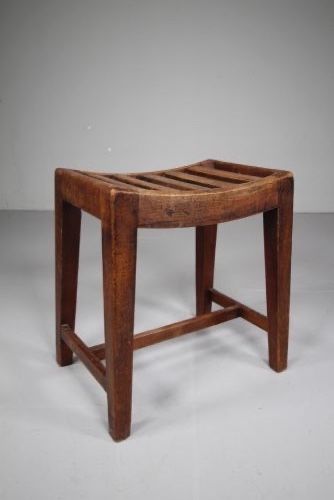
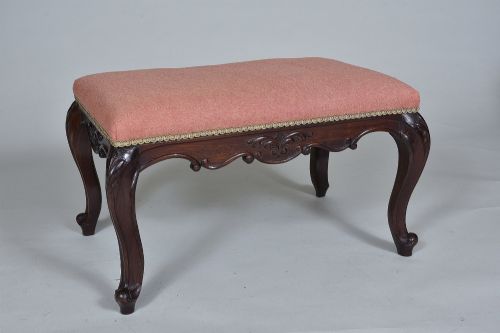
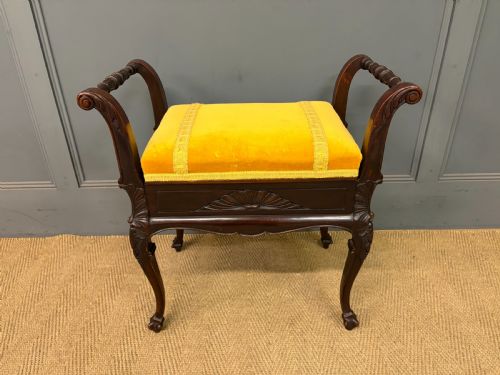
A mahogany vanity bench appears across several historic periods, functioning primarily as a dressing stool, piano stool, or window seat. These low seats sit closely with dressing tables and instruments, combining exposed timber frames with upholstered pads.
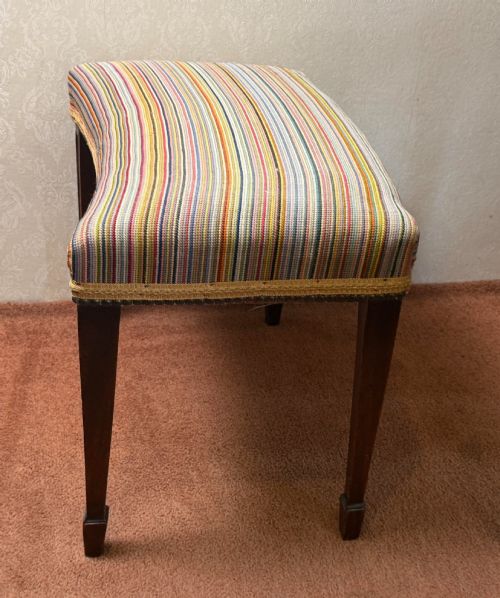
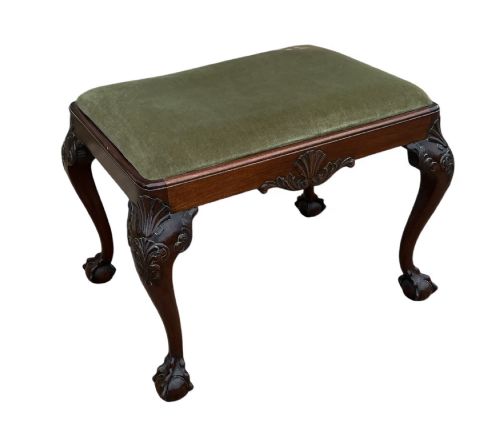
The most common examples on this page date from the Edwardian era and the nineteenth century, often following Georgian, Regency, or Chippendale revival designs. Pieces range from simple square frames with tapering legs to elaborate carved cabriole structures and inlaid surfaces.
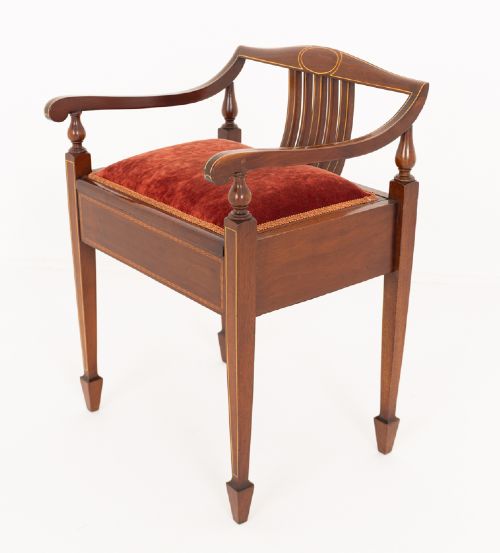
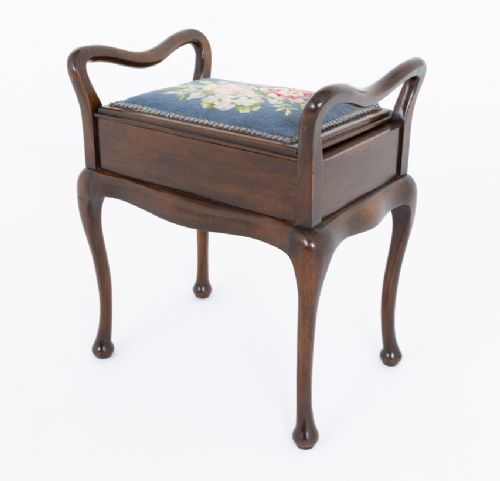
Makers adapted these forms for specific domestic tasks, producing piano stools with lift-up seats alongside dressing stools and X-framed benches. Their compact proportions make them versatile additions to modern bedrooms and living spaces.
Materials and construction
Cabinetmakers built these frames using solid mahogany, frequently embellishing the timber with satinwood inlay, crisp carving, or pierced slats. Structural joints rely on traditional joinery techniques, ensuring stability for frequent seating use.
Upholstery materials vary from early tapestries and velvets to contemporary fabrics, leather, and buttoned textiles. These cushions are secured over webbing or solid bases to support daily sitting.
Mahogany Vanity Bench Retail Price Guide 2026
Typical asking prices for mahogany vanity bench among the pieces listed under this phrase on Sellingantiques today, from the lower quarter to the upper quarter. They describe what is for sale here now, not the wider market.
Design influences on this page range from Georgian and Regency to Queen Anne and Chippendale revival styles.
Assessing craftsmanship and finish
Quality reveals itself in the crispness of the mahogany carving and the precision of any inlaid satinwood detailing. Finer examples display harmonious proportions and substantial timber weights rather than light, mass-produced frames.
The method of upholstery and the integrity of the underlying frame construction distinguish standard utility pieces from high-status revival work. Original upholstery fabrics and carefully fitted mechanical music seats add distinct levels of historical interest.
Jas Shoolbred
The Mahogany Vanity Bench Glossary
- Cabriole leg
- A furniture leg that curves outward at the knee and tapers inward to an ankle, often ending in a pad or claw foot. This form derives from classical Chinese motifs and became prominent in Queen Anne and Georgian furniture.
- X-frame
- A structural base formed by intersecting diagonal timbers that cross to support the seat. This ancient design provides robust load-bearing strength while creating a distinct architectural silhouette.
- Satinwood
- A durable, light yellow exotic wood utilised for contrasting inlay and banding on darker mahogany surfaces. Cabinetmakers favoured it for decorative borders on Edwardian and revival pieces.
- Piano stool
- A specialised seat designed for keyboard players, occasionally incorporating a lift-up mechanism or rotating height adjustment. These forms frequently share proportions with dressing stools.
- Chippendale style
- A decorative vocabulary inspired by eighteenth-century designer Thomas Chippendale, featuring carved ribbon motifs, acanthus leaves, and ball-and-claw feet. Revival versions emerged strongly during the Victorian and Edwardian periods.
Mahogany Vanity Bench: Frequently Asked Questions
What is a mahogany vanity bench used for?
These low seats function primarily as dressing table stools, music seats, or window benches. Their compact dimensions allow them to tuck neatly beneath tables or piano consoles when not in use.
Historically, specific variants accommodated musicians who required stable seating with storage compartments for sheet music, while others served bedrooms for grooming.
How do I distinguish Edwardian pieces from earlier styles?
Edwardian examples often incorporate lighter satinwood inlay, softer mahogany tones, and machine-assisted joinery alongside simpler revival motifs. They reflect the mass production capabilities of the early twentieth century.
In contrast, eighteenth and early nineteenth-century pieces rely on dense, dark timbers, hand-carved details, and traditional pegged joinery that demonstrates older workshop practices.
Can I use an antique piano stool at a dressing table?
Piano stools share the same low height and compact footprint as dedicated dressing stools, making them interchangeable in modern interiors. Many feature upholstered lift-up lids that provide convenient hidden storage for cosmetics or small items.
Their sturdy mahogany frames and comfortable padded tops suit daily use in bedrooms and hallways alike.
How do I care for antique mahogany and upholstery?
Protect the timber frame from direct sunlight and extreme temperature fluctuations to prevent the mahogany from drying out or splitting. Gentle dusting with a dry, soft cloth maintains the polished surface without harsh chemical polishes.
Upholstered sections benefit from regular light vacuuming using a low-suction brush attachment to lift dust from fabrics, tapestries, or leather without damaging the textile fibres.