
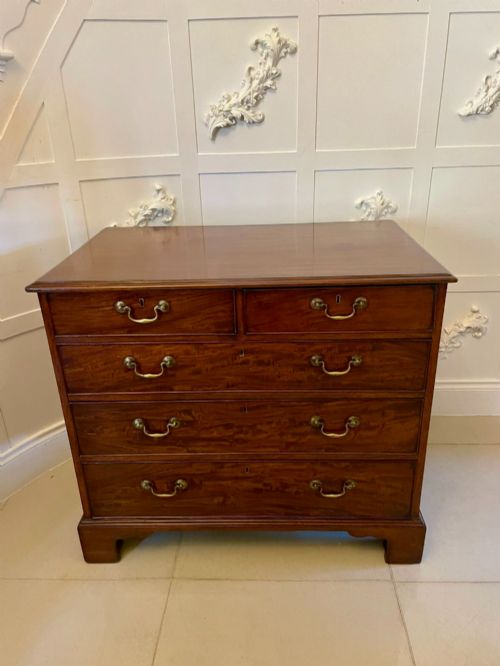
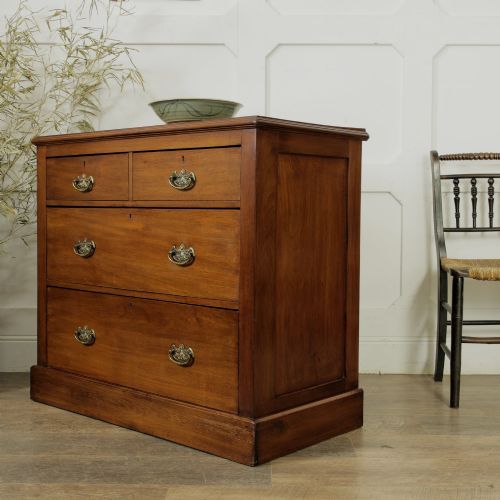
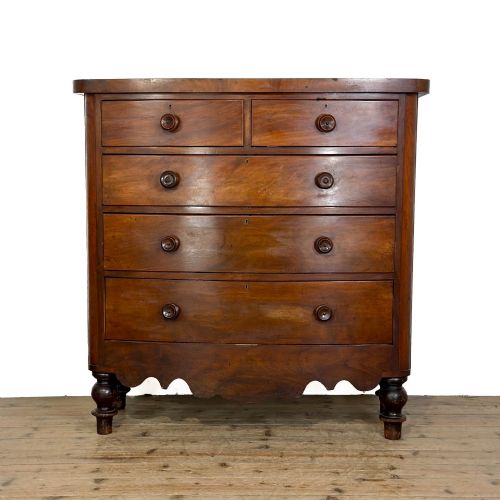
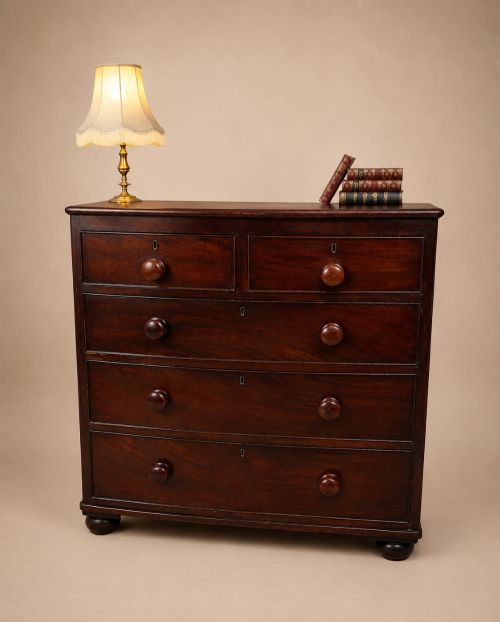
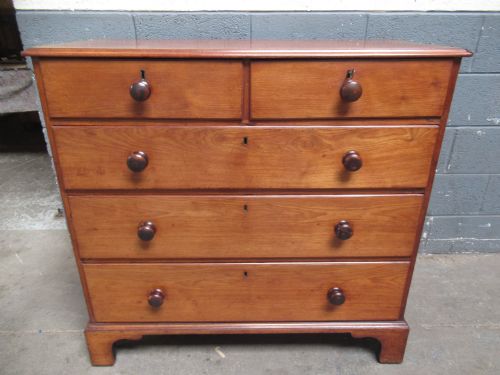
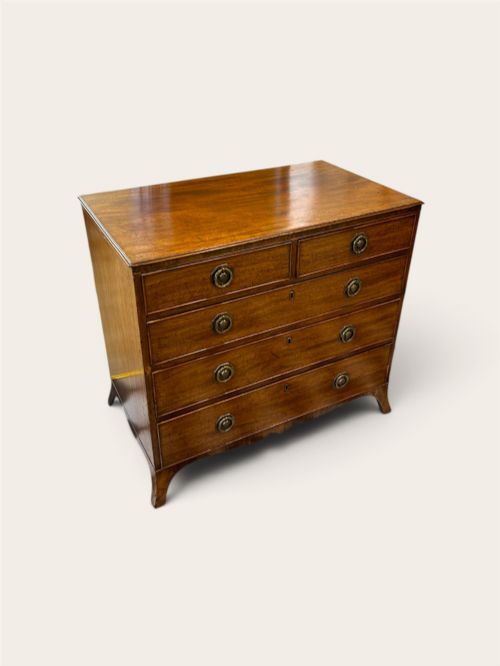
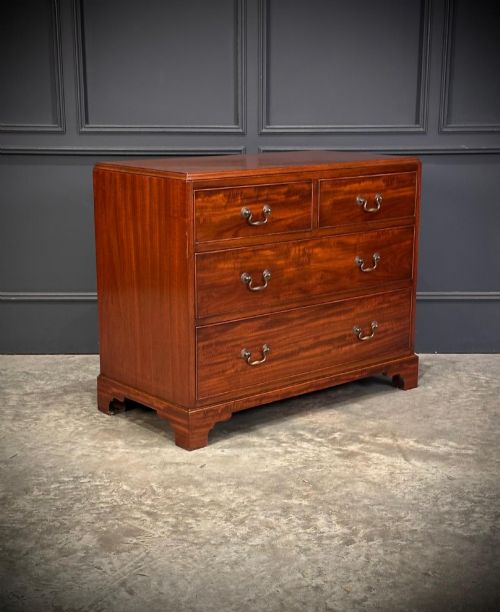
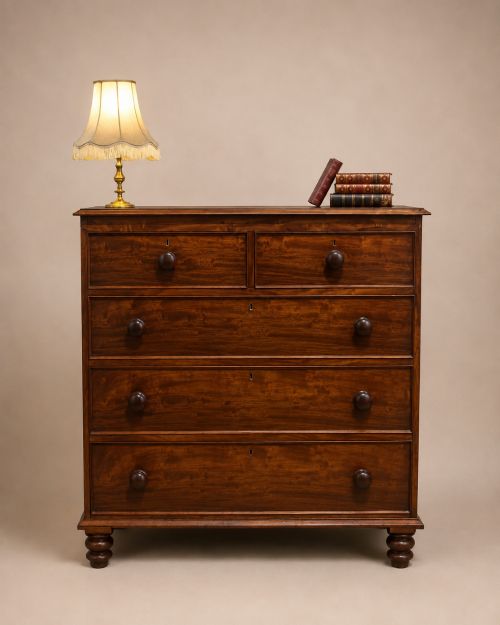
Mahogany Two Drawer Chests
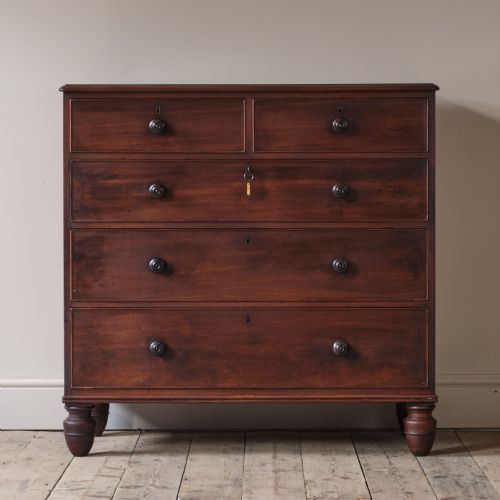
Mahogany two drawer chests are compact storage pieces built from rich timber, offering practical surface space and traditional drawer arrangement for domestic interiors.

Mahogany Two Drawer Chests
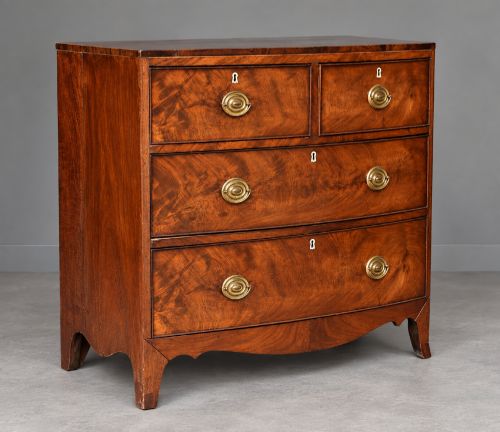
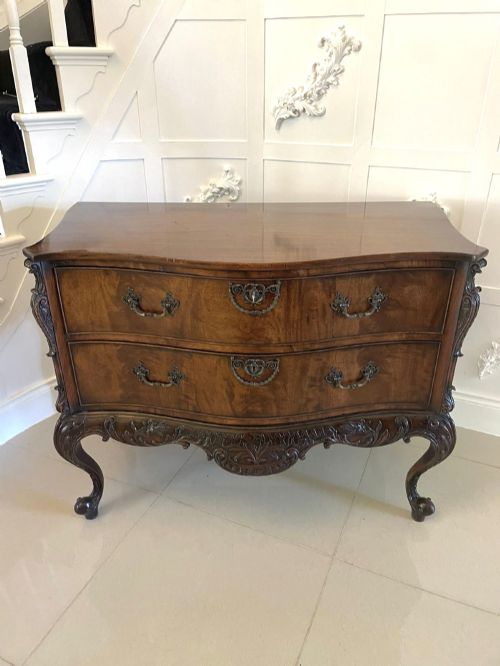
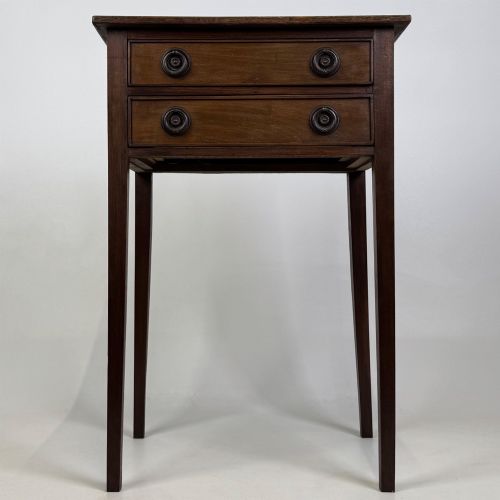
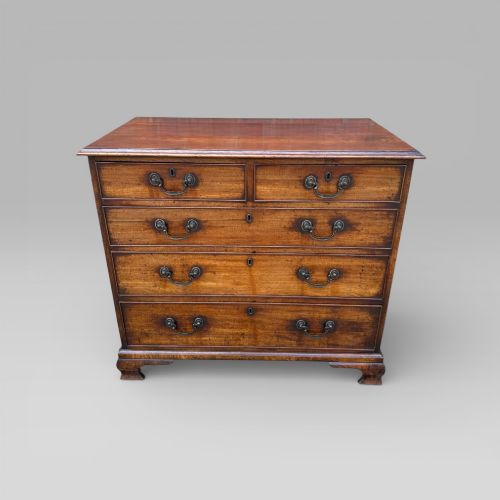
Mahogany two drawer chests represent a specific form of compact domestic storage built across several historical periods, including the Georgian, Regency, and Victorian eras. Buyers seeking this phrase typically encounter smaller chests, side tables, or bowfront designs featuring two primary drawers or configurations described through compact proportions.
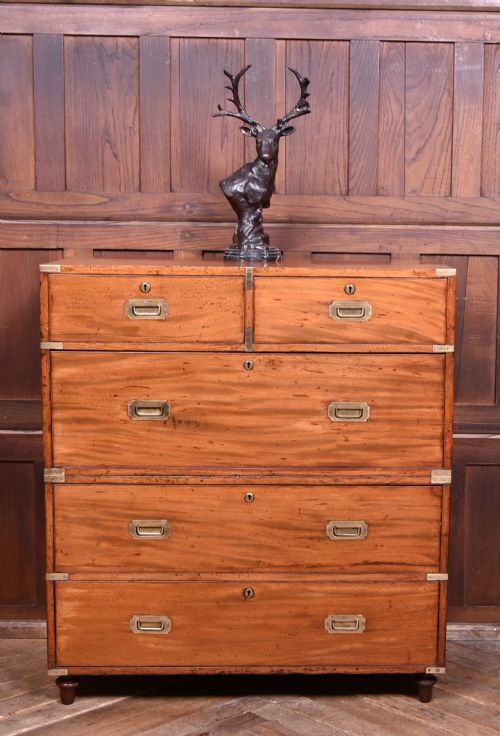
The materials and styles span from 18th century George III examples with fine patina to 19th century Victorian and Edwardian variations. Many pieces demonstrate specific regional adaptations or utilitarian purposes, such as military campaign forms fitted with brass hardware.
Makers and workshops utilised mahogany timber alongside secondary woods like oak and pine, producing items ranging from simple bedroom chests to serpentine shaped statement furniture. The enduring appeal of these pieces lies in their manageable scale and warm timber tones.
How they were made
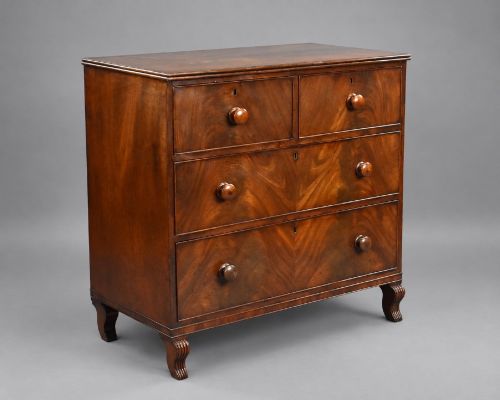
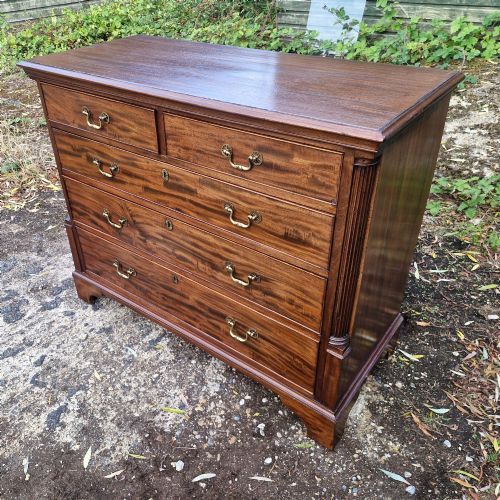
Cabinet makers constructed these pieces primarily from solid mahogany or by applying flame and figured mahogany veneers over secondary timbers such as oak, pine, and general wood substrates. This veneering technique allowed craftsmen to display dramatic wood grain patterns across drawer fronts while maintaining structural stability.
Metal components like brass handles, escutcheons, and campaign corners were integrated into the construction to secure drawer fronts and facilitate handling. Joints were hand-cut to ensure durability, uniting the primary mahogany surfaces with internal carcase work.
Some chests arrive with a working key, a small surviving detail that has managed to stay with the drawer lock for two centuries.
What varies in quality
The quality of these chests is determined by the selection of the timber, particularly the use of figured or flame mahogany veneer that creates visual depth across the surfaces. Finer examples display careful book-matching of grain patterns and consistent colour tone throughout the carcase.
Execution of secondary details, such as the precision of brass fittings, the smoothness of drawer operation, and the integrity of crossbanding, separates standard domestic items from exceptional cabinet work. Patina accumulated through age also contributes to the visual distinction of superior pieces.
T & G Seddon·J Moorcroft
The Mahogany Two Drawer Chests Glossary
- Mahogany
- A durable tropical hardwood prized for its deep reddish-brown colour and stable working properties. It serves as the primary exterior timber for these chests.
- Bowfront
- A convex, curved front profile popular in Georgian and Regency design. This shape softens the rectangular outline of the furniture.
- Flame Mahogany Veneer
- Thin slices of timber cut from wood where branches join the trunk, creating a flamy, figured pattern. Craftsmen apply this to prominent surfaces for decorative effect.
- Crossbanding
- A border technique where strips of veneer are laid perpendicular to the surrounding grain. It frames drawer fronts and top panels.
- Patina
- The surface sheen and softening of colour developed through years of handling, polishing, and exposure to light. It indicates genuine age and use.
- Campaign Chest
- A modular storage chest constructed in sections with brass corners and recessed handles. Originally designed for military travel, these pieces prioritize robust portability.
Mahogany Two Drawer Chests: Frequently Asked Questions
What periods do these chests come from?
These chests originate from several distinct historical eras, spanning from the mid 18th century through the Georgian and Regency periods into the Victorian and Edwardian decades.
Each period imparts characteristic proportions, handle designs, and construction methods that help identify the age of the piece.
How were these chests used originally?
Historically, smaller chests served multiple domestic functions, operating as bedside tables, dressing drawer units, or compact storage in smaller rooms.
Campaign versions were built specifically for transport during military campaigns, featuring durable brass hardware to withstand travel.
What woods are found in these pieces?
The primary visible timber is mahogany, often selected as solid wood or utilised as flame and figured mahogany veneer across the drawer fronts.
Secondary woods like oak, pine, and general framing timber appear inside drawer linings and internal carcase construction.