





Mahogany Turned Leg Bench
Mahogany turned leg bench forms bridge the gap between practical utility and period elegance, offering solid timber frames and sturdy supports.
Mahogany Turned Leg Bench
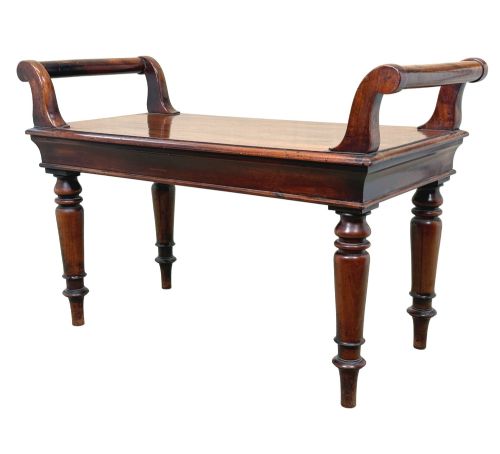
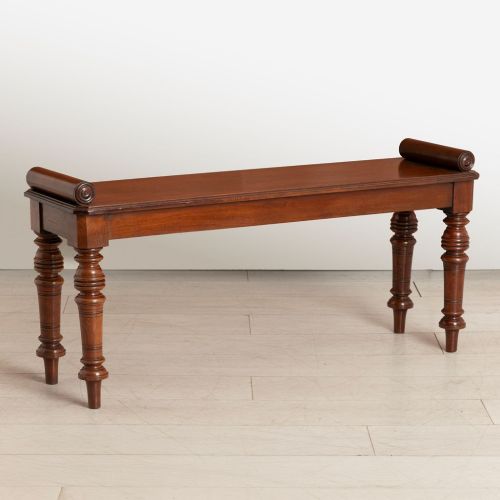
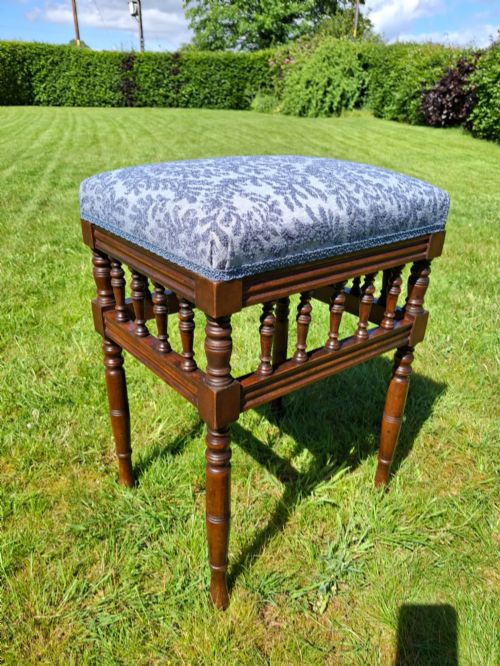
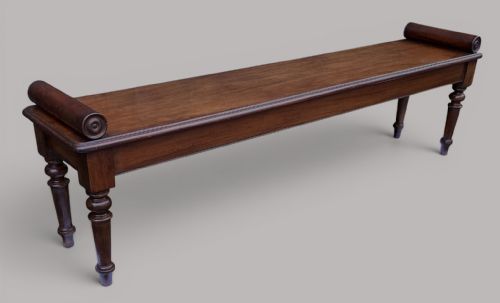
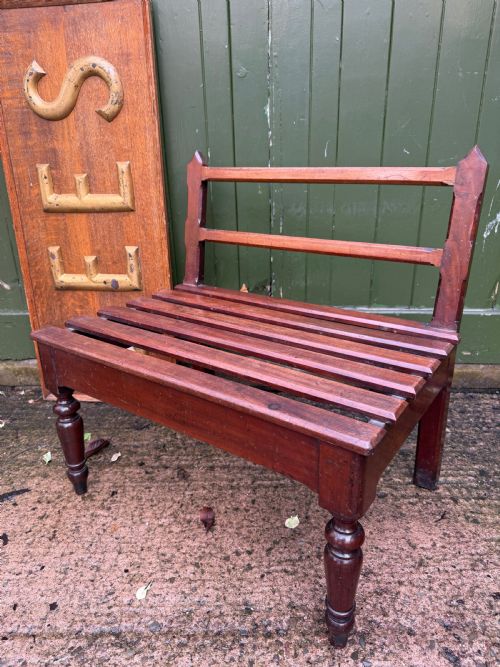
A mahogany turned leg bench appears in several guises across this selection, primarily as window seats, hall benches, footstools, and luggage stands. These items emerge from periods spanning the Georgian era, the Regency period, the Victorian epoch, and into the Edwardian years.
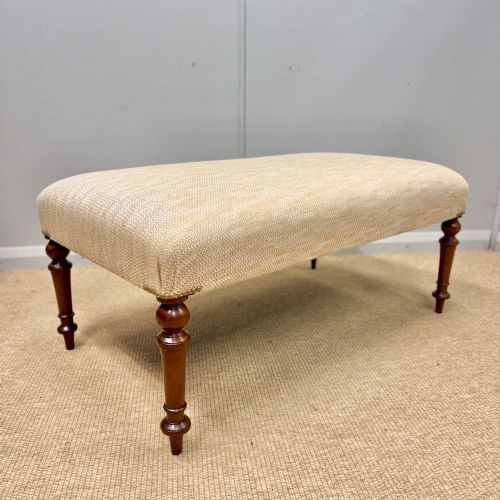
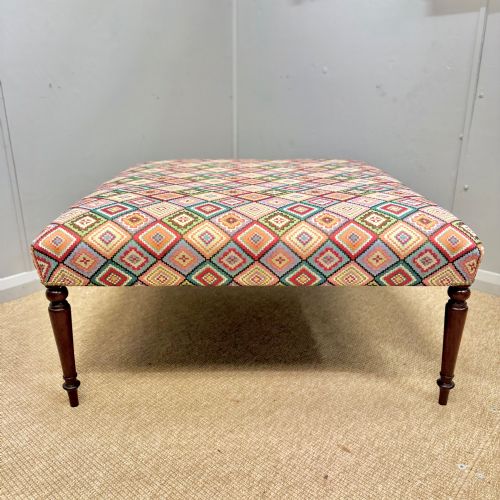
The most frequent iteration on this page is the window seat or hall bench, often stretching to generous proportions, alongside upholstered footstools and caned top tables. These pieces served functional roles in country houses, drawing rooms, and hallways.
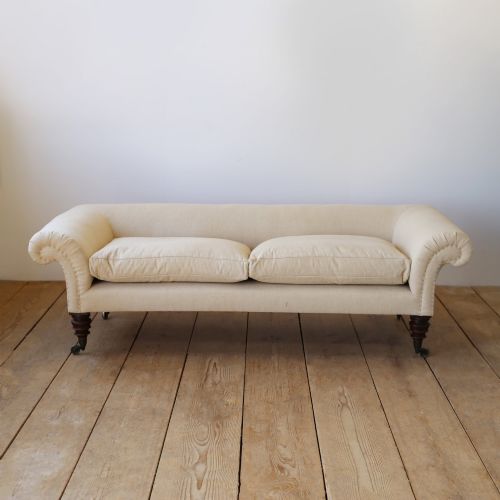
Makers and manufacturers utilised mahogany across the nineteenth and early twentieth centuries to build sturdy, resilient frames that frequently incorporate turned supports, brass castors, and upholstered surfaces.
Materials and construction
Makers constructed these frames predominantly from solid mahogany, occasionally integrating satinwood inlay or brass hardware such as castors. Wood selection dictated both the visual weight and the structural integrity of the piece.
Upholstery techniques varied from deep buttoned leather and woven fabric to kilim covers, cane tops, and modern fabric upholstery. Craftsmen shaped the wooden supports using turning techniques to produce decorative legs that matched the prevailing style of the period.
Structural elements like raised rear upstands, raked supports, and joinery reflect the domestic requirements of nineteenth and early twentieth-century households.
The listings include mahogany pieces from the Georgian, Regency, Victorian, and Edwardian periods, alongside items dated to specific years like 1870 and 1920.
Distinctions in quality
Quality rests upon the proportion and drawing of the frame, where well-balanced dimensions and elegant lines separate standard pieces from finer examples. The handling of the turned wooden legs and the integration of details like brass castors reveal the maker's competence.
The integrity of the timber and the standard of upholstery work, whether dealing with buttoned leather, cane, or fabric, dictate the durability and finish of the item. Pieces demonstrating thoughtful proportion and substantial construction command greater attention.
The Mahogany Turned Leg Bench Glossary
- Mahogany
- A durable tropical hardwood prized for its rich colour and stability. It served as the primary timber for high-quality furniture frames throughout the eighteenth and nineteenth centuries.
- Turned leg
- A structural support shaped on a lathe to create cylindrical or decorative profiles. This technique was standard practice for legs on benches, stools, and tables.
- Window seat
- A long, narrow bench designed to fit within the recess of a window. These forms often feature upholstered tops and decorative wooden frames.
- Luggage stand
- A low-standing rack used for holding bags, typically constructed with a slatted or webbed top and raised supports. Country house examples often include rear upstands.
- Castor
- A small wheel mounted on a swivel assembly attached to the base of a leg. Brass versions frequently appear on nineteenth-century footstools and seating.
Mahogany Turned Leg Bench: Frequently Asked Questions
Where did people place these benches?
Households positioned these benches in hallways, grand reception rooms, and alongside window recesses where occupants could sit or place items.
They also functioned as dressing stools or luggage stands in bedrooms across country houses and urban residences.
How do I care for mahogany?
Maintain the timber by keeping it away from direct heat sources and sudden changes in humidity to prevent the wood from drying out.
Apply a suitable wax polish periodically to preserve the natural lustre and protect the surface of the mahogany.
How do I identify the period?
Examine the overall silhouette, the style of the turning on the legs, and any decorative elements like inlay or brass hardware.
Cabinetmakers incorporated design traits specific to the Regency, Victorian, and Edwardian eras, which help narrow down the date of manufacture.
Can I use these in modern rooms?
These pieces integrate easily into contemporary interiors as coffee table alternatives, footstools, or hallway seating.
Their solid timber construction and practical proportions provide functional utility alongside period character.