




Mahogany Trunk Clock
A mahogany trunk clock brings substantial timekeeping presence to a wall or hallway, combining precision engineering with rich timber cases.
Mahogany Trunk Clock
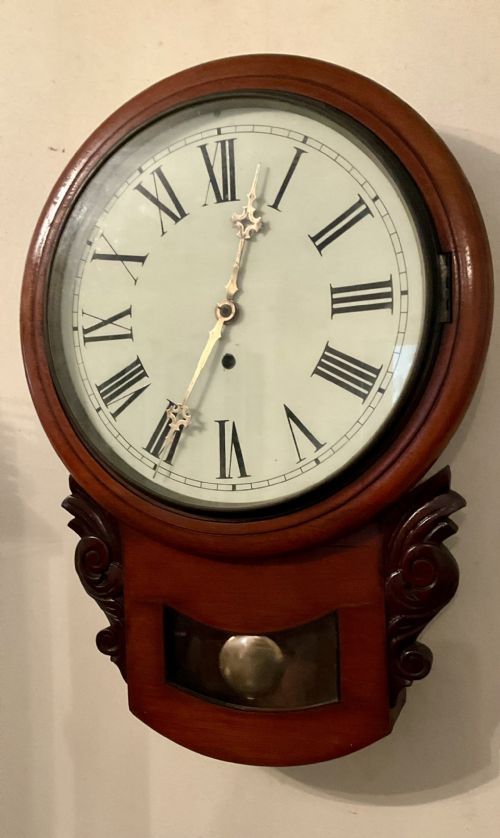
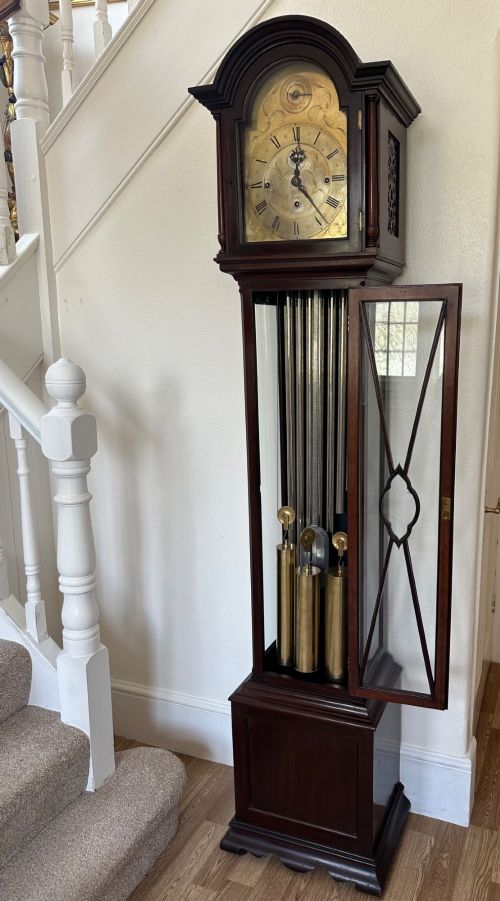
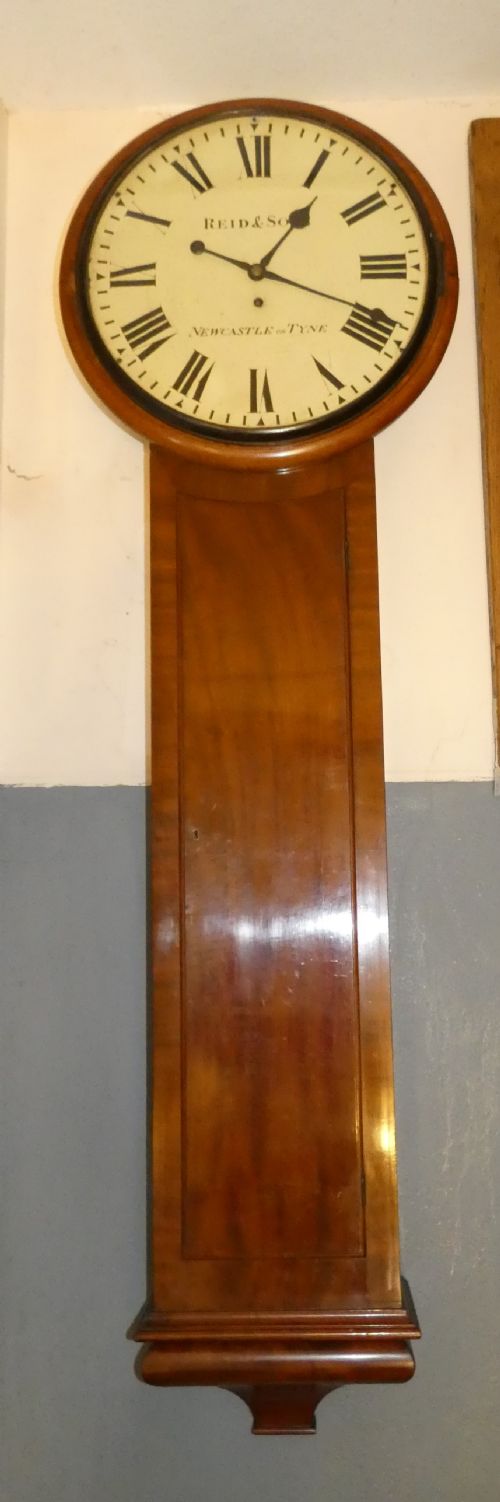
A mahogany trunk clock encompasses both drop-dial wall timepieces and tall floor-standing longcase models, anchored by the distinctive dark timber housing enclosing the dial and movement.
The drop-dial wall clock is the most frequent form encountered on this page, featuring a circular upper dial case that extends downward into a trunk to accommodate the pendulum.
Examples span the Regency, Georgian, and Victorian periods, alongside Edwardian and mid-twentieth-century pieces, reflecting shifts in British horological design.
Materials and construction
Makers utilised solid mahogany and flame mahogany veneer for the structural cases, sometimes incorporating marquetry inlay or brass bezel surrounds.
Movements rely on brass components, iron, and silvered metal or enamel dials, paired with glass viewing panels set into the trunk doors.
Evaluating craftsmanship
Superior examples display crisp carving, well-figured timber veneer, and signed movements by known makers that operate on reliable fusee mechanisms.
The grade of a piece rests on the integration of the trunk proportions with the dial surround and the clarity of the metal or wooden dial graduation.
Joseph Mansfield·John Walker·James Wood·R. Roberts·John Thwaites·J.W. Enock·Webb of Frome·C. Coleman·Mark Bartley·Aitchison of Glasgow·Frederick Rowe·Sansom·Halliday & Rich
The Mahogany Trunk Clock Glossary
- Fusee
- A conical pulley connected to the mainspring by a cord or chain that ensures even power delivery as the spring unwinds. This mechanism improves timekeeping accuracy across the duration of the wind.
- Drop dial
- A clock face configuration where the circular dial extends downward into a lower trunk case. This shape accommodates the swing of the pendulum while maintaining a compact upper profile.
- Regulator
- A precision timekeeper designed for exactness, often featuring an independent minute hand and refined gear trains. These clocks were utilised in public offices and watchmakers' shops as time standards.
- Longcase clock
- A tall floor-standing timepiece housed in a wooden case consisting of a hood, trunk, and base. They are frequently termed grandfather clocks by collectors.
- Silvered metal
- A brass or copper dial plate treated with a silver compound to produce a matte white metallic finish. Numerals and maker signatures are typically engraved and blackened for legibility.
Mahogany Trunk Clock: Frequently Asked Questions
What is a fusee movement?
A fusee movement uses a conical pulley and chain to equalise the force of the mainspring as it runs down. This mechanical arrangement maintains consistent power to the escapement for better timekeeping.
Most high-grade British wall and trunk clocks from the nineteenth century rely on this system rather than a standard barrel spring.
Where should I hang a drop dial clock?
Drop dial clocks require a sturdy interior wall capable of supporting the weight of the mahogany case and heavy pendulum. Position the clock away from direct sunlight and damp atmospheres to protect the timber veneer and movement.
Ensure the wall allows the trunk to hang plumb so the pendulum swings freely without striking the interior case.
What distinguishes a regulator from a standard wall clock?
Regulators are engineered specifically for extreme precision, featuring deadbeat escapements and heavy compensated pendulums designed to resist temperature changes.
Their dials often separate the minute and hour displays to allow exact reading by astronomers, railway staff, or master horologists.