

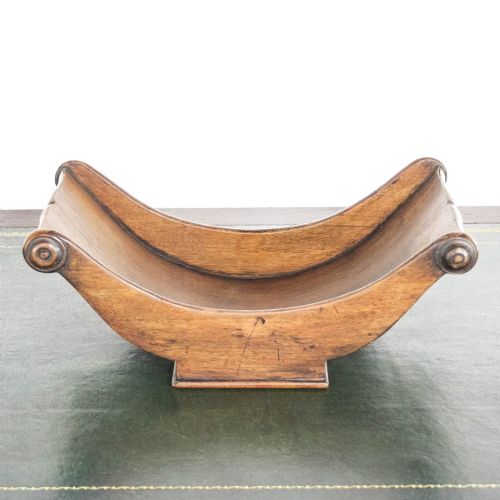


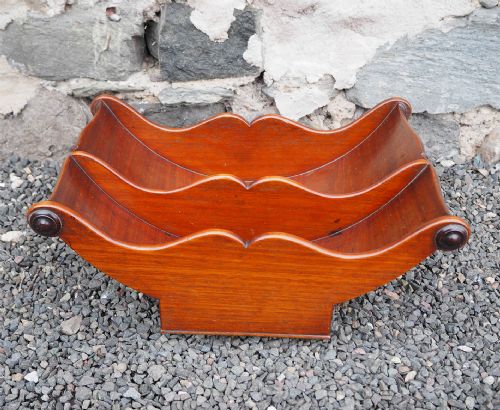


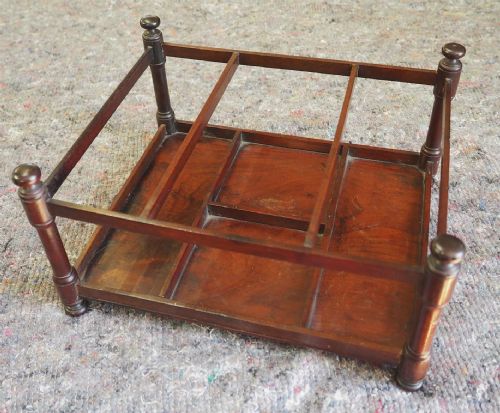


Mahogany Tray Coaster
These mahogany tray coaster pieces are classic dining accessories built to protect tables and serve guests with traditional British style.
Mahogany Tray Coaster
A mahogany tray coaster serves as a practical dining accessory designed to hold wine bottles, decanters, and cheeses securely during meals. These items appear across Georgian, Victorian, and later periods, showing the enduring utility of timber tableware in British homes.
Materials and construction
Cabinet makers utilised solid timber, primarily mahogany, often enhanced with brass mounts, felt linings, or contrasting boxwood and satinwood inlay. These materials provided both the structural durability needed for heavy decanters and the refined appearance expected in formal dining settings.
Construction techniques include careful turning, curved carving, and fitted metal accents designed to protect surfaces and hold heavy glass or ceramic vessels securely during movement around the table.
Mahogany Tray Coaster Retail Price Guide 2026
Typical asking prices for mahogany tray coaster among the pieces listed under this phrase on Sellingantiques today, from the lower quarter to the upper quarter. They describe what is for sale here now, not the wider market.
Listings span the Georgian period, nineteenth century, and twentieth-century eras, incorporating mahogany, brass, silver plate, felt, boxwood, satinwood, and bone.
Assessing quality and craftsmanship
Quality in these dining accessories rests on the crispness of the carving, the richness of the timber grain, and the integration of decorative elements like stringing or inlaid details. Finer examples show thoughtful proportions and precise turning that elevate a functional item into a work of cabinetmaking skill.
The presence of period metalwork, such as original brass handles or fitted silver plate elements, distinguishes superior pieces from simpler utilitarian items.
James Mein of Kelso
The Mahogany Tray Coaster Glossary
- Cheese coaster
- A low trolley or tray, sometimes called a truckle or stilton stand, designed to hold a wedge of cheese on the dining table. They frequently feature wheels or crescent shapes to facilitate movement.
- Wine coaster
- A small circular stand used to hold a bottle or decanter, protecting the dining table from moisture and rings. They often incorporate felt or baize bases.
- Lazy susan
- A revolving tray placed on a table to assist in moving food or tableware easily between guests. The listings include carved rotating examples.
- Inlay
- A decorative technique where contrasting materials like boxwood or satinwood are inserted into recesses within the mahogany surface to create patterns.
Mahogany Tray Coaster: Frequently Asked Questions
What is a mahogany tray coaster used for?
These items were traditionally used during formal dining to hold wine bottles, decanters, or cheeses and pass them safely around the table. Their raised rims and fitted bases protected polished wooden furniture from spills and condensation.
Today, they function well as decorative serving accessories or practical tabletop organizers in period and modern interiors alike.
How do I date an antique mahogany piece?
Dating relies on examining the timber species, construction methods, and stylistic cues such as Georgian inlay or Victorian carving styles. Comparing the turning work and hardware against known historical periods helps narrow down the origin.
Makers' marks or attributions, when present, also provide firm chronological anchors for specific pieces.
Are these pieces suitable for daily use?
Most of these items are robustly built from solid timber and were originally designed for active household dining. Gentle handling and appropriate care for antique wood surfaces ensure they remain functional.
Avoid excessive moisture and direct heat to preserve the original polish and timber integrity.
What styles of coasters are available?
The selection includes circular wine holders, crescent cheese truckles, and larger revolving trays from the Georgian and nineteenth-century periods. Variations feature brass hardware, inlaid decoration, and carved wooden details.
Each form reflects the specific entertaining customs of its respective era.