

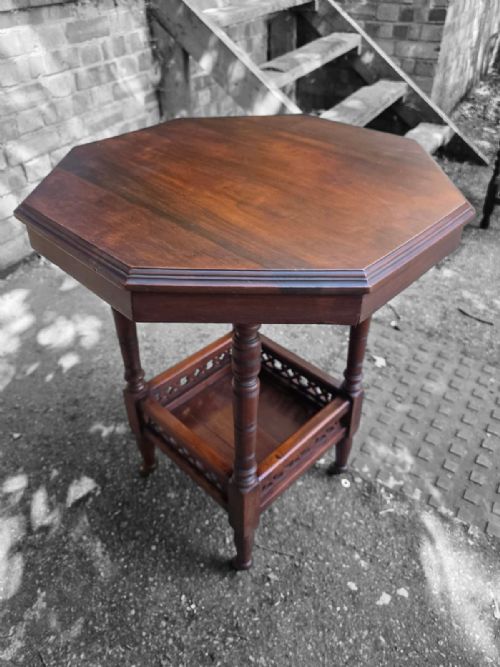
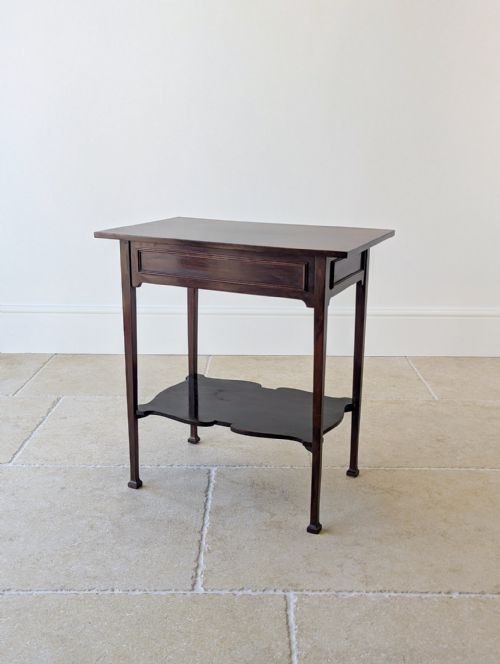
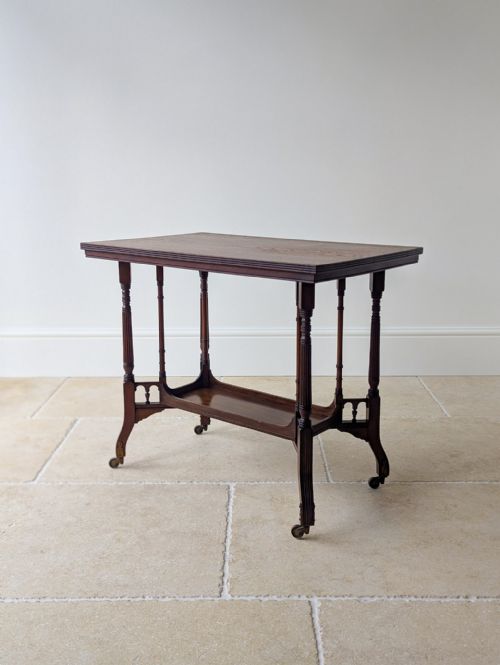
Mahogany Tiered Occasional Table
Mahogany tiered occasional table designs bring multi-level surface utility to sitting rooms through compact timber framing.
Mahogany Tiered Occasional Table
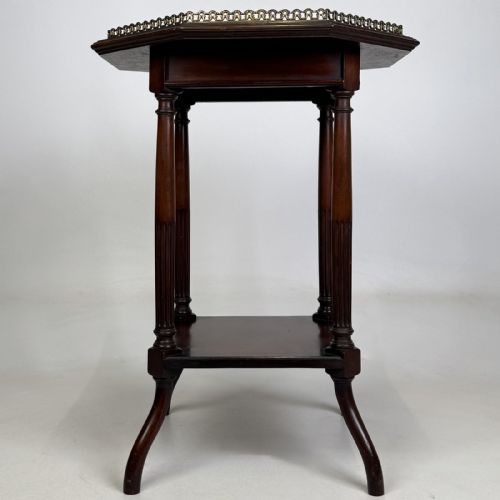
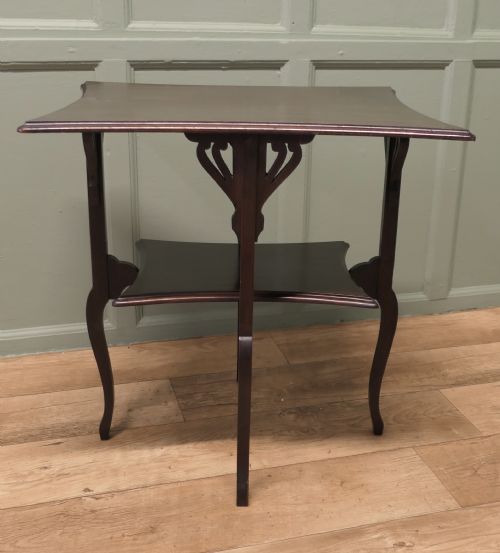
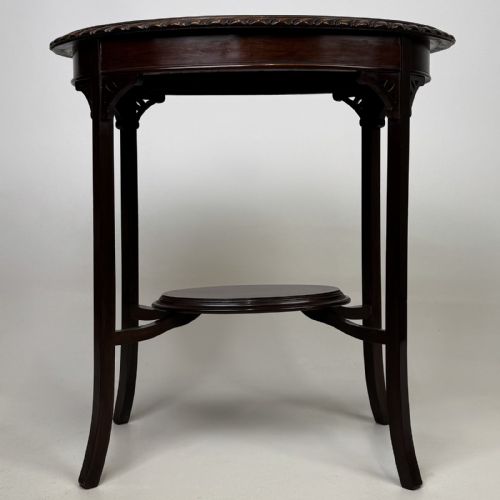
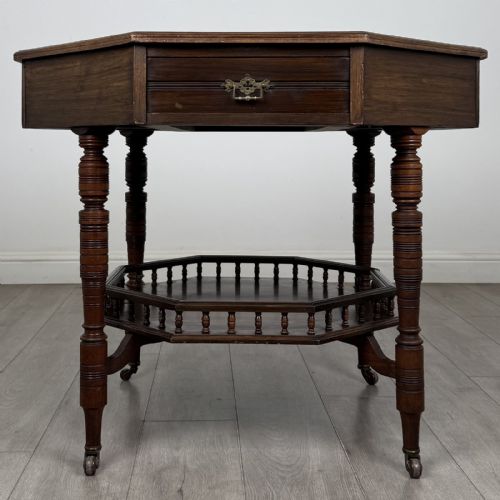
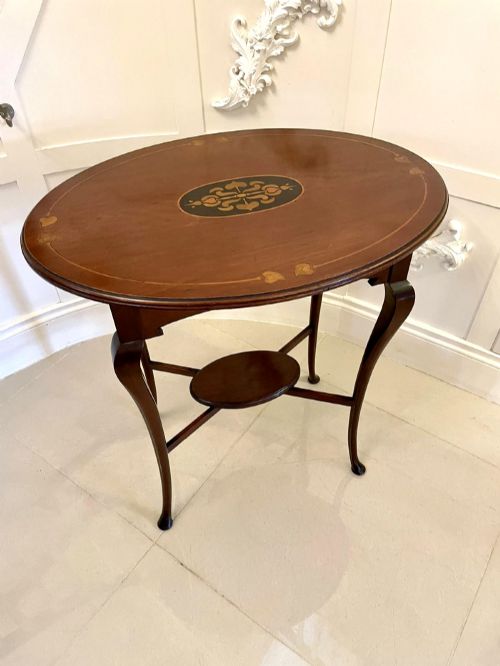
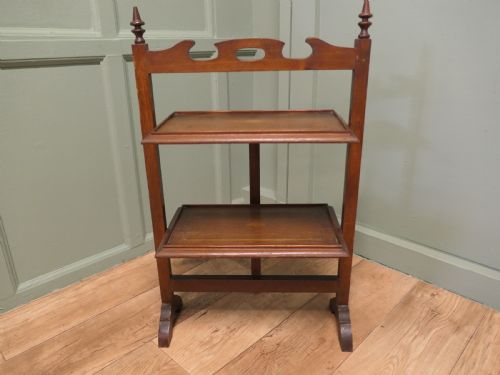
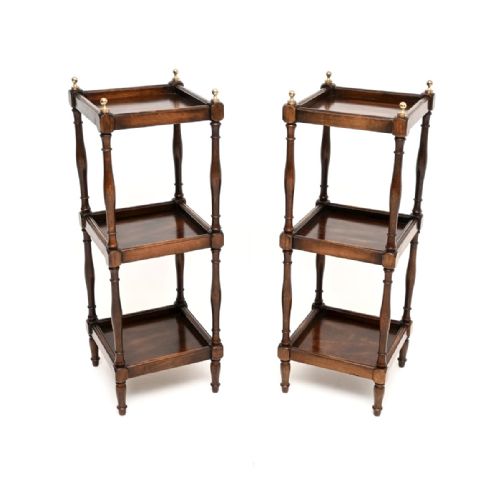
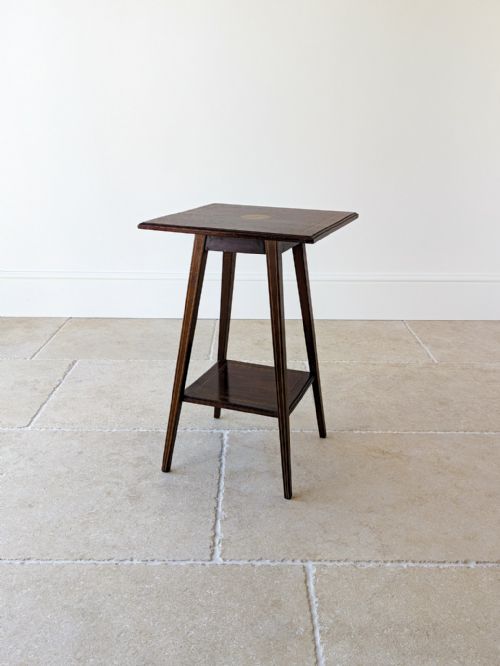
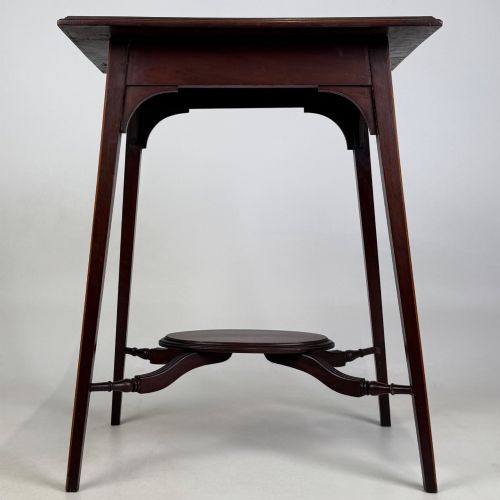
A mahogany tiered occasional table provides multiple surfaces arranged vertically, appearing most frequently in Edwardian and Victorian forms across these listings. These pieces function as compact side stands, tea tables, or lamp supports within a room, utilising tiered shelves to increase display capacity without expanding floor footprints.
The selections span simple two-tier drop-leaf formats to elaborate étagères and revolving bookcases, drawing on Edwardian, Victorian, and Regency styling. Makers utilised varied geometric shapes including round, oval, octagonal, and heart-shaped tops to suit different interior spaces.
Materials and construction methods
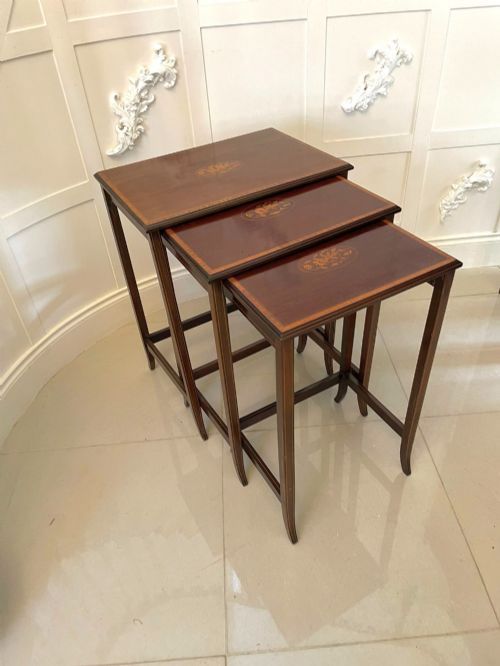
Makers built these tables primarily from solid and veneered mahogany, frequently incorporating contrasting timbers such as satinwood and boxwood for decorative inlay work. Structural joins relied on traditional cabinet-making methods to support multiple stacked platforms securely.
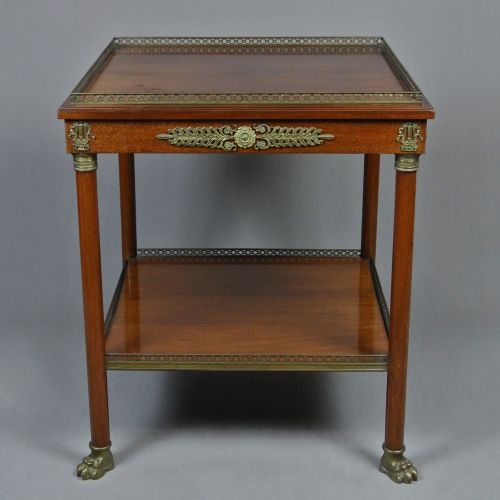
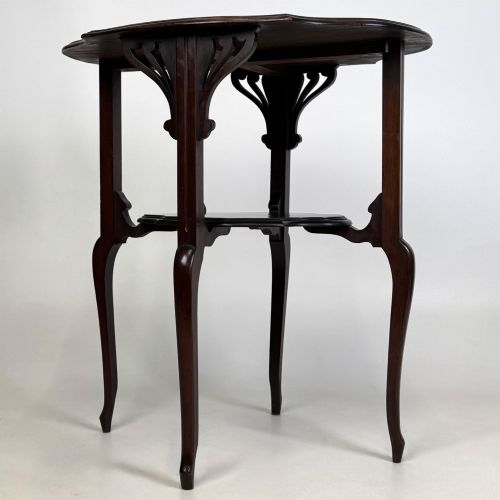
Higher-tier examples integrate cast brass or bronze ormolu mounts to edge galleries and reinforce leg supports. Surface ornamentation includes marquetry details, painted decoration, and fretwork panels executed within Arts and Crafts or Aesthetic Movement traditions.
Some tables feature heart-shaped tiers, proving that Victorian cabinet-makers occasionally indulged in genuine romance.
Distinctions in quality
Quality rests upon the crispness of timber selection, particularly where plum pudding mahogany or fine satinwood stringing meets the primary grain. Superior execution shows in the precise fit of ormolu mounts and the stability of multi-tier upright supports.
Makers' marks from established cabinet firms distinguish workshop pieces from anonymous vernacular production. The subtlety of inlay work and the retention of original surface polishes separate standard examples from finer commissions.
Gregory & Co·W. Turner Lord & Co·Maple & Co·François Linke
The Mahogany Tiered Occasional Table Glossary
- Étagère
- A piece of furniture consisting of a set of open shelves for displaying small objects. These tiered stands often serve as moveable tea or lamp tables.
- Ormolu
- Gilded bronze applications used for mounts, feet, and decorative trims. This cast metalwork adorns French and English luxury tables.
- Marquetry
- Decorative veneer work forming pictures or geometric patterns using various coloured woods. Artisans apply these designs across tabletop surfaces.
- Dumb waiter
- A tiered freestanding stand used for serving food or holding books without needing a servant. These utilitarian pieces evolved into refined display furniture.
- Boxwood inlay
- Narrow strips of pale boxwood embedded into darker mahogany to create contrasting borders. This technique defines classical stringing details.
Mahogany Tiered Occasional Table: Frequently Asked Questions
What is a tiered occasional table used for?
These tables provide supplementary surfaces for lamps, books, and tea service within living spaces. The vertical arrangement allows multiple items to sit within a compact footprint.
They function equally well beside armchairs or positioned centrally as decorative display stands for ceramics and small objects.
How do I identify an Edwardian tiered table?
Edwardian examples typically exhibit lighter timber framing, delicate boxwood inlay, and slender tapered legs. They often draw inspiration from earlier Georgian or Sheraton design vocabularies.
Construction from this period emphasises refined elegance and multifunctional utility for domestic sitting rooms.
What is an étagère?
An étagère is an open-shelved piece designed for tiered display, frequently mounted with brass or ormolu galleries. These stands hold decorative items across ascending horizontal platforms.
In mahogany, they range from simple English tea stands to elaborate French salon tables.
Are these tables solid mahogany?
Cabinet-makers utilised both solid timber and fine mahogany veneers laid over secondary framing woods. Veneered surfaces allowed craftsmen to display striking grain figures like plum pudding mahogany.
Internal carcase timbers and secondary supports often consist of softer or structural hardwoods.