




Mahogany Tambour Front
Mahogany tambour front pieces combine sliding slatted wooden shutters with rich timber grain, offering clever concealment for documents and bedside storage.
Mahogany Tambour Front
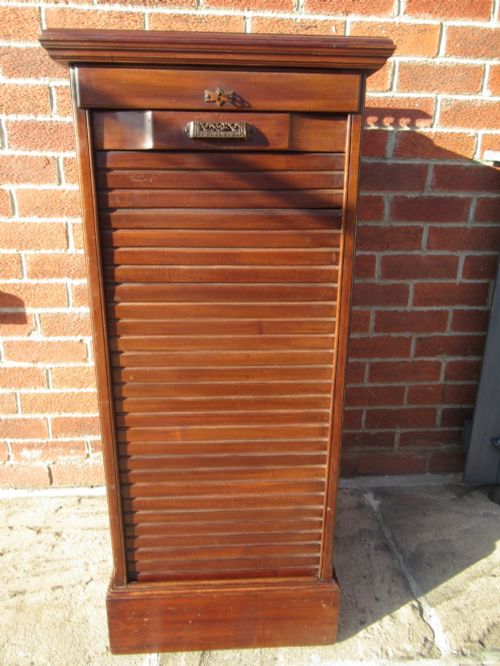
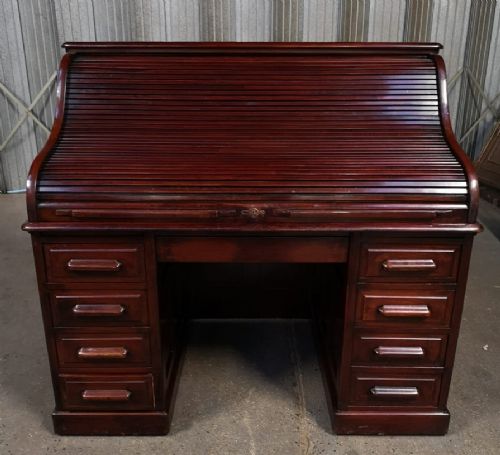
When you search for mahogany tambour front, you encounter items designed for writing and storage that hide their contents behind flexible slatted shutters. The selection spans Georgian, Victorian, and Edwardian eras, encompassing desks, filing cabinets, and bedside tables.
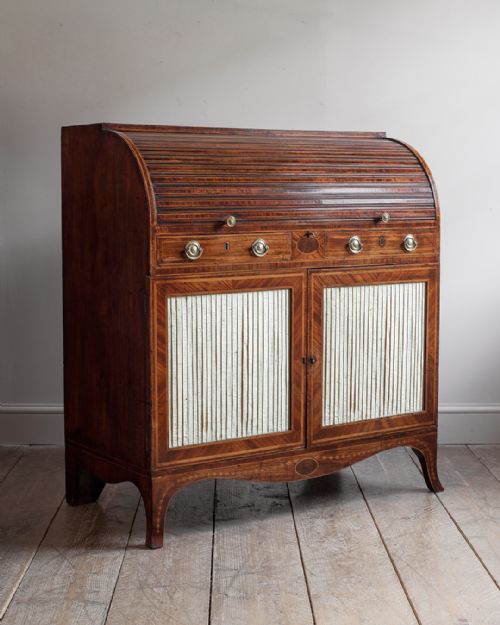
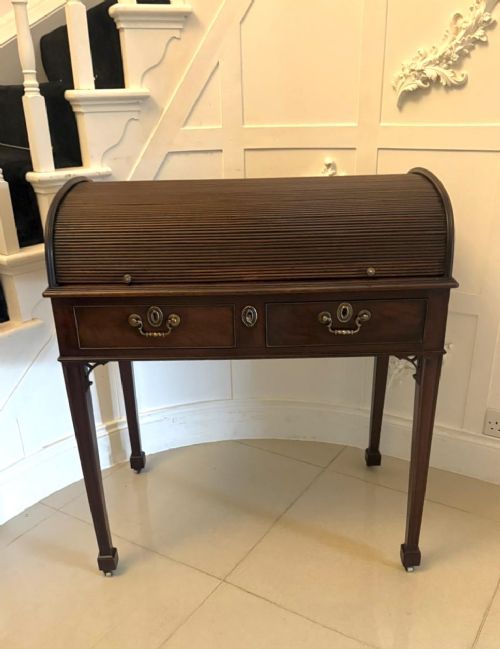
Desks and cylinder bureaux dominate the offerings, often featuring pull-out writing slides and satinwood stringing. Alongside these sit bedside commodes and nightstands, showing how cabinetmakers applied the mechanism to domestic furniture of varying scales.
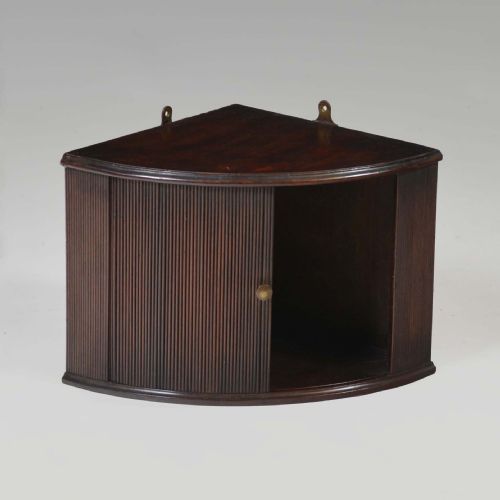
Origins stretch from English workshops in the eighteenth and nineteenth centuries to continental examples bearing marble tops. Pieces range from large pedestal roll-top desks down to compact bedside cupboards and hanging corner cabinets.
Materials and construction
Cabinetmakers constructed these pieces primarily from solid mahogany and mahogany veneers, frequently pairing the dark timber with contrasting boxwood and satinwood inlay. Brass fittings appear on handles, feet, and key escutcheons, whilst internal compartments sometimes incorporate leather surfaces for writing.
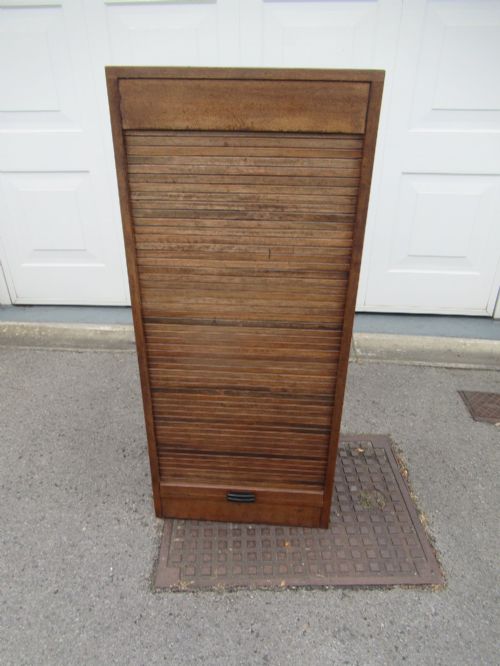
The defining tambour mechanism relies on narrow wooden strips glued to a canvas or linen backing, allowing the shutter to slide smoothly along grooved tracks within the carcase. This flexible curtain requires precise carpentry so the slats align perfectly when closed.
Mahogany Tambour Front Retail Price Guide 2026
Typical asking prices for mahogany tambour front among the pieces listed under this phrase on Sellingantiques today, from the lower quarter to the upper quarter. They describe what is for sale here now, not the wider market.
Listings span the eighteenth, nineteenth, and early twentieth centuries, featuring mahogany, satinwood, brass, and marble across desks and bedside commodes.
Judging quality and execution
Quality rests upon the smooth operation of the slatted shutter and the tightness of its fit within the side channels. Superior examples glide without binding, while inferior pieces suffer from warped slats or worn fabric backing that causes the curtain to jam.
Selection of figured timber and crispness of inlay separate utilitarian pieces from finer output. Cabinetmakers who matched veneer grains across the tambour panels and drawer fronts achieved a visual harmony that marks out better workshops.
The Mahogany Tambour Front Glossary
- Tambour
- A flexible shutter made of narrow wooden slats glued to canvas, allowing it to slide around a curved track. This mechanism conceals the interior compartments of desks and cabinets without needing swinging doors.
- Cylinder desk
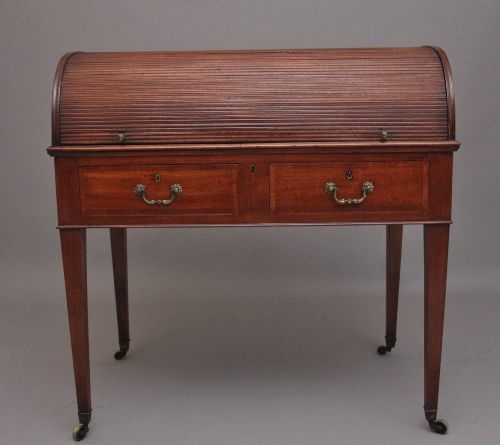
- A writing desk featuring a quarter-cylinder rolling shutter that encloses the writing surface and pigeonholes. When pushed back, the cylinder reveals the desk interior.
- Commode
- A decorative low cabinet or chest of drawers, often used for bedside storage in eighteenth-century bedrooms. Many examples in this search incorporate tambour doors above enclosed cupboards.
- Stringing
- Narrow inlaid lines of contrasting wood, such as boxwood or satinwood, set flush into the mahogany surface. This technique outlines drawers and panels to create a refined border.
- Tray top
- A tabletop finished with a raised moulded rim or gallery to prevent items from rolling off. This detail appears frequently on Georgian bedside tables.
Mahogany Tambour Front: Frequently Asked Questions
What is a tambour desk?
A tambour desk incorporates flexible wooden slats on a canvas backing that slide along a track to cover the writing surface or pigeonholes. This clever mechanism allows the user to secure the desk interior without swinging doors taking up workspace.
Craftsmen built these primarily in mahogany during the Georgian and Victorian periods, often combining them with pull-out writing slides and internal satinwood drawers.
How do I maintain a tambour shutter?
Keep the sliding tracks clean of dust and debris to ensure the slatted shutter moves freely along its curved path. Avoid excessive moisture, which can cause the wooden slats or the canvas backing to warp and jam.
Applying a suitable wax polish to the mahogany keeps the timber nourished without building up a sticky residue in the delicate grooves where the shutter travels.
Are these pieces Georgian or Victorian?
The selection includes both Georgian and Victorian pieces, alongside Edwardian and early twentieth-century examples. Eighteenth-century and Regency pieces often display finer inlay work and more restrained proportions.
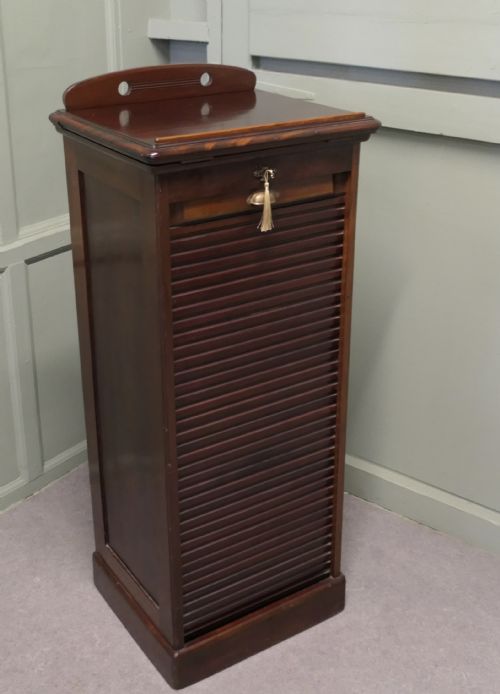
Victorian and later iterations tend toward heavier pedestal formats, such as large roll-top office desks and filing cabinets designed for commercial or domestic study use.
Where were bedside tambour cabinets used?
Bedside tambour cabinets served as nightstands or commodes in principal bedrooms, providing discreet enclosed storage for chamber pots or personal items. The sliding shutter kept bedside paraphernalia hidden from view while remaining instantly accessible.
Cabinetmakers topped these small cupboards with mahogany, serpentine fronts, or occasionally marble slabs, matching the refined standards of period bedroom furniture.