
Mahogany Table with Leaves
When you search for a mahogany table with leaves, you look for versatile furniture designed to adapt its surface area through removable sections or folding flaps.
Mahogany Table with Leaves
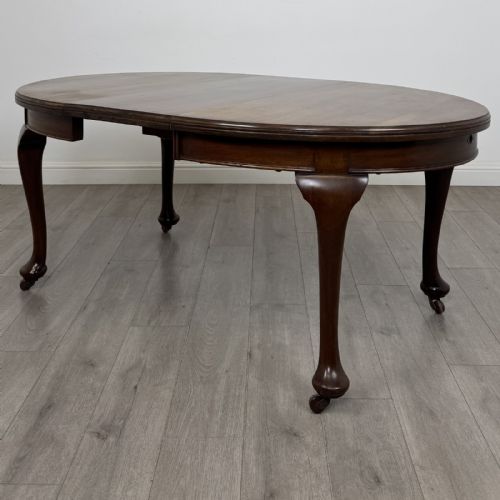
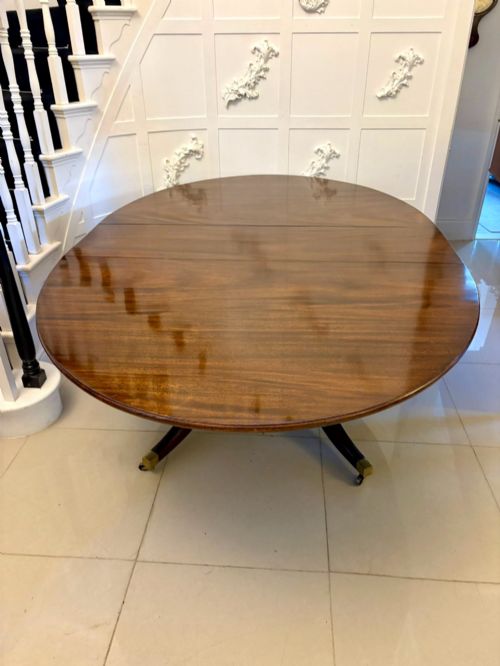
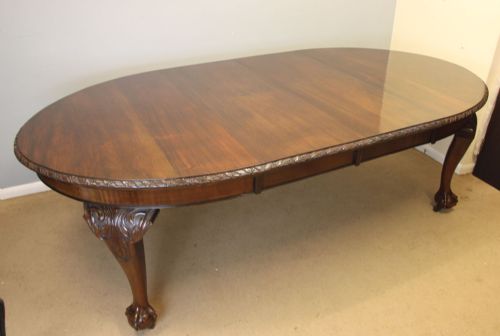
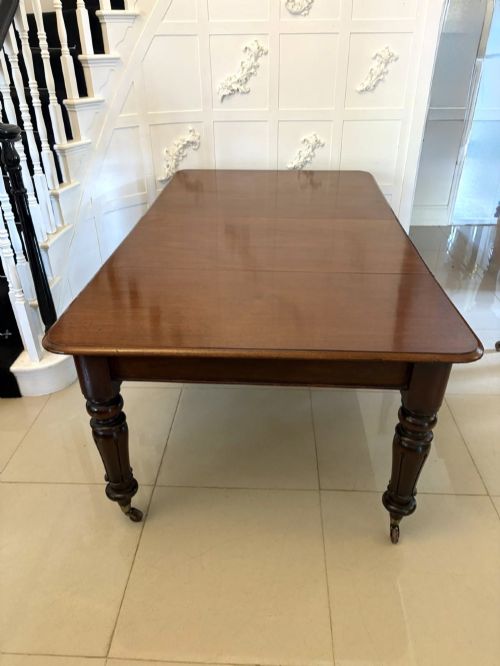
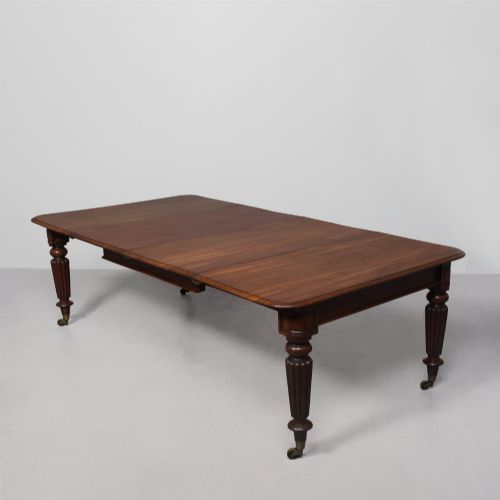
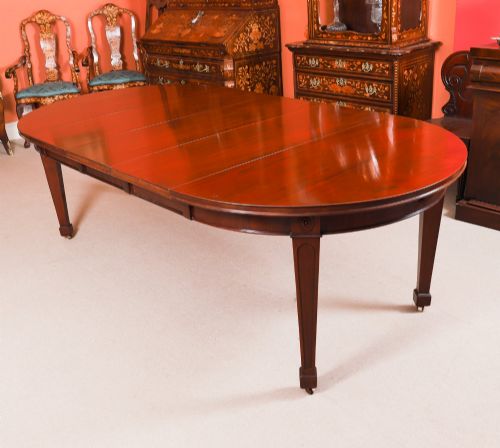
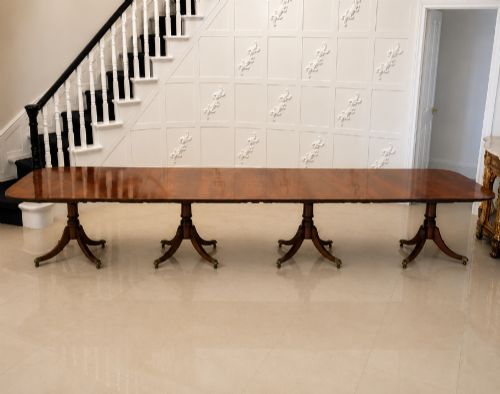
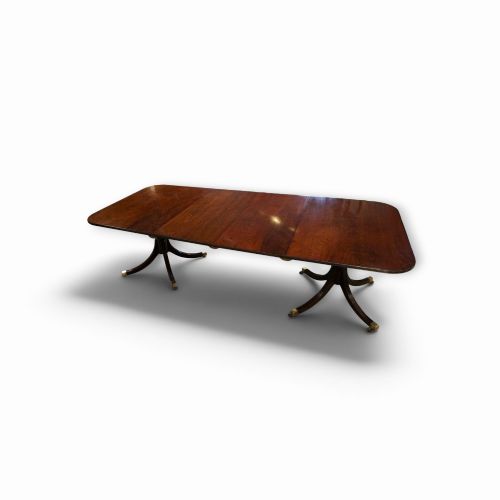
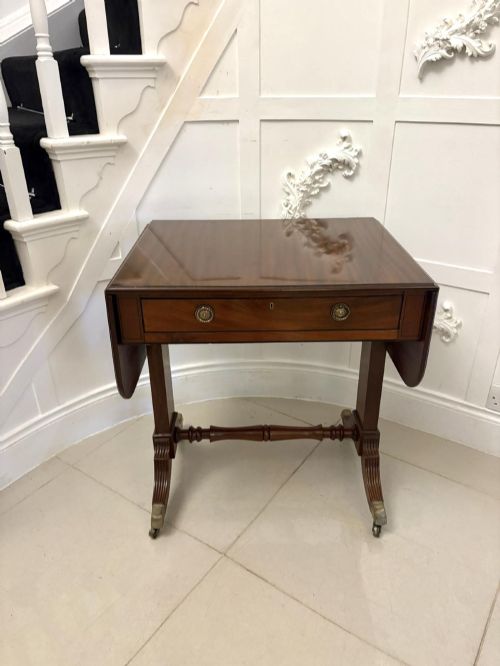
A mahogany table with leaves spans several periods and forms, most notably grand dining tables from the Georgian, Regency, and Victorian eras alongside smaller occasional, pembroke, and sofa tables. The larger examples utilise multiple pedestals or wind-out mechanisms to support several removable leaves for large gatherings.
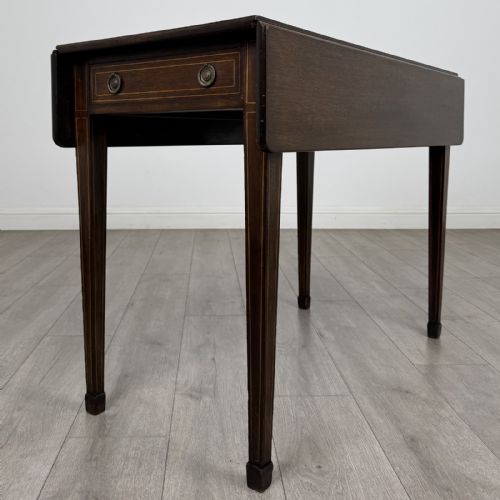
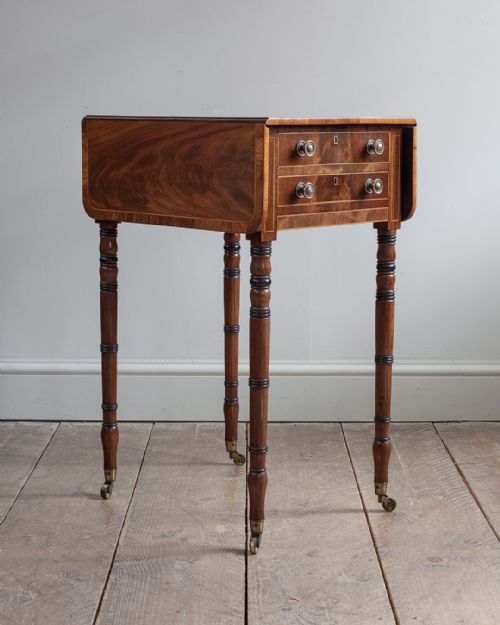
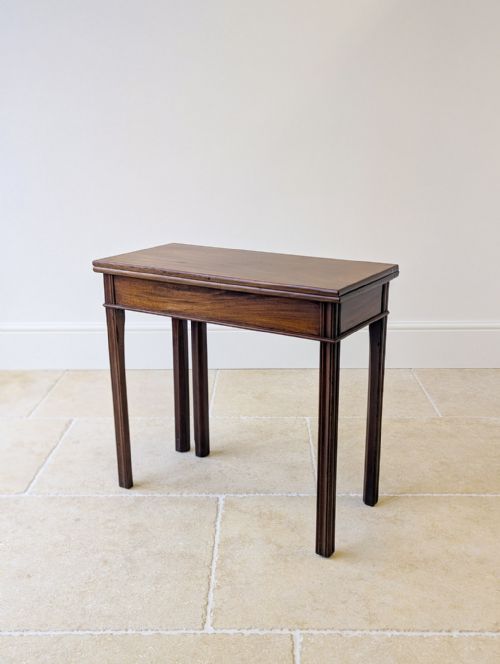
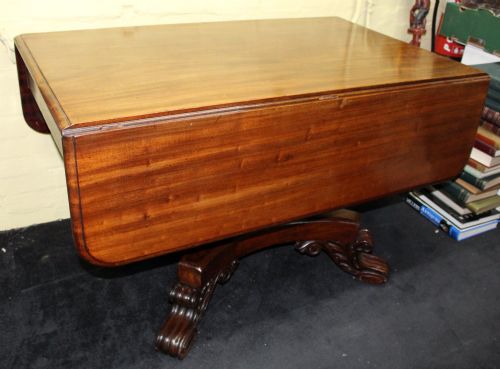
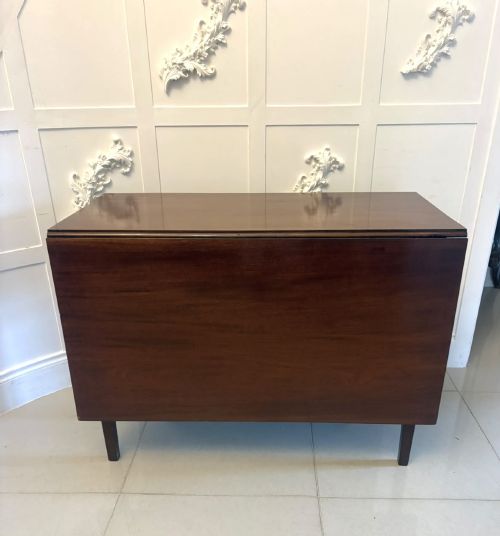
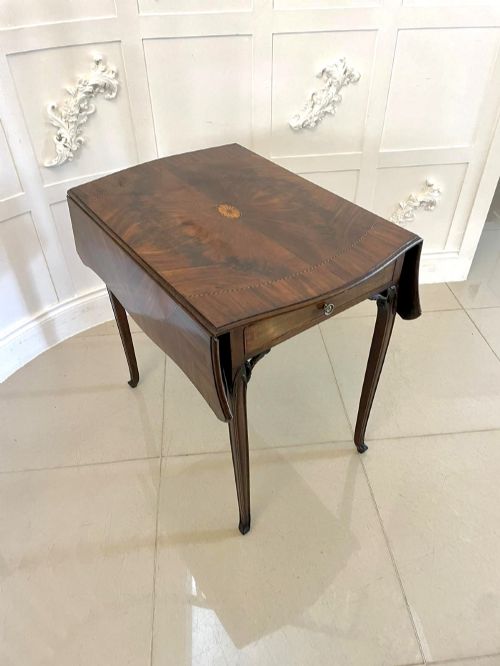
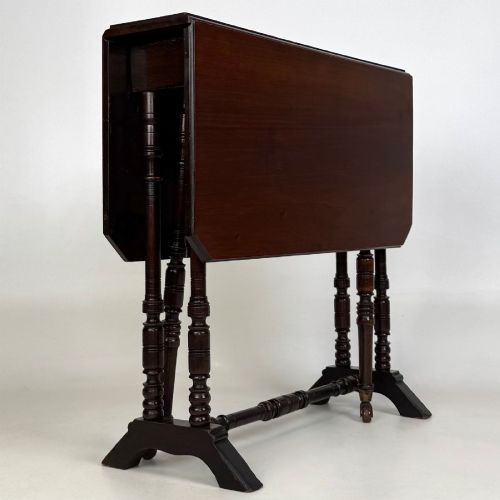
Smaller formats appear as drop-leaf breakfast tables, card tables, and writing tables featuring hinged flaps supported by swing legs or gates. These pieces serve daily household functions while retaining the capacity to expand when needed.
Origins range across English workshops, provincial cabinet makers, and Irish makers, with timber selections spanning standard mahogany, figured grains, and dense Cuban mahogany.
How They Were Made
Cabinet makers utilised solid mahogany and Cuban mahogany veneers laid over secondary timbers, often accentuating surfaces with satinwood inlay, rosewood banding, or partridge wood cross-banding. Structural elements frequently incorporate brass castors, brass sockets, and bone or brass mechanisms.
Extending dining tables relied on heavy pillar and claw pedestals, wind-out wooden screw mechanisms, or sliding rails to bear the weight of multiple extra leaves. Drop-leaf and pembroke formats employed rule joints and hinged wooden brackets to support folding flaps securely.
Secondary materials recorded across these tables include brass castors, satinwood inlay, leather inserts, and bone escutcheons.
What Varies In Quality
The distinction between ordinary and exceptional pieces rests in the choice of timber, particularly the depth of figure in the mahogany and the precision of the grain matching across added leaves. Uniform colour and original matching surfaces indicate superior cabinet work.
Construction details such as hand-cut dovetails in drawers, the weight and original state of brass hardware, and the stability of the extending framework separate standard production from fine workshop creation.
The Mahogany Table with Leaves Glossary
- Mahogany
- A durable tropical hardwood prized for its reddish-brown colour and stable grain. It served as the primary medium for high-end British cabinet making across the eighteenth and nineteenth centuries.
- Cuban Mahogany
- A dense and heavily figured variety of mahogany harvested in the Caribbean. It displays deep colouration and rich chatoyancy under polish.
- Pembroke Table
- A small rectangular table featuring two hinged drop leaves on opposite sides and usually a single fitted drawer. It originated in the eighteenth century as a versatile breakfast or occasional surface.
- Wind-out Mechanism
- An internal mechanical screw system operated by a handle that separates the table ends to accommodate removable leaves. This innovation defined large Victorian dining tables.
- Rule Joint
- A moulded hinge joint connecting a table top to a drop leaf. It conceals the gap between the fixed surface and the folding flap.
Mahogany Table with Leaves: Frequently Asked Questions
How do extending dining tables work?
Extending dining tables utilise wooden runners or mechanical wind-out screws operated by a detachable handle. Turning the handle separates the main sections apart to insert removable leaves into the centre.
Additional support legs or central pedestals deploy underneath to bear the extra weight and maintain stability across the expanded surface.
How do you identify original leaves?
Original leaves share the exact timber grain patterns, thickness, fading, and underside construction marks of the main table sections. They often retain matching numbering systems stamped into the wood by the original cabinet maker.
Subtle discrepancies in colour, polish texture, or edge moulding usually suggest later replacements made to extend the table further.
How should mahogany furniture be maintained?
Mahogany surfaces require dusting with a soft, dry cloth and protection from direct sunlight to prevent timber fading. Natural beeswax polish applied sparingly preserves the polish without building up hazy residues.
Keeping room humidity stable prevents the timber and glue joints from drying out or splitting, particularly on extending tables with moving parts.