




Mahogany Table Top Mirror
Mahogany table top mirror examples combine rich timber frames with tilting glass plates, offering a practical centrepiece for dressing surfaces.
Mahogany Table Top Mirror
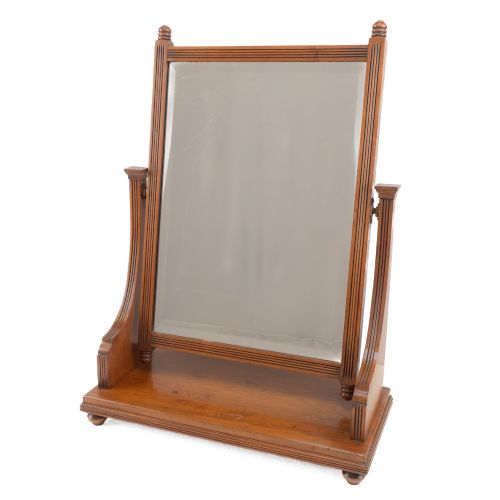
A mahogany table top mirror provides a tilting glass surface supported by a wooden frame designed to sit upon chests, dressing tables, or sideboards. When you search for a mahogany table top mirror, you encounter pieces originating primarily from the Georgian, Victorian, and Edwardian eras.
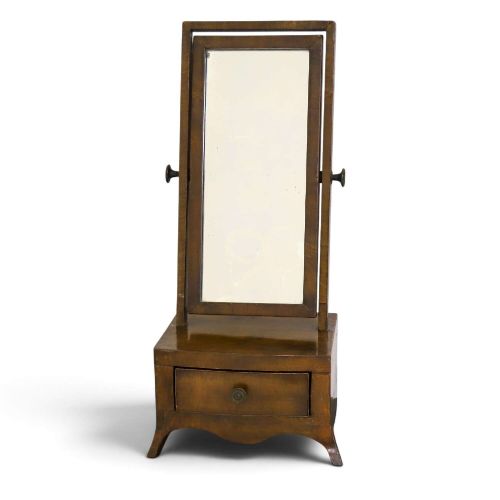
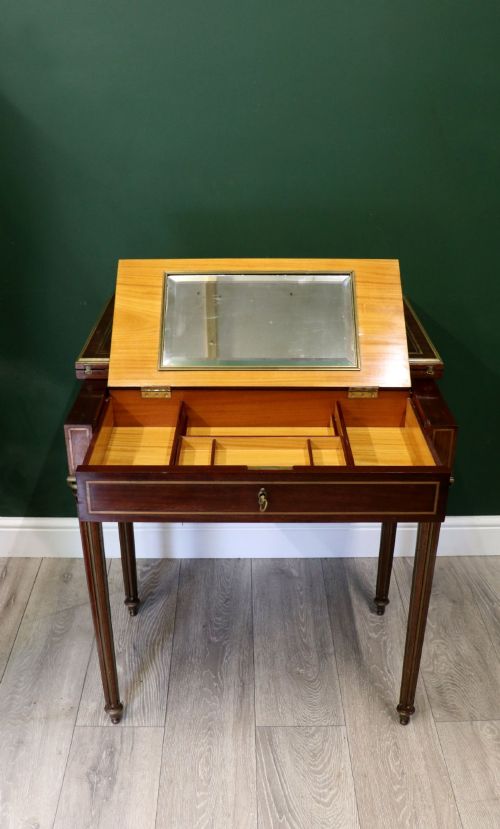
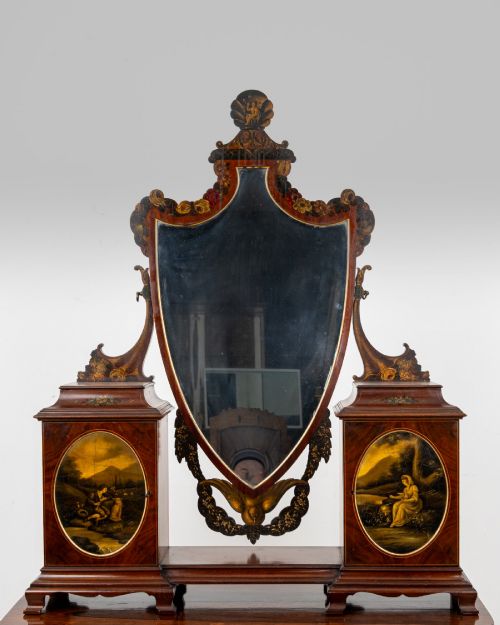
The surviving selection includes compact swing mirrors with fitted base drawers, tall cheval variations, and combination pieces incorporating small jewellery cabinets. Most examples follow traditional British and continental cabinet-making designs in solid or veneered timber.
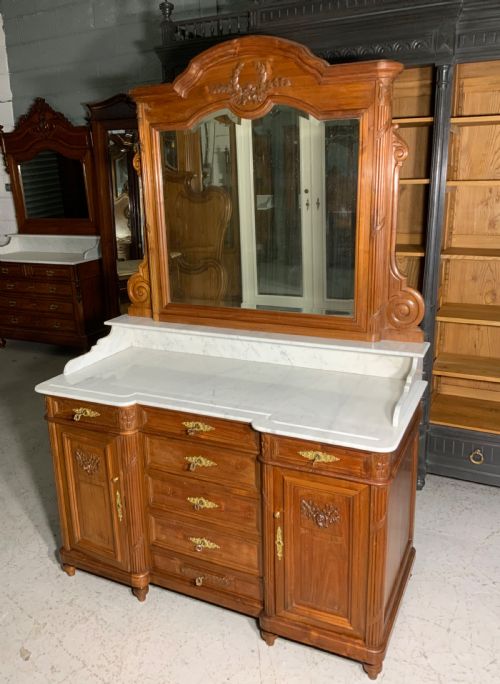
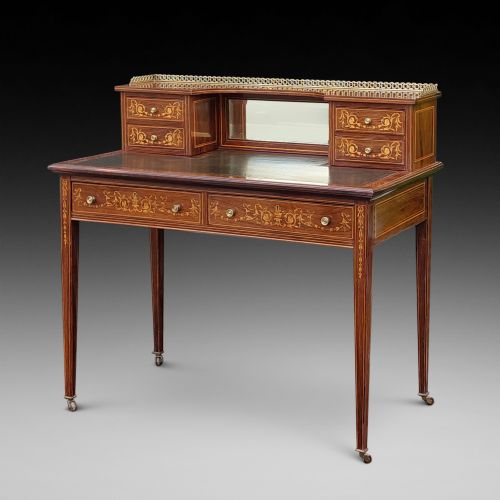
Makers integrated various decorative elements over time, ranging from plain George III frames to inlaid Edwardian borders and brass-mounted Victorian structures. These items served a daily domestic function in bedrooms and dressing rooms before becoming decorative antiques.
How they were made
Cabinet-makers constructed the primary frames using dense mahogany, often selecting finely figured timber veneers for the visible surfaces and drawer fronts. Secondary woods such as pine or oak formed the internal drawer linings and structural supports.
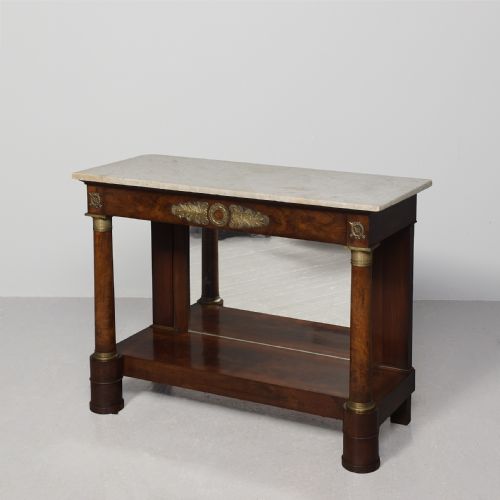
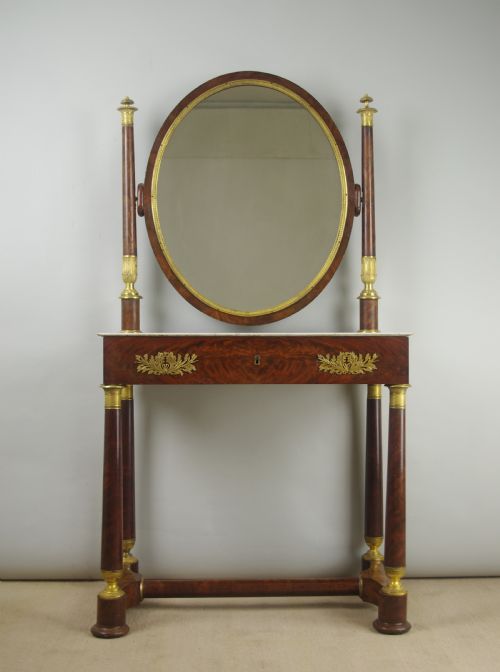
Brass fittings, including pivot screws, arm supports, and small knobs, allowed the glass plate to tilt securely within the upright arms. Ormolu mounts and delicate marquetry inlay appeared on specific continental and late-period examples to enhance the visual depth of the timber.
Mahogany Table Top Mirror Retail Price Guide 2026
Typical asking prices for mahogany table top mirror among the pieces listed under this phrase on Sellingantiques today, from the lower quarter to the upper quarter. They describe what is for sale here now, not the wider market.
Many a Victorian morning began with a crooked reflection because someone forgot to tighten the brass pivot screws on their swing mirror.
What varies in quality
The refinement of the timber grain and the precision of the joinery set the standard for these mirrors. Pieces displaying tightly figured mahogany veneer across the base box and upright supports demonstrate superior craftsmanship compared to plain or heavily faded surfaces.
Originality of components dictates the standing of an individual mirror. Retaining the original mercury or early silvered glass plate, together with matching brass hardware and unreplaced drawer linings, elevates the integrity of the piece.
Maple & Co·Jas Shoolbred
The Mahogany Table Top Mirror Glossary
- Mahogany
- A durable tropical hardwood known for its deep reddish-brown colour and ability to take a high polish. It served as the primary material for high-end British and continental cabinet-making throughout the eighteenth and nineteenth centuries.
- Swing mirror
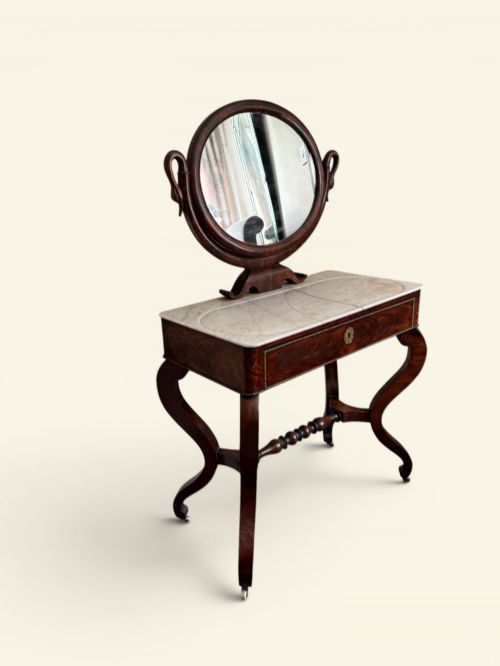
- A glass plate hung on central pivot screws between two upright arms so that the angle of reflection can be adjusted. This mechanism is standard on table top dressing mirrors.
- Ormolu
- Gilt bronze ornamentation applied to furniture and mirrors. It gained popularity during revival periods and French Empire designs.
- Marquetry
- Decorative patterns formed by fitting contrasting pieces of veneer into a prepared wooden surface. Edwardian and Georgian pieces frequently utilised this technique on drawer fronts and frame borders.
- Cheval mirror
- A full-length or large-scale mirror supported on a free-standing frame with four legs. Table top variants adapt this principle for smaller surfaces.
Mahogany Table Top Mirror: Frequently Asked Questions
How are these mirrors cleaned safely?
Dust the mahogany frame gently with a dry, soft cloth to prevent grit from scratching the polished surface. Avoid commercial wet sprays that can damage old polish or seep into wooden joints.
Clean the glass plate using a minimal amount of glass cleaner applied directly to a cloth rather than the mirror itself. This prevents moisture from seeping behind the silvered backing where it causes dark spots.
What periods do these mirrors span?
The recorded examples span from the eighteenth-century Georgian era through the Victorian period and into the early twentieth century. Georgian pieces often feature simpler serpentine or oval box bases, while Victorian and Edwardian items introduce heavier carving or decorative inlay.
Stylistic shifts reflect changing domestic tastes, moving from plain timber frames to revival styles influenced by French designs. Examining the construction of the base drawers helps confirm the specific era.
Where should a table top mirror sit?
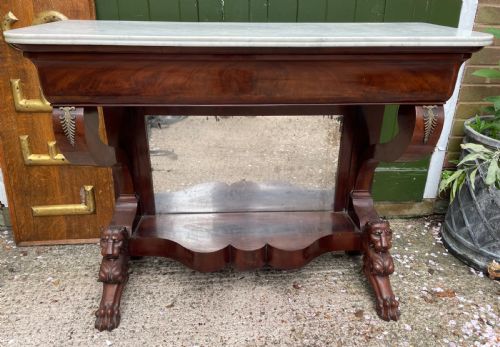
These mirrors function best when placed on stable, flat surfaces such as dressing chests, sideboards, or wide console tables. Ensure the weight distributes evenly across the supporting piece of furniture to prevent tipping.
Positioning the mirror near natural light sources maximises its reflective utility in a room. The proportion between the mirror base and the underlying furniture remains the primary aesthetic consideration.
Why do some mirrors have drawers?
Base drawers provided secure storage for small personal items, jewellery, and cosmetics in traditional dressing rooms. The added weight of the drawer section also anchored the frame, keeping the tilting glass stable during daily use.
Single or multiple small drawers often indicate the specific style period, such as George III designs with serpentine fronts. These compartments demonstrate the multi-functional nature of antique dressing accessories.