


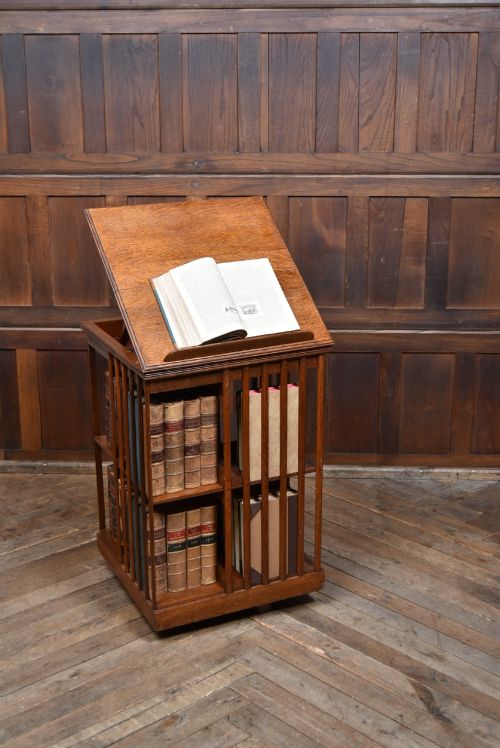
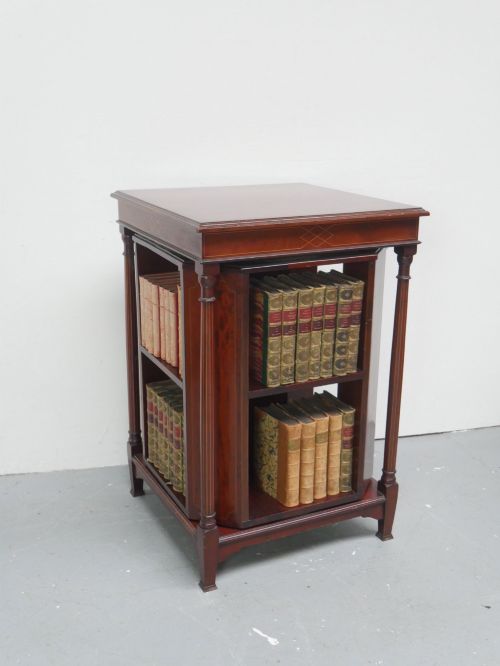
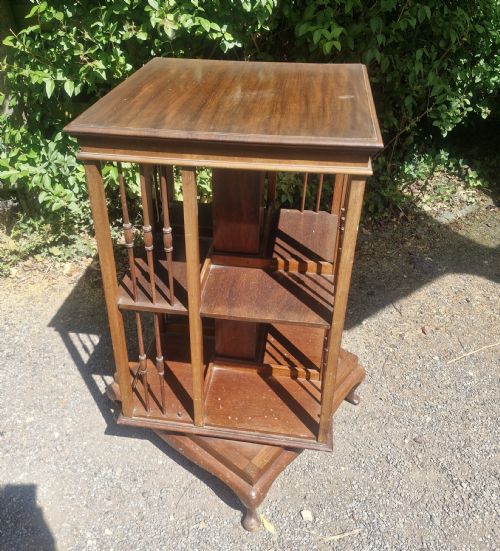
Mahogany Table Bookcase
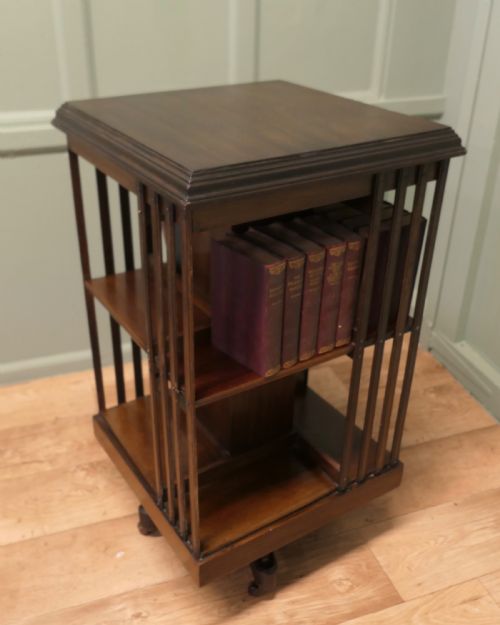
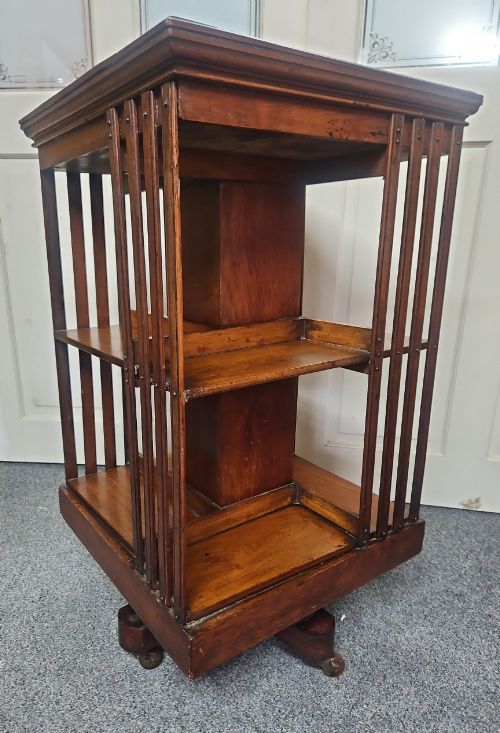
Mahogany table bookcase designs bring together compact revolving stands and tabletop displays, offering a practical way to keep volumes close at hand.
Mahogany Table Bookcase
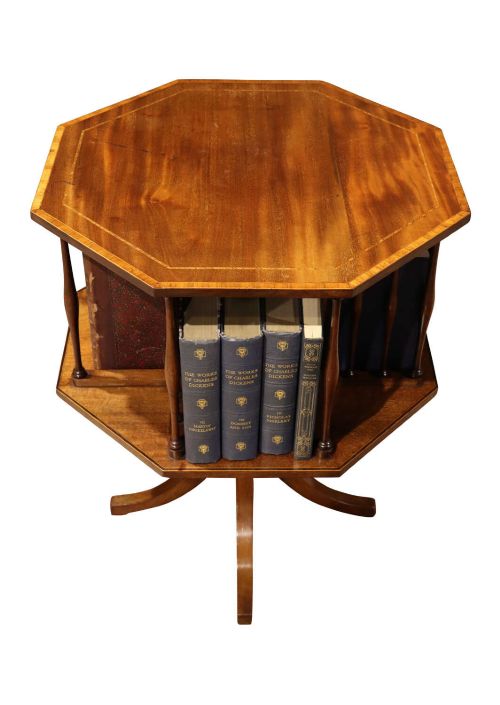
When you search for a mahogany table bookcase, you encounter a variety of compact furniture forms designed to hold books and display small objects within reach. These pieces span the Georgian, Regency, Victorian, and Edwardian periods, stretching from the late eighteenth century into the early twentieth century.
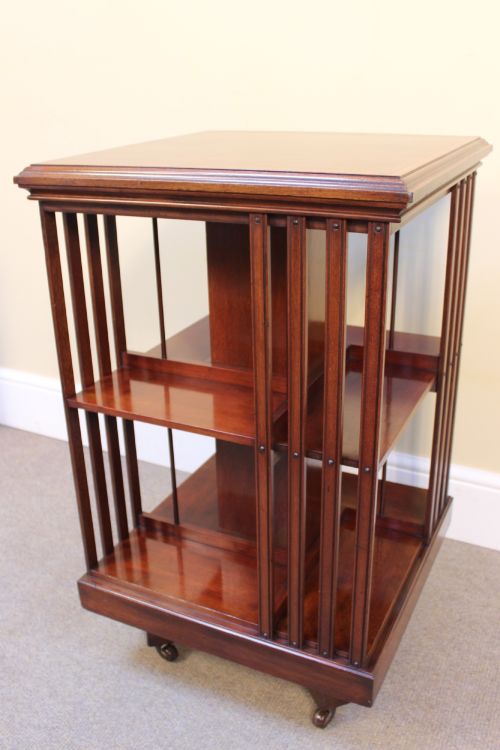
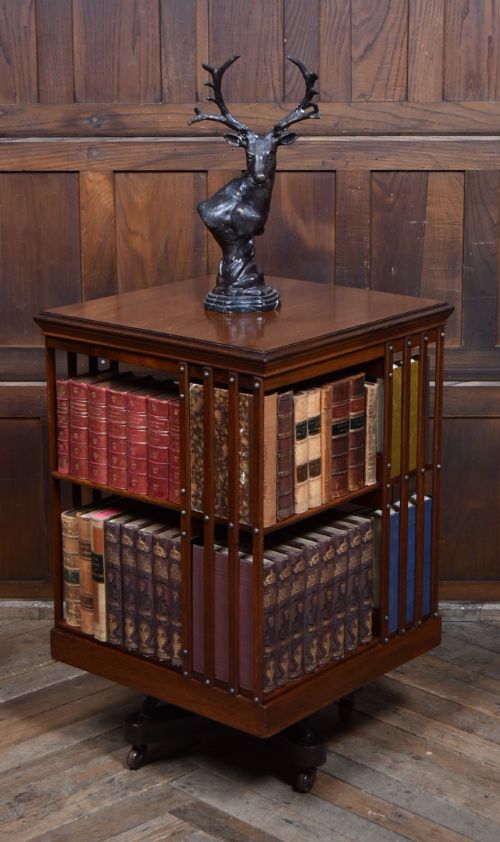
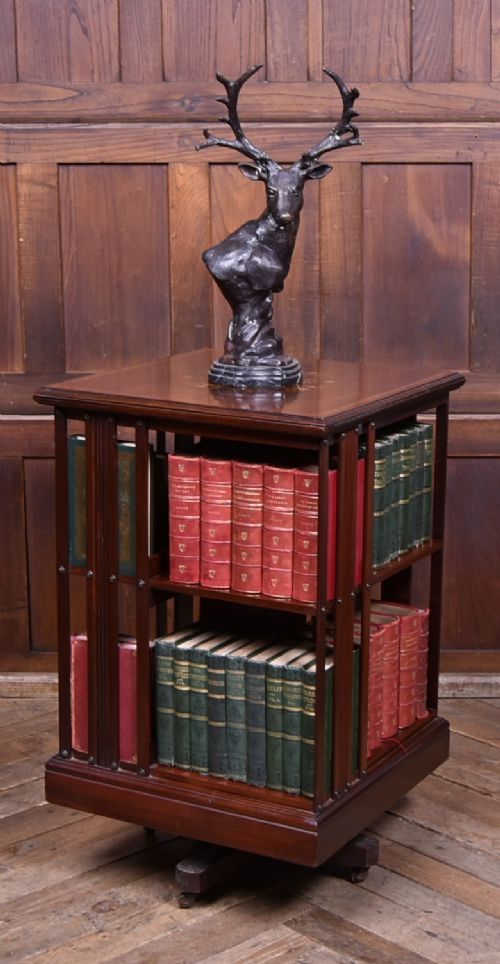
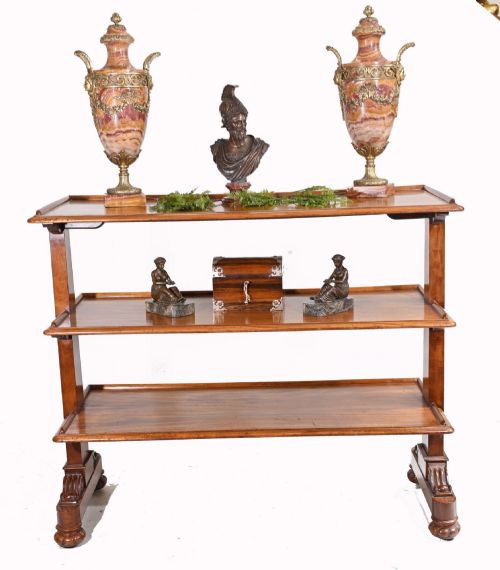
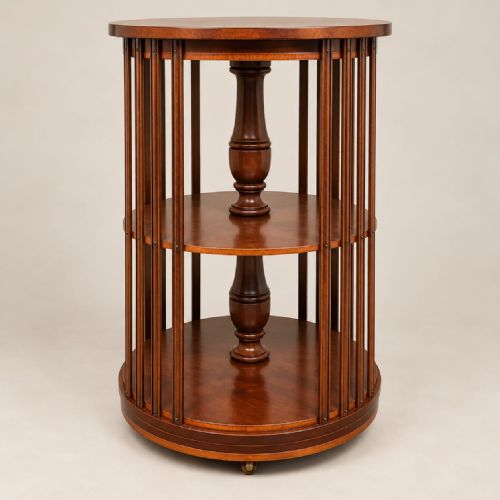
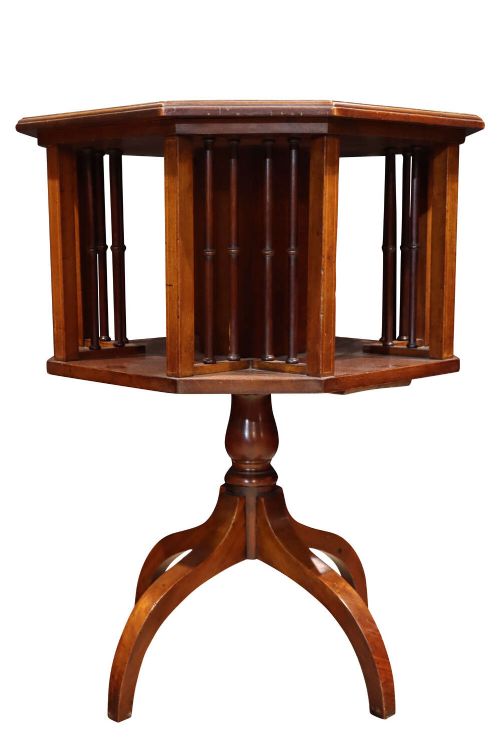
The selections on this page are dominated by revolving book bookcases and table top book stands, alongside occasional display cabinets and writing desks. Examples include circular and octagonal revolving tiers, alongside stationary tabletop troughs and tiered étagères designed for everyday study.
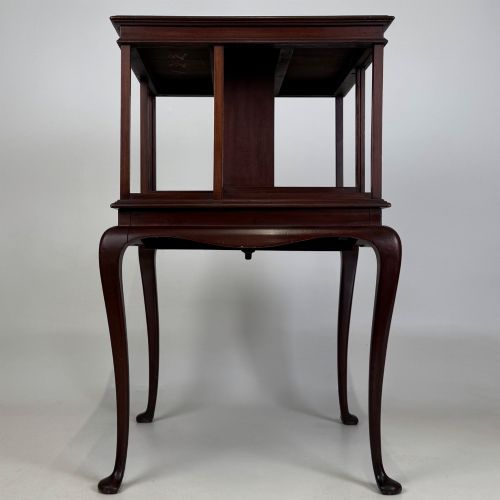
Origins range from formal Georgian library pieces to lighter Edwardian parlor stands featuring satinwood inlay and cabriole legs. Each form adapts the dense timber to domestic spaces, combining storage with the mobility of a table or the presence of a cabinet.
Materials and construction methods
Makers utilised solid mahogany and flame mahogany veneers over secondary timbers, often incorporating satinwood for stringing and decorative inlay. The structural frame frequently relied on turned central columns, slatted partitions, and cross-banded tabletops.
Hardware played a functional role in movable forms, with internal iron or metal pivot mechanisms enabling smooth rotation on revolving book stands. Brass casters, cast-iron fittings, and occasional marble tops added weight and stability to smaller table designs.
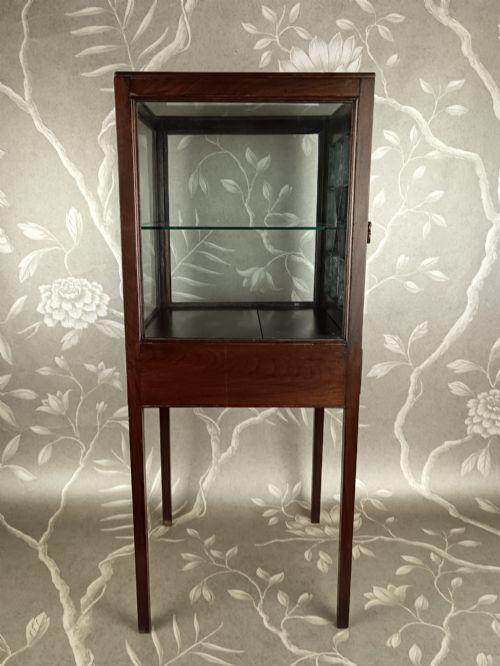
Joinery techniques matched the period, from hand-dovetailed drawers in writing desks to pegged joints in tiered stands. Glass doors appeared on vitrines and display cabinets, secured with brass hinges and simple locks.
Mahogany Table Bookcase Retail Price Guide 2026
Typical asking prices for mahogany table bookcase among the pieces listed under this phrase on Sellingantiques today, from the lower quarter to the upper quarter. They describe what is for sale here now, not the wider market.
Listings span from the Georgian period through the Victorian and Edwardian eras, utilising solid mahogany, brass, glass, and satinwood inlay.
Distinctions in construction and design
Quality rests in the selection of the timber, particularly the depth of flame in the mahogany grain and the precision of satinwood stringing. Simpler production relies on plain planks, whereas finer examples display carefully matched veneers across tabletops and revolving tiers.
The mechanical action of revolving pieces separates standard production from superior workshops. A well-engineered pivot mechanism turns silently and evenly without listing to one side, supported by sturdy internal cruciform framing.
Carving and detailing mark the division between utilitarian items and high-end commissions. Crisp hand-carved cabriole legs, inlaid brass work, and refined mouldings demonstrate the hand of skilled cabinet makers.
Gillows and Co·Maple and Co
The Mahogany Table Bookcase Glossary
- Flame mahogany
- A veneer figure produced from the fork of the mahogany tree, creating a distinctive flame-like pattern. Makers selected this timber for prominent surfaces on tabletops and cabinet doors.
- Tambour
- A sliding door constructed from narrow strips of wood glued to a canvas backing. This mechanism allowed access to writing desks and small cabinet compartments without requiring clearance for swinging doors.
- Étagere
- A set of open shelves supported by columns or pillars, used for displaying books and ornaments. Mid-nineteenth-century examples often featured multiple tiers in mahogany.
- Vitrine
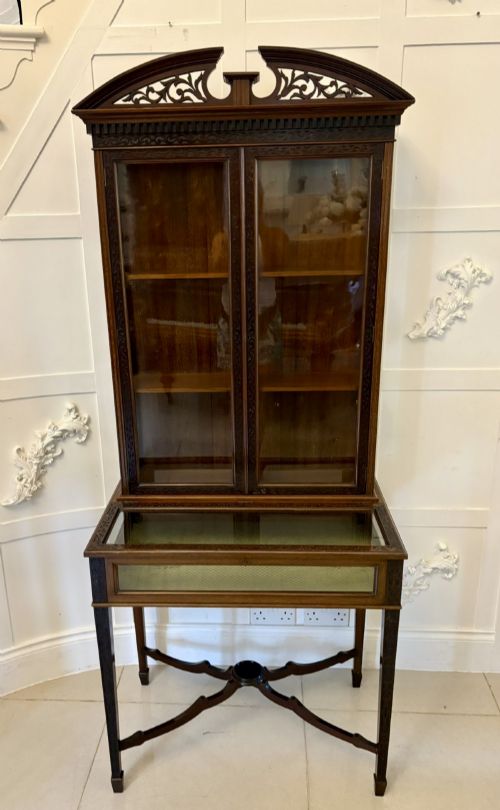
- A glass-paneled display cabinet designed to showcase fine objects and small volumes. These pieces utilised glazed doors and sides to protect contents from dust while maintaining visibility.
- Cabriole leg
- A furniture leg that curves outward and then tapers inward, popular in various revival styles. Edwardian mahogany revolving bookcases frequently employed this form on their lower supports.
Mahogany Table Bookcase: Frequently Asked Questions
How do revolving mahogany bookcases work?
Revolving bookcases sit upon a concealed internal mechanism featuring a central iron spindle and wooden or metal bearing plates. This allows the stacked tiers of shelves to rotate smoothly in either direction, giving access to volumes from a seated position.
Most table-top and floor-standing versions balance the weight across a four-legged or cruciform base. The engineering ensures the loaded tiers turn without wobbling or tipping.
What is the difference between an étagere and a book trough?
An étagere consists of multiple open tiers supported by columns, designed for holding books and decorative objects vertically. A book trough is a simpler open-topped container, often V-shaped, meant for holding a selection of current reading material on a tabletop.
While both utilise mahogany construction, étageres offer distinct display levels whereas troughs provide a single open compartment for quick access.
Where were table bookcases used in the home?
These pieces were placed on library tables, desks, and side tables in studies, drawing rooms, and parlours. Their compact footprint allowed owners to keep reference books and ledgers close at hand without requiring a full-sized wall bookcase.
Tabletop revolving versions were particularly favored for writing desks, holding dictionaries and frequently consulted volumes within arm's reach.
How do I care for antique mahogany furniture?
Antique mahogany benefits from gentle cleaning using a soft, dry cloth to remove dust. Avoid placing the timber in direct sunlight or near heat sources, which can dry out the wood and cause veneers to lift.
Application of traditional beeswax polish helps maintain the finish and nourishes the grain without building up synthetic residues.