



Mahogany Table Accessories
These mahogany table accessories range from Georgian cheese coasters to Edwardian lazy Susans, built for dining rooms where quality counts.
Mahogany Table Accessories
Mahogany table accessories encompass dining pieces spanning the Georgian, Victorian, and Edwardian periods, featuring forms designed for table service. Buyers searching for mahogany table accessories encounter items such as wine coasters, cheese coasters, cruet sets, dumb waiters, and lazy Susans.
The most common forms seen on this page are coasters intended for wine and cheese, alongside serving stands from the 18th Century and 19th Century. These functional objects reflect the dining habits of their respective eras, utilising rich timbers and metals.
Makers shaped these items from solid timber and veneers, frequently pairing the wood with brass, silver plate, or copper. Pieces range from single crescent cheese truckles to multi-tiered dumb waiters and occasional tables.
How they were made
Craftsmen built these accessories using primary timber bodies of mahogany and fruitwood, often selecting dense grain for turning and carving. Metal components in brass, copper, and silver plate provide structural mounts, galleries, and handling hardware.
Details include turned wooden bases, original castors, cut glass inserts, and felt linings designed to protect dining surfaces. Joinery and turning methods reflect the standards of Georgian, Victorian, and Edwardian workshops.
Mahogany Table Accessories Retail Price Guide 2026
Typical asking prices for mahogany table accessories among the pieces listed under this phrase on Sellingantiques today, from the lower quarter to the upper quarter. They describe what is for sale here now, not the wider market.
A solitary clay pipe stand sits amongst the dining gear, proving that post-prandial relaxation occasionally took precedence over cheese.
What varies in quality
The distinction between standard and superior pieces lies in the choice of timber figure, the crispness of turned mouldings, and the integration of metal mounts. Finer examples retain original castors, unblemished silver plate, and undamaged fruitwood or mahogany surfaces.
Proportion and decorative restraint dictate the desirability of items like cheese coasters and wine coasters, where heavier brass detailing or delicate cut glass inserts elevate the finished object.
The Mahogany Table Accessories Glossary
- Cheese coaster
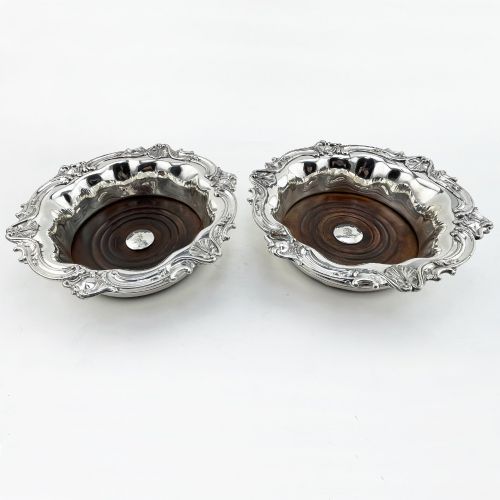
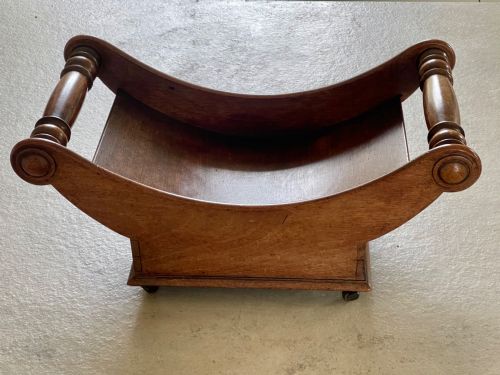
- A shallow vessel designed to hold a wedge of cheese, often fitted with small wheels or castors so it can be rolled along the dining table.
- Wine coaster
- A small circular tray with a raised rim, typically featuring a turned wooden base and a silver plate or brass gallery to hold a bottle.
- Dumb waiter
- A tiered stand with revolving or fixed shelves, used during meals to hold tableware and dishes without requiring servant attendance.
- Cruet set
- A matched collection of bottles or containers for condiments, held within a fitted frame of metal or wood.
- Lazy Susan
- A revolving tray placed on a table to assist in moving food and accessories between diners.
Mahogany Table Accessories: Frequently Asked Questions
What is a cheese coaster?
A cheese coaster is a small, curved or straight-sided tray designed to hold a wedge of cheese at the dining table.
Many examples feature original castors so diners could roll the piece smoothly along the mahogany surface between guests.
How do I date a wine coaster?
Dating relies on examining the timber species, the style of the turned mahogany base, and the metal used for the gallery.
Georgian and Regency pieces typically show different turning profiles and silver plate application compared to later 19th Century or Edwardian items.
Were dumb waiters used for serving?
Dumb waiters provided a multi-tiered surface for holding extra plates, cutlery, and bottles during formal meals.
They allowed diners to help themselves without servants listening to conversation at the table.
What metals appear on these pieces?
Makers frequently combined mahogany with brass, copper, and silver plate for galleries, handles, and mountings.
Old Sheffield plate and solid brass accents are common on pieces from the 18th Century and Georgian eras.