

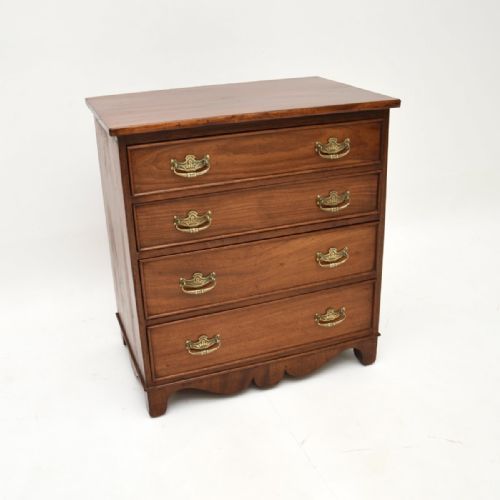
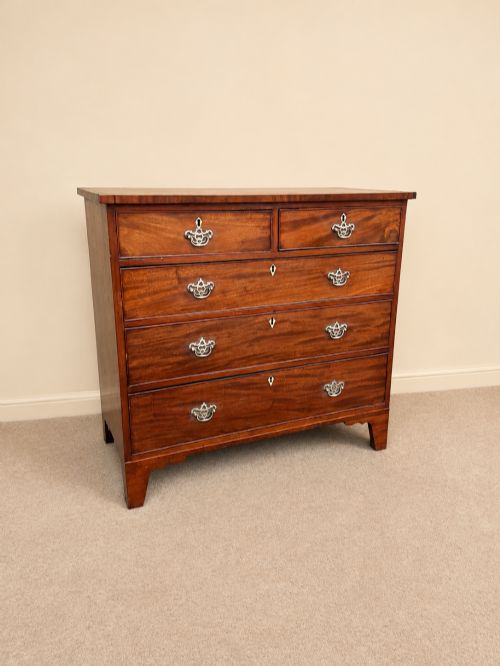
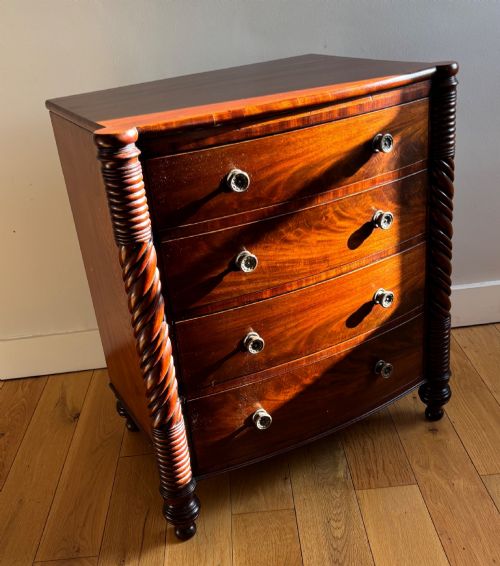
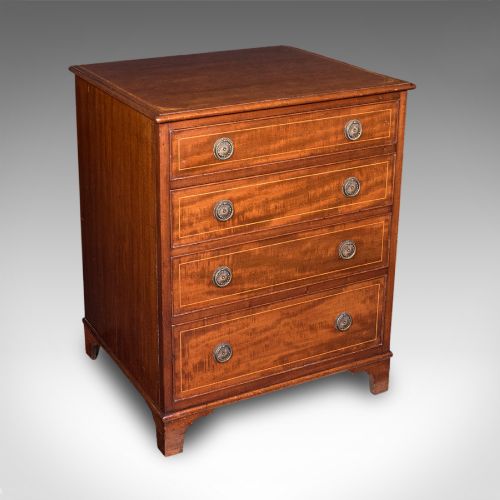
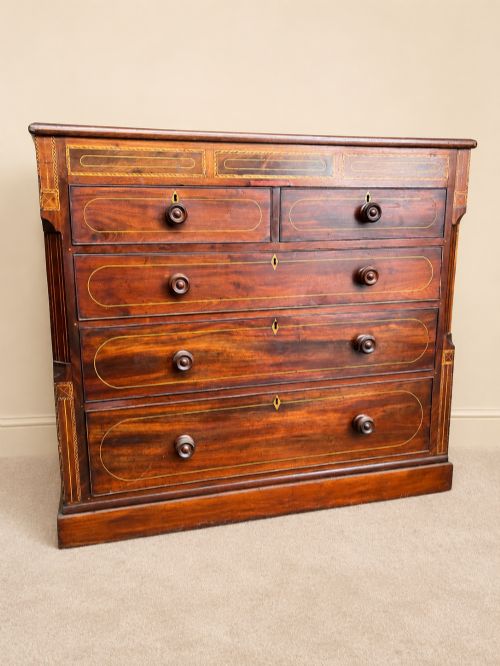
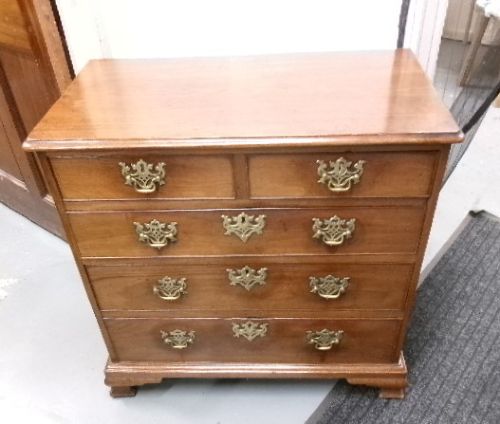
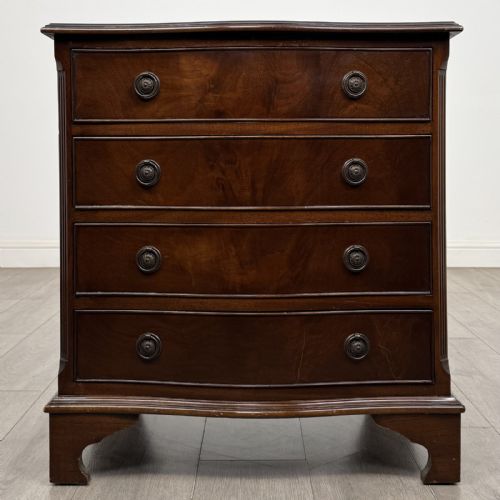
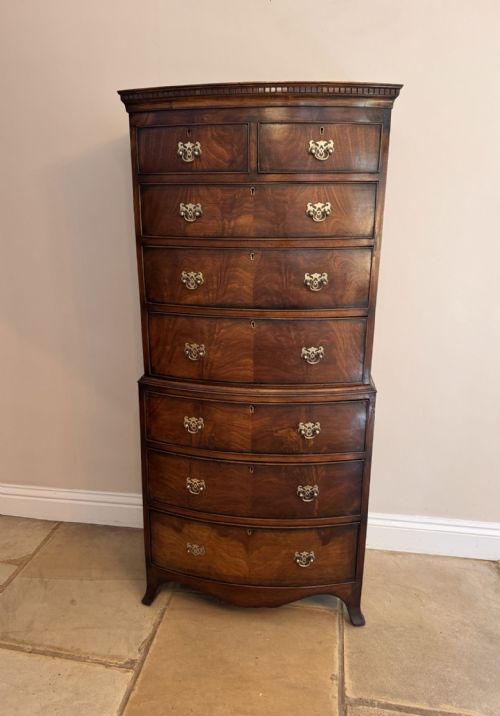
Mahogany Style Tallboy
A mahogany style tallboy provides towering vertical storage whilst anchoring a room with rich timber grain and classic proportions.
Mahogany Style Tallboy
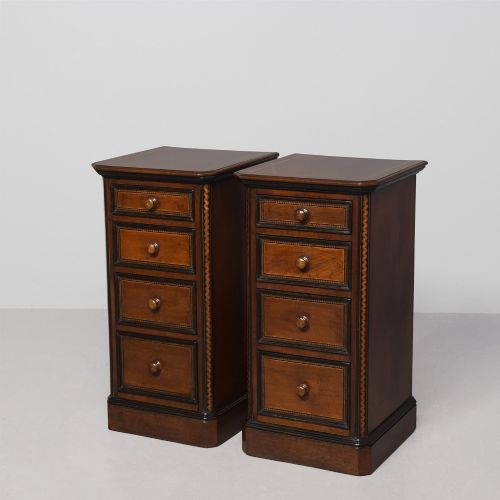
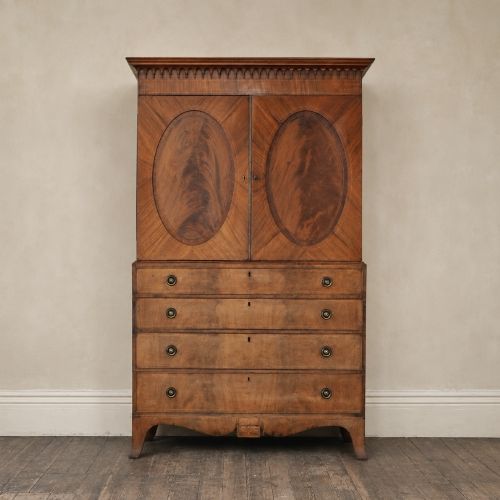
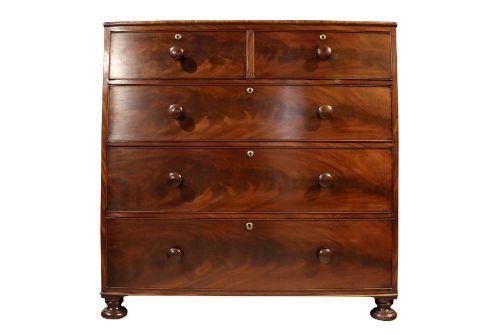
Buyers searching this phrase encounter various tall formats including linen presses, narrow chests, and traditional two-part tallboys. The construction typically pairs deep mahogany primary wood with secondary timbers like oak, often accented by satinwood or boxwood inlay.
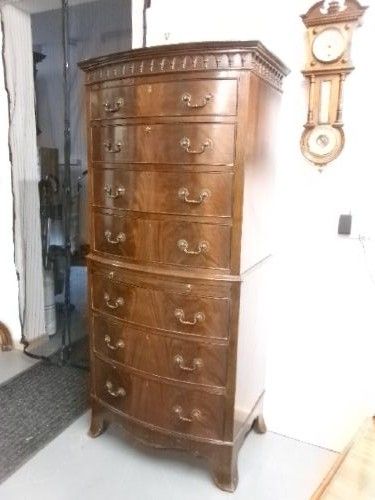
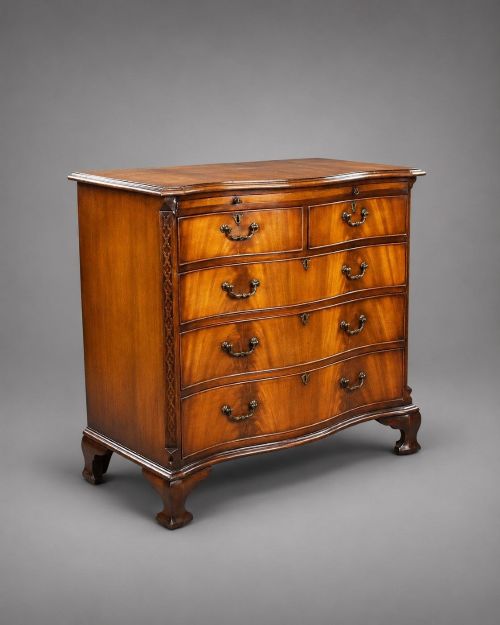
The selection ranges from genuine 18th-century pieces to 20th-century revivals styled after Sheraton, Hepplewhite, or Georgian designs. Many retain original brass hardware, bracket feet, or distinctive serpentine fronts.
How They Were Made
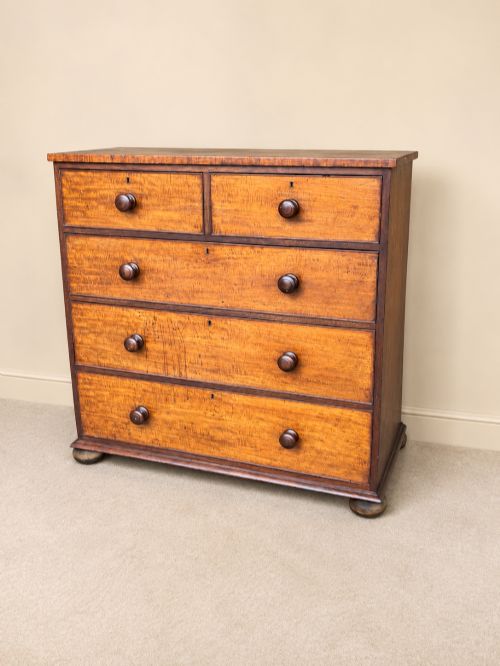
Cabinet makers utilised solid mahogany alongside flame mahogany veneers to create rich, figured exterior surfaces. Carcases often incorporated secondary timbers such as oak for structural stability within drawer linings and internal frames.
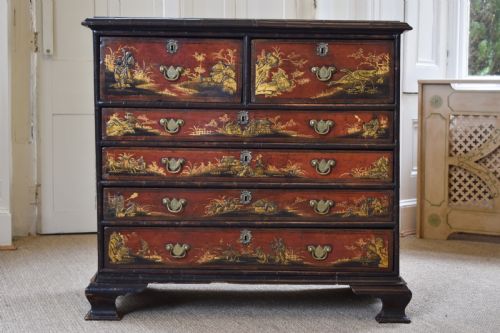
Decorative elements relied on precision handcrafting, including boxwood and satinwood stringing, crossbanding, and delicate brass handles. Drawers were typically assembled with hand-cut dovetail joints to ensure long-term durability.
Revival pieces from the Edwardian period and the 1920s mirrored these traditional techniques, employing period joinery methods to emulate earlier Georgian and Regency aesthetics.
Mahogany Style Tallboy Retail Price Guide 2026
Typical asking prices for mahogany style tallboy among the pieces listed under this phrase on Sellingantiques today, from the lower quarter to the upper quarter. They describe what is for sale here now, not the wider market.
Listings feature mahogany, flame mahogany veneer, burr oak, and satinwood across pieces from the 18th to the 20th century.
What Varies In Quality
The choice of timber creates a distinct separation in quality, moving from plain mahogany boards to heavily figured flame mahogany veneer and intricate marquetry. Grain selection dictates the visual depth and presence of the piece across different periods.
Joinery execution distinguishes standard production from superior cabinet work, particularly in the precision of drawer dovetails and the alignment of cockbeading. The crispness of carved bracket feet or applied mouldings further indicates the skill of the original maker.
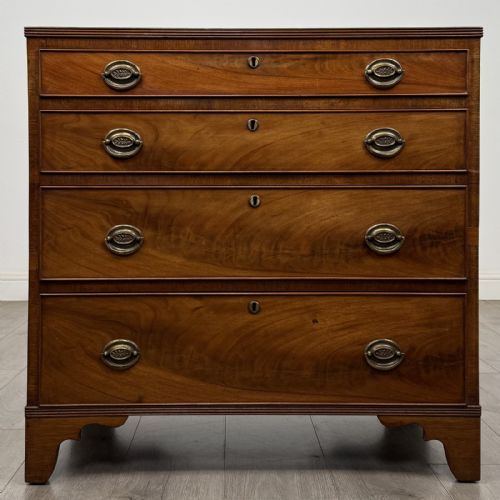
Hardware integrity also plays a role, with original brass drop handles and escutcheons holding greater appeal than later replacements. The overall balance of proportions between the upper and lower sections defines the success of the silhouette.
Whytock & Reid·Druce & Co
The Mahogany Style Tallboy Glossary
- Tallboy
- A tall chest of drawers, often constructed as one chest stacked upon another to provide substantial vertical storage.
- Linen Press
- A tall cabinet featuring upper shelving enclosed by doors, positioned above a base of wider storage drawers.
- Flame Mahogany
- A wood veneer cut from timber fork joints, displaying a distinctive flickering flame pattern across the surface.
- Serpentine
- A front profile characterised by a gentle convex curve flanked by two concave curves.
- Bracket Feet
- Architectural corner feet resembling small brackets, commonly seen on Georgian and revival furniture forms.
Mahogany Style Tallboy: Frequently Asked Questions
What is a tallboy?
A tallboy is a vertical furniture piece designed to hold garments and linens while taking up minimal floor space. These units often stack two cabinet sections together.
Historically used in bedrooms and dressing rooms, they offer greater storage capacity than standard low chests.
How do I date a tallboy?
Dating involves examining construction methods, timber choices, and hardware styles across different eras. Hand-cut dovetails and solid secondary woods often point to earlier periods.
Revival pieces from the Edwardian era and the 1920s often imitate Georgian proportions while using machine assistance or slightly different interior construction.
Where should I place a tallboy?
These tall pieces fit well in bedrooms, hallways, or dressing areas where vertical wall space is available. Their height draws the eye upward, making them useful in rooms with high ceilings.
Securing taller furniture to the wall ensures stability, particularly with multi-section chests on chests.
Are original handles important?
Original brass handles contribute significantly to the authenticity and visual harmony of period furniture. Replacement hardware remains common on older pieces due to centuries of use.
Matching brassware to the correct era helps maintain the overall character of the cabinet.