


Mahogany Shield Back Armchairs
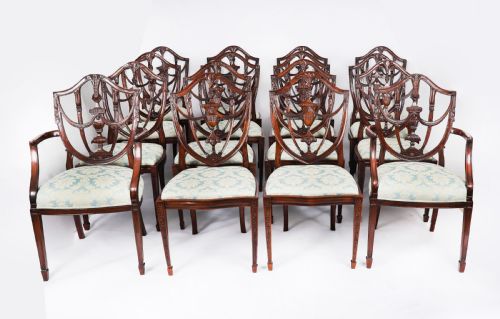
Mahogany shield back armchairs bring distinct neoclassical proportion and carved grace to a room, offering enduring seating with a characteristic curved silhouette.
Mahogany Shield Back Armchairs
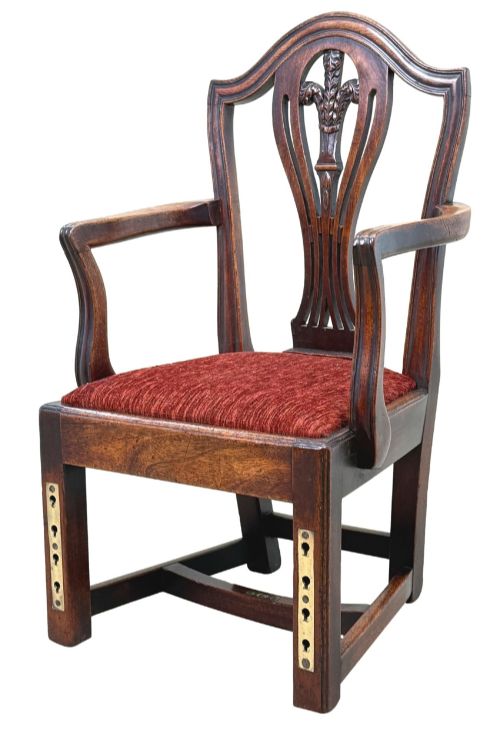
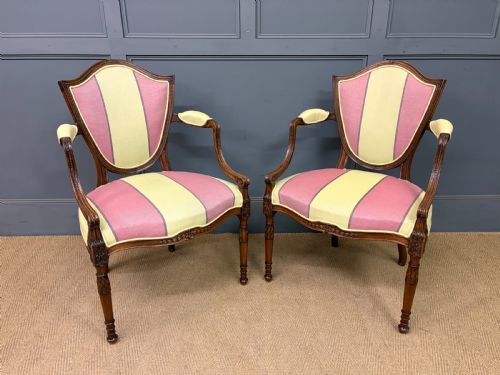
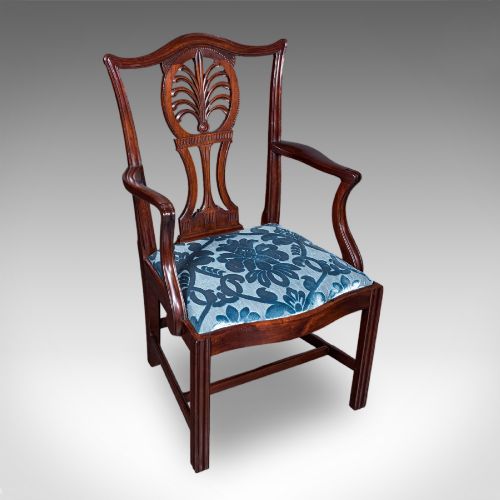
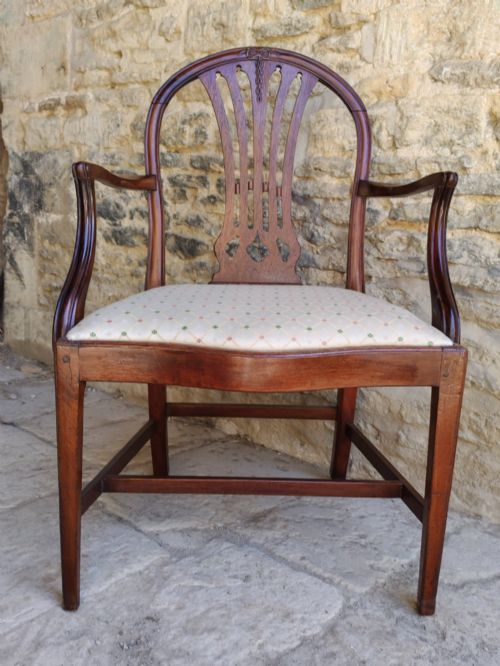
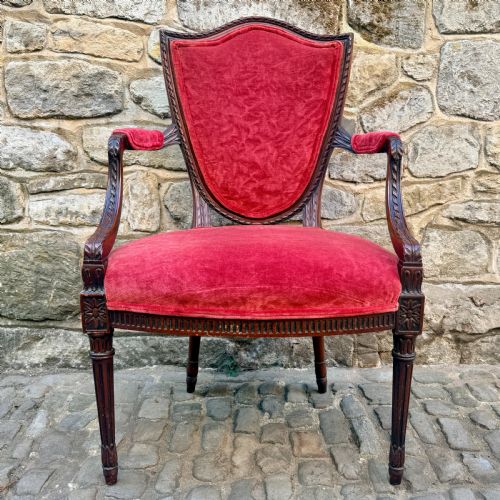
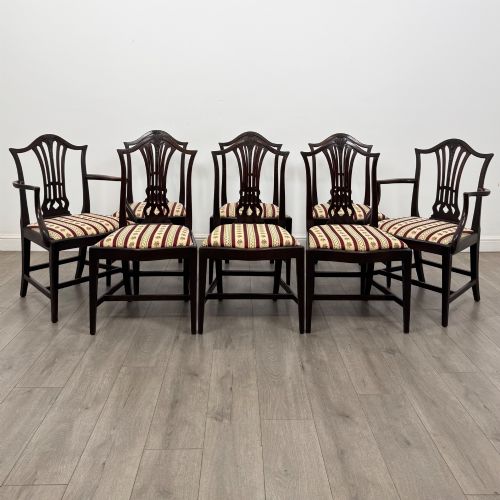
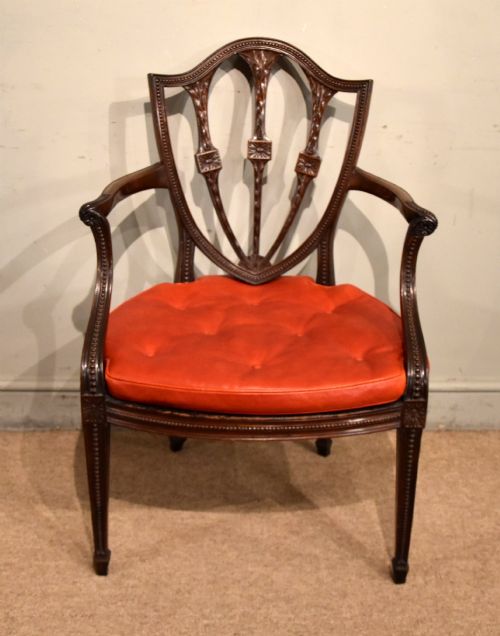
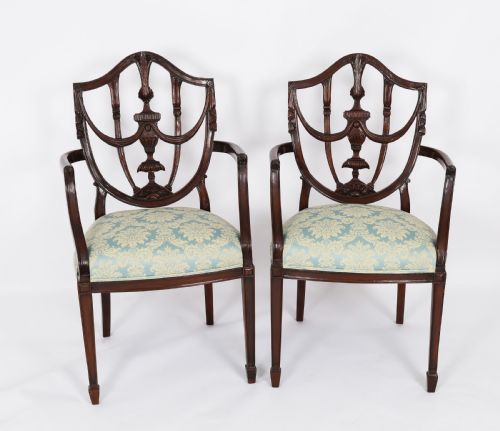
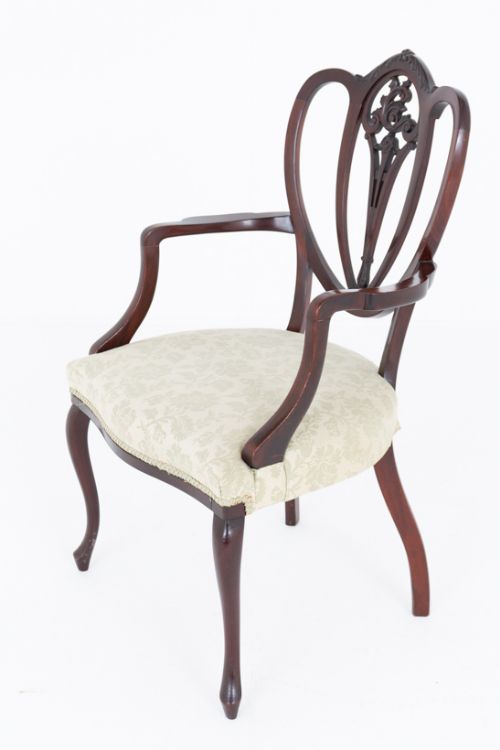
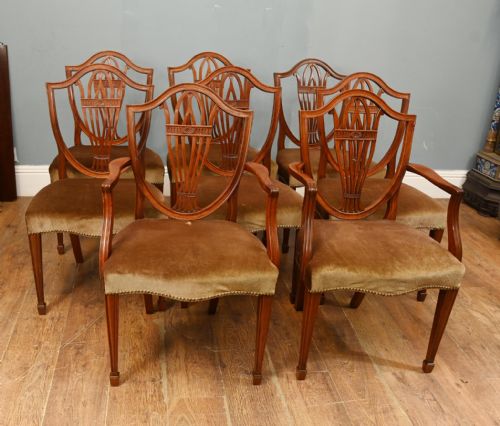
When you search for mahogany shield back armchairs, you encounter sophisticated seating defined by an open, carved backrest shaped like a tapering shield or heart. These pieces draw heavily on eighteenth-century design principles, appearing frequently in revival forms spanning the Victorian, Edwardian and early twentieth-century periods alongside original Georgian examples.
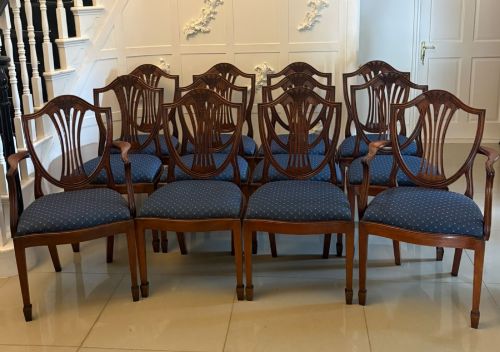
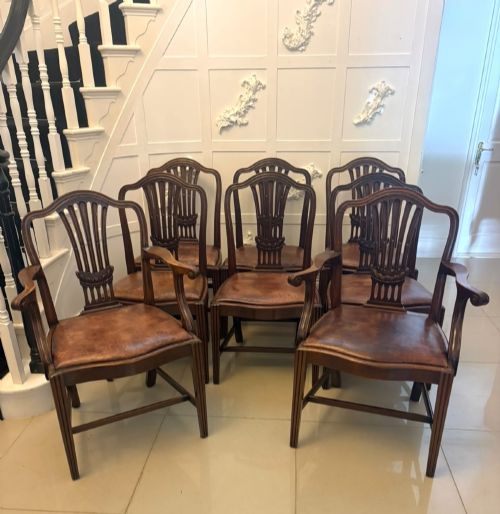
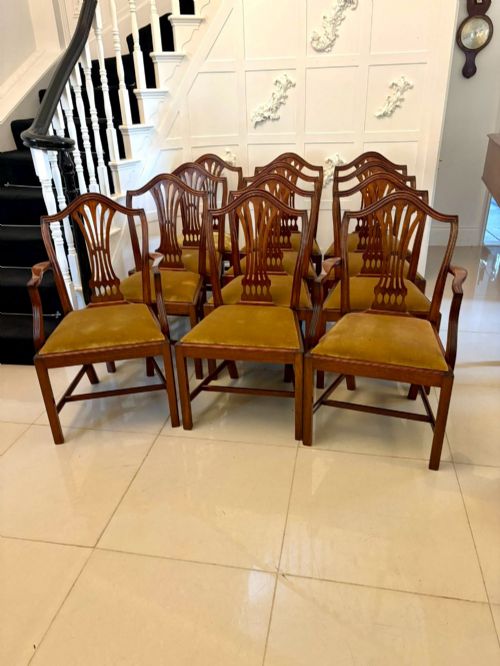
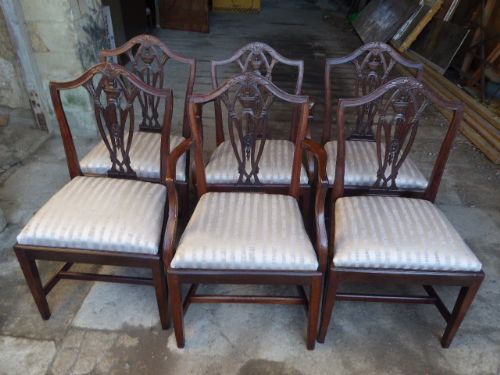
The form typically incorporates open arms that sweep down from the upper rail to join the supports above an upholstered drop-in seat. While many listings show larger dining suites containing carver chairs, single pairs and open armchairs surface regularly across the inventory.
Origins span authentic Georgian workshops up to later cabinet makers producing Federal and Hepplewhite revival pieces. Buyers find both individual carvers and matched pairs intended for libraries, drawing rooms or grand dining tables.
Materials and construction methods
Makers relied primarily on dense mahogany, chosen for its deep grain, durability and capacity to hold crisp, intricate carving along the splat and frame. Subsidiary framing elements occasionally incorporated secondary timbers, while select revival pieces featured subtle marquetry or inlay work.
Upholstery materials range from traditional horsehair stuffing covered in modern fabrics to original tan leather and velvet surfaces. Joinery relied on precise mortise and tenon joints to ensure stability within the sweeping back framework.
Mahogany Shield Back Armchairs Retail Price Guide 2026
Typical asking prices for mahogany shield back armchairs among the pieces listed under this phrase on Sellingantiques today, from the lower quarter to the upper quarter. They describe what is for sale here now, not the wider market.
Materials appearing across current and archived stock include solid mahogany, brass accents, leather, velvet and traditional upholstery fabric.
Assessing craftsmanship and execution
The distinction between average and exceptional execution lies in the depth and sharpness of the hand-carved details upon the shield splat and crest rail. Superior examples exhibit fluid, symmetrical piercing and crisp wheat ear or drapery motifs rather than shallow or mechanical milling.
Structural integrity of the arm joints and rear uprights dictates longevity, as these curved load-bearing sections endure significant pressure during daily use. Timber selection also plays a role, with richly figured grain elevating the visual presence of the chair.
Maple & Co·Edwards & Roberts
The Mahogany Shield Back Armchairs Glossary
- Shield back
- A chair back shaped in the outline of a shield or inverted heart, popularised in the late eighteenth century. This design allows for openwork splats featuring carved bell husks, urns or drapery.
- Carver
- An armchair, traditionally placed at the head of a dining table or used alongside matching single dining chairs. These pieces incorporate supportive armrests.
- Hepplewhite style
- A neoclassical design vocabulary associated with cabinet maker George Hepplewhite, characterised by elegance, contrasting veneers and slender tapered legs. Revivals of this style recur throughout the Victorian and Edwardian eras.
- Drop-in seat
- An upholstered seat frame that lifts directly out from a rebated recess within the chair rails. This construction method allows for straightforward reupholstering without dismantling the primary frame.
- Splat
- The central vertical wooden member connecting the seat to the top rail of a chair back. In shield back designs, the splat often fans out into slender vertical pillars.
Mahogany Shield Back Armchairs: Frequently Asked Questions
Are shield back armchairs comfortable for dining?
These armchairs provide solid upright support due to their curved backrests and generous seat dimensions. They function well for formal dining or desk use.
Most examples feature upholstered drop-in pads that can be adjusted for cushioning depth while maintaining the clean aesthetic of the wooden frame.
How do I distinguish eighteenth-century originals from revivals?
Original pieces from the seventeen-eighties display distinct timber patina, hand-cut joinery marks and structural wear consistent with extended age. The mahogany often feels heavier and shows a softer, warmer lustre.
Revival pieces from the Victorian and Edwardian eras typically exhibit machine precision in secondary framing components and crisper, harder varnish finishes.
What is the difference between a carver and an armchair?
In historical and trade terminology, a carver refers specifically to an armchair designed to match a set of single dining chairs. These were historically reserved for the head of the household.
General armchairs may encompass standalone seating intended for parlours, bedrooms or libraries rather than strict dining table accompaniment.
How should I care for mahogany chair frames?
Maintain the timber by dusting regularly with a soft, dry cloth and avoiding placement near direct heat sources or strong sunlight. Excessive warmth causes mahogany to dry out and split.
Apply high-quality beeswax sparingly to nourish the grain and preserve the historic polish without building up greasy residue.