

Mahogany Shelf Stand
A mahogany shelf stand brings architectural timber and tiered display into a room, offering practical vertical storage that suits both traditional and modern spaces.
Mahogany Shelf Stand
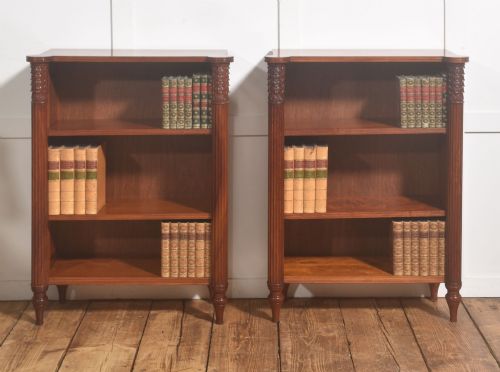
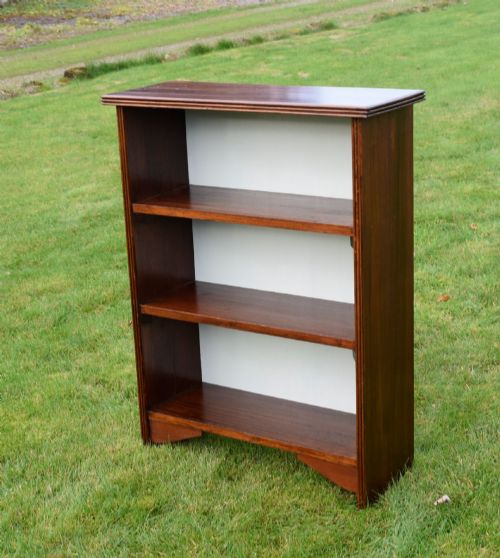
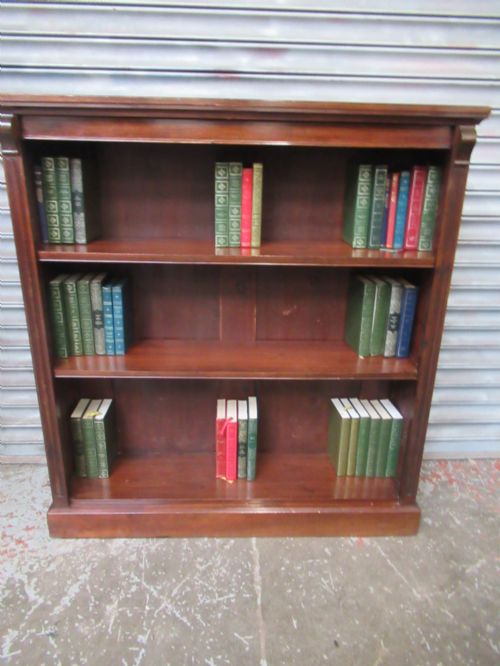
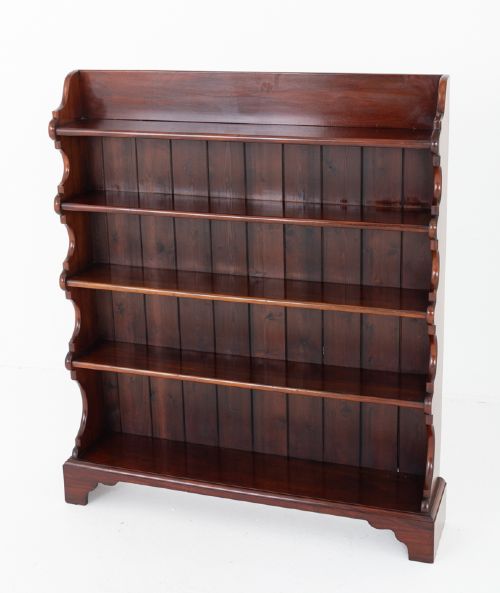
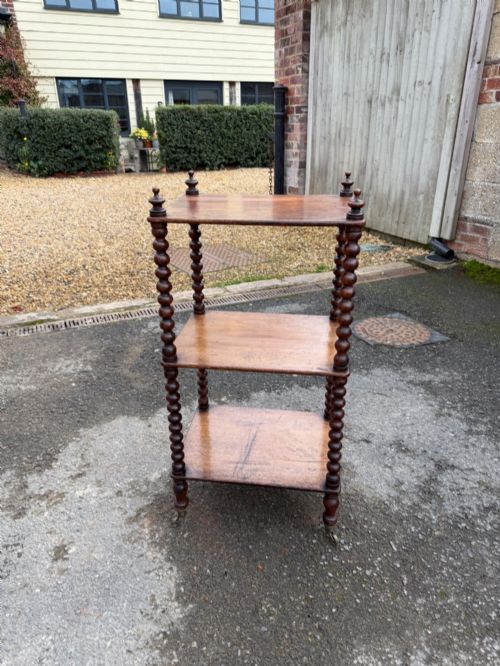
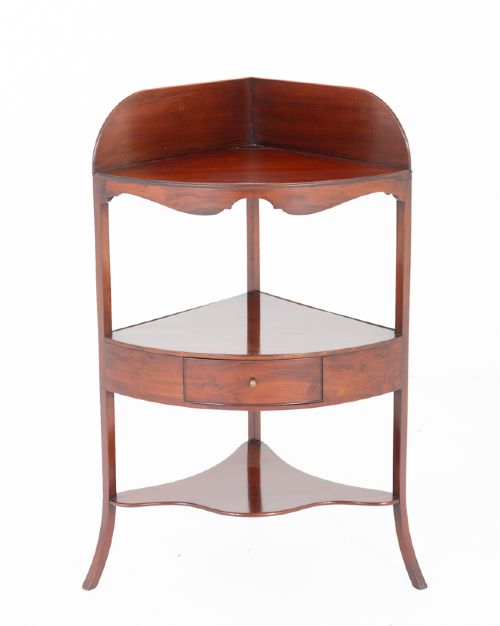
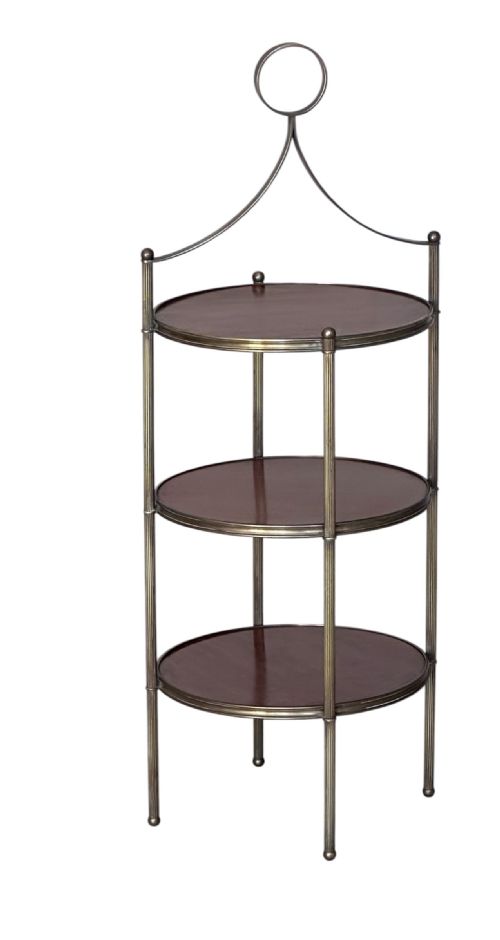
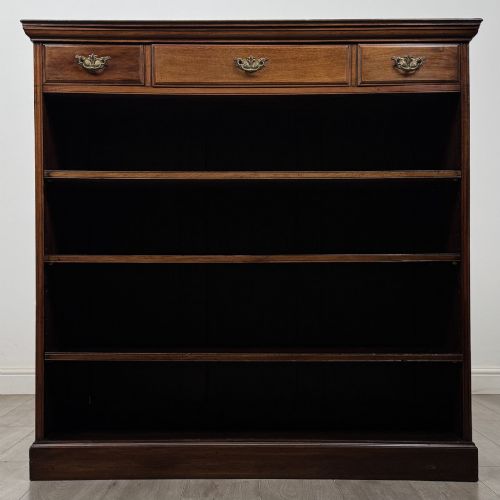
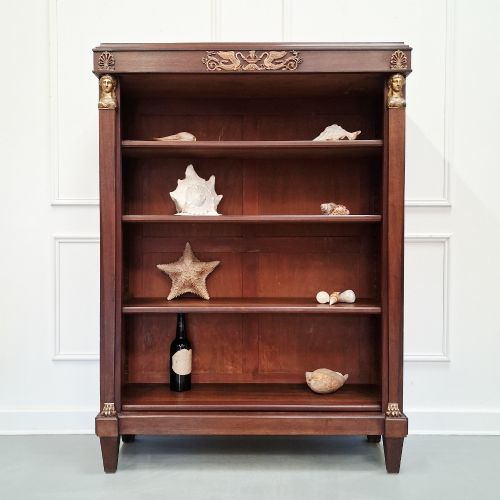
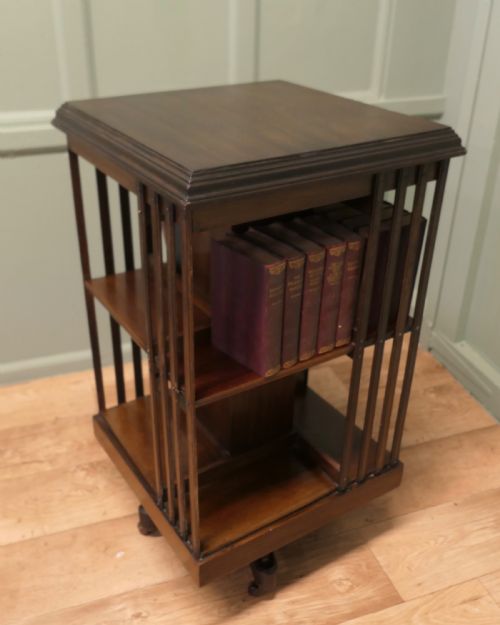
A mahogany shelf stand comprises tiered shelving, open bookcases, and multi-level whatnots designed for books, display objects, and everyday items. When exploring a mahogany shelf stand, buyers encounter forms ranging from slim corner units and revolving library bookcases to multi-tiered étagères dating from the Georgian, Regency, and Victorian periods.
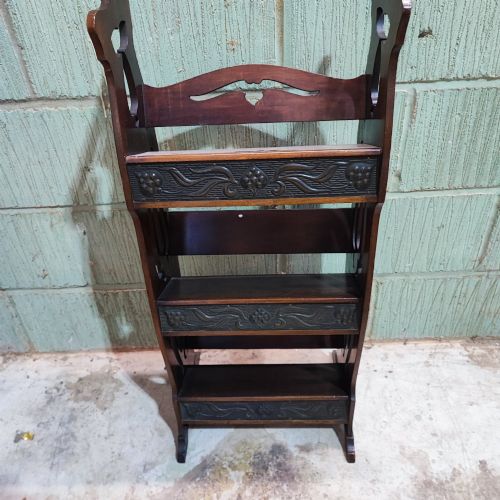
The pieces often feature raised galleries, fretwork details, or slender pillars to support multiple tiers of timber. Edwardian and later twentieth-century iterations frequently incorporate lower shelves or delicate inlay work alongside the core shelving structure.
Originating primarily as functional library and parlour furniture, these stands provide sturdy vertical utility without dominating floor space. The selection spans straightforward open shelving units to decorative display pieces intended to hold china, plants, or volumes.
Evaluating craftsmanship and proportion
Quality reveals itself in the grain selection of the timber and the crispness of any inlaid work or fretwork galleries. Refined pieces exhibit balanced proportions, tight joinery, and well-executed turning on pillars or barley twist supports.
The presence of secondary woods, original brass castors, and adjustable shelving mechanisms distinguishes higher-grade examples. Finer constructions maintain structural rigidity across tall, slender frames without relying on heavy supplementary bracing.
Mahogany Shelf Stand Retail Price Guide 2026
Typical asking prices for mahogany shelf stand among the pieces listed under this phrase on Sellingantiques today, from the lower quarter to the upper quarter. They describe what is for sale here now, not the wider market.
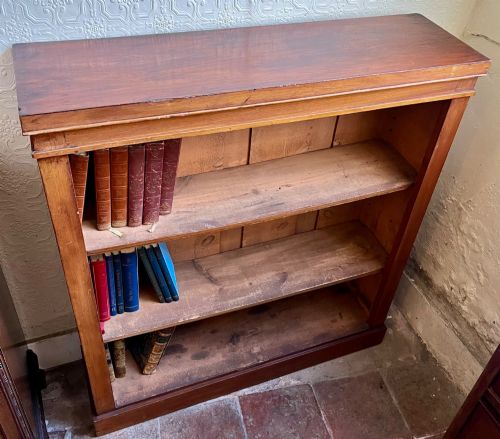
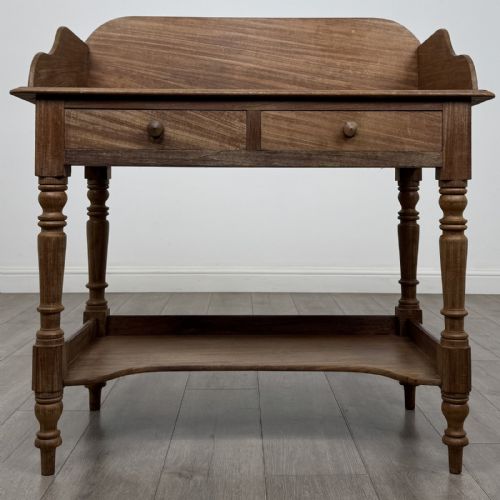
The documented forms range from tall open bookcases and revolving library units to tiered whatnots, corner stands, and occasional tables with lower shelves.
Trevor Page And Co
The Mahogany Shelf Stand Glossary
- Étagère
- A French term for a piece of furniture consisting of a set of open shelves for displaying small articles. These units often incorporate decorative galleries and delicate framework.
- Waterfall bookcase
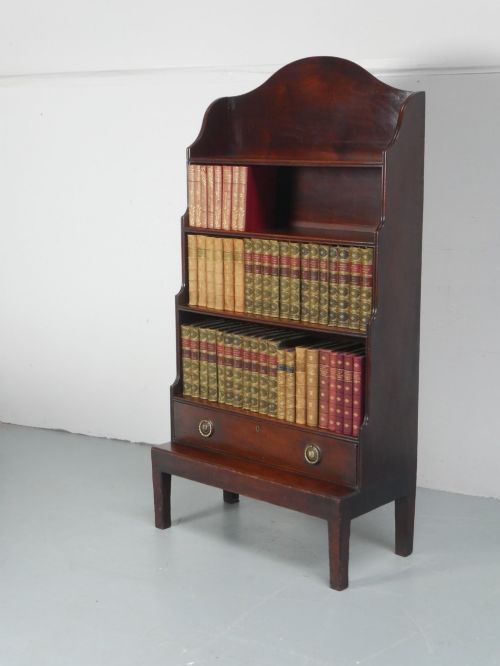
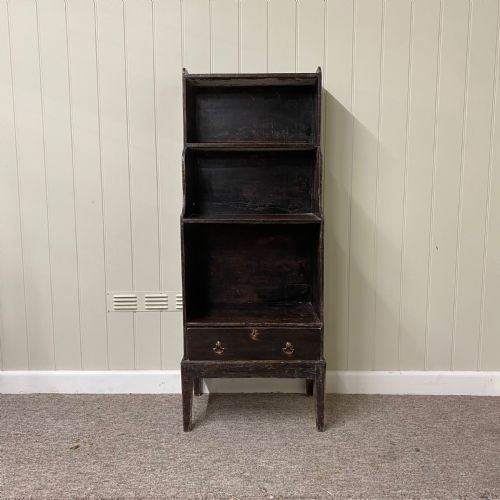
- A graduated set of open shelves where each upper tier is narrower and set back from the one below. This creates a stepped profile reminiscent of cascading water.
- Gallery
- A raised decorative border around the top edge of a shelf or table. It prevents items from sliding off and adds an ornamental architectural detail.
- Barley twist
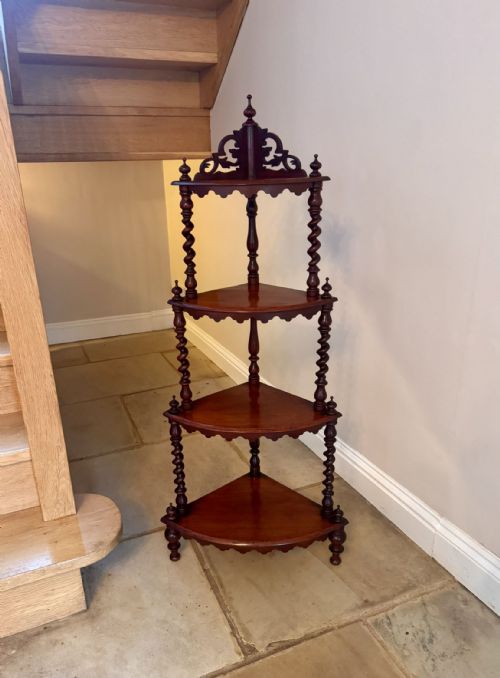
- A type of turning shaped like a spiral or helix resembling barley sugar. It is commonly found on the vertical supports of Victorian stands.
Mahogany Shelf Stand: Frequently Asked Questions
What is the difference between a whatnot and a bookcase?
A whatnot is primarily designed for display and open storage across multiple tiered levels, often featuring decorative uprights and accessible from multiple sides. Bookcases focus specifically on housing volumes, frequently with enclosed lower cabinets or adjustable vertical shelving.
While both utilise mahogany framing, a whatnot is lighter in construction and intended for decorative objects, whereas a bookcase prioritises shelf depth and structural support for heavy books.
Where should I place a corner shelf stand?
A corner shelf stand fits neatly into unused room angles, making it an efficient choice for compact spaces. These units utilise vertical wall junctions to provide display or storage without occupying central floor space.
They work well in studies, hallways, and living rooms where standard rectangular furniture might obstruct walkways or overwhelm the room layout.
How do I care for antique mahogany timber?
Antique mahogany requires protection from direct sunlight and dramatic humidity changes to prevent the timber from warping or fading. Regular dusting with a soft, dry cloth maintains the surface without the buildup of heavy chemical polishes.
Applying a traditional beeswax occasionally helps nourish the wood and preserves the natural lustre of the grain over time.
How can I identify a Victorian piece from a Regency one?
Regency stands often display neoclassical influences with clean architectural lines, sabre legs, or brass inlay, reflecting taste from the early nineteenth century. Victorian pieces tend to be heavier in construction, frequently incorporating elaborate turned supports like barley twists or darker, richer timber finishes.
Examining the secondary woods, fixings, and overall proportion helps clarify the manufacturing era when style markers overlap.