



Mahogany Settle Bench
A mahogany settle bench brings solid timber and enclosed seating together, offering a practical seat with historical character for any hallway.
Mahogany Settle Bench
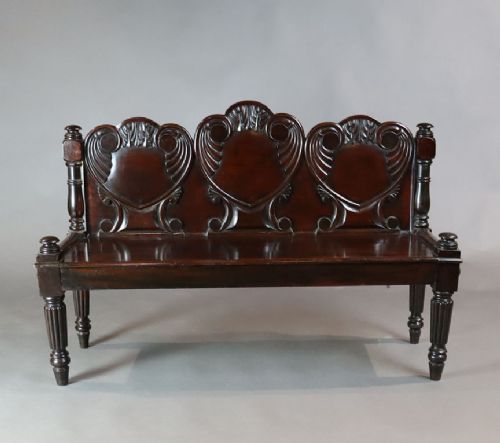
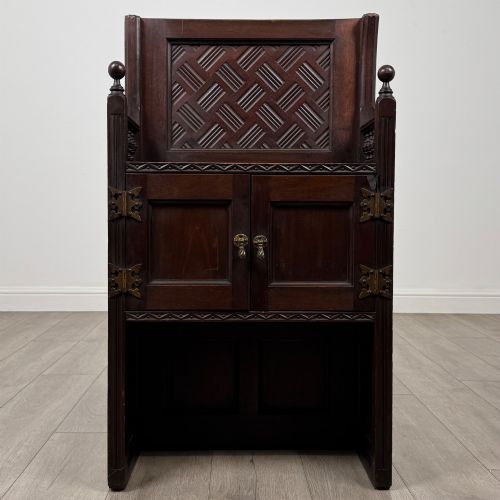
A mahogany settle bench is a sturdy wooden seat designed for halls and living spaces, drawing on forms from the nineteenth century, the Edwardian era, and around nineteen hundred. These pieces range from simple ladderback settees and long window seats to panelled box settles equipped with central cupboards and storage compartments.
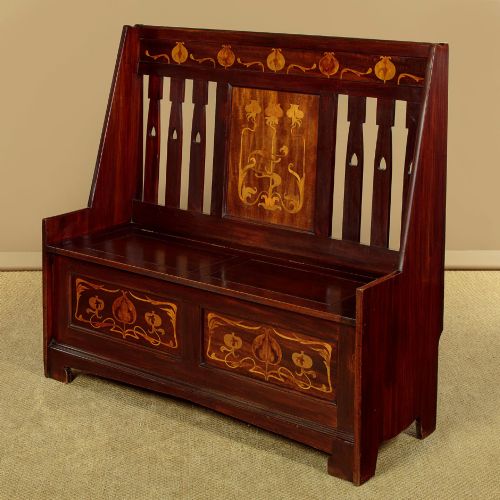
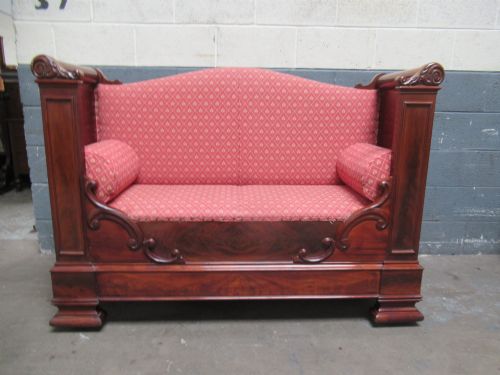
The versions most commonly met on this page include nineteenth-century hall benches, Edwardian hall seats, and carved Brazilian mahogany panelled box settles. Makers and workshops of the Arts and Crafts period also produced distinctive box settles, alongside Regency revival designs and William IV carved benches.
Materials and construction methods
Construction relies heavily on solid mahogany and Brazilian mahogany, frequently embellished with flame mahogany veneer to give the timber a rich, figured appearance. Carpenters and cabinetmakers added decorative detail through boxwood inlay and precise carving directly into the wood panels.
Functional additions such as brass fittings and hardware appear on storage compartments, while upholstery fabric and plain fabric provide cushioning for seats and chair-back sofas.
Mahogany Settle Bench Retail Price Guide 2026
Typical asking prices for mahogany settle bench among the pieces listed under this phrase on Sellingantiques today, from the lower quarter to the upper quarter. They describe what is for sale here now, not the wider market.
Some box settles hide storage deep enough to keep the daily clutter completely out of sight.
Judging quality and craftsmanship
Quality rests upon the selection of timber, distinguishing simple planks from beautifully figured Brazilian mahogany and vibrant flame mahogany veneer. The crispness of the carved details and the precision of any boxwood inlay set finer pieces apart from plainer workshop production.
James Shoolbred & Co.
The Mahogany Settle Bench Glossary
- Settle bench
- A wooden bench with a high back and solid arms, often featuring a panelled base or storage box beneath the seat. This form protected sitters from draughts in older hallways and corridors.
- Flame mahogany veneer
- A thin slice of mahogany timber cut from the fork of the tree where branches meet the trunk, displaying a fiery, undulating grain pattern. Cabinetmakers applied this to prominent surfaces for visual impact.
- Boxwood inlay
- Small pieces of pale boxwood inserted into recesses cut into the darker mahogany surface to create contrasting geometric or floral patterns.
- Box settle
- A heavy wooden bench incorporating a hinged seat that lifts to reveal a storage chest underneath. Some examples also include integrated cupboards within the high back.
- Ladderback
- A chair or bench back constructed with horizontal wooden slats resembling the rungs of a ladder. This traditional rural design was adopted by later revival makers.
Mahogany Settle Bench: Frequently Asked Questions
What is a mahogany settle bench?
A mahogany settle bench is a traditional wooden seat featuring a high back, solid arms, and frequently a storage compartment beneath the seat or within the back structure. These pieces were historically placed in entrance halls to provide seating while managing outer garments.
Today, they function as substantial statement pieces that combine practical storage with strong period character.
Where were settle benches used?
These benches were traditionally positioned in entrance halls, corridors, and large communal rooms of period houses to offer a resting place away from draughts. Their high backs and solid sides helped shield occupants from cold air entering through doorways.
In modern homes, they serve a similar purpose in spacious hallways, boot rooms, and living areas where extra seating and hidden storage prove useful.
How do I identify an Edwardian settle?
Edwardian settles and hall seats often exhibit lighter proportions, refined boxwood inlay, and thoughtful storage solutions like central cupboards. Makers of this period frequently drew inspiration from earlier Georgian and Regency styles while incorporating contemporary Edwardian tastes.
Examining the construction methods, timber choice, and secondary woods helps confirm the Edwardian origin of the piece.
How do I care for mahogany furniture?
Maintaining mahogany furniture involves keeping the timber away from direct sunlight and steady heat sources to prevent the wood and any veneer from drying out. Regular dusting with a soft, dry cloth preserves the natural lustre of the polished surface without building up residue.
Applying a traditional beeswax polish occasionally helps nourish the wood and maintain its deep colour.