

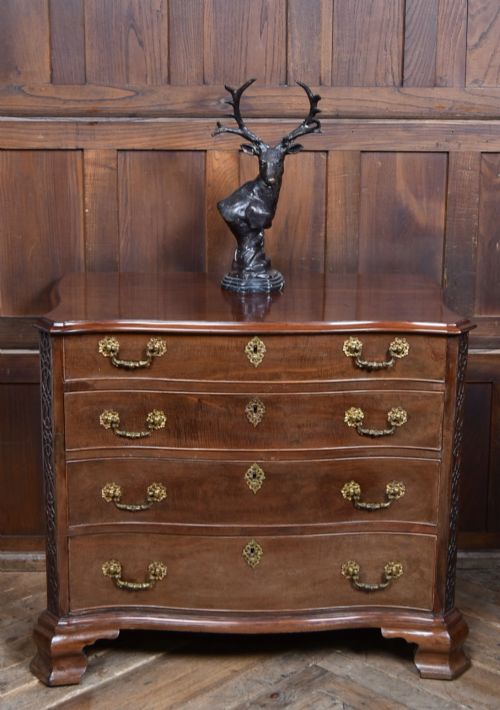
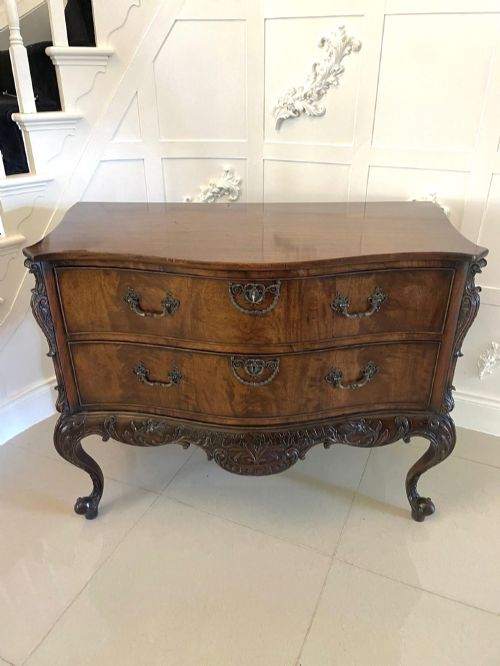
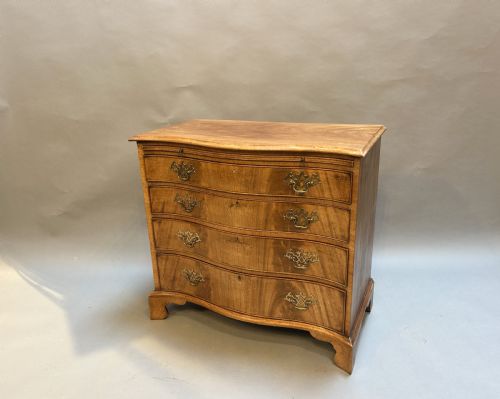
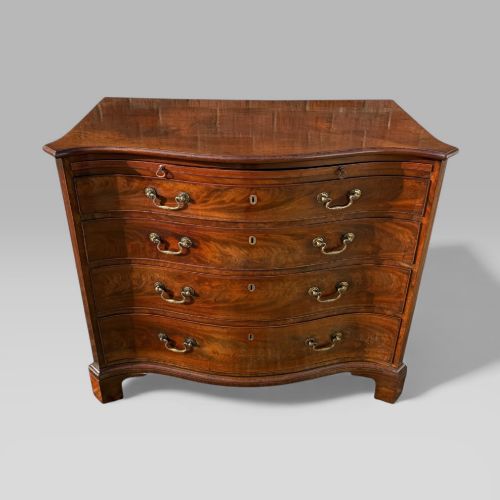

Mahogany Serpentine Chest of Drawers
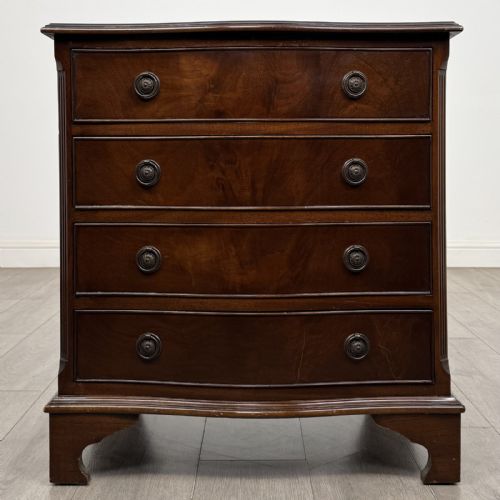
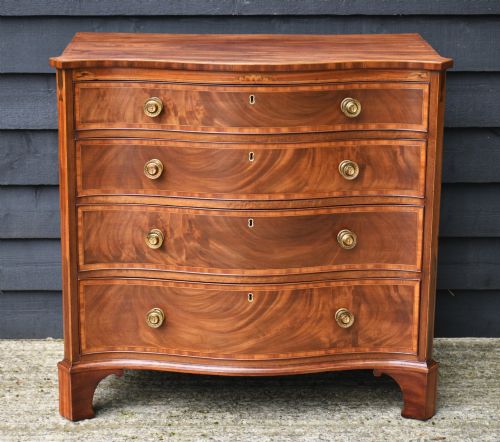
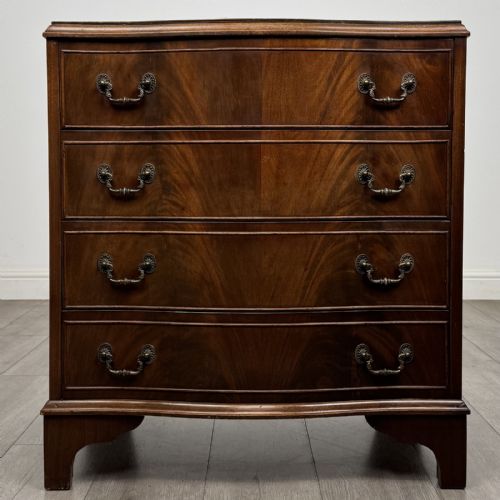
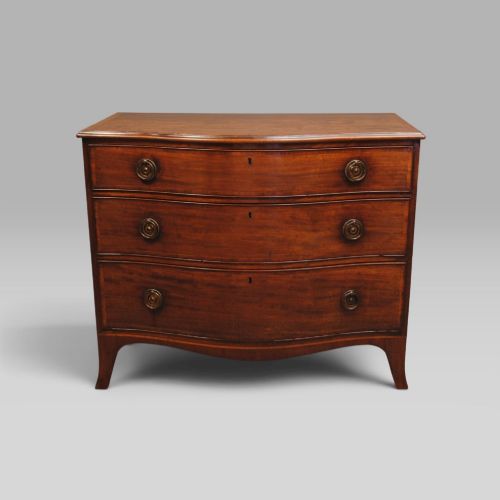
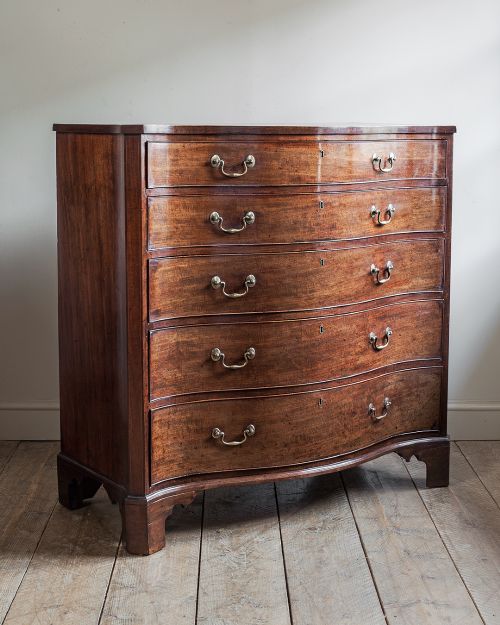
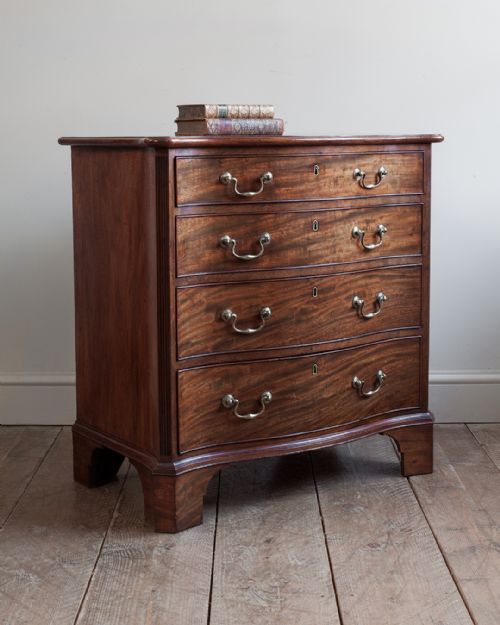
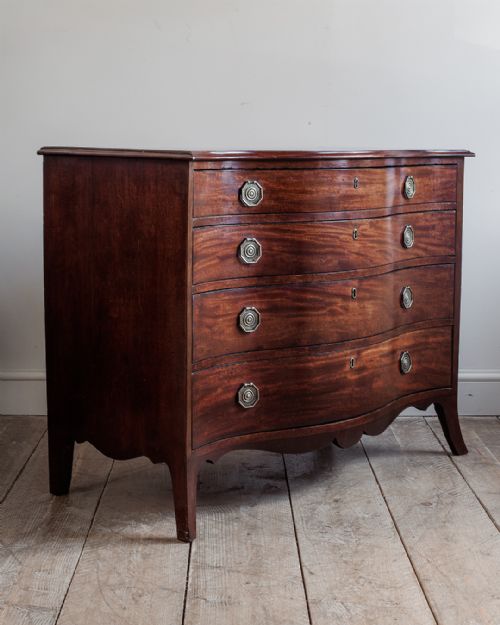
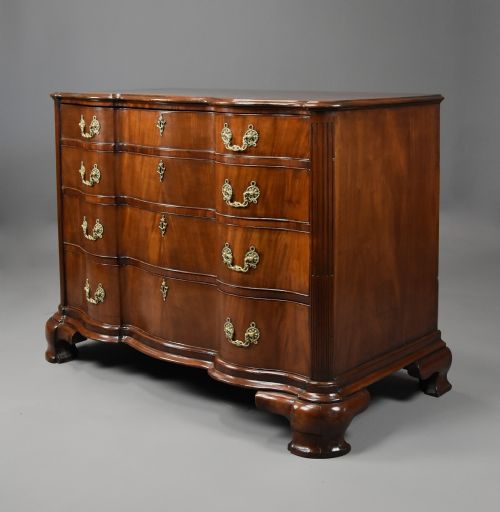
A mahogany serpentine chest of drawers brings the fluid elegance of the eighteenth century into a room through its undulating front.
Mahogany Serpentine Chest of Drawers
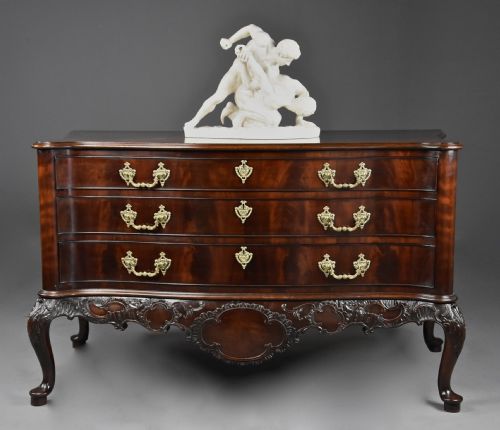
A mahogany serpentine chest of drawers presents a distinctive curved front that sweeps inward and outward in a single flowing line, uniting utility with decorative ambition. You will encounter pieces spanning the eighteenth century, the Victorian era, and later revival periods, alongside continental commodes and taller forms.
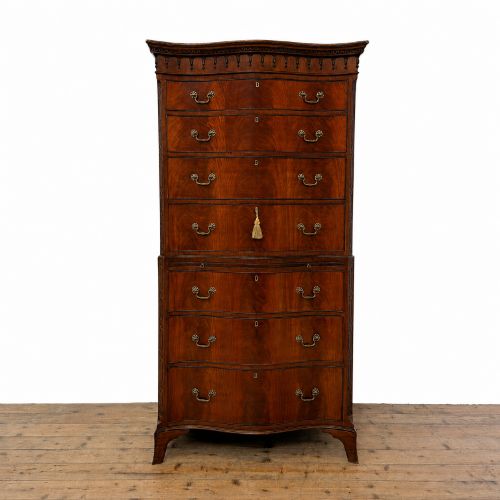
The primary form is the low chest of drawers, occasionally housing a brushing slide or writing compartment within the upper tier. Variations include taller formats such as chests on chests, tallboys, and bedside cabinets, as well as continental commodes displaying oxbow outlines or bombe profiles.
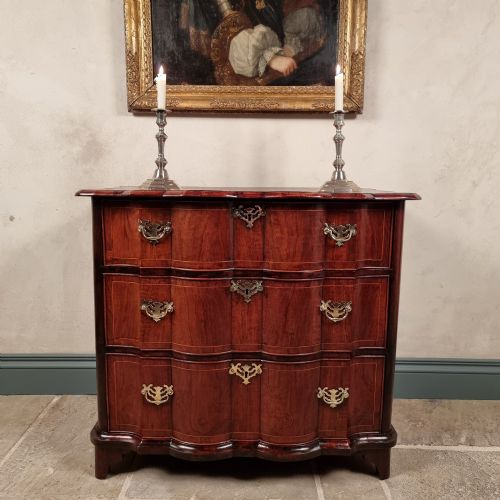
Makers and workshops from Georgian origins onward adopted this challenging silhouette, which later inspired Edwardian cabinetmakers and twentieth-century revivalists working in the George III and Chippendale styles. The selection ranges from compact country pieces to grand proportions finished with intricate brass handles and boxwood inlay.
Materials and construction methods
Cabinetmakers constructed these chests predominantly from solid and veneered mahogany, frequently selecting figured timber, fiddleback grains, or satinwood and marquetry highlights to catch the light across the curved facade. Secondary woods support the internal drawer linings, whilst brass handles and escutcheons punctuate the polished wooden surfaces.
Shaping the serpentine front required thick timber or clever lamination to cut the undulating curve without compromising the structural integrity of the drawer fronts and frame. Inlays of boxwood and contrasting stringing were carefully let into the solid mahogany surfaces to define the edges and corners.
Mahogany Serpentine Chest of Drawers Retail Price Guide 2026
Typical asking prices for mahogany serpentine chest of drawers among the pieces listed under this phrase on Sellingantiques today, from the lower quarter to the upper quarter. They describe what is for sale here now, not the wider market.
Listings feature mahogany serpentine chests across the Georgian, Victorian, and Edwardian eras, alongside twentieth-century revival pieces in the Chippendale and George III styles.
Judging the standard of execution
Quality rests in the precision of the curved drawer fronts and how seamlessly the timber grain follows the undulating contours without distortion. Finer examples display meticulous dovetailing on the drawer carcases and retain their original brass hardware, whilst lesser pieces may show rushed shaping or mismatched veneers.
The integration of secondary decorative elements, such as delicate satinwood banding, crisp boxwood inlay, or well-executed carved bracket feet, separates standard production from exceptional cabinet work. Proportions remain crucial; the sweep of the serpentine outline must harmonize with the overall mass of the chest.
Waring S Gillows
The Mahogany Serpentine Chest of Drawers Glossary
- Serpentine front
- A furniture front curving outward at the centre and inward at the sides, or vice versa, creating a continuous undulating line. This shape demands high skill from the cabinetmaker.
- Brushing slide
- A pull-out shelf located beneath the top surface, traditionally used for writing or brushing clothes. It slides flush into the frame when not in use.
- Chests on chests
- A tall storage unit formed of two separate carcases stacked vertically, with smaller drawers on top and larger ones below. They provide substantial capacity within a modest floor footprint.
- Commode
- A continental term for a low chest of drawers or cabinet, often applied to French or Dutch pieces featuring marble tops or bombe profiles. These pieces served both decorative and functional roles in domestic interiors.
- Fiddleback mahogany
- A highly figured timber showing ripples resembling the back of a violin. Cabinetmakers reserved this wood for prominent drawer fronts to create a shimmering optical effect.
Mahogany Serpentine Chest of Drawers: Frequently Asked Questions
What is a serpentine chest of drawers?
A serpentine chest of drawers is a storage piece featuring a front that curves in a wave-like pattern, combining convex and concave sections across the width.
Cabinetmakers utilised this profile from the Georgian period onward to introduce movement and sophistication into standard bedroom and parlour furniture.
How do I spot a Georgian period piece?
Genuine Georgian pieces typically display period construction methods, such as hand-cut dovetails on oak or mahogany drawer linings and authentic patination on the timber.
Later Edwardian and twentieth-century revival pieces often copy these forms but reveal different internal secondary woods and machine-cut elements upon close inspection.
What is a brushing slide?
A brushing slide is a pull-out wooden board integrated just below the top surface of the chest, designed originally for dusting garments or writing correspondence.
When pushed fully in, it disappears into the upper moulding of the carcase, remaining hidden until needed for daily use.
Where were these chests placed historically?
These chests stood primarily in principal bedrooms, dressing rooms, and formal parlours where guests could admire their curved facades and polished mahogany grain.
Their substantial storage capacity and decorative presence made them central fixtures of elite domestic interiors throughout the eighteenth and nineteenth centuries.