

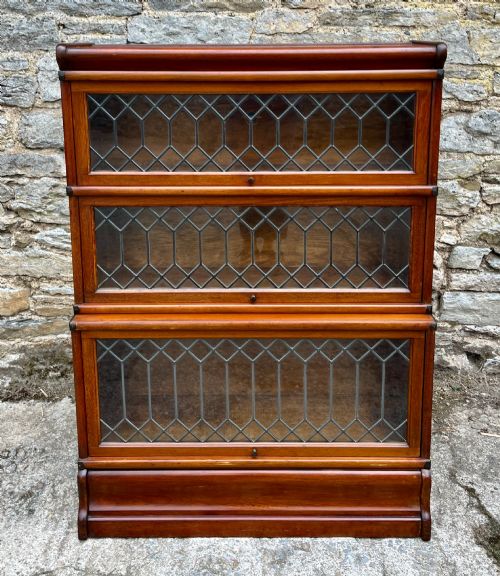
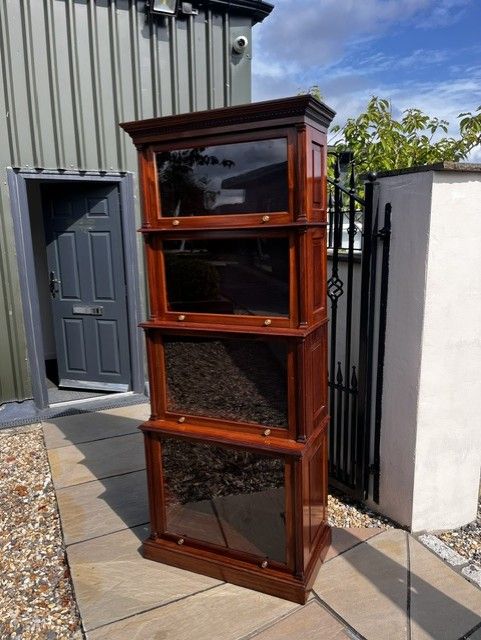
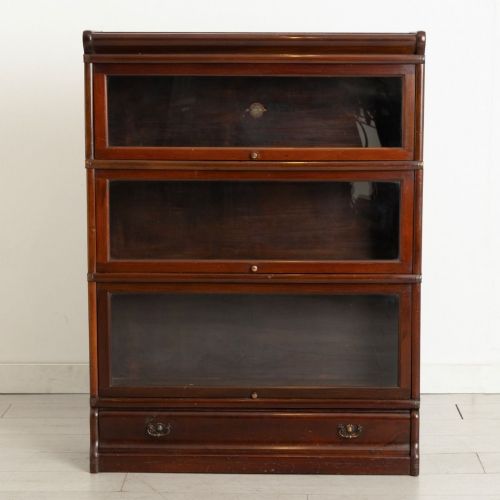

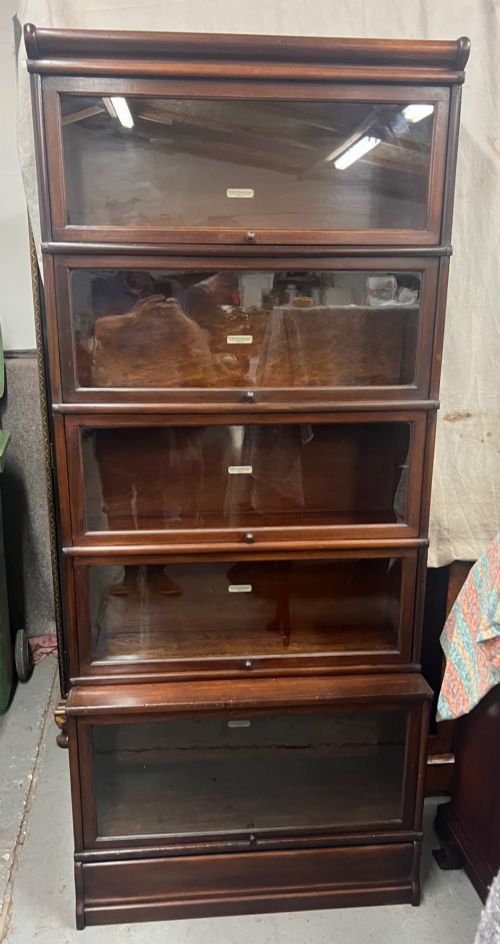


Mahogany Sectional Cabinet
A mahogany sectional cabinet offers modular storage built from rich timber, designed to stack in adaptable tiers with glass fronts.
Mahogany Sectional Cabinet
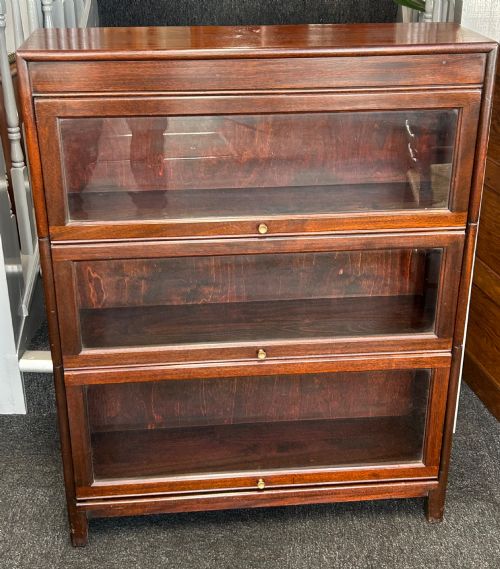
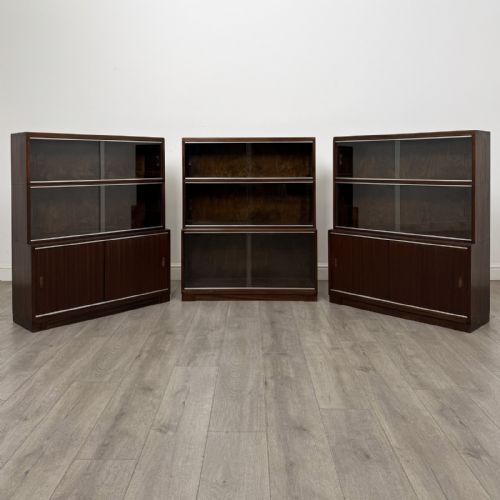
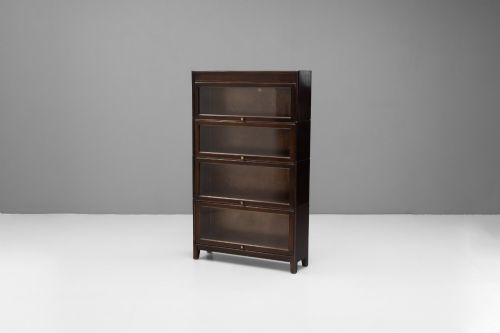
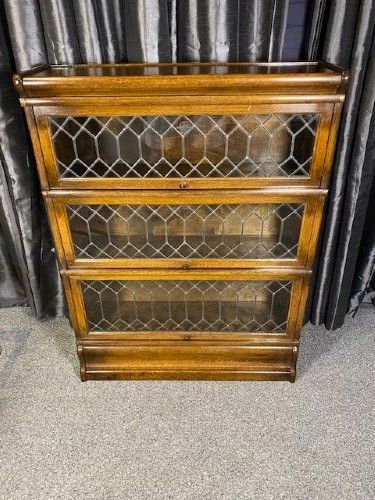
A mahogany sectional cabinet comprises multiple modular tiers that stack together to form a tall bookcase or display unit. These pieces take forms such as barrister bookcases and stacking cabinets, designed to protect books and papers behind glass doors.
Most examples encountered here date from the Edwardian era and the nineteen-twenties, alongside pieces from nineteen-hundred, nineteen-ten, nineteen-thirty, and the Georgian period. The dominant styles include Edwardian, Art Deco, nineteen-twenties commercial, Mid-Century Modern, and Georgian.
Makers such as Gunn Furniture, Macey, Globe Wernicke, and AMYL produced these modular units in solid mahogany. Buyers select these cabinets for their practical adaptability and traditional timber character.
How they were made
Makers constructed these cabinets using solid mahogany and mahogany veneers over secondary timbers like oak. The construction relies on modular tiers that fit one above the other, allowing the cabinet to grow or shrink according to need.
Mahogany Sectional Cabinet Retail Price Guide 2026
Typical asking prices for mahogany sectional cabinet among the pieces listed under this phrase on Sellingantiques today, from the lower quarter to the upper quarter. They describe what is for sale here now, not the wider market.
Listings feature solid mahogany and oak structures fitted with sliding, leaded, or up-and-over glass doors across Edwardian and Art Deco styles.
What varies in quality
The refinement of the timber selection separates everyday commercial production from finer workshop pieces. Solid mahogany tiers exhibit superior grain continuity across stacked sections compared to simpler veneered carcases.
The precision of the mechanical door action defines the engineering standard of each cabinet. Smooth operation in up-and-over glass doors or sliding panels indicates careful original fitting and minimal timber distortion over time.
Gunn Furniture·Macey·Globe Wernicke·AMYL·Heal's
The Mahogany Sectional Cabinet Glossary
- Sectional cabinet
- A storage unit built from independent tiers that stack vertically. This modular design allows the cabinet to be dismantled or expanded easily.
- Barrister bookcase
- A specialised stacking bookcase featuring glazed doors that lift and slide into the cabinet above each shelf. These protected legal libraries from dust and moisture.
- Up and over doors
- Glazed doors suspended on internal scissor mechanisms that push upwards into the recess of the tier. This system keeps the door out of the way when open.
- Tier
- An individual stackable section of a modular cabinet containing its own shelf and door. Multiple tiers combine to create the full height of the piece.
Mahogany Sectional Cabinet: Frequently Asked Questions
How do sectional cabinets work?
These cabinets consist of separate modular sections that stack directly on top of a base and beneath a top cornice. Each tier operates as an independent box with its own glass door.
The modular design allows the cabinet to be reconfigured, moved in pieces rather than as a heavy single unit, and expanded by adding more tiers.
What are up and over doors?
Up and over doors are glazed panels fitted with internal metal links that guide the door inward and upward into the top of the shelf compartment. This mechanism allows the door to slide away smoothly while remaining attached to the tier.
Invented to protect books while offering quick access, this system is characteristic of barrister and stacking bookcases from the early twentieth century.
How do I date an Edwardian cabinet?
Edwardian sectional cabinets date from the reign of Edward the Seventh, spanning the early nineteen-hundreds. They frequently exhibit lighter mahogany tones and straightforward commercial styling.
Comparing the hardware patents, maker stamps, and glass types helps narrow the production period alongside stylistic clues like Art Deco influences in later nineteen-thirty models.
Can I separate the stacked tiers?
Yes, the individual tiers lift apart once the top cornice is removed and any locking pins or side brackets are disengaged. Each section rests on the one below it using simple gravity or locating pins.
This separation makes transport straightforward and permits owners to alter the total height of the furniture to fit different room dimensions.