




Mahogany Scientific Instrument Case
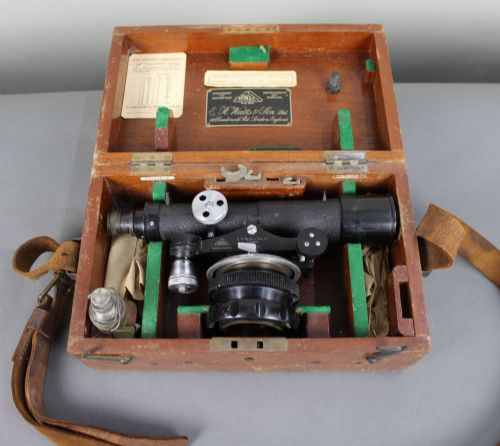
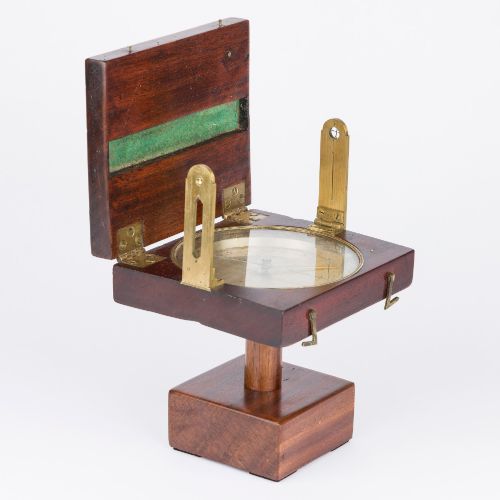
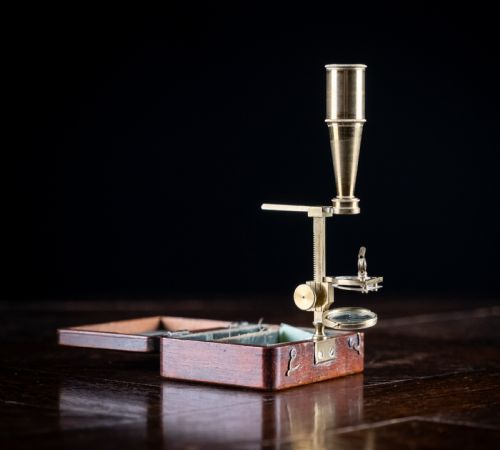
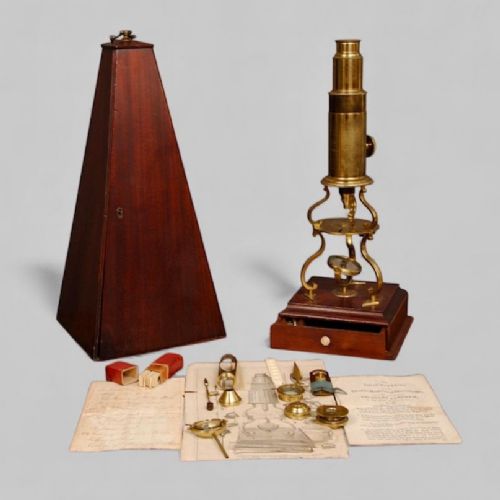
A mahogany scientific instrument case houses precision brass and glass apparatus intended for measurement, navigation, and observation.
Mahogany Scientific Instrument Case
A mahogany scientific instrument case encloses precision tools designed for surveying, meteorology, and navigation across the Georgian, Victorian, and Edwardian periods.
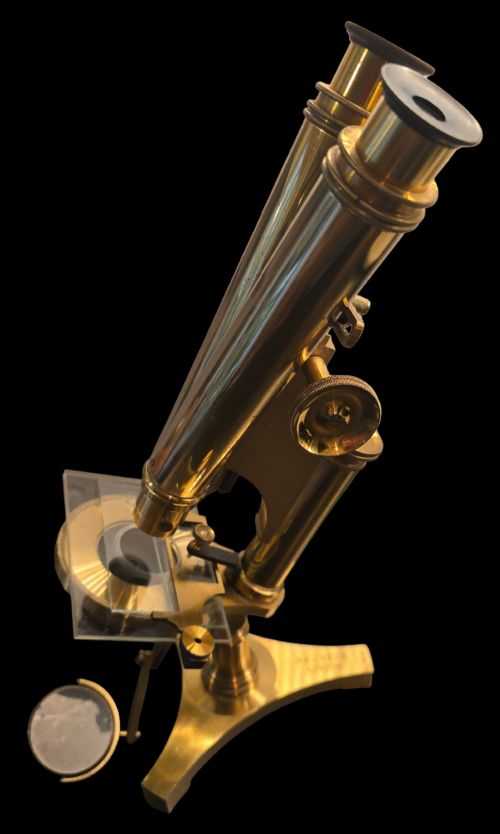
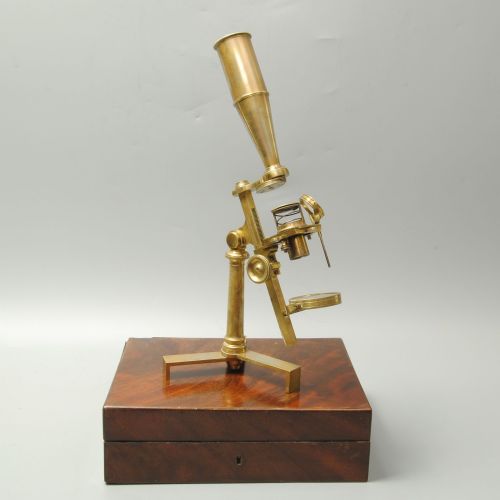
The objects preserved within these timber enclosures range from pocket microscopes and surveyors compasses to barographs, barometers, and hydrometers.
Victorian and Edwardian versions appear most frequently on this page, often housing meteorological apparatus or optical equipment in polished wood boxes.
Construction and materials
Cabinet makers utilised dense tropical timber to build protective housings, fitted with brass hinges, hook fastenings, and inset carrying handles.
Interiors typically combine shaped wooden blocks, velvet linings, and paper trade labels to secure delicate steel, brass, and glass components.
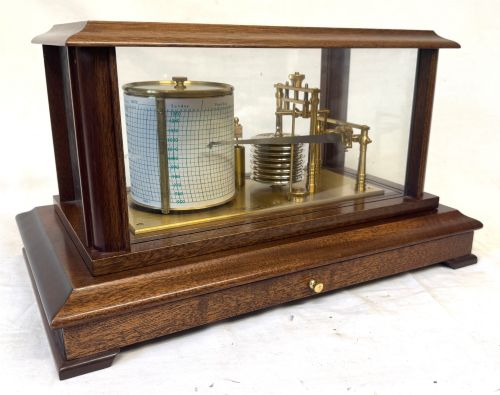
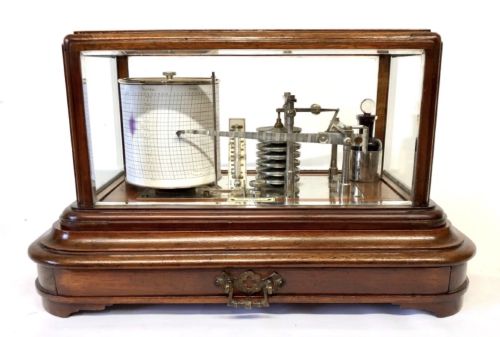
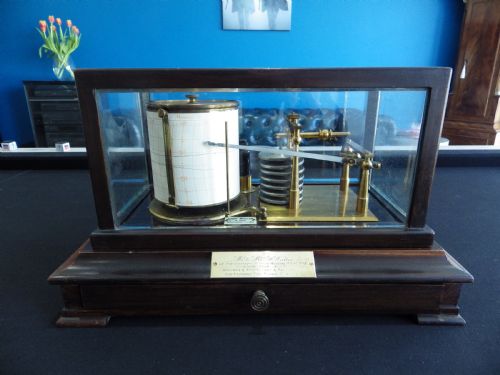
Glass panels feature in barometer and barograph boxes to allow observation of the recording mechanism while shielding the paper charts from dust.
Listings feature 19th Century, Victorian, Edwardian, and Georgian periods alongside interwar examples.
Factors determining quality
Quality rests upon the precision of the inner instrument and the joinery of the housing, where tight corner joints and well-fitted lids indicate superior workshop standards.
Signatures inscribed on metal dials or engraved into brass plates elevate a piece, identifying work by renowned makers rather than anonymous production.
Completeness dictates value, particularly when original accessories, lens kits, chart drawers, and contemporary paperwork remain intact within the enclosure.
G. Davis of Leeds·Gaupp And Co Hongkong And Singapore·Cary London·Charles Lincoln·L Casella And Co·R And J Beck London·George Adams Of Fleet Street·H Hughes And Son London·A Hurlimann Paris·Alexander Wright·Negretti And Zambra·Short And Mason London·R Fuess·Harrods Of London·Short And Mason Limited·Stanley London·Cox Of Plymouth Dock·Robson Of Newcastle·Oertling·Swift And Son·Alexander Adie Of Edinburgh·Stephen Houghton And Son Of Ormskirk·Matthew Berge London
The Mahogany Scientific Instrument Case Glossary
- Barograph
- A self-recording meteorological instrument that plots barometric pressure onto a rotating paper drum.
- Pantograph
- A mechanical linkage connected in a parallelogram-based system used for copying maps and drawings at different scales.
- Theodolite
- An optical instrument used for measuring horizontal and vertical angles in surveying and civil engineering.
- Hydrometer
- A device deployed to measure the specific gravity and relative density of liquids based on buoyancy.
- Chondrometer
- A specialised weighing scale utilised to determine the bushel weight and quality of grain.
Mahogany Scientific Instrument Case: Frequently Asked Questions
What tools go in these cases?
These wooden boxes contain a variety of measuring and recording apparatus, including barographs, compasses, microscopes, and thermometers.
Each instrument is secured within fitted compartments designed to prevent movement during travel or storage.
How do I date a mahogany case?
Dating relies on the style of the cabinet construction, brass hardware, and any paper trade labels glued inside the lid.
Georgian examples tend towards simpler joinery, while Victorian and Edwardian boxes frequently incorporate chart drawers and glazed viewing panels.
Are the instruments still working?
Many meteorological and optical devices remain operational, though barographs require fresh paper charts and ink to record pressure changes.
Precision scales and compasses often function accurately when handled with care and placed on a level surface.
Why use mahogany for instruments?
Mahogany provides exceptional dimensional stability, resisting warping and cracking under normal environmental changes.
Its dense grain allows cabinet makers to cut precise housings and dovetail joints that protect delicate scientific apparatus.