

Mahogany Rotating Stand
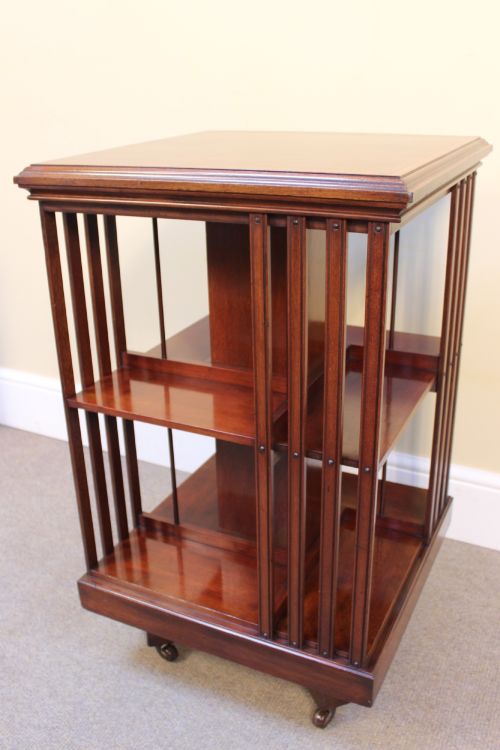
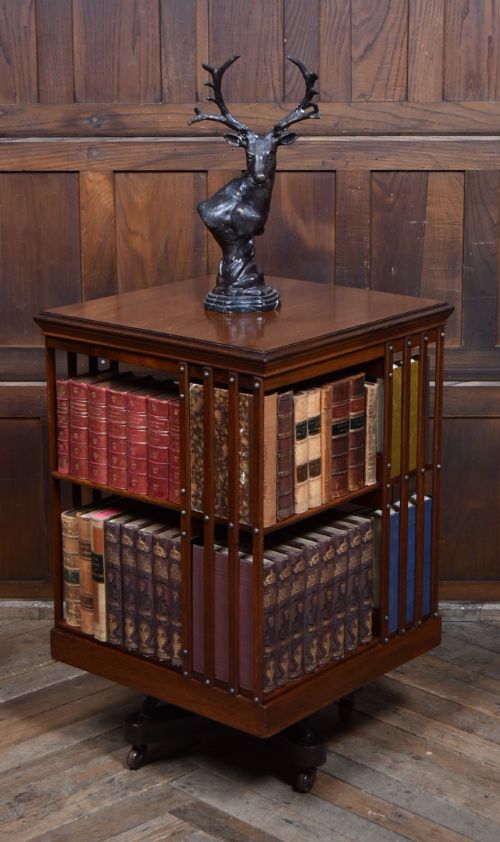
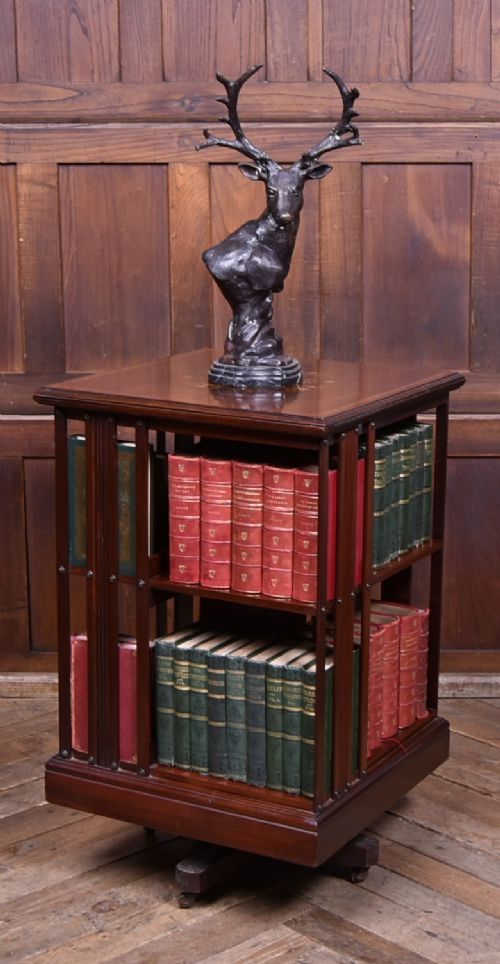
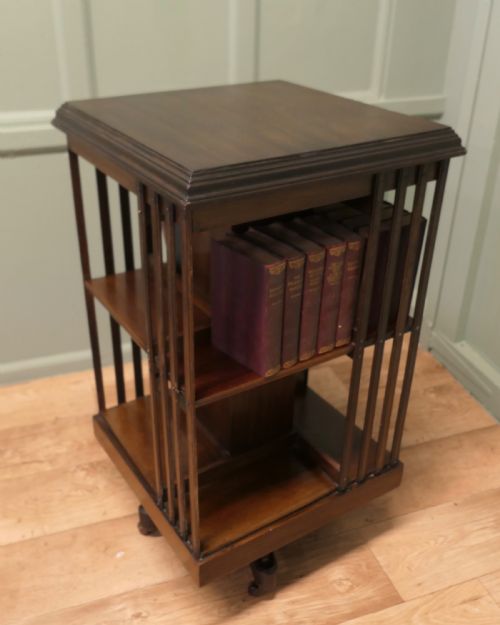
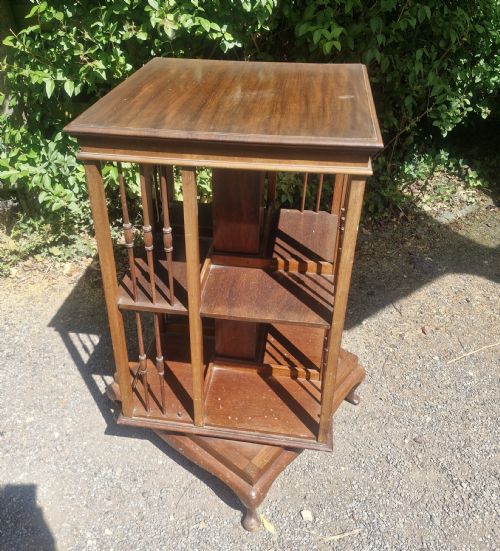
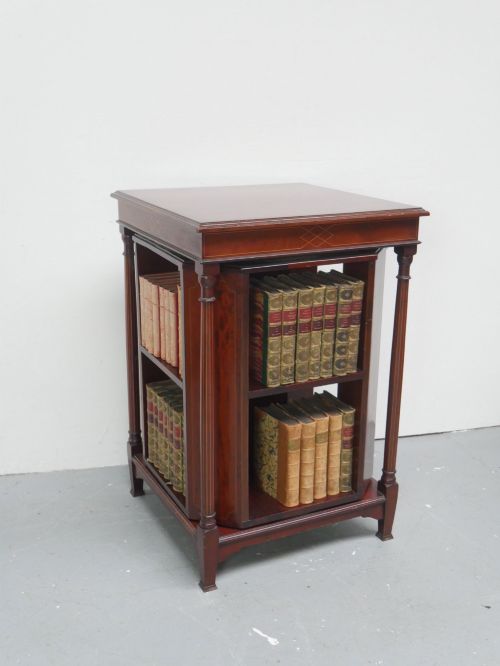
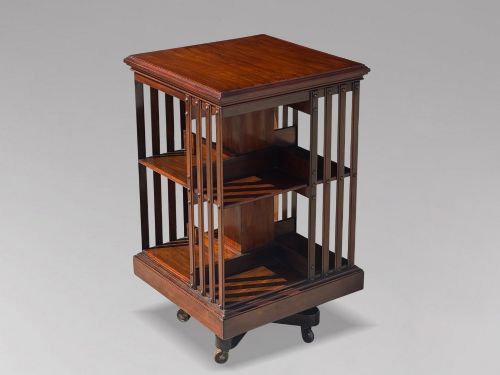
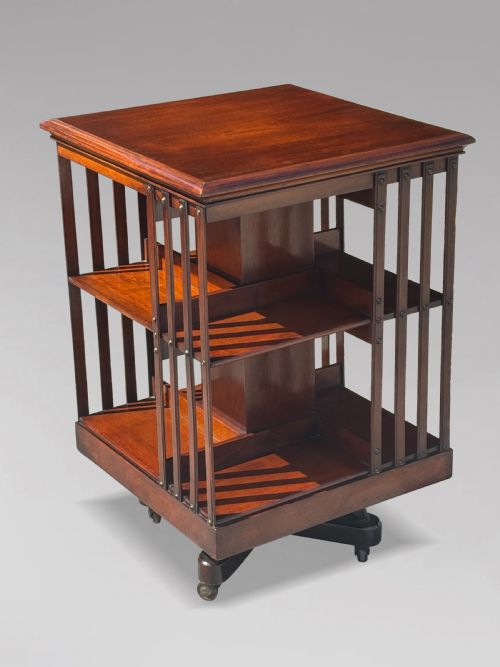
A mahogany rotating stand offers clever access to books or dining items, turning smoothly on a central pivot.
Mahogany Rotating Stand
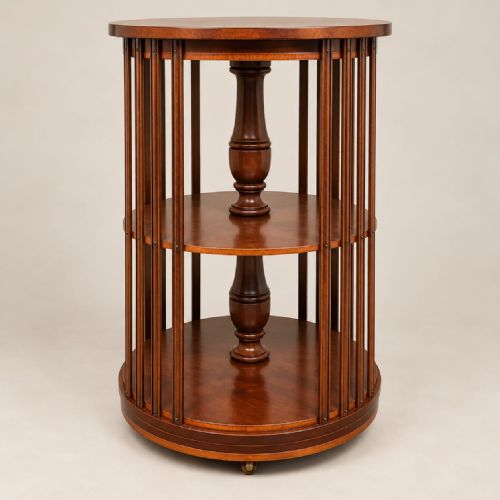
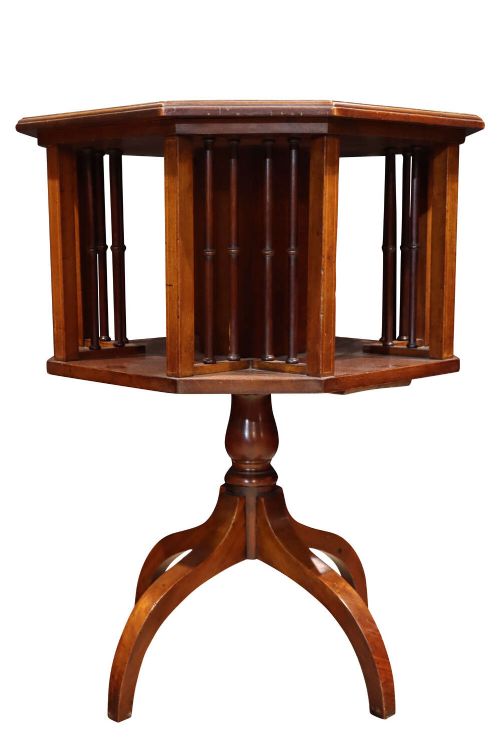
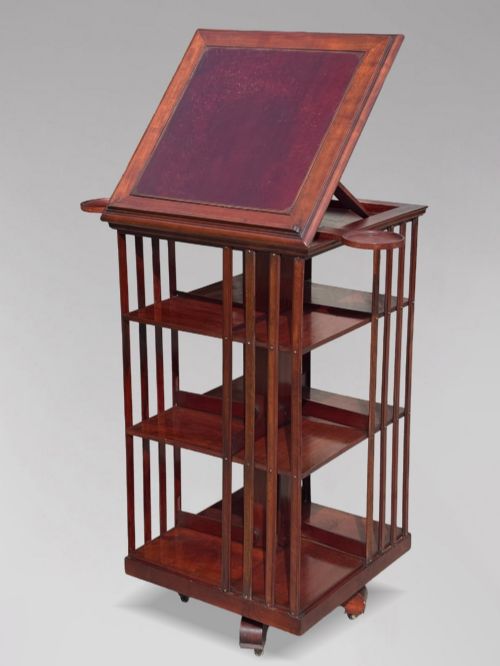
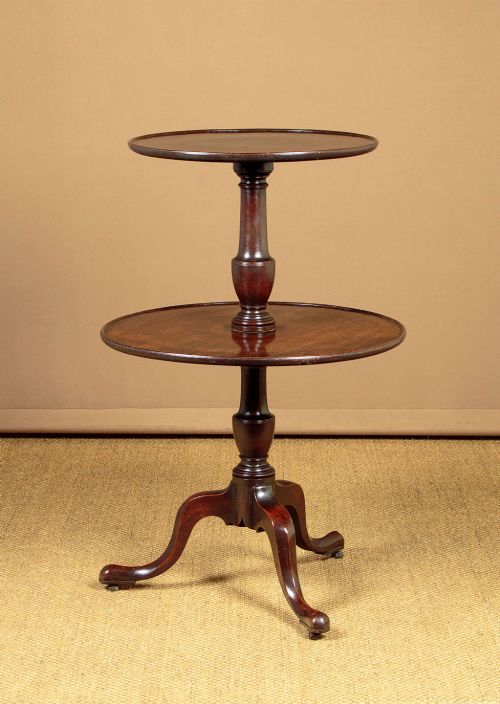
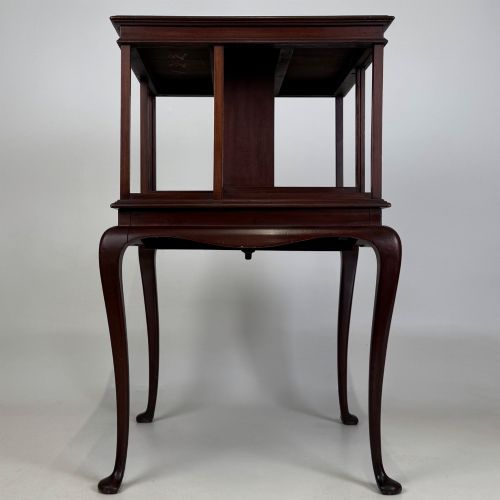
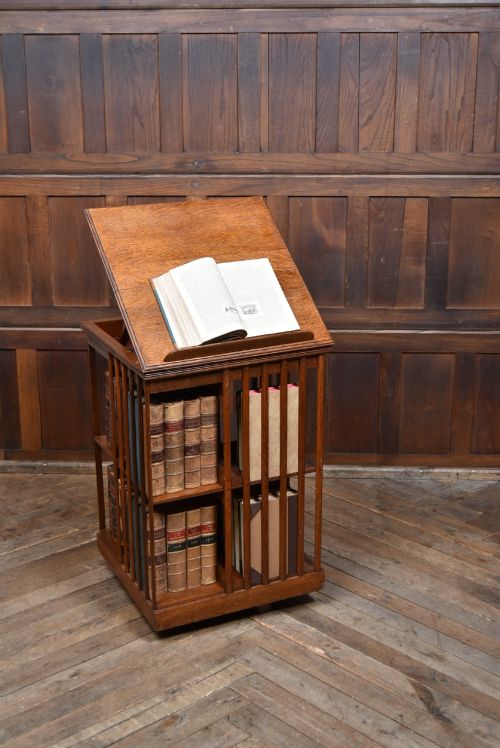
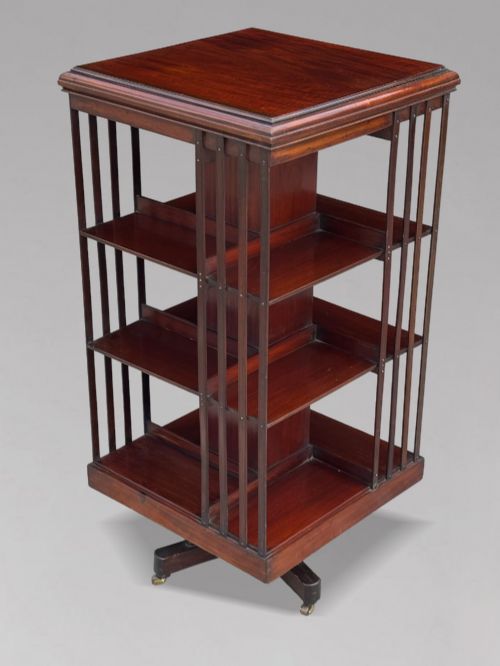
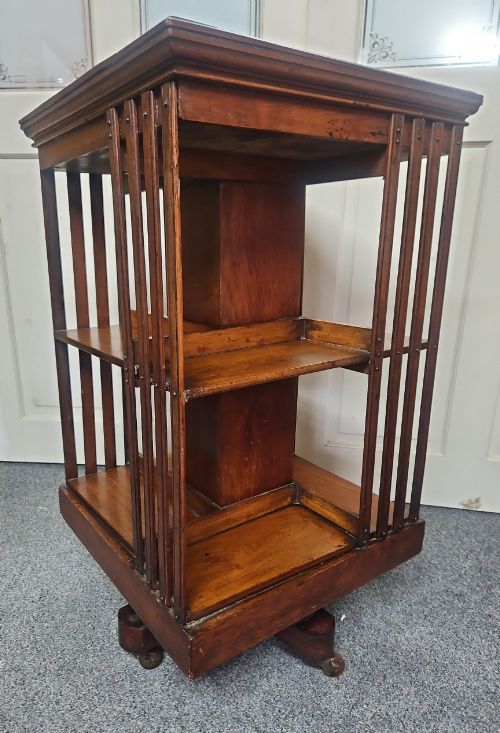
A mahogany rotating stand typically takes the form of a revolving bookcase, a dumb waiter, or a fireside stand. You will most often encounter Edwardian and Victorian revolving bookcases on this page, alongside Georgian dumb waiters and rotating fireside stands.
These pieces serve practical functions in studies, libraries, and dining rooms by keeping volumes or serving dishes close to hand. Their defining characteristic is the ability to rotate on a base without requiring the user to move the entire piece of furniture.
The selection ranges from compact tabletop models to tall multi-tiered structures designed for heavy use. Form follows function closely across all periods, resulting in balanced proportions suited to domestic interiors.
How they were made
Cabinet makers constructed these stands primarily using solid mahogany and mahogany veneers, occasionally incorporating secondary timbers like oak. Brass and cast iron mechanisms provide the internal rotating pivot that allows the tiers to turn smoothly.
Surface decoration frequently involves satinwood inlay, brass inlay, or flame mahogany figuring to enhance the visual depth of the wood. Tabletop and floor-standing versions alike rely on stable cross-form or cast-iron bases to support the weight of the rotating sections.
Mahogany Rotating Stand Retail Price Guide 2026
Typical asking prices for mahogany rotating stand among the pieces listed under this phrase on Sellingantiques today, from the lower quarter to the upper quarter. They describe what is for sale here now, not the wider market.
Several pieces double as fire cats, proving that Victorians wanted their hearth accessories to spin.
What varies in quality
The smoothness of the rotating mechanism and the stability of the central axis dictate the mechanical success of any stand. Superior examples maintain an even balance across all tiers without wobbling or sticking during rotation.
Timber selection and decorative detail separate standard production pieces from finer work. The inclusion of intricate satinwood inlay, flame mahogany grain, or specialist marble tops elevates the visual presence of the furniture.
Maple and Co
The Mahogany Rotating Stand Glossary
- Dumb waiter
- A tiered serving table designed to hold dishes or glassware, often featuring rotating trays or graduated tiers.
- Revolving bookcase
- A freestanding or tabletop unit with compartments for books that turns on a concealed central pivot.
- Fire cat
- An alternative term for a rotating fireside stand used to adjust items near a hearth.
- Satinwood inlay
- Contrasting pale timber inserted into the mahogany surface to create geometric or floral patterns.
- Flame mahogany
- Timber cut from the fork of the mahogany tree, producing a distinctive, rippling flame-like grain pattern.
Mahogany Rotating Stand: Frequently Asked Questions
What is a rotating fireside stand?
A rotating fireside stand, sometimes called a fire cat, is a small pivoting stand used near a hearth.
These pieces allowed users to adjust the position of items without leaving an armchair.
How do revolving bookcases work?
Revolving bookcases rest on a hidden internal pivot and cross-base mechanism.
This engineering lets the entire set of shelves turn freely with a gentle push.
Were these stands used in offices?
Desktop and floor-standing revolving bookcases served frequently in studies and offices.
They kept reference books within arm's reach of a desk.
How do I date a mahogany stand?
Dating relies on stylistic details such as Edwardian inlay or Georgian tier proportions.
Materials like cast iron and brass mechanisms also help indicate the period.