

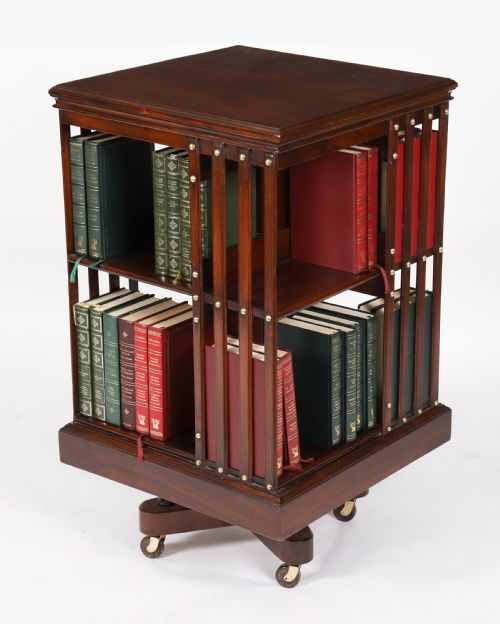
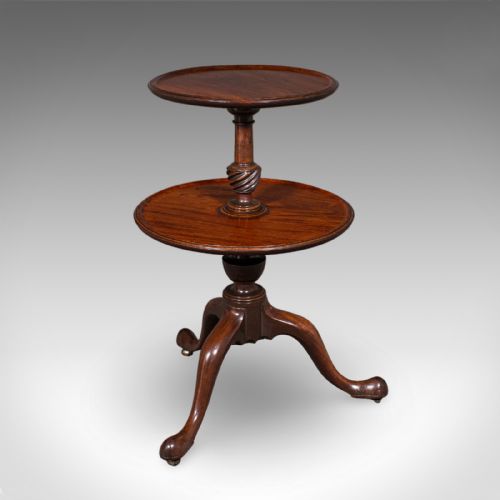


Mahogany Revolving Occasional Table
These mahogany revolving occasional table pieces offer compact utility and traditional timber grain, answering the need for a versatile surface.
Mahogany Revolving Occasional Table
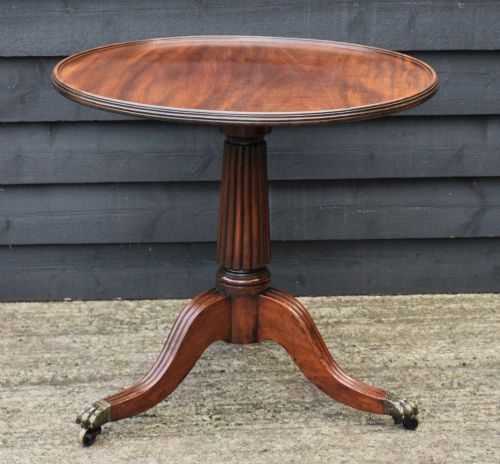
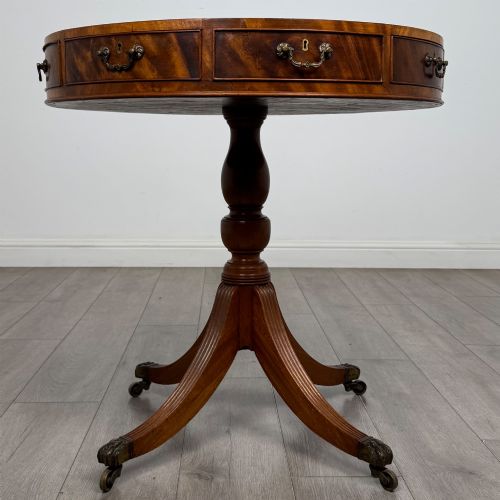
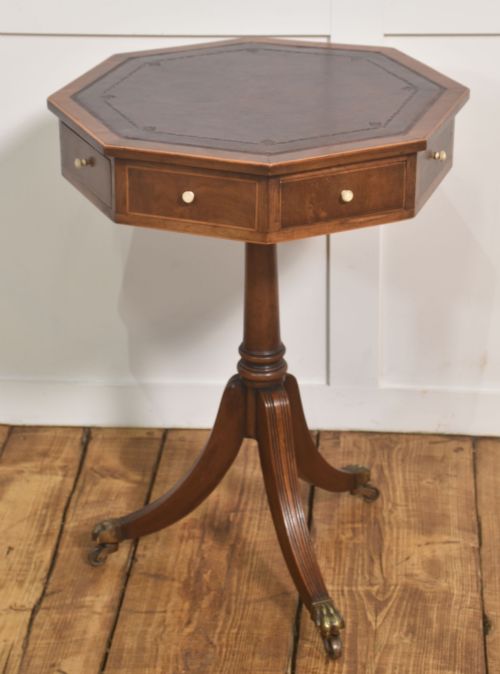
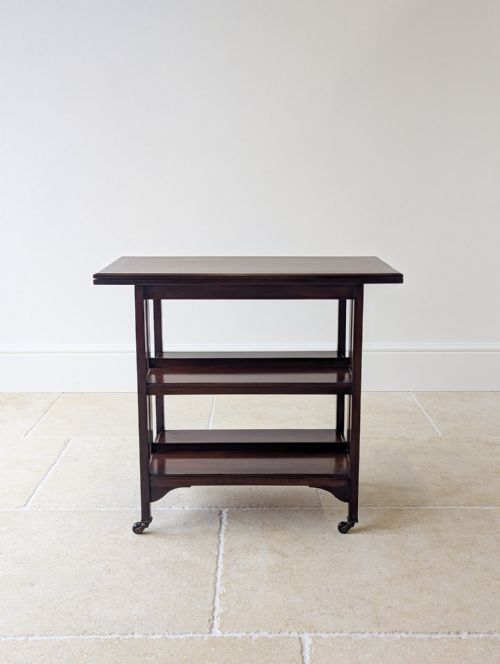
A mahogany revolving occasional table combines a rich timber top with a swivelling mechanism, often taking the form of drum tables, tripod tea tables, or smaller book stands. These pieces serve flexible functions in a room, offering surfaces that turn for ease of access or multi-tiered storage.
The selections span distinct periods from the George III and Regency eras through to Victorian, Edwardian, and later revivals. Buyers encounter diverse formats, including dumb waiters, card tables, and occasional tables with birdcage actions.
Originating primarily as functional furniture for tea service, dining, or holding books, these items bring classic British cabinet-making traditions into modern domestic spaces.
Materials and construction methods
Makers utilised solid mahogany and figured veneers, frequently pairing the rich reddish-brown timber with brass castors, handles, or pivoting mechanisms. Selected examples introduce contrasting burr walnut details to enhance the visual depth of the surface.
Carpenters employed stable tripod bases, pillar supports, and drum constructions to ensure the revolving tops functioned smoothly. Drawers incorporated within drum tables were fitted into the frieze, while tiered dumb waiters utilised turned central columns to support multiple graduating trays.
Mahogany Revolving Occasional Table Retail Price Guide 2026
Typical asking prices for mahogany revolving occasional table among the pieces listed under this phrase on Sellingantiques today, from the lower quarter to the upper quarter. They describe what is for sale here now, not the wider market.
Some nineteenth-century revolving book stands were designed low to the floor so readers could browse volumes from a comfortable fireside rug.
Markers of superior craftsmanship
Quality rests in the selection of the mahogany timber, where well-figured grain and rich patination elevate the visual presence of the piece. Subtle details such as finely turned pedestals, dovetail joints in drawers, and the precision of the rotating mechanism distinguish finer examples.
Proportions also dictate the desirability of an item, with smaller drum tables and delicate tripod formats commanding attention for their restrained scale and balanced engineering.
Maple & Co
The Mahogany Revolving Occasional Table Glossary
- Drum table
- A circular library or occasional table with a deep frieze containing drawers, typically supported on a central pillar and tripod base.
- Dumb waiter
- A multi-tiered serving stand with revolving or fixed trays, designed to hold dishes or tea service without requiring a servant.
- Birdcage table
- A table featuring a wooden framework beneath the top that allows the surface to tilt and revolve independently of the pedestal.
- Tripod base
- A three-legged support structure commonly found beneath pillar tables to ensure stability on uneven floors.
- Swivel top
- A table top engineered to pivot horizontally on its central support for convenient access from multiple angles.
Mahogany Revolving Occasional Table: Frequently Asked Questions
What is a revolving occasional table used for?
These tables provide a movable surface for holding books, tea service, or decorative items within a living space. The rotating action allows users to access items easily from different seating positions.
They function well beside armchairs or as centre tables where flexibility of placement is required.
How do I identify a Regency period table?
Regency pieces often feature clean architectural lines, brass inlay, or reeded pillar supports reflecting classical influence. Timber selection typically emphasises dark, dense mahogany with a polished finish.
Proportions remain restrained, and mechanical ingenuity in the pivoting joints becomes more pronounced during this era.
How should I care for antique mahogany furniture?
Keep mahogany pieces away from direct sunlight and heat sources to prevent the timber from drying out or fading. Regular dusting with a soft, dry cloth preserves the polished surface.
Apply a traditional beeswax polish sparingly when the wood appears dry to maintain its natural lustre.