
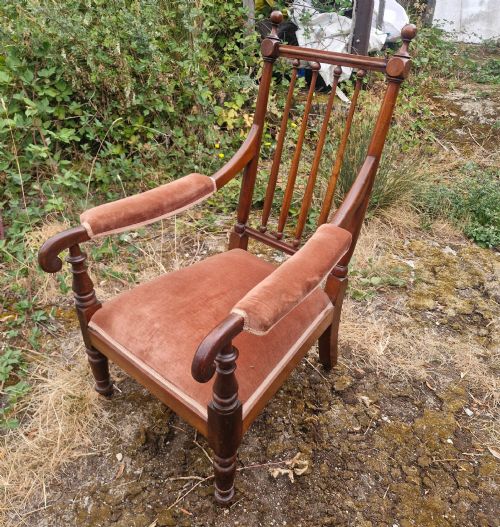
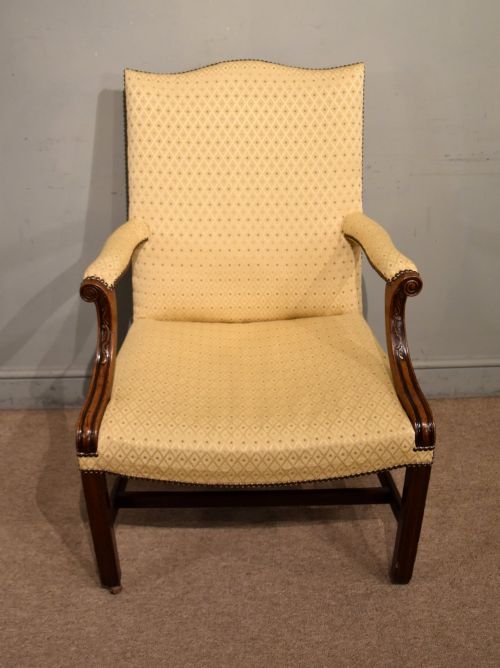
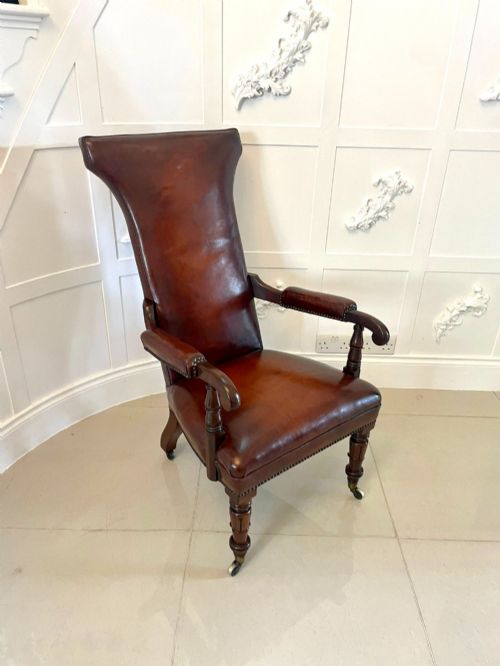
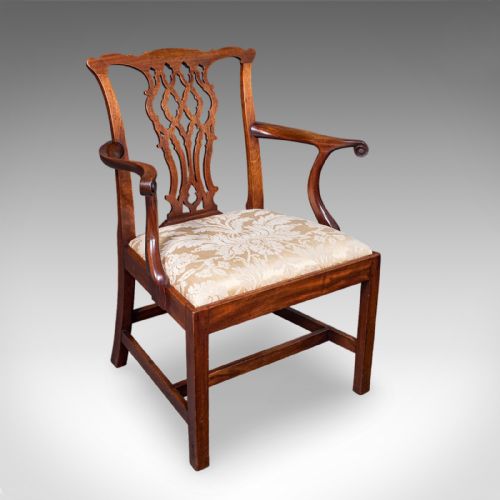


Mahogany Reading Desk Chair
A mahogany reading desk chair is a sturdy, supportive seat built for study and writing, prized for rich timber and comfortable upholstered arms.
Mahogany Reading Desk Chair
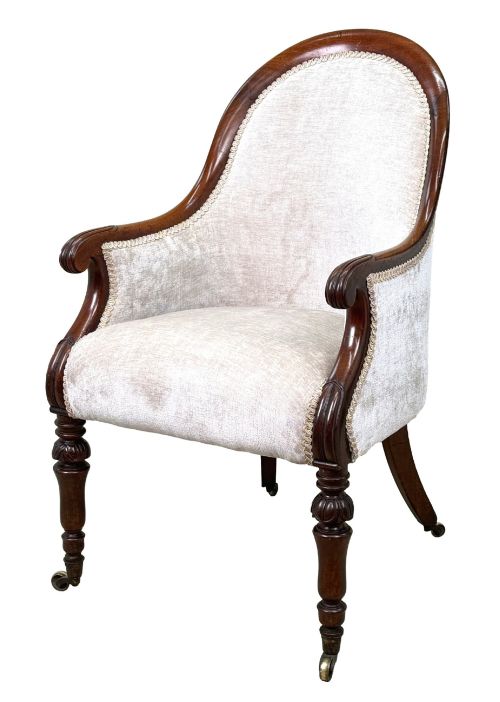
A mahogany reading desk chair brings together the practical requirements of a study seat and the handsome presence of period furniture. When searching this phrase, buyers encounter forms that span the eighteenth, nineteenth, and early twentieth centuries, reflecting changing domestic fashions in libraries and offices.
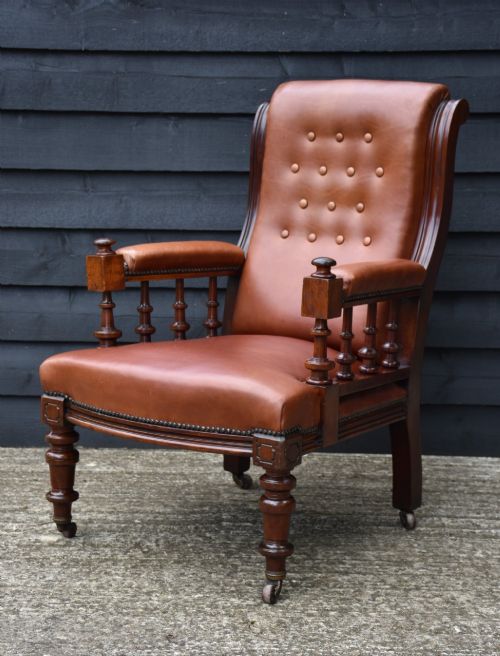
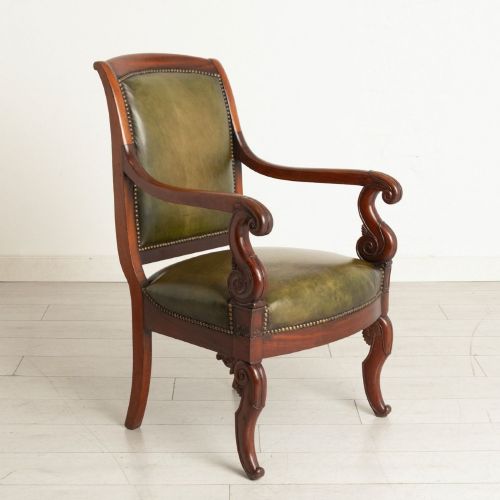
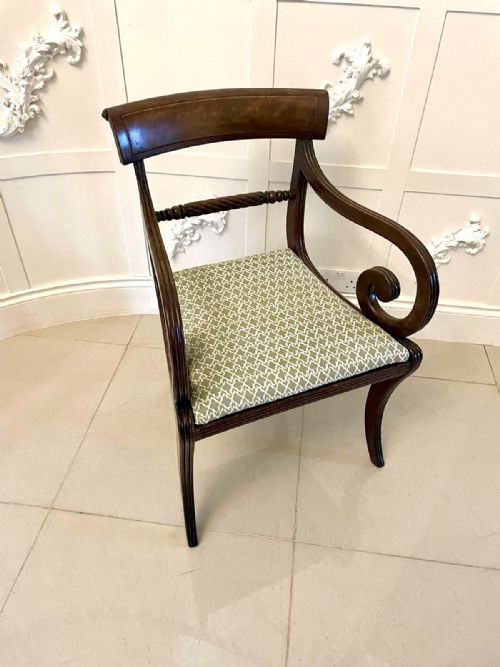
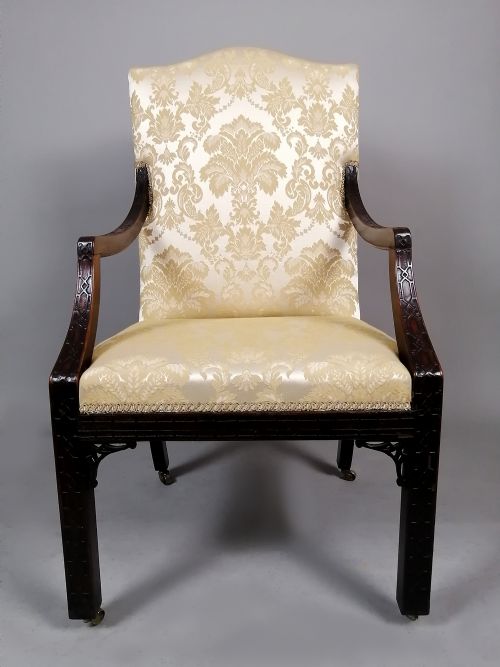
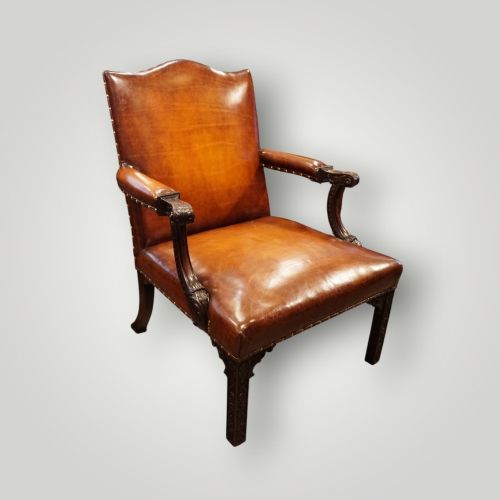
The most common examples on this page date from the nineteenth century, including Regency, William IV, and Victorian interpretations of earlier Georgian designs. These pieces often feature library, tub, or Gainsborough configurations designed for long hours of reading or correspondence.
How they were made
Cabinetmakers constructed the frames of these chairs from dense, durable mahogany, sometimes incorporating carved details, reeded legs, or blind fretwork. Brass hardware and castors frequently appear on the feet to assist movement across heavy carpets.
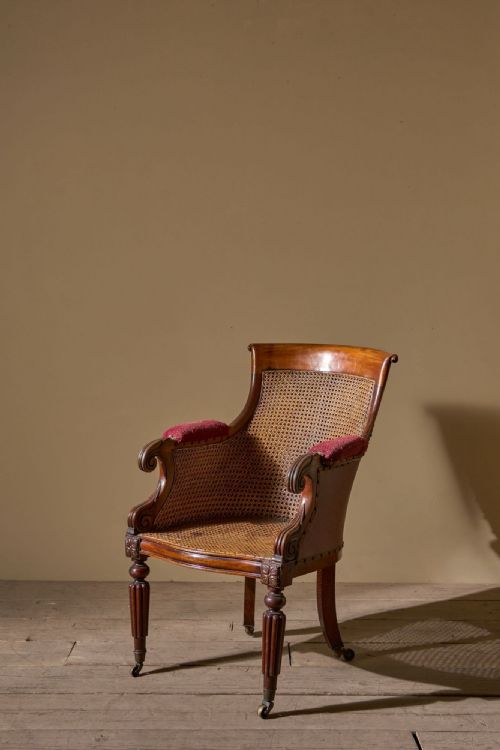
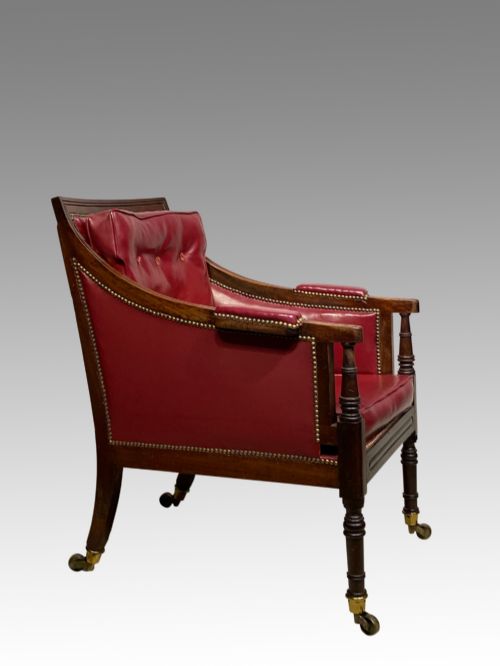
Seating surfaces relied on traditional upholstery methods, combining webbed bases with horsehair stuffing beneath leather, fabric, velvet, or woven cane. Leather was commonly hand-dyed or finished with brass nail heads along the borders.
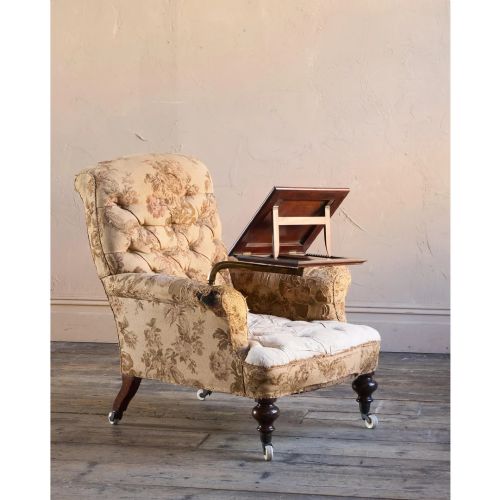
Some nineteenth-century reading chairs include discreet built-in book rests, proving that nineteenth-century scholars loved multitasking just as much as we do.
What varies in quality
The distinction between standard examples and the finest pieces lies in the crispness of the timber carving and the architectural proportions of the frame. Superior chairs display carefully selected mahogany grain with rich colour and balanced arm supports that integrate smoothly into the overall design.
Attention to detail in the secondary woods, the execution of the joinery, and the authenticity of the leather or cane work further elevate a piece. Master craftsmen invested time in precise joinery that ensures structural stability after centuries of use.
The Mahogany Reading Desk Chair Glossary
- Bergère
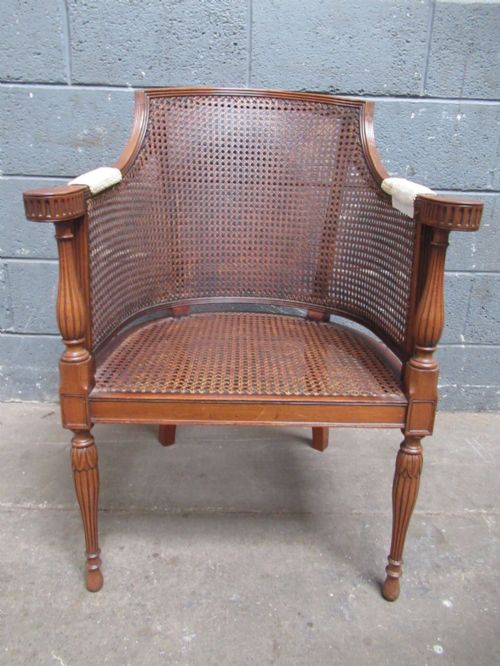
- An enclosed upholstered armchair with cane work panels on the back and sides. This French-inspired form became popular in English libraries during the Regency period.
- Gainsborough chair
- A wide, open-armed easy chair with a padded back and seat, standing on short legs. Eighteenth-century versions often featured carved mahogany frames.
- Tub chair
- An armchair with a continuous curved back and arms forming a single semi-circular enclosure. It provides a snug, supportive seat for reading desks.
- Reeding
- Parallel convex moulding carved into wooden legs or uprights. It offers a classical decorative texture found on many nineteenth-century examples.
- Elbow chair
- A traditional term for an armchair with low armrests designed for use at a desk or table. These seats frequently appear in morning rooms and studies.
Mahogany Reading Desk Chair: Frequently Asked Questions
What is a mahogany reading desk chair?
A mahogany reading desk chair is a traditional wooden seat designed specifically for studies, libraries, and offices, combining sturdy timber frames with supportive upholstered or caned backs.
These pieces emerged to accommodate long periods of writing and reading, offering distinctive armrests and ergonomic curves tailored for scholarly work.
How do I date a mahogany chair?
Dating these chairs involves examining the timber species, joinery methods, decorative carving styles, and the wear patterns on the wood. Regency and Georgian examples display distinct leg turns and back splats characteristic of their respective eras.
Secondary woods and upholstery techniques also provide reliable clues to the decade of manufacture, distinguishing eighteenth-century originals from later revival pieces.
Where were these chairs used?
They originally served in private libraries, gentlemen's studies, and grand country house writing rooms where scholars and landowners managed their correspondence. Their sturdy construction made them suitable for daily professional use.
Today, they function equally well in modern home offices, studies, or as accent seating in living spaces requiring traditional character.
How do I care for leather upholstery?
Leather upholstery benefits from regular dusting with a soft, dry cloth and occasional treatment with appropriate leather balms to prevent drying and cracking. Keeping the leather away from direct sunlight preserves its rich colour.
Avoid using harsh chemical cleaners or excess water, which can damage the hide and stain the surrounding mahogany frame.
What is the difference between cane and leather seats?
Caned seats offer a lightweight, breathable surface woven from rattan, often seen in lighter Regency and Edwardian reading chairs. Leather seats provide a padded, durable surface secured with tacks.
While cane requires gentle handling to prevent snapping, leather offers a softer cushion suited for extended desk work.