



Mahogany Piecrust Lamp Table
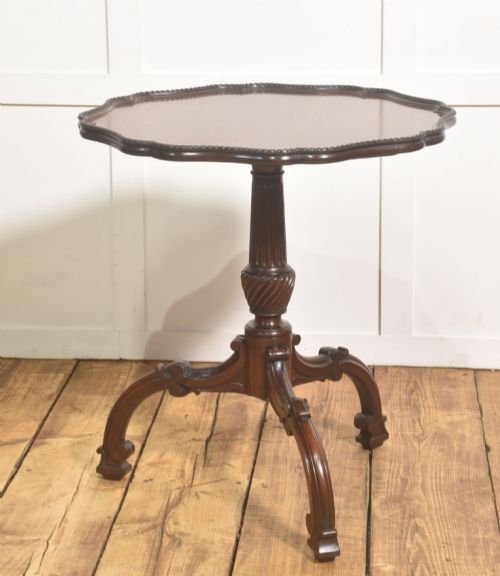
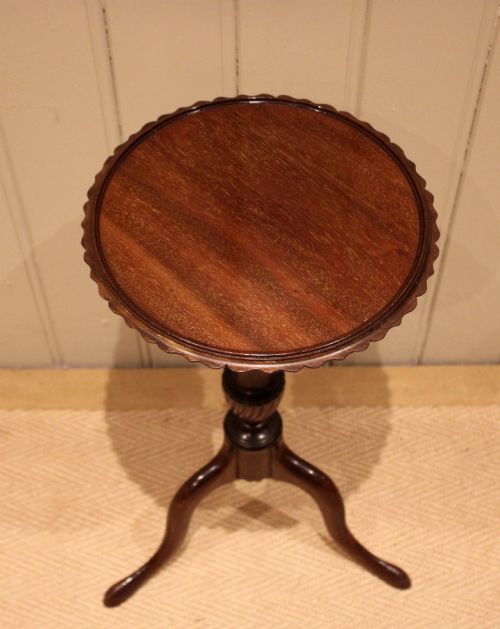
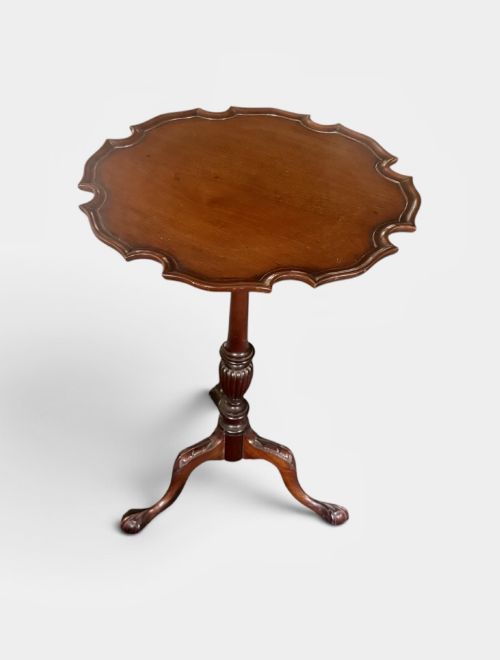
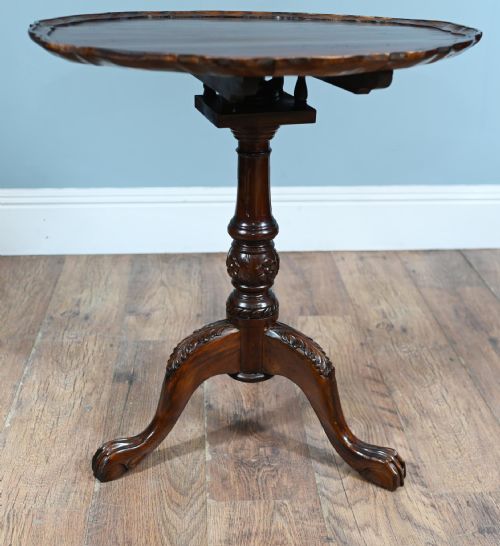
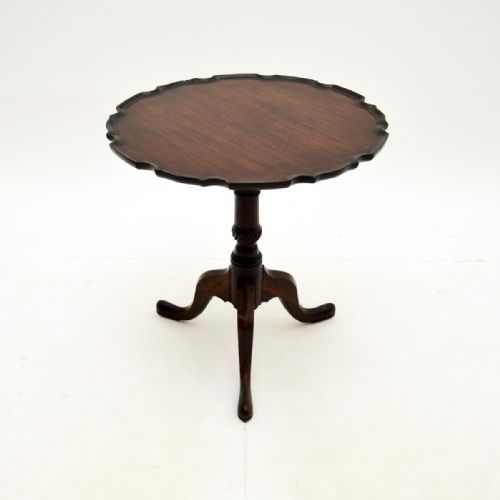
These mahogany piecrust lamp table pieces combine timber and raised rims for compact surface space beside a chair.

Mahogany Piecrust Lamp Table
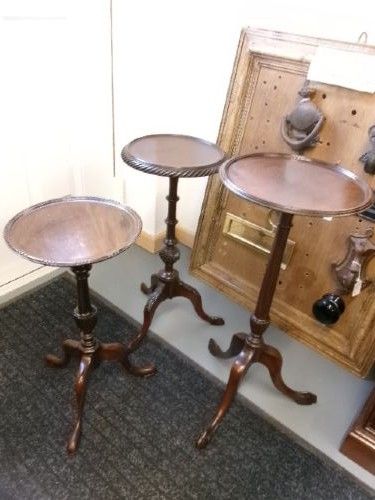
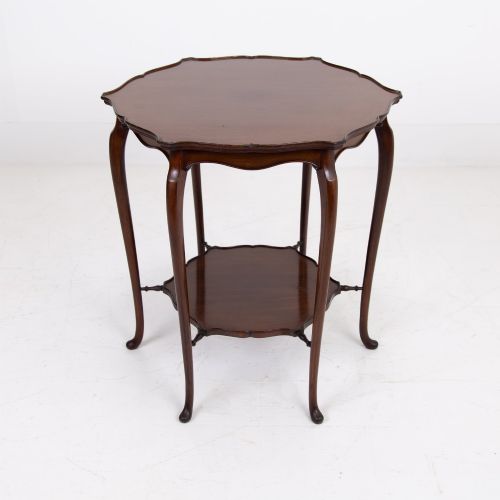
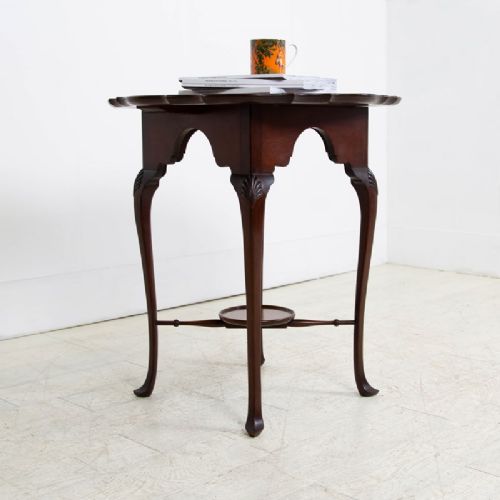
A mahogany piecrust lamp table serves as a compact surface for lighting or drinks beside seating. This selection brings together occasional tables, wine tables, and tripod tables designed with raised shaped rims.
Most examples date from the Edwardian era and the nineteenth century, alongside Georgian originals and later revival styles. Forms range from simple tilt-top designs to carved tripod bases supporting round wooden tops.
Materials and construction
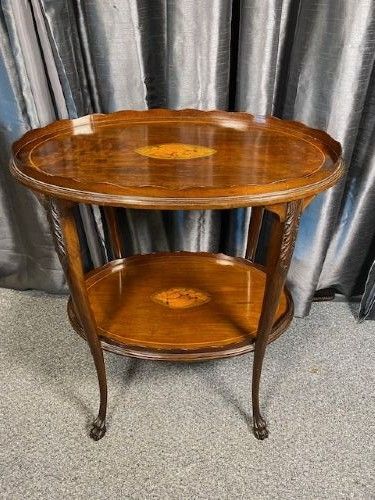
Makers shaped solid mahogany and wood veneer to form the top and central column. Marquetry inlay and brass details appear on select pieces to add surface decoration.
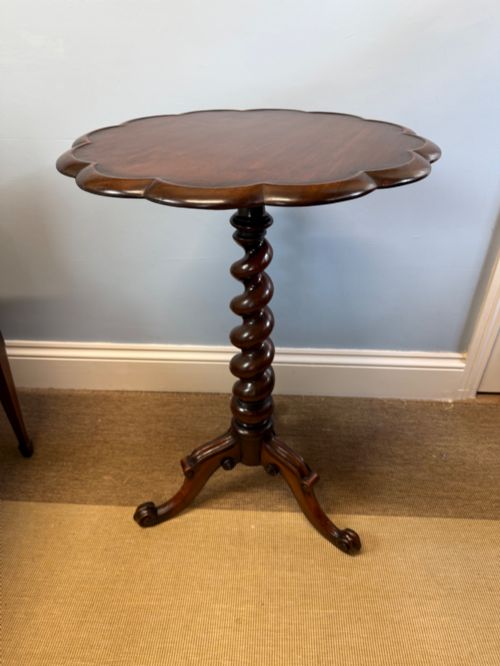
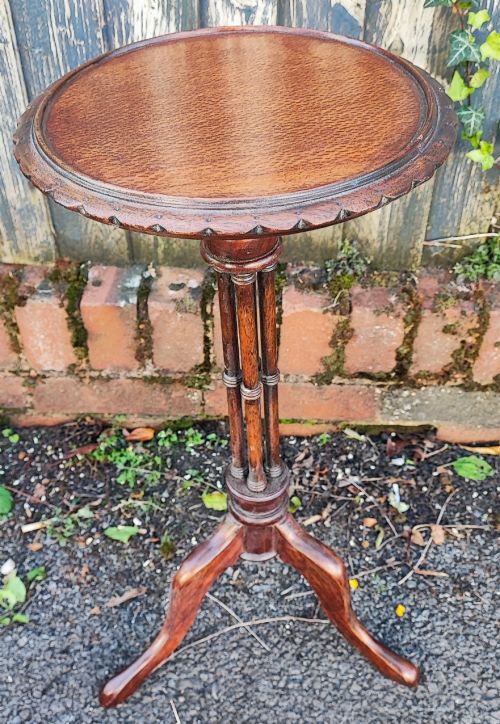
Tripod legs provide stability for the slender central pillar. Turned elements such as bobbin turning shape the upright supports on nineteenth-century examples.
Listings span the eighteenth century, the Victorian era, the Edwardian period, and twentieth-century revivals in mahogany and brass.
Variations in quality
The crispness of the carved rim separates standard production from finer craftsmanship. Detail in the timber figure and the execution of tripod base carving determine the overall distinction of a piece.
Proportion between the top and the supporting column affects the visual balance. Timbers selected for rich figure and depth of colour elevate the finished object.
Shapland and Petter·S and H Jewell London
The Mahogany Piecrust Lamp Table Glossary
- Piecrust rim
- A raised, decoratively carved edge shaped to resemble pastry work. This feature prevents items from sliding off the small surface.
- Tripod table
- A small freestanding table supported by three legs branching from a central column. This format provides steady placement on uneven floors.
- Tilt-top
- A table mechanism allowing the top to hinge vertically when not in use. This design saved floor space in period interiors.
- Occasional table
- A small movable table intended for flexible placement around a room. These pieces function as lamp stands or wine tables.
- Marquetry inlay
- Decorative patterns formed by fitted pieces of veneer applied to a wooden surface. This technique creates contrasting geometric or floral designs.
Mahogany Piecrust Lamp Table: Frequently Asked Questions
What is a piecrust edge?
A piecrust edge is a raised, scalloped border carved directly from the timber of the table top. It provides both decorative detail and a functional barrier to keep items secure.
This shaped rim appears on occasional tables and wine tables from various periods. The execution of the curves indicates the skill of the maker.
How were these tables used?
These small tables served as movable surfaces for lamps, candles, or wine glasses beside seating. Their compact footprint suited intimate parlour spaces and sitting rooms.
Tilt-top variants allowed the surface to fold away against a wall when the room needed clear floor space. Tripod bases made them easy to reposition as required.
Are these tables Georgian or later?
The selection includes genuine eighteenth-century pieces alongside nineteenth-century examples and twentieth-century revival styles. Georgian originals sit alongside Chippendale style and Georgian Revival reproductions.
Materials, construction methods, and timber patination help distinguish between early pieces and later revivals from the Edwardian period.
What wood is used?
Mahogany serves as the primary timber for these tables, often selected for its rich grain and deep colour. Figured mahogany and wood veneer appear on specific pieces to enhance the visual texture of the top.
Additional materials like brass and marquetry inlay provide subtle contrast on select occasional and side tables.