
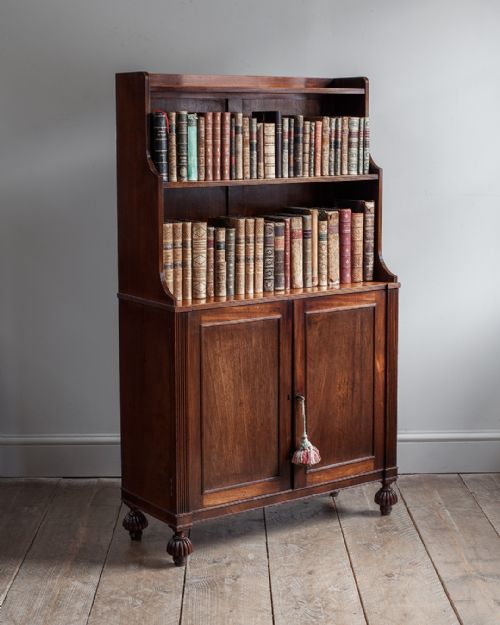
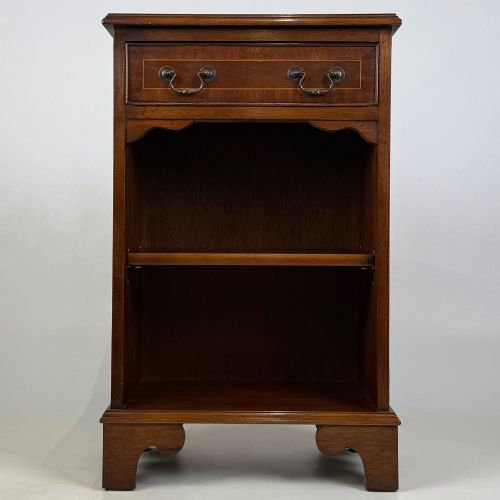
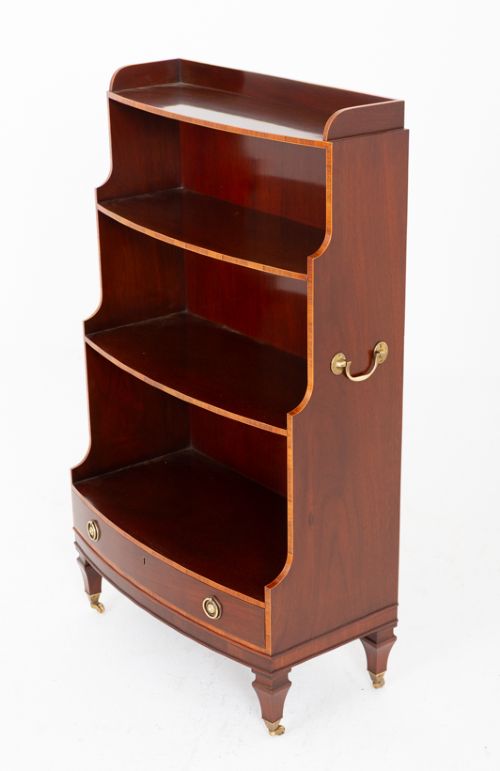
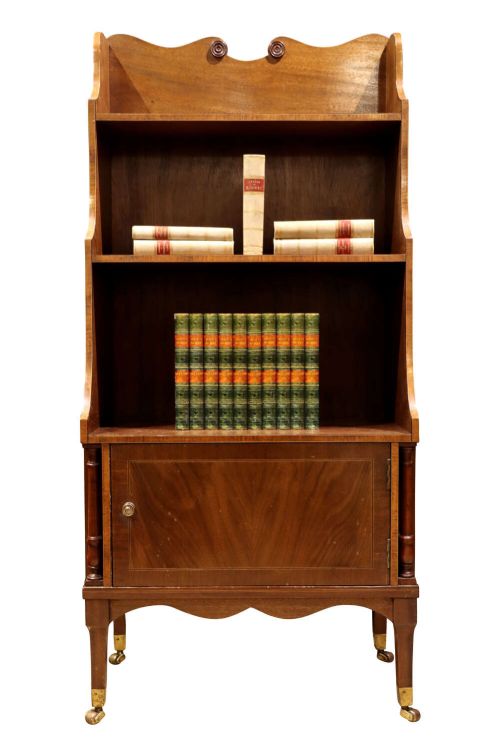
Mahogany Open Shelf
These mahogany open shelf pieces provide practical architectural display and storage, bringing warm timber grain and functional tiers into sitting rooms and libraries.
Mahogany Open Shelf
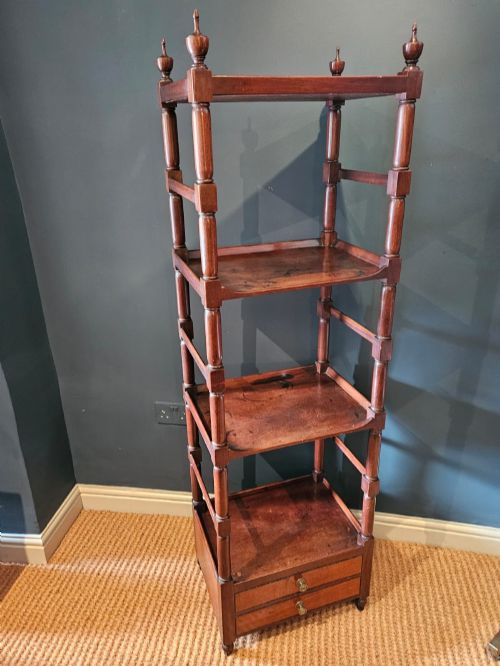
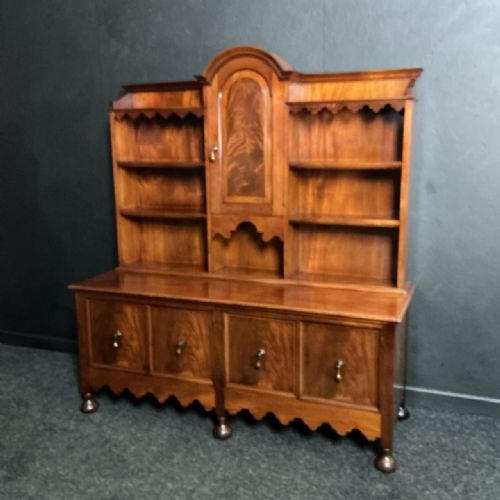
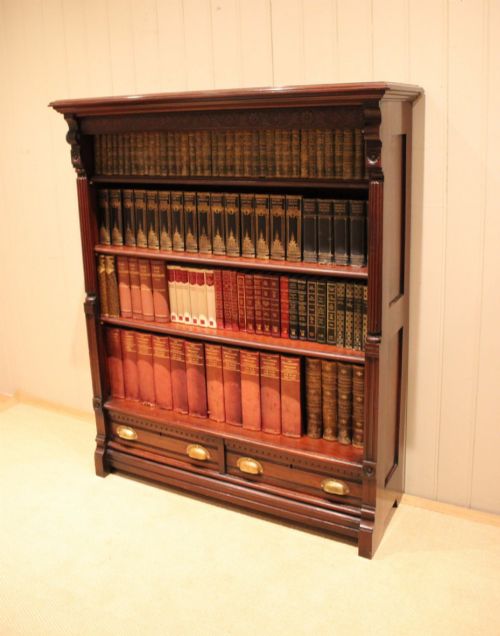
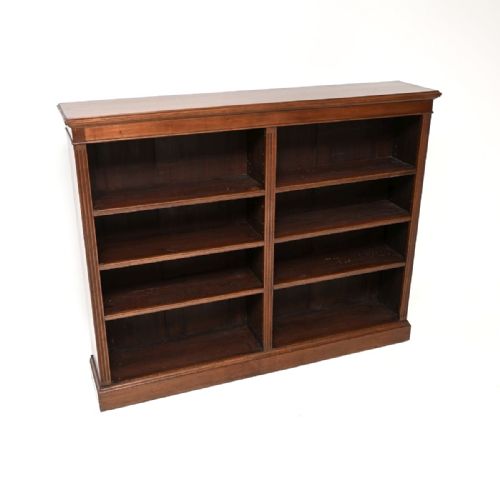
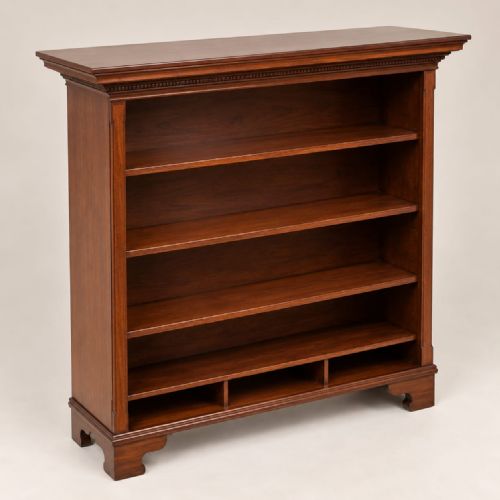
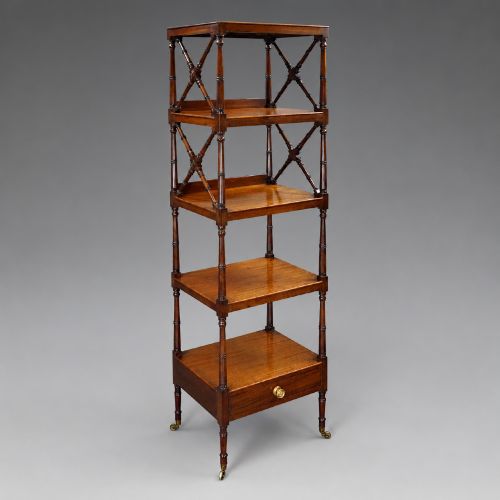
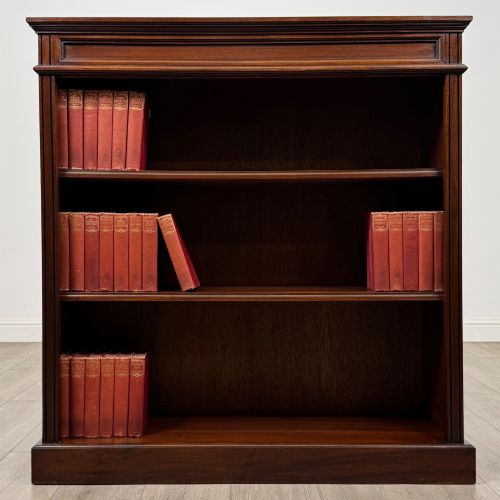
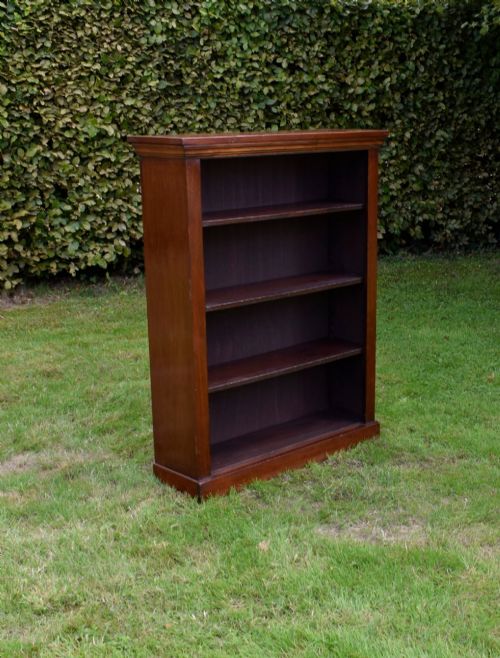
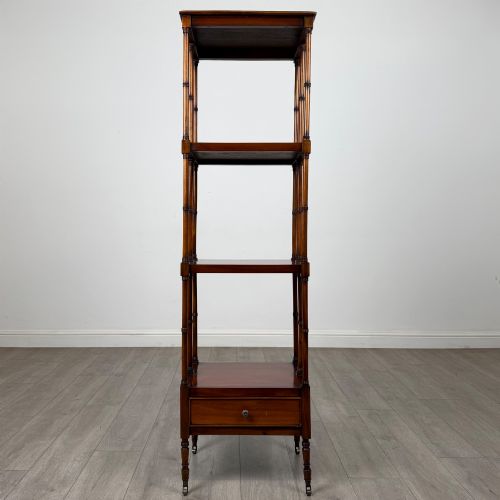
A mahogany open shelf encompasses versatile bookcases, multi-tiered whatnots, wall-hanging bookshelves, and freestanding étagères designed for displaying books and decorative objects. When searching for a mahogany open shelf, buyers encounter everything from compact Georgian wall shelves to substantial Victorian and Edwardian bookcases.
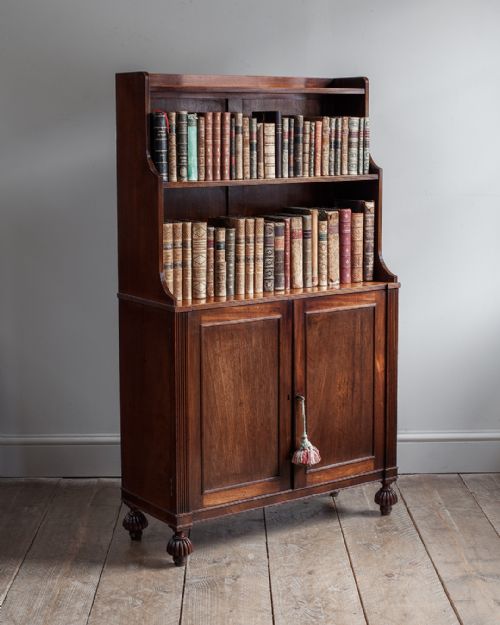
The pieces span several centuries of British cabinet-making, featuring formal Regency waterfall designs alongside utilitarian late-nineteenth-century library shelving and early-twentieth-century revival pieces. Most examples rely on open horizontal tiers supported by vertical uprights, offering easy access to books and collections without the barrier of glazed doors.
How they were made
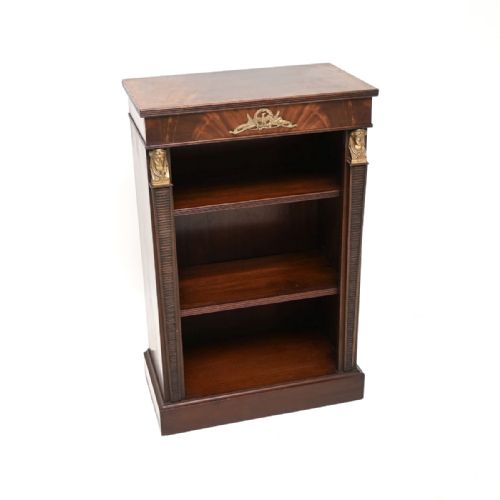
Cabinet-makers relied heavily on solid mahogany and flame mahogany veneers, often incorporating secondary timbers such as pine alongside decorative accents of satinwood, brass, and ormolu. Timber selection dictated the visual weight of the furniture, with figured flame grains reserved for prominent surfaces on high-status bookcases and whatnots.
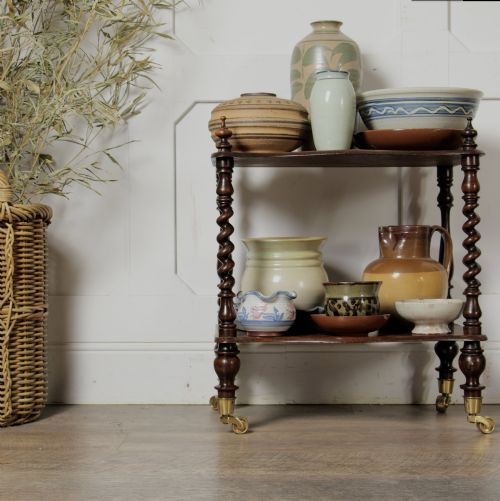
Construction techniques evolved from pegged joinery in earlier Georgian periods to include adjustable shelf mechanisms in nineteenth-century library pieces and delicate turned supports on tiered stands. Brass castors, barley twist turnings, and inlaid banding appear frequently as structural and decorative enhancements across Victorian and Edwardian iterations.
Listings feature mahogany, satinwood, flame mahogany, brass, ormolu, and paint across periods ranging from the eighteenth to the twentieth century.
What varies in quality
The distinction between ordinary and exceptional pieces rests upon the crispness of timber selection, the refinement of joinery, and the elegance of proportions. Superior examples demonstrate thoughtful grain matching across shelves and uprights, whilst lesser items employ plain timber boards with heavier, uninspired turnings.
Detailing elevates a piece from utility to craftsmanship, visible in hand-cut dovetails, finely cast brass fittings, and well-executed decorative inlays rather than stamped or applied ornaments. Structural integrity also dictates worth, separating rigid, precisely assembled bookcases from those compromised by loose joints or warped shelves over decades of use.
The Mahogany Open Shelf Glossary
- Waterfall bookcase
- A stepped set of open shelves where each tier is shallower than the one below it, creating a cascading profile. This form gained popularity during the Regency period.
- Étagère
- A French term for a piece of furniture consisting of a set of open shelves for displaying small objects. These slim pieces function well in tight spaces as side tables or buffets.
- Flame mahogany
- A highly figured wood veneer sliced from the point where a branch joins the main tree trunk. The resulting grain pattern resembles flickering flames of fire.
- Breakfront
- A cabinet or bookcase design where the central section projects forward from the flanking wings. This architectural arrangement creates depth and visual interest in large library furniture.
Mahogany Open Shelf: Frequently Asked Questions
How do I style an open shelf?
Balance books stored vertically with horizontal stacks and decorative objects to maintain visual breathing room across the tiers.
Vary heights and textures by incorporating ceramics, small sculptures, and trailing plants alongside bound volumes.
Are these shelves suitable for heavy books?
Many nineteenth-century library bookcases feature thick mahogany boards and adjustable supports specifically engineered to bear heavy collections of volumes.
Wall-hanging shelves require secure anchoring to wall studs to safely hold substantial weight.
What is the difference between a whatnot and a bookcase?
A bookcase focuses primarily on storing books with deeper, uniform shelving enclosed within upright sides.
Whatnots prioritize decorative display through lighter tiered structures, slender columns, and open sides accessible from all angles.
How do I care for mahogany timber?
Keep mahogany furniture away from direct sunlight and heat sources to prevent the wood from drying out or fading over time.
Dust regularly with a dry cloth and occasionally apply a quality beeswax to nourish the polished surface.