


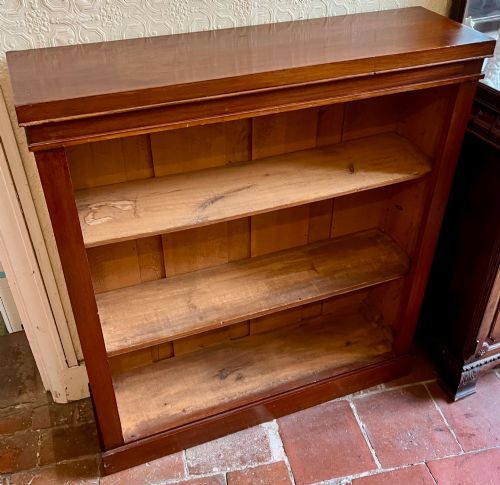
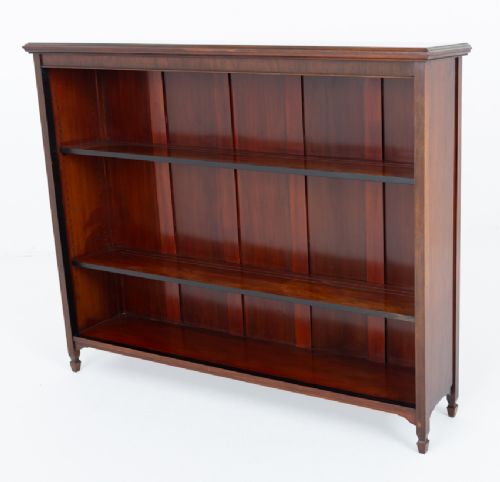
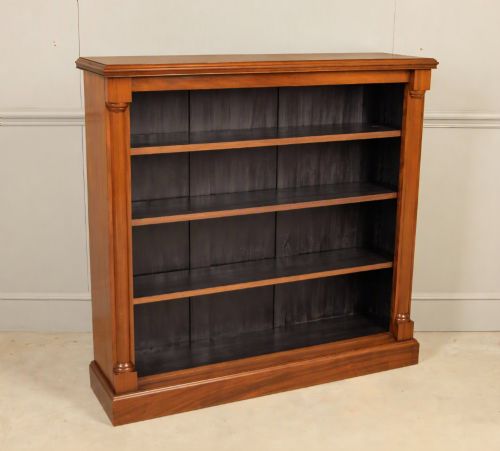
Mahogany Open Bookshelves
Mahogany open bookshelves bring orderly warmth to a room, offering accessible display and storage for a growing library.
Mahogany Open Bookshelves
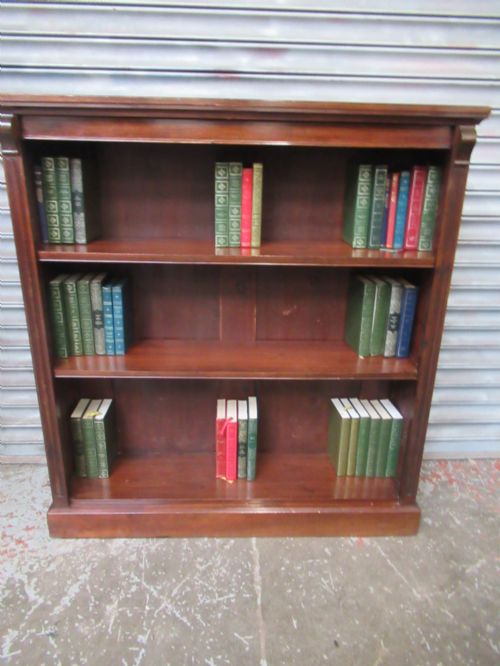
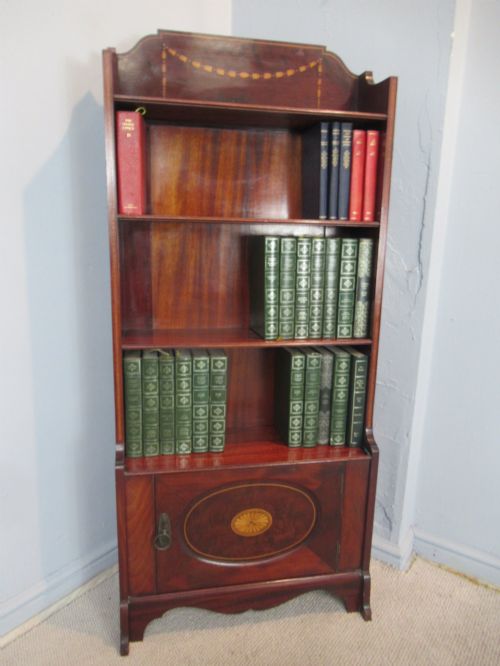
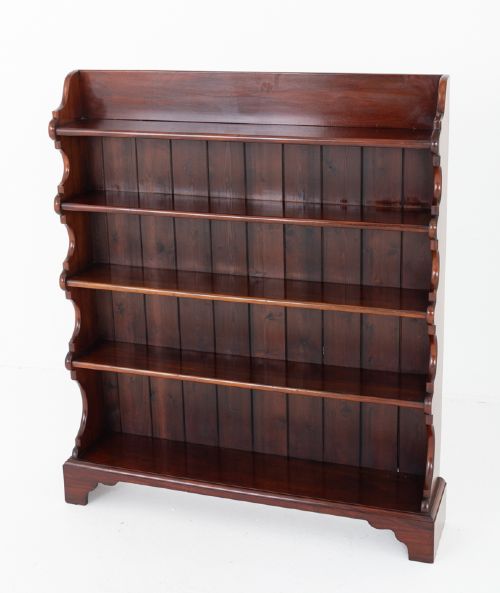
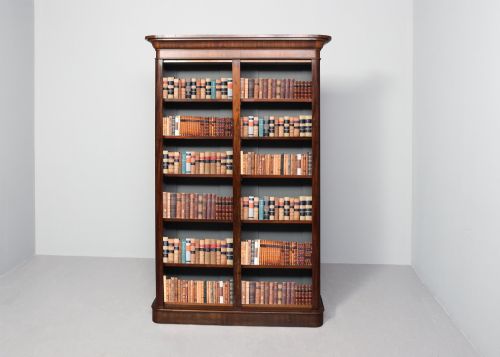
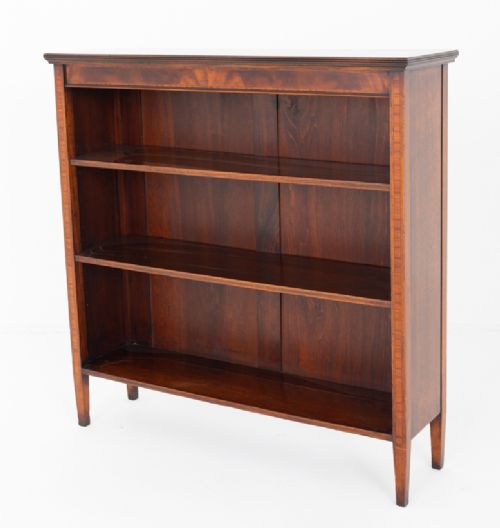
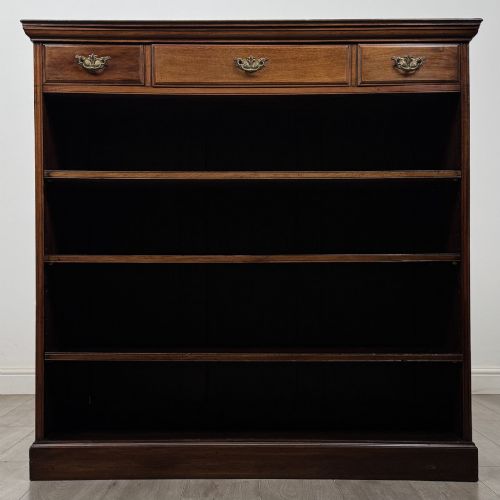
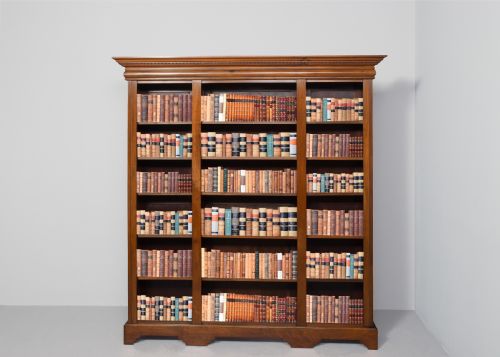
When searching for mahogany open bookshelves, buyers encounter a range of forms spanning the nineteenth and twentieth centuries, from tall library fixtures to small waterfall units. Victorian and Edwardian examples dominate the selection, appearing alongside Regency pieces and early twentieth-century designs.
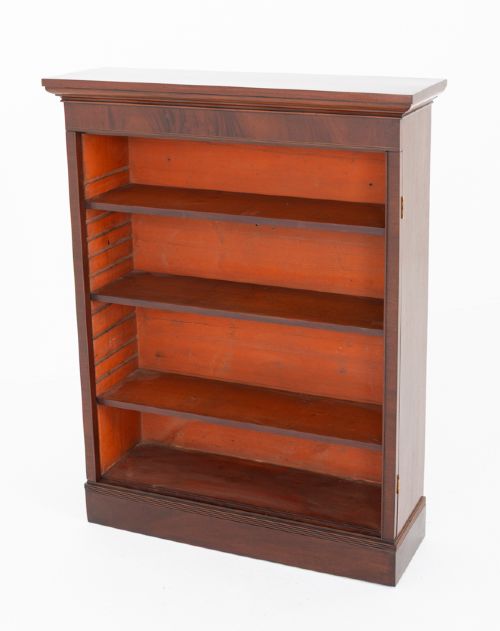
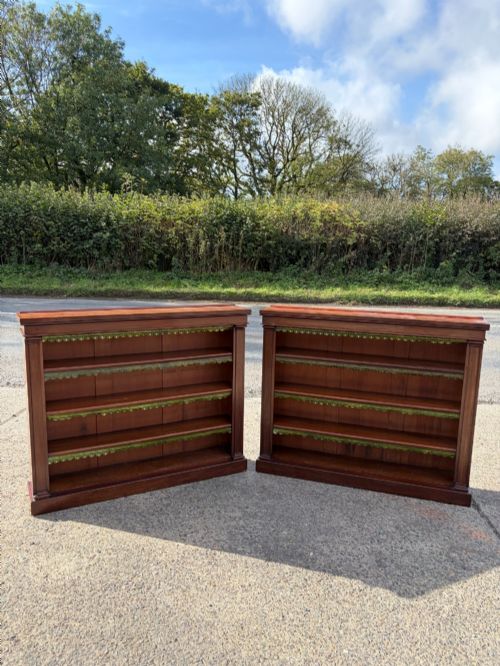
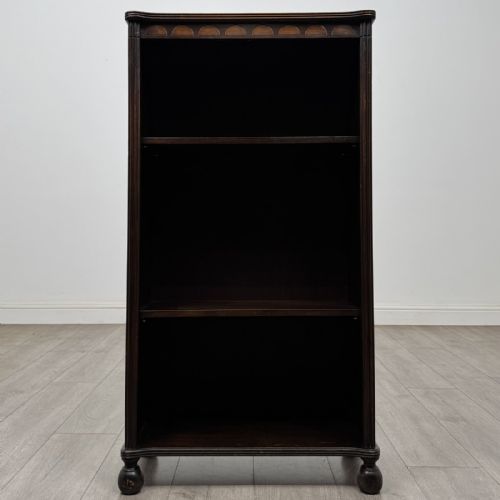
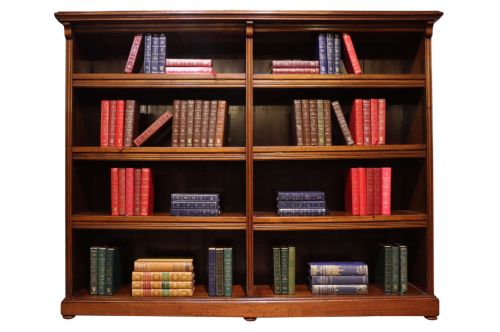
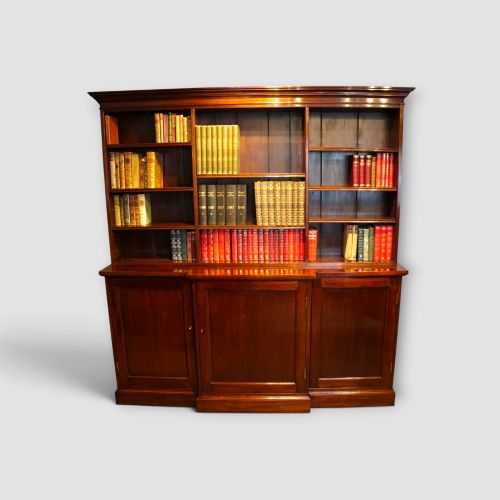
The objects take various functional shapes, including two-section bookcases, wall hanging shelves, narrow cabinets, and breakfront units. Many incorporate adjustable shelves, raised galleries, or brass castors, serving studies and living spaces alike.
Materials and construction
Cabinet makers utilised solid timber alongside flame mahogany veneer to achieve rich grain patterns across the surfaces. Secondary elements such as brass castors, gilt metal fittings, and delicate satinwood inlay provide decorative contrast.
Structural methods involve sturdy plinth bases, bracket feet, and carved top edges, while interior provisions often rely on adjustable wooden supports for versatile shelf spacing.
Mahogany Open Bookshelves Retail Price Guide 2026
Typical asking prices for mahogany open bookshelves among the pieces listed under this phrase on Sellingantiques today, from the lower quarter to the upper quarter. They describe what is for sale here now, not the wider market.
Listings span from the Regency period through Victorian and Edwardian eras, utilising mahogany, satinwood inlay, and brass castors.
Quality differentials
The calibre of a piece rests upon the selection of the mahogany timber and the crispness of any inlay work. Finer examples display carefully matched grain and balanced proportions rather than plain, uniform surfaces.
Execution of functional details, such as smooth adjustable shelf mechanisms and robust brass castors, distinguishes standard utility items from superior workshop production.
The Mahogany Open Bookshelves Glossary
- Waterfall bookcase
- A tiered shelving unit where each level recedes from the one below, creating a stepped profile.
- Breakfront
- A piece of furniture featuring a central section that projects forward from the flanking sides.
- Plinth base
- A heavy solid platform or block supporting the lower section of a cabinet or bookcase.
- Raised gallery
- A low decorative railing or rim fitted to the top surface of a shelf unit.
- Satinwood inlay
- Contrasting light-coloured wood inserted into the mahogany surface to form decorative patterns.
Mahogany Open Bookshelves: Frequently Asked Questions
What periods do these bookcases cover?
The pieces span from the Regency era through Victorian and Edwardian times, extending into the early twentieth century.
Most items originate from the nineteenth and early twentieth centuries, reflecting changing domestic library requirements.
Are the shelves adjustable?
Many of the listed bookcases feature adjustable shelving to accommodate volumes of varying heights.
Fixed shelves also appear, particularly in smaller wall-hanging formats and specific waterfall designs.
How were wall shelves used?
Hanging shelves provided compact book storage and display space in rooms with limited floor area.
They were typically mounted above desks or seating areas to keep frequently read volumes close at hand.
What is a waterfall bookcase?
A waterfall bookcase utilises tiered, progressively smaller shelves arranged in a stepped vertical stack.
This form gained popularity for displaying smaller collections and decorative items within domestic interiors.