



Mahogany Officer Chest
A mahogany officer chest is a rugged, multi-part travel cabinet built for colonial service, combining portable practicality with fine timber craftsmanship.
Mahogany Officer Chest
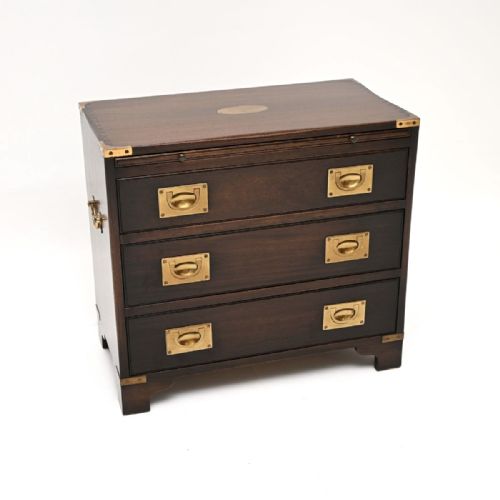
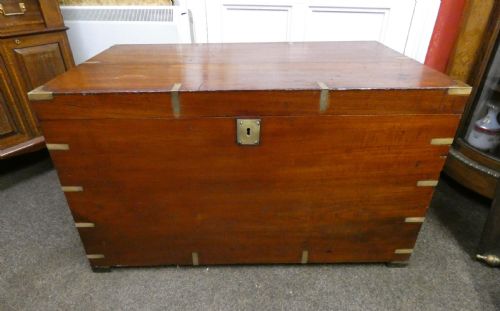
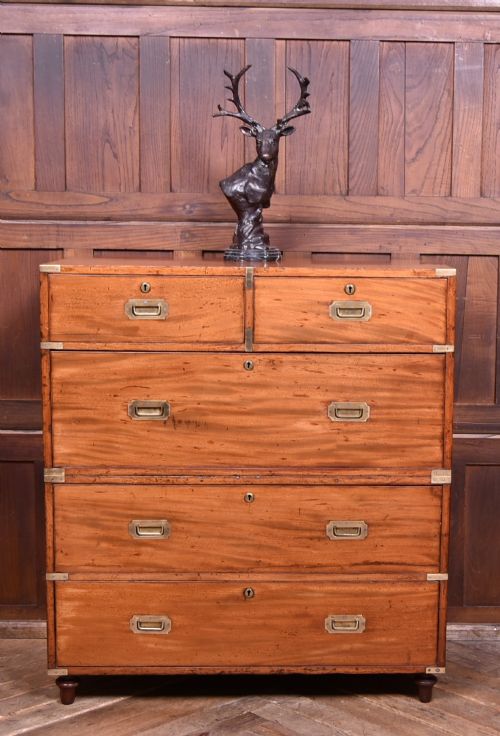
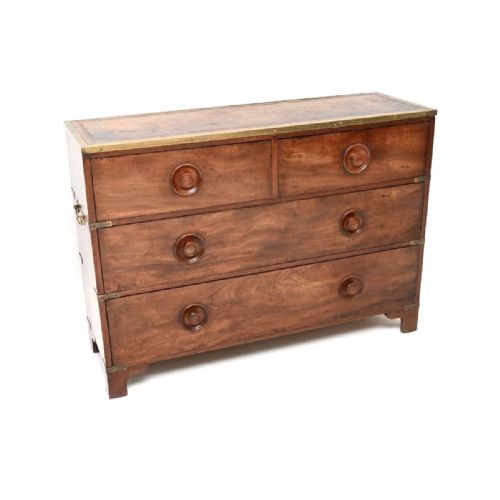
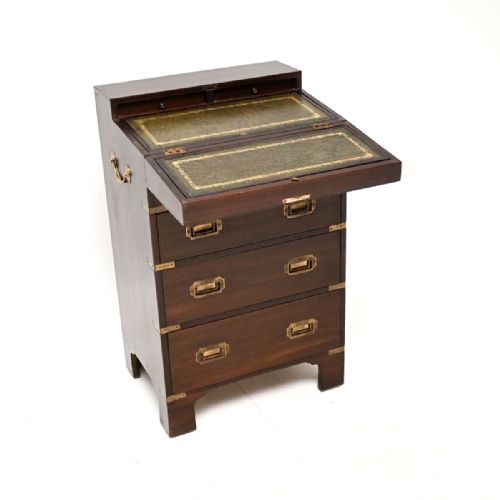
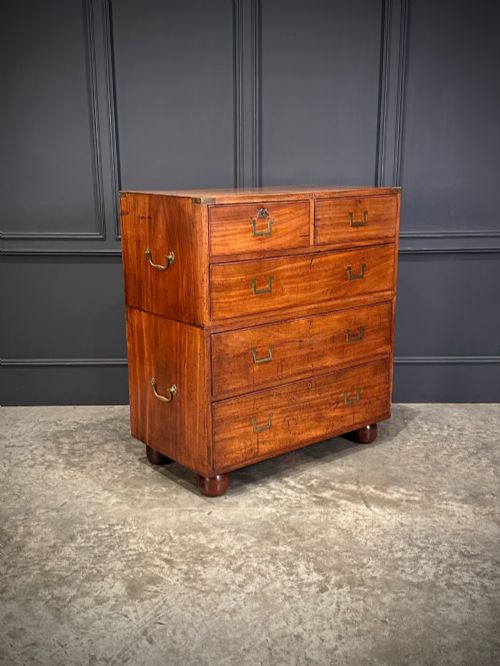
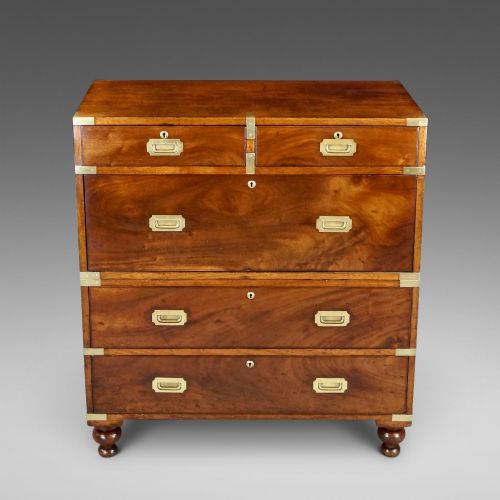
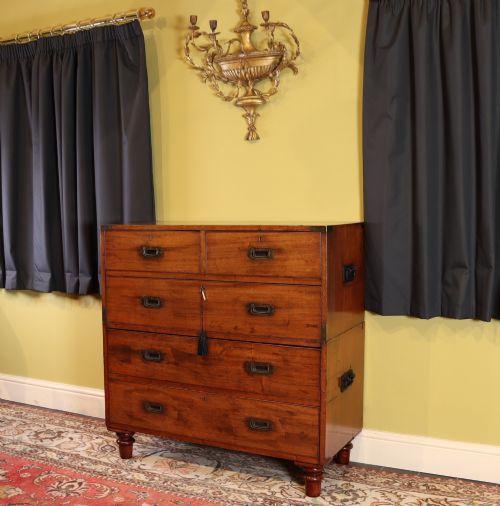
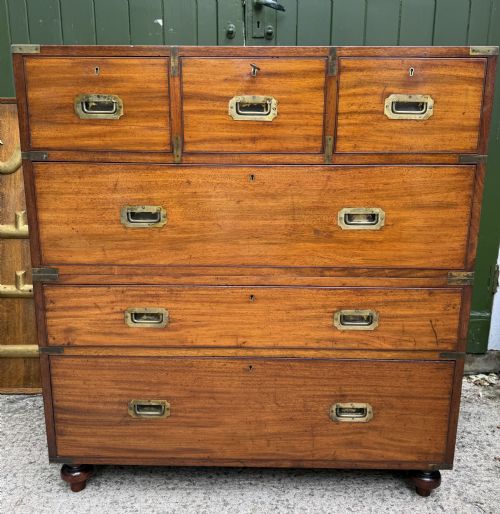
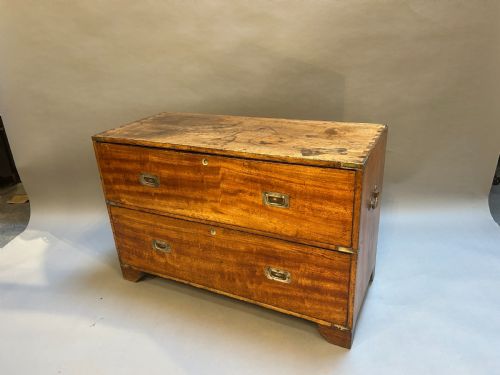
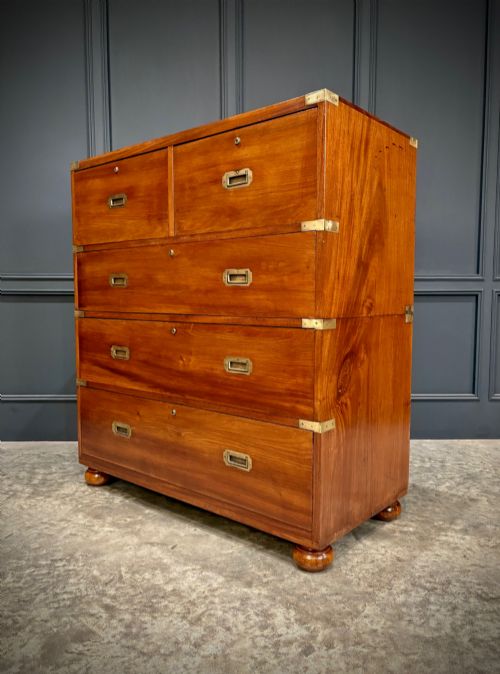
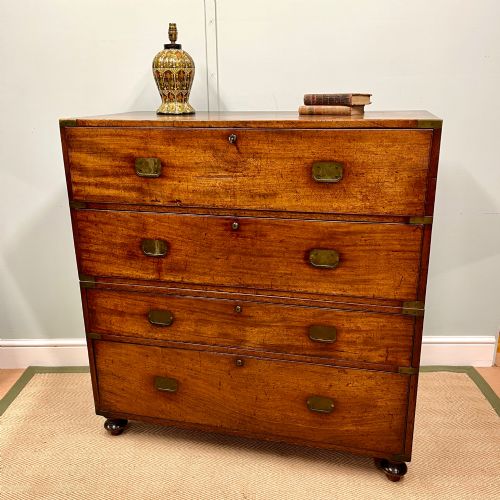
A mahogany officer chest is designed for easy transport by military personnel, dividing typically into two stacked sections with inset brass carrying handles. The most common format on this page is the Victorian two-part chest of drawers, often fitted with flush brass corners and strapwork to withstand rough travel.
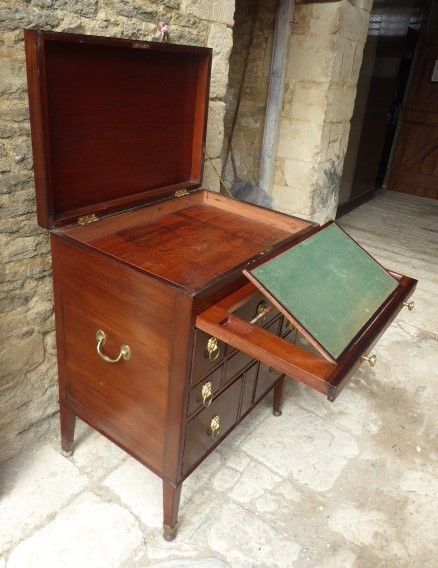
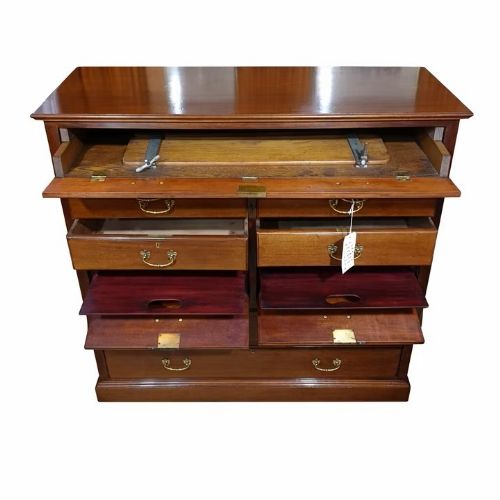
Beyond standard drawer configurations, these pieces appear as secretaire chests with drop-down writing surfaces, alongside variants housing leather tops, glass decanter sets, or correspondence compartments. Dating ranges principally from the late eighteenth century through the Victorian era into the early twentieth century.
The aesthetic is strictly utilitarian yet refined, reflecting the demands of officers on campaign who required domestic dignity in the field. These chests surface in Georgian, Victorian, and Edwardian styles, including Anglo-Indian panelled variations.
Materials and construction methods
Construction relies heavily on dense mahogany timber chosen for its stability and resistance to warping in harsh climates, paired with robust brass fittings that protect vulnerable corners and edges during transit. Recessed hardware ensures nothing snags on packing straps or canvas covers.
Makers integrated practical internal mechanisms such as baize-lined writing surfaces, secret compartments, and occasionally zinc linings for damp storage. The two-part modular design allows the main carcase to separate cleanly for loading onto carts or ships.
Mahogany Officer Chest Retail Price Guide 2026
Typical asking prices for mahogany officer chest among the pieces listed under this phrase on Sellingantiques today, from the lower quarter to the upper quarter. They describe what is for sale here now, not the wider market.
Listings feature mahogany officer chests spanning the eighteenth, nineteenth, and early twentieth centuries alongside Edwardian ship's chests.
Assessing quality and craftsmanship
Quality rests in the precision of the brass work and the tightness of the joinery where the two sections meet. Superior examples feature well-fitted flush hardware, clean dovetail joints, and original carrying handles that show consistent casting detail.
The integrity of the mahogany and the presence of original secondary timbers dictate the standing of a piece. Variations emerge between standard drawer units and more complex secretaire models equipped with fitted interior pigeonholes and drawers.
S. W. Silver & Co. London & Liverpool·Ross & Co.
The Mahogany Officer Chest Glossary
- Campaign chest
- A portable chest of drawers built in two separate sections designed to lock together for military transport. These units feature recessed brass handles and corner brackets to prevent damage on journeys.
- Secretaire chest
- A chest of drawers featuring a pull-out or drop-front upper drawer lined with leather and fitted with small drawers and pigeonholes for writing. This served as a portable desk for officers in the field.
- Brass bound
- The reinforcement of edges and corners with flat brass strips secured by countersunk screws. This technique absorbs impact and stops the timber from splitting during rough handling.
- Two-part chest
- A modular cabinet comprising an upper and lower carcase stacked and secured by side hooks or brackets. This division halved the weight and bulk for baggage animals and ships.
- Baize
- A coarse woollen fabric resembling felt, traditionally used to line writing surfaces and interior compartments. It provided a smooth, non-slip surface for paperwork and ink pots.
Mahogany Officer Chest: Frequently Asked Questions
Why are these chests made in two parts?
The two-part construction allowed military officers to divide heavy wardrobes into manageable loads for transport on pack animals or ships.
Each section fitted securely onto the other using internal alignment pins and exterior brass brackets.
How do I use a secretaire chest?
The upper drawer pulls down on brass hinges to form a writing surface supported by internal lopers.
Behind this flap lie small pigeonholes and letter drawers used for administrative duties on campaign.
How should I care for the brass and mahogany?
Dust the timber regularly with a dry cloth and apply natural wax sparingly to maintain the polish of the mahogany.
Clean the brass hardware gently without abrasive polishes to preserve the patination accumulated over decades.
Are all campaign chests from the Victorian period?
While the majority date from the nineteenth century, production spans from the late eighteenth century into the Edwardian era.
Earlier examples often display Georgian proportions, while later pieces show twentieth-century manufacturing shifts.