

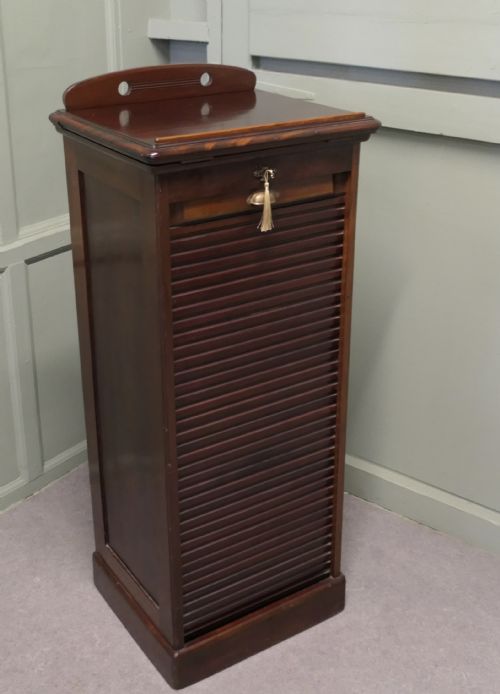


Mahogany Music Desk
These mahogany music desk pieces are finely timbered furniture designed for holding scores, bringing period elegance and practical surface space to any room.
Mahogany Music Desk
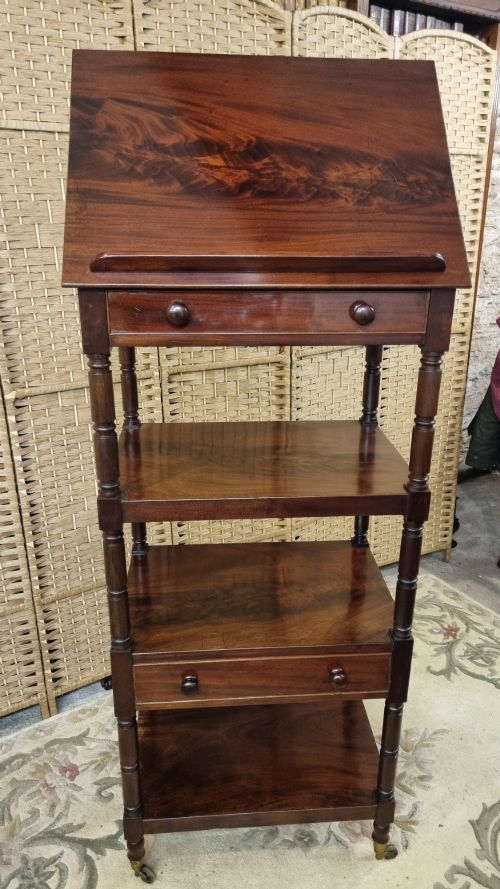
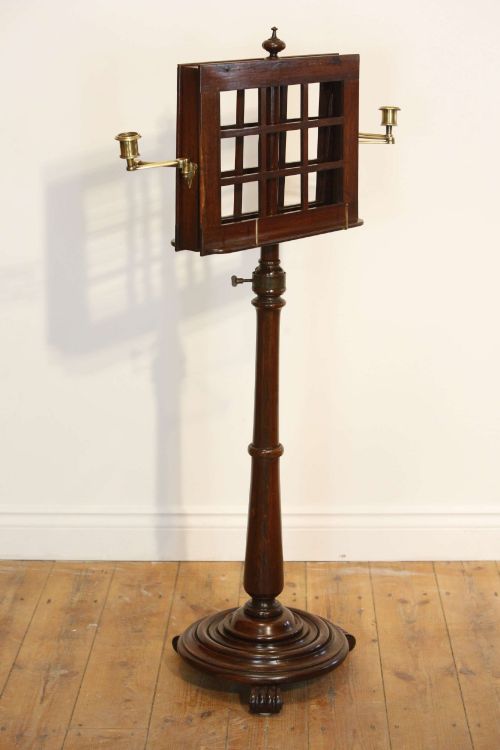
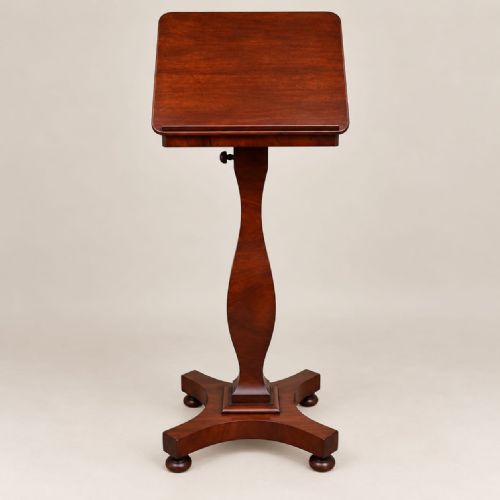
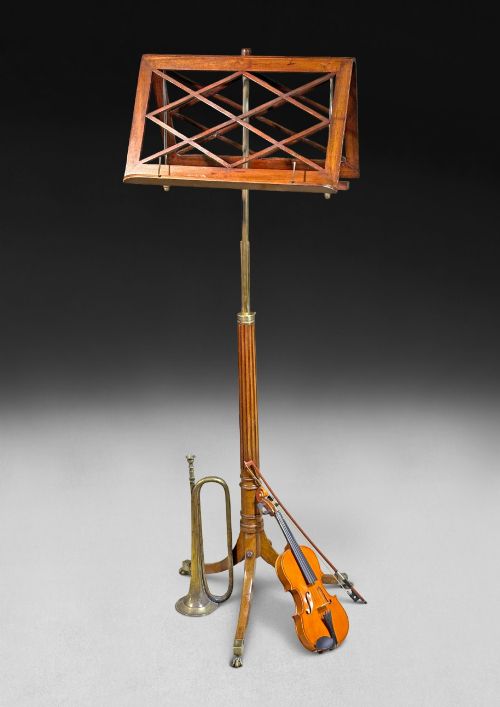
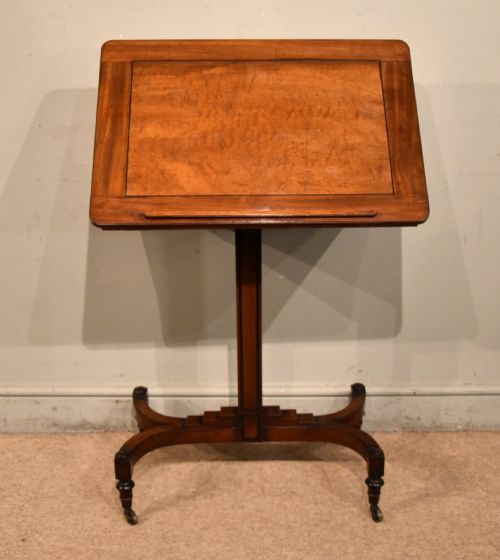
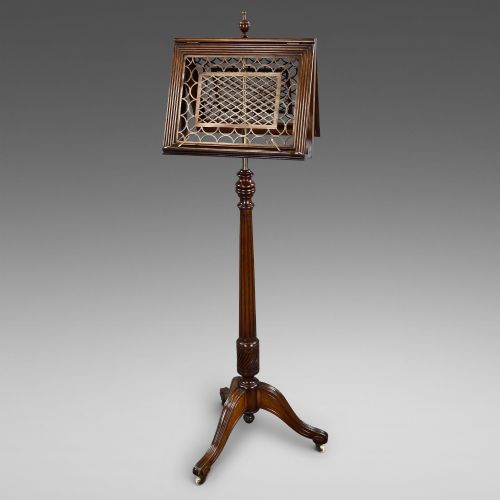
A mahogany music desk is typically encountered on this page as an adjustable reading table, duet stand, or music stand originating from the Georgian, Regency, and Victorian periods. These forms range from simpler late nineteenth century examples to grander Regency designs equipped with brass fittings.
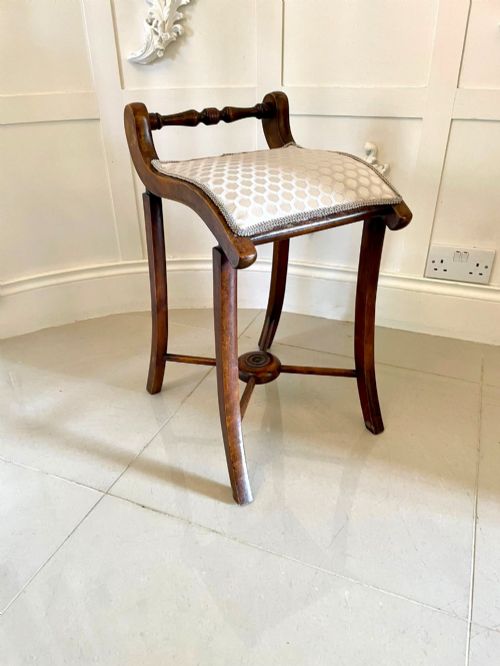
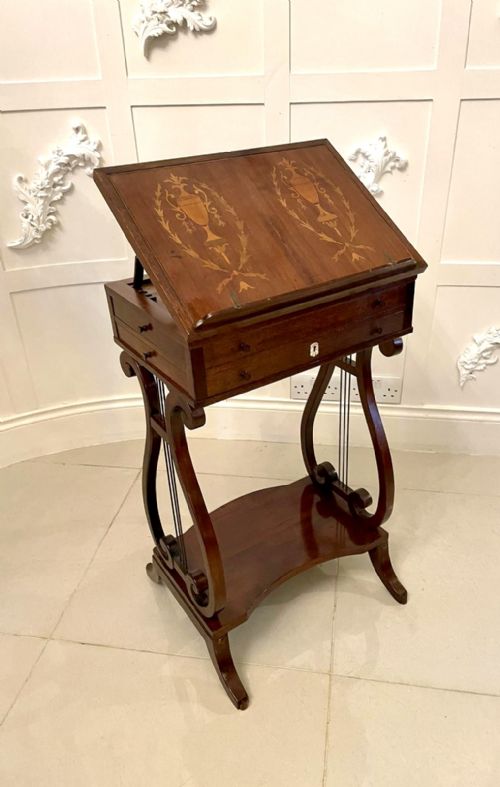
Buyers also encounter related seating and storage pieces such as music chairs, dressing chairs, reading tables, and mahogany whatnots adapted for holding folios or sheets. The selection encompasses diverse formats spanning the eighteenth century through to the Edwardian era.
How they were made
Construction relies heavily on solid mahogany and rich veneers, frequently accented with contrasting inlay woods like satinwood. Brass mechanisms, candle arms, or gallery rails appear alongside plush inserts of velvet, leather, or upholstery fabric.
Adjustability is achieved through engineered ratchets, screws, and pedestals that allow the reading surface or lectern to tilt and rise according to the user's needs.
Mahogany Music Desk Retail Price Guide 2026
Typical asking prices for mahogany music desk among the pieces listed under this phrase on Sellingantiques today, from the lower quarter to the upper quarter. They describe what is for sale here now, not the wider market.
The listings span from the eighteenth century George II period through to Edwardian times, predominantly featuring mahogany alongside brass, leather, and rosewood.
What varies in quality
Quality rests upon the crispness of the timber's grain figure, the robustness of the adjustable mechanisms, and the sophistication of any brass or inlaid detailing. Early Georgian and Regency pieces generally demonstrate finer proportions and more inventive joinery than later mass-produced alternatives.
The integration of dual-purpose functions, such as combined reading and writing surfaces or elaborate fretwork on duet stands, marks out the superior examples in this category.
The Mahogany Music Desk Glossary
- Duet stand
- A music stand designed to hold scores for two musicians simultaneously, often featuring dual adjustable ledges.
- Reading table
- A multi-functional table with an adjustable or fixed top intended for books, folios, or papers.
- Whatnot
- An open-shelved multi-tier piece of furniture used for displaying or storing books, music, and decorative items.
- Fretwork
- Openwork ornamentation carved or pierced through thin wood, commonly seen on the ledges of better quality stands.
- Metamorphic
- Furniture engineered to transform from one form or height into another, such as a table converting into a desk.
Mahogany Music Desk: Frequently Asked Questions
What is a mahogany music desk used for?
These pieces were originally built to support heavy sheet music, folios, or books at a comfortable reading angle for musicians and readers.
Today they function effectively as standalone display surfaces, lecterns, or specialised desks in studies and living spaces.
How do I adjust the height and angle?
Many examples utilise traditional wooden ratchets, brass thumbscrews, or central brass columns that allow the reading surface to tilt and rise.
Care should be taken with antique mechanisms to ensure the brass components or wooden teeth are properly aligned before making adjustments.
Are these pieces stable enough for daily use?
Most stands and reading tables are built on sturdy tripod bases or robust pedestals designed to bear the weight of large books and folios.
Checking the tightness of the central pillar and foot joints ensures proper stability during everyday placement in a room.
How do I identify a Regency period stand?
Regency pieces often display classical proportions, reeded brass or mahogany columns, and heavier platform bases with sabre legs.
They frequently incorporate distinctive brass inlay or gallery rails that characterise the early nineteenth century aesthetic.