








Mahogany Medical Chest
A mahogany medical chest brings tangible history into a room, offering fitted compartments and original glass bottles that reveal nineteenth-century pharmacy and travel.
Mahogany Medical Chest
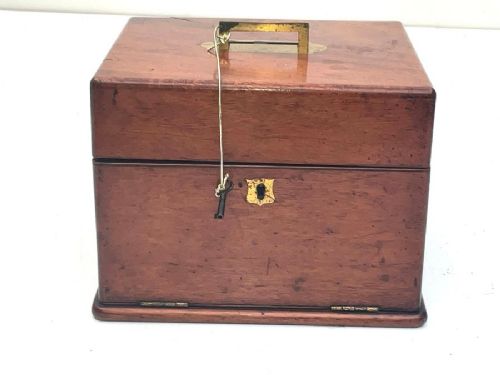
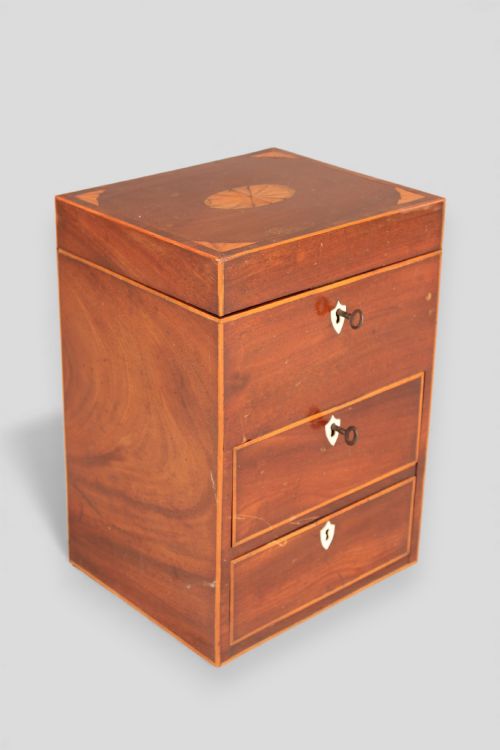
A mahogany medical chest is a portable or tabletop container designed to secure apothecary bottles, scales, and instruments for domestic, travel, or professional use. These pieces range from compact Georgian travelling cases to larger Victorian banks of drawers and chemist cabinets.
Buyers on this page most frequently encounter nineteenth-century examples in mahogany, often retaining interior fittings such as velvet linings and glass bottles. Forms extend from simple apothecary boxes to specialised optician lens kits and veterinary cabinets.
How they were made
Cabinetmakers constructed these chests primarily in solid mahogany, frequently reinforced with brass handles, corner brackets, and escutcheons for durability during travel. Interiors utilised precision carpentry to create tight partitions, secret drawers, and fitted slots for fragile glass bottles.
Secondary woods like pine often appear in concealed structural areas, while interior surfaces frequently feature velvet or paper linings to cushion instruments and bottles. Metal components such as steel and brass provided secure locking mechanisms and lifting hardware.
Mahogany Medical Chest Retail Price Guide 2026
Typical asking prices for mahogany medical chest among the pieces listed under this phrase on Sellingantiques today, from the lower quarter to the upper quarter. They describe what is for sale here now, not the wider market.
Listings feature items spanning the Georgian, Regency, and Victorian periods, constructed from mahogany, brass, glass, and velvet.
What varies in quality
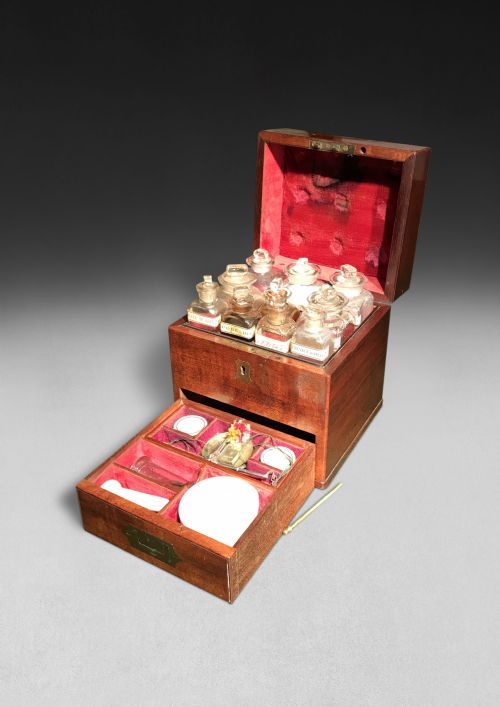
Quality rests heavily on the completeness of the interior contents, distinguishing chests that retain their original labeled glass bottles and instruments from those that are empty or later assembled. Superior examples display fine joinery, undisturbed original brass hardware, and intact velvet or paper linings.
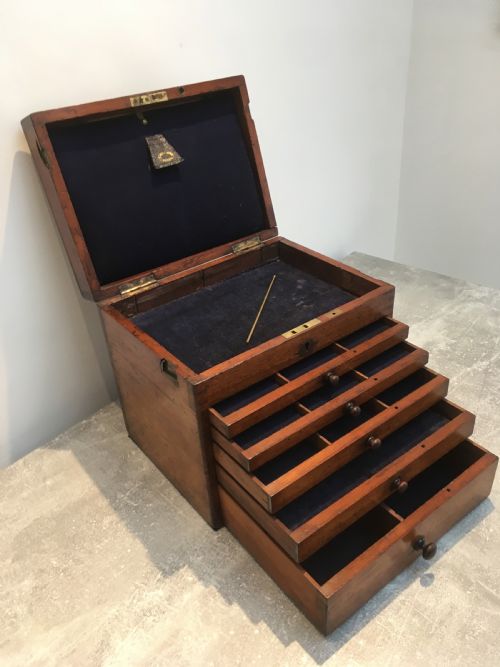
The sophistication of the internal layout also dictates worth, with multi-tiered boxes, concealed drawers, and specialised veterinary or optician fittings commanding greater attention than basic storage compartments.
The Mahogany Medical Chest Glossary
- Apothecary box
- A fitted wooden container specifically designed to hold medicinal bottles, scales, and compounding tools securely. These boxes served doctors, households, and travellers.
- Escutcheon
- A protective brass plate surrounding a keyhole on the exterior of a chest. It reinforces the wood around the lock and often matches other brass hardware.
- Bank of drawers
- A small set of multiple stacked drawers used for organising small items such as remedies or optics. These provide greater storage capacity than a standard single-compartment box.
- Travelling case
- A portable medical chest constructed for mobility, featuring secure locking mechanisms and flush-fitting handles for carriage. They allowed physicians to transport remedies safely.
Mahogany Medical Chest: Frequently Asked Questions
What went inside a mahogany medical chest?
These chests typically housed rows of glass apothecary bottles for tinctures, powders, and liquids, alongside small scales, measuring glasses, and mortars. Some specialised variants carried optician test lenses or veterinary instruments.
Many retained dedicated spaces for mixing remedies or securing spare corks and paper labels beneath lift-out trays or behind locked panels.
How do I date a mahogany medical chest?
Dating relies on construction methods, wood types, brass hardware design, and interior label typography. Georgian and Regency pieces often display simpler, elegant proportions with fine brass inlay or flush handles.
Victorian and later nineteenth-century examples frequently incorporate more elaborate locking systems, varied secondary woods like pine, and specialised internal configurations for specific trades.
Were these chests used for travel?
Many examples functioned as travelling cases for physicians, military officers, or families embarking on long voyages. Recessed brass carrying handles and robust locking mechanisms protected the fragile glass contents during movement.
Tabletop display boxes and banks of drawers remained stationary in pharmacies, surgeries, or large country houses rather than accompanying travellers on journeys.
How should I clean the wood and brass?
Maintain the mahogany surfaces with a gentle application of microcrystalline wax to nourish the grain without leaving a heavy buildup. Avoid harsh chemical cleaners that strip the aged patina.
Brass fittings respond well to careful, dry polishing with a soft cloth, taking care not to stain adjacent wood or historic paper labels.