






Mahogany Lectern Table
These mahogany lectern table pieces bring practical book rests and adjustable heights to study spaces.
Mahogany Lectern Table
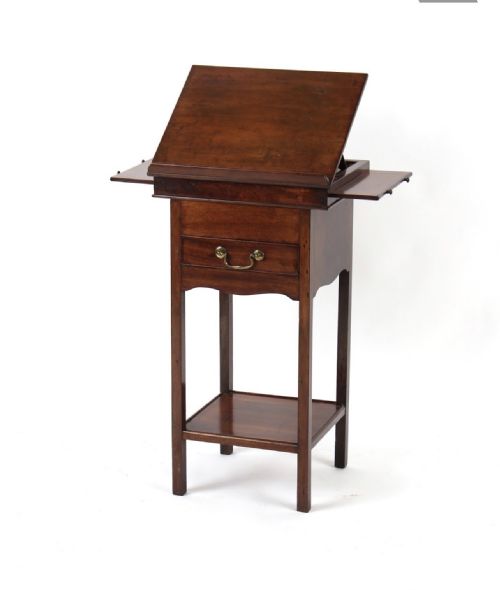
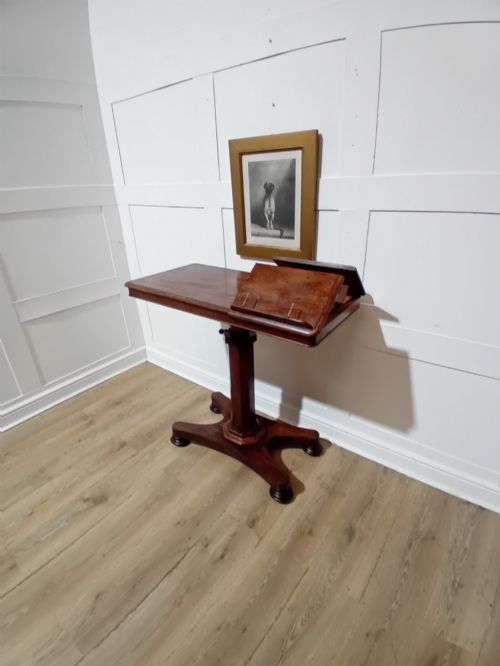
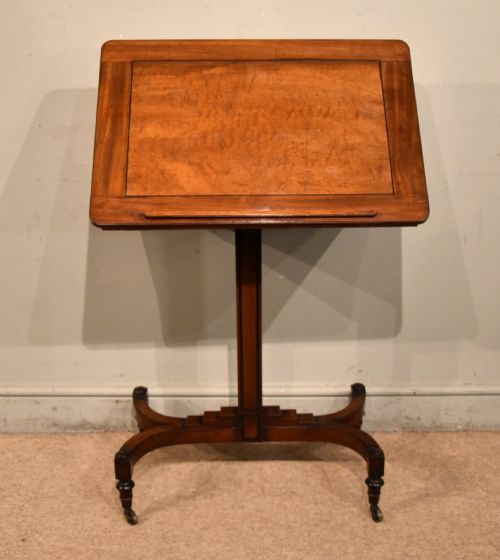
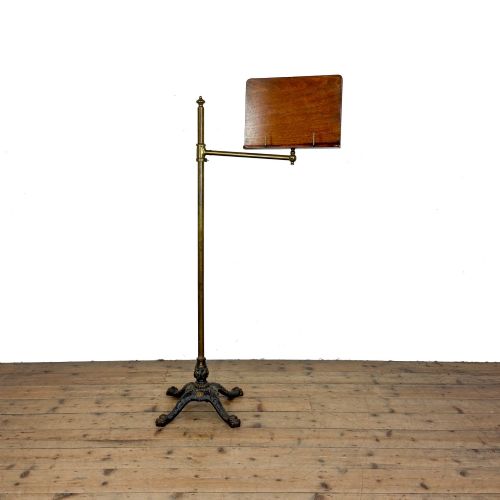
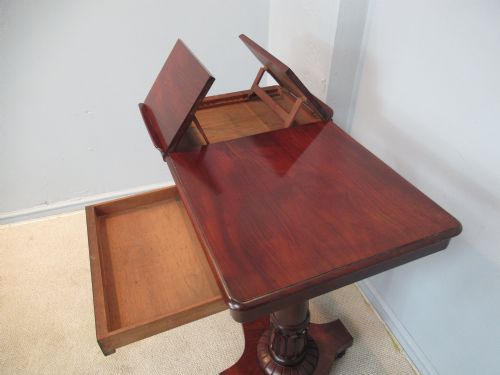
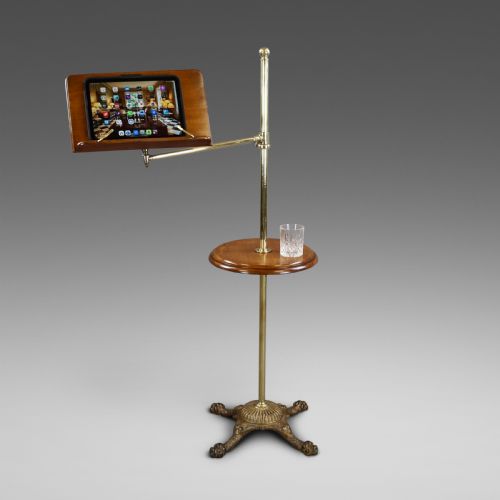
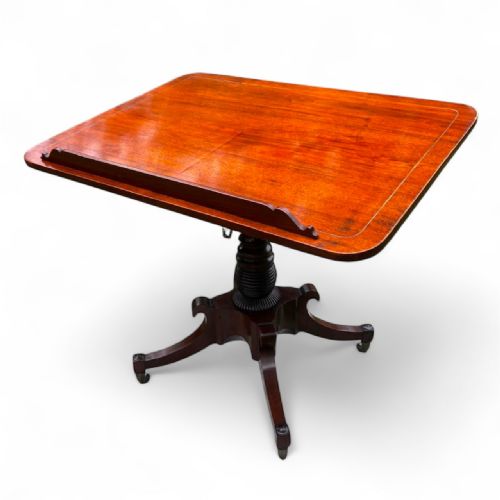
A mahogany lectern table serves as a dedicated support for reading, music, and writing, often featuring an adjustable mechanism to angle books or sheet music. These pieces range from compact tabletop reading stands to larger double-sided tables and metamorphic occasional pieces designed for sitting or standing use.
The selections on this page span several centuries, with particular emphasis on George III, Regency, and Victorian periods. Buyers will encounter both simple stands meant for desks and complex pedestal tables with brass inlay or revolving bookcase elements.
Makers and inventors applied patents to these designs to improve functionality, resulting in specialised examples like bed reading tables and campaign stands. The primary forms combine rich timber surfaces with practical ratchets and book rests intended for daily scholarship.
Materials and construction
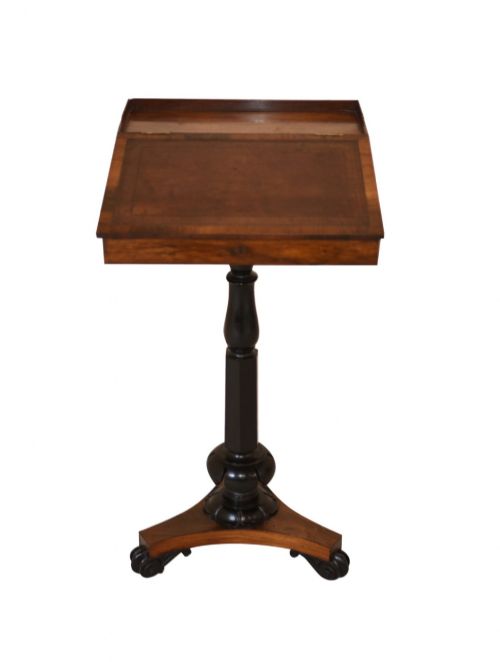
Cabinet makers relied primarily on mahogany for its strength, rich grain, and stability, often incorporating rosewood or ebonised wood for contrast. Secondary materials like brass provide hinges, ratchets, and adjustable column fittings, while cast iron underpins heavier mechanical bases.
Surfaces frequently feature inset leather panels or delicate inlay to frame the reading area. Joinery techniques had to accommodate moving parts, such as ratchets, folding ledges, and screw mechanisms that allow the top to tilt and rise.
Mahogany Lectern Table Retail Price Guide 2026
Typical asking prices for mahogany lectern table among the pieces listed under this phrase on Sellingantiques today, from the lower quarter to the upper quarter. They describe what is for sale here now, not the wider market.
Some nineteenth-century readers required marine-themed book rests to keep their sea-faring novels from sliding into the bilge.
Evaluating quality and mechanics
The distinction between ordinary and superior pieces rests on the precision of the mechanical adjustments and the quality of the timber figure. A well-executed mahogany lectern table moves smoothly through its height and angle adjustments without slack in the brass fittings or wear in the wooden ratchets.
Construction details such as dovetailed drawers, solid brass hardware, and tightly jointed pedestals indicate higher standards of workshop production. Grain selection also matters significantly, with deeply figured mahogany surfaces commanding greater attention than plain stock.
Carter S Patent
The Mahogany Lectern Table Glossary
- Lectern table
- A piece of furniture combining a table base with a slanted top designed for holding books or manuscripts. It allows a reader to stand or sit comfortably while engaging with texts.
- Ratchet support
- A mechanical rack and pawl system hidden beneath the book rest. This mechanism permits the reader to select several specific angles for the reading surface.
- Metamorphic furniture
- Pieces designed to transform from one form of furniture into another, such as an occasional table converting into a reading desk. These clever designs reflect nineteenth-century ingenuity.
- Campaign stand
- Portable furniture made for travel, often featuring folding elements or easily disassembled parts. These items were built for officers and travellers who required sturdy writing and reading equipment on the move.
- Ebonised wood
- Timber treated with a dark stain or finish to imitate ebony. Cabinet makers used this technique to create sharp visual contrasts against warm mahogany surfaces.
Mahogany Lectern Table: Frequently Asked Questions
What is a mahogany lectern table used for?
These pieces served scholars, musicians, and readers by holding heavy volumes, ledgers, or sheet music at a comfortable viewing angle. The adjustable top helped reduce strain during long hours of study.
Today, they function well as decorative occasional tables or practical stands for displaying open books and art monographs in a study or library.
How do you adjust the reading height?
Most examples utilise a central brass screw mechanism, a ratchet arm underneath the book rest, or a sliding pillar held by a thumb screw. These mechanical components allowed the user to raise the surface and alter the slant.
Careful handling of these moving parts preserves the original brass pins and wooden ratchets that control the motion.
How do I identify a Regency period table?
Regency pieces often display classical proportions, robust pillar supports, and restrained brass mounts without excessive ornamentation. The use of dense mahogany with polished finishes is typical of this era.
Details like reeded legs, platform bases, and brass paw castors further distinguish furniture produced during the early nineteenth century.