




Mahogany Leather Wingback Armchair
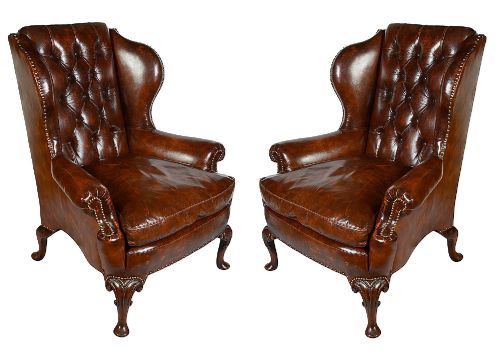
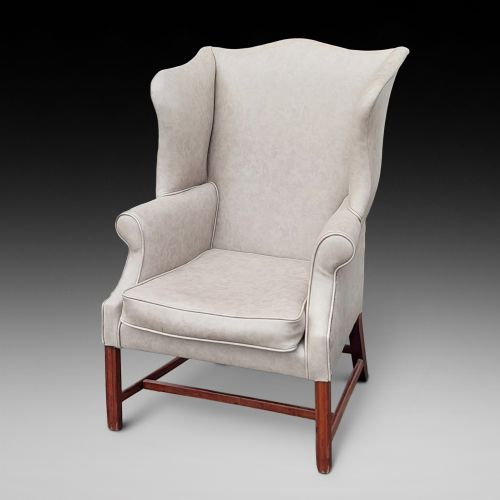
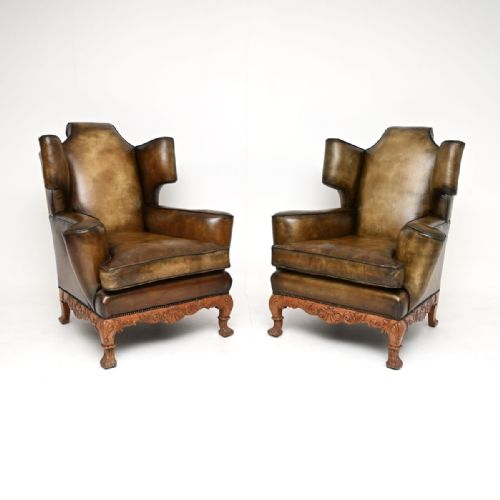
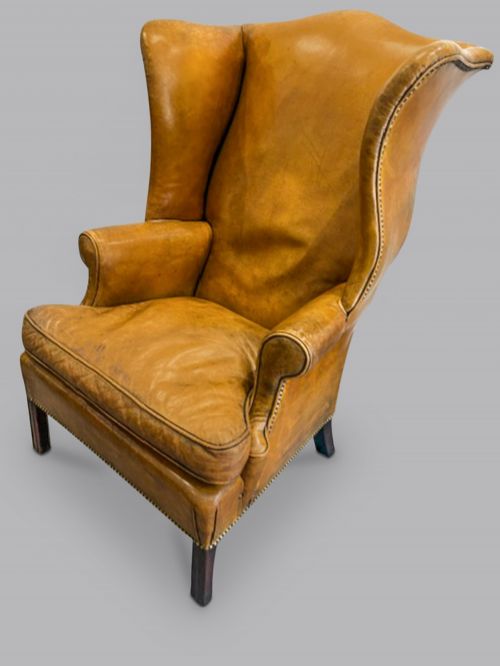
A mahogany leather wingback armchair offers deep-seated comfort and dignified presence, designed originally to shield the sitter from draughts.
Mahogany Leather Wingback Armchair
The mahogany leather wingback armchair appears in variations spanning the eighteenth century through to the early twentieth century, including Georgian originals and later revivals. These pieces combine exposed timber frames with upholstered hide wings designed to contain warmth near the fireplace.
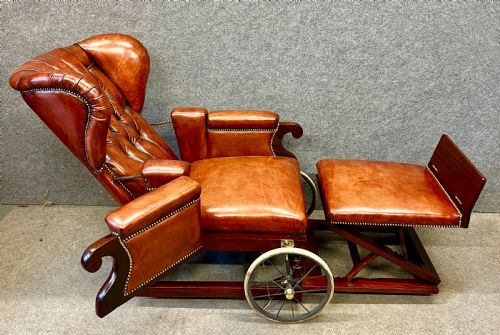
Most examples found on this page date from the Victorian and Edwardian eras, alongside George III pieces and twentieth-century revivals. Forms range from standard fireside chairs to library armchairs, reclining variants, and porters chairs.
Construction and materials
Makers built the structural frames using hardwood, principally mahogany, often featuring carved or plain mahogany legs, sometimes with brass castors. Iron mechanics appear in specialised library or reclining examples.
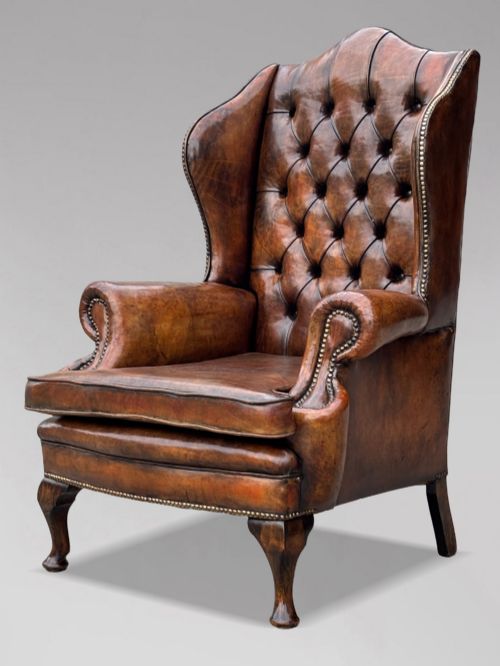
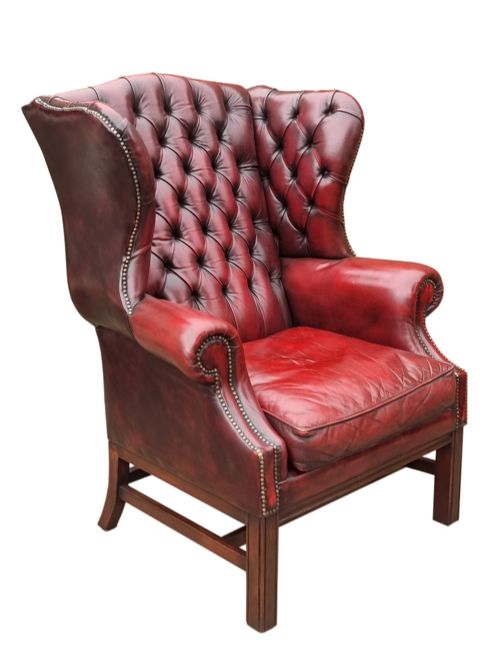
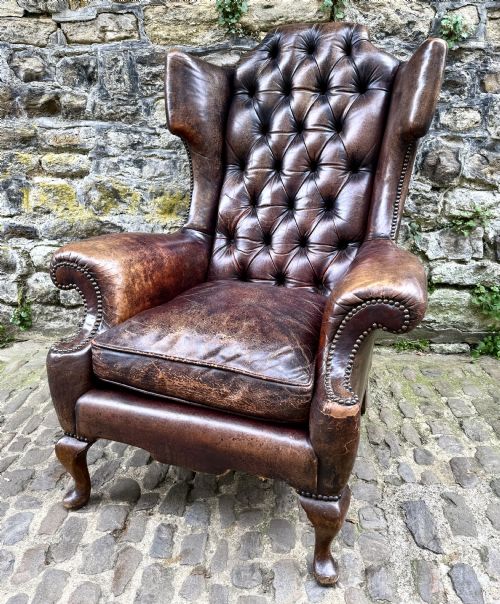
Upholstery relies on leather, varying from brown or green hide to hand-dyed variants, frequently secured with individual brass tacks and incorporating button-back detailing.
Mahogany Leather Wingback Armchair Retail Price Guide 2026
Typical asking prices for mahogany leather wingback armchair among the pieces listed under this phrase on Sellingantiques today, from the lower quarter to the upper quarter. They describe what is for sale here now, not the wider market.
Materials recorded across the inventory include mahogany, hardwood, brass, iron, and various finishes of leather and hide.
Judging quality in wingback armchairs
The sophistication of the timber carving and the architectural proportion of the wings and arms separate standard workshop production from finer pieces. Genuine eighteenth-century proportions differ distinctly from twentieth-century revival interpretations.
The grade of the leather and the integrity of the original buttoning and frame construction dictate the long-term character of the chair.
J Foot And Son·John Ward
The Mahogany Leather Wingback Armchair Glossary
- Wingback
- An upholstered chair featuring projecting side panels designed originally to block draughts and retain hearth heat. These wings define the silhouette of the fireside chair.
- Button-back
- An upholstery technique where depressions are formed in the leather by pulling ties through to the frame, secured with buttons. This secures the internal stuffing and creates a distinct geometric pattern.
- Hide
- The natural leather skin used for upholstery, which develops a patina through age and use. Different grades show varied grain and suppleness.
- Castor
- A small wheel attached to the base of furniture legs to ease movement. Brass castors are frequently fitted to nineteenth-century mahogany frames.
- Gillow
- A prominent furniture-making firm whose stylistic legacy influences nineteenth-century library and porter chair designs. Pieces in the manner of Gillows reflect high cabinet-making standards.
Mahogany Leather Wingback Armchair: Frequently Asked Questions
How do I date a wingback armchair?
Dating relies on examining the timber species, stretcher arrangement, leg style, and the construction methods visible beneath the upholstery. Eighteenth-century frames differ significantly in hand-tooling and joinery from Victorian or Edwardian reproductions.
Changes in furniture fashion also dictated wing shapes and seat depths over successive periods, helping to separate Georgian originals from later revivals.
What is a porters chair?
A porters chair is a specialised high-backed, hooded seat originally positioned in the draughty hallways of large houses to shelter the attendant on duty. The enclosed sides trapped heat effectively.
Later Victorian and Regency revivals adapted this protective form into comfortable library and reading chairs.
Are these chairs comfortable for daily use?
These armchairs are built with deep seats and supportive high backs, making them well-suited for reading and relaxing. The ergonomic design developed for eighteenth-century firesides translates effectively into modern living spaces.
Leather upholstery and traditional stuffing provide a firm yet yielding sit that adapts over time.
How do I care for antique leather?
Antique leather benefits from regular dusting and occasional treatment with appropriate leather balms to maintain flexibility. Avoiding direct sunlight and intense heat sources prevents the hide from drying and cracking.
Preserving the natural patina requires gentle cleaning rather than heavy chemical restoration.