

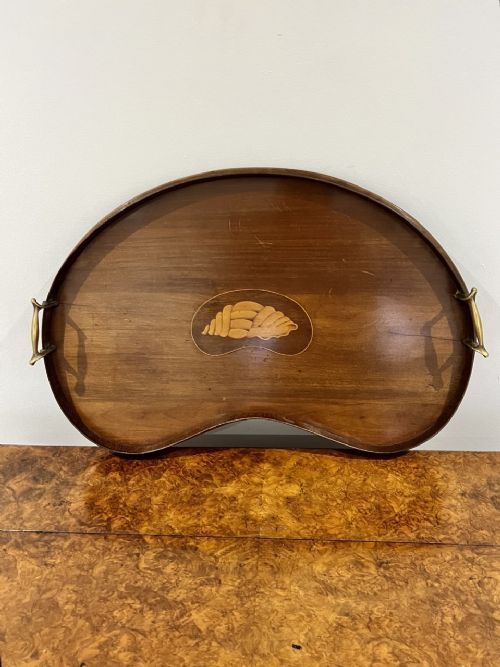
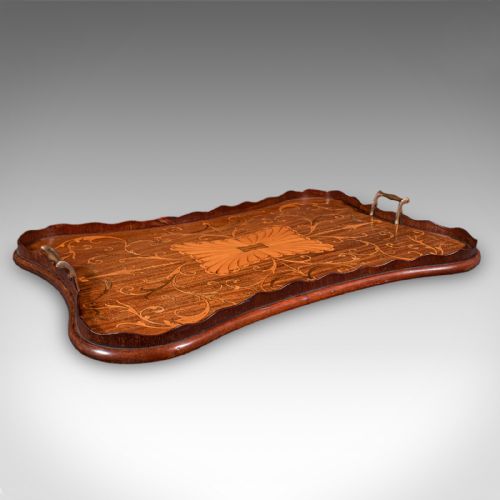


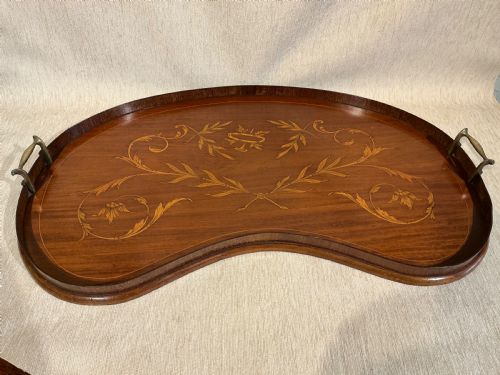


Mahogany Inlay Tray
Mahogany inlay tray pieces bring refined timber and meticulous detail to a room, serving as both practical hospitality items and decorative focal points.
Mahogany Inlay Tray
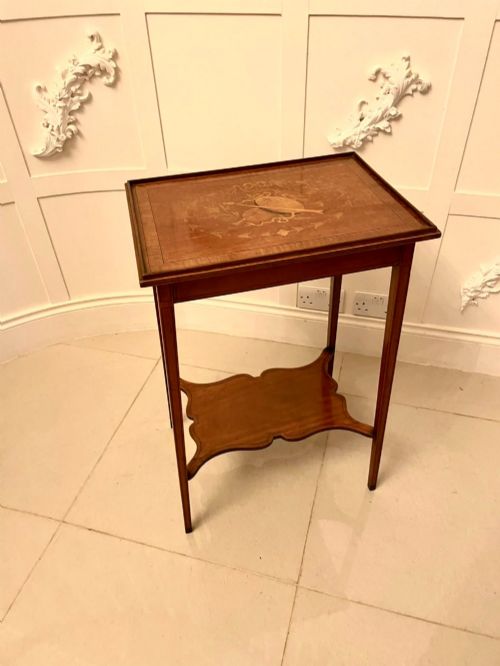
A mahogany inlay tray search leads directly to serving trays, tea trays, and occasional tables featuring raised edges or handles. These items emerge primarily from the Georgian, Victorian, and Edwardian periods, reflecting changing domestic habits around hospitality and dining.
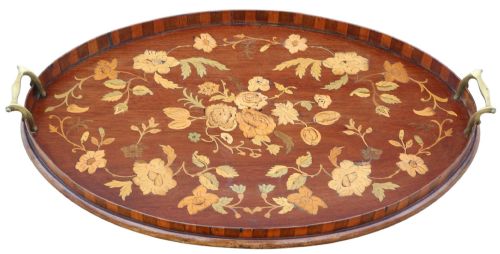
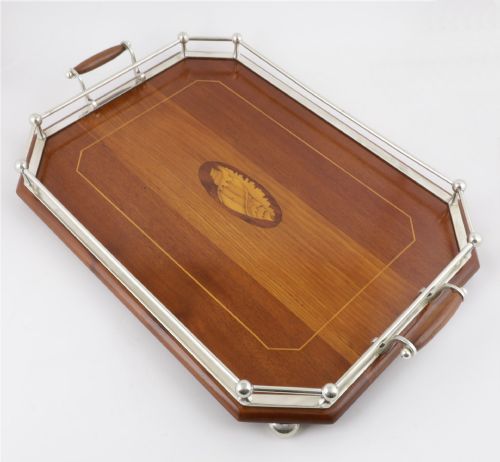
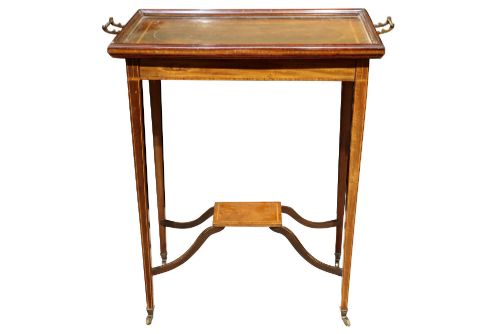
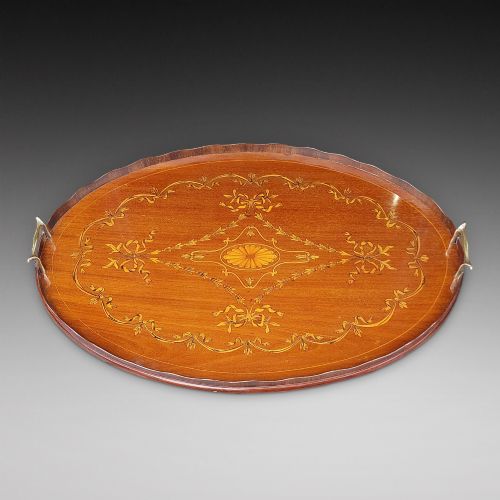
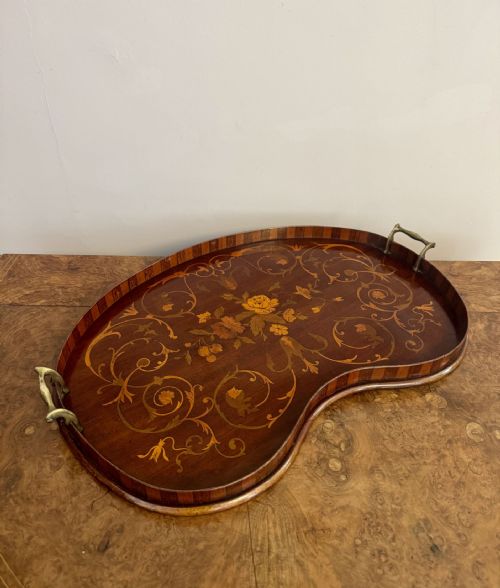
The most common formats on this page are oval, kidney-shaped, and rectangular serving pieces alongside tray top tables. Makers utilised dense mahogany as a stable ground for contrasting wood details.
Georgian and late nineteenth-century examples prioritise classical proportions, while Edwardian pieces often present lighter satinwood and marquetry motifs. Buyers encounter both portable afternoon tea platters and stationary tier tables adapted from the same design vocabulary.
Materials and Technique
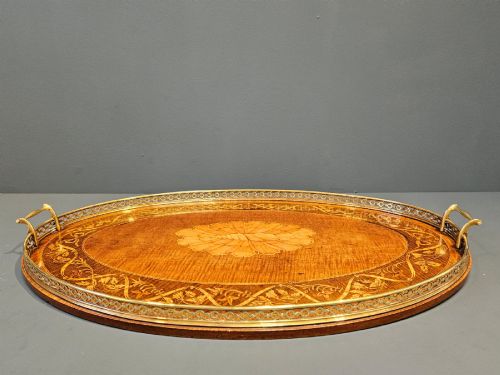
Craftsmen built these pieces using solid mahogany or fine veneers laid over secondary timbers, often incorporating satinwood, boxwood, and ebony for contrasting decorative elements. Marquetry inlay techniques allow for intricate floral or geometric patterns embedded directly into the surface timber.
Many trays incorporate brass handles, galleries, or silver plate mounts to secure the edges and provide functional grip. Joinery methods balance the need for a flat, stable display surface with lightweight portability for domestic service.
Mahogany Inlay Tray Retail Price Guide 2026
Typical asking prices for mahogany inlay tray among the pieces listed under this phrase on Sellingantiques today, from the lower quarter to the upper quarter. They describe what is for sale here now, not the wider market.
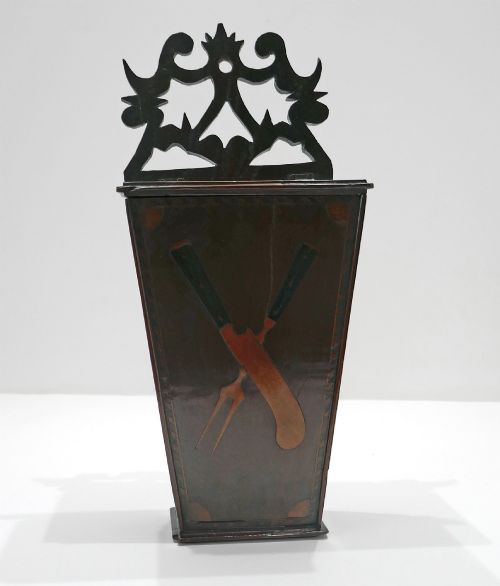
Several pieces include hidden pull-out steps inside bedside cabinets, proving that even a tray maker loved a clever mechanism.
Craftsmanship and Distinction
Quality rests in the precision of the timber selection and the crispness of the contrasting inlay work. Superior examples display tightly figured mahogany grains paired with cleanly cut boxwood or satinwood stringing rather than printed or painted substitutes.
Structural integrity also separates standard items from exceptional ones, particularly in the fit of inlaid borders and the secure attachment of brass handles or galleries. Pieces that retain their original polished finish without excessive restoration hold greater visual harmony.
The Mahogany Inlay Tray Glossary
- Inlay
- A technique where pieces of contrasting timber, such as boxwood or satinwood, are inserted into recessed cavities in the mahogany base to form a pattern.
- Marquetry
- Elaborate pictorial veneers assembled from various coloured woods to create complex decorative scenes across the tray surface.
- Etagere
- A set of open shelves or tiers used for display, frequently constructed with tray-like surfaces supported on slender legs.
- Gallery
- A raised pierced brass or wooden border fitted around the edge of a tray to prevent items from sliding off.
- Satinwood
- A lustrous, pale yellow timber native to Ceylon and India, commonly utilised for contrasting inlay against dark mahogany.
Mahogany Inlay Tray: Frequently Asked Questions
How were mahogany inlay trays used?
These items served primarily for carrying tea ware, wine bottles, and afternoon refreshments in domestic parlours and dining rooms. Households also utilised them as stationary display pieces on side tables.
Over time, many portable trays found new life mounted on stands to create occasional or lamp tables within sitting rooms.
How do I care for my tray?
Maintain the polished timber surface by dusting gently with a dry, soft cloth and avoiding direct sunlight or damp environments. Natural wax can be applied sparingly to nourish the mahogany and satinwood.
Keep moisture away from the inlaid sections to prevent the delicate boxwood or ebony elements from lifting over the years.
What defines Edwardian inlay work?
Edwardian pieces often feature lighter satinwood borders, delicate bellflower motifs, and kidney-shaped silhouettes designed for visual grace. Craftsmen in this era frequently combined mahogany with burr yew or rosewood.
This style leans towards lighter, decorative occasional furniture suited for refined drawing rooms rather than heavy formal dining.
Are these trays suitable for daily use?
While originally built for active domestic service, antique trays with delicate marquetry and aged polishes benefit from careful handling today. Using them for display or light service preserves their historical surfaces.
Pairing a sturdy mahogany tray with coasters protects the vintage polish from heat and moisture rings.