
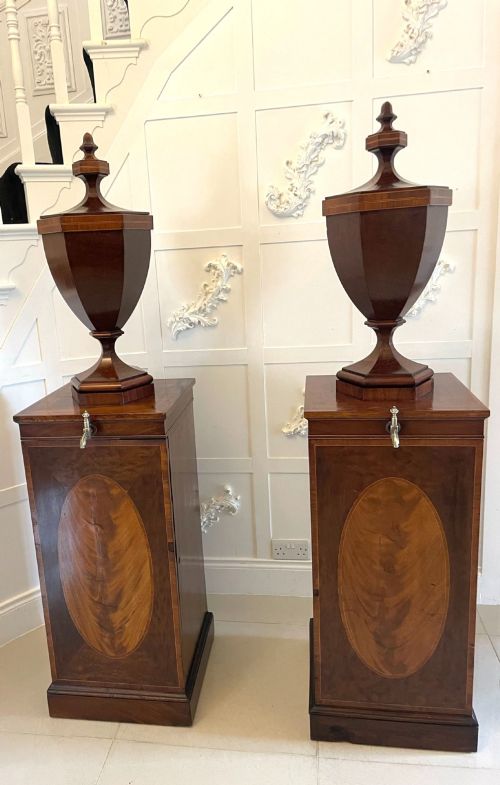
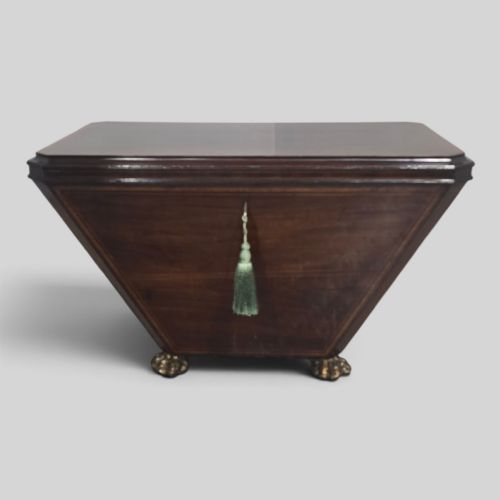
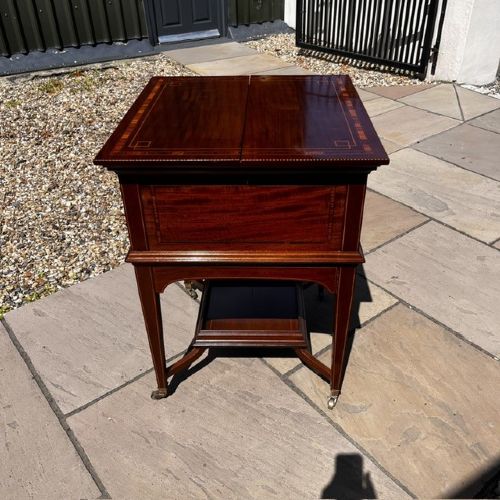
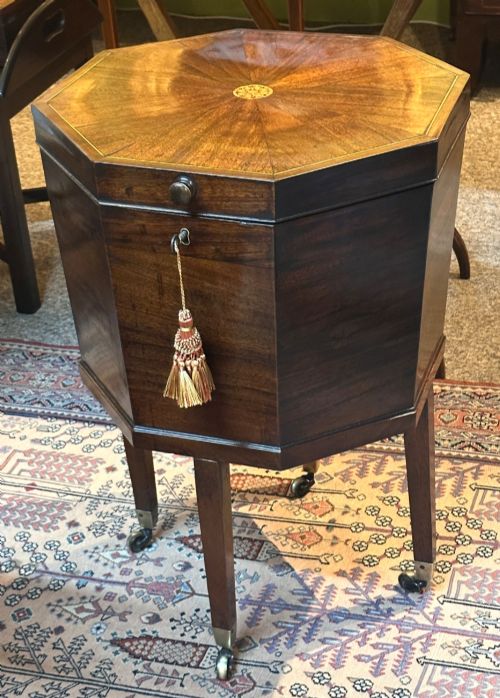

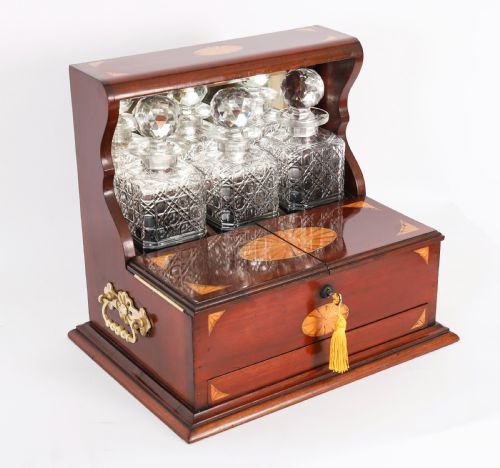

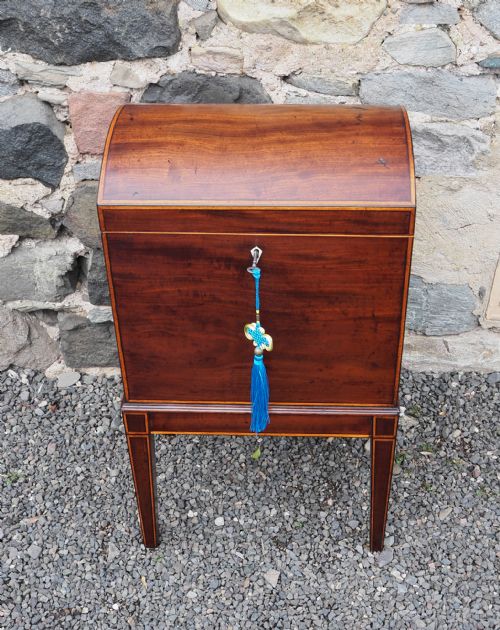
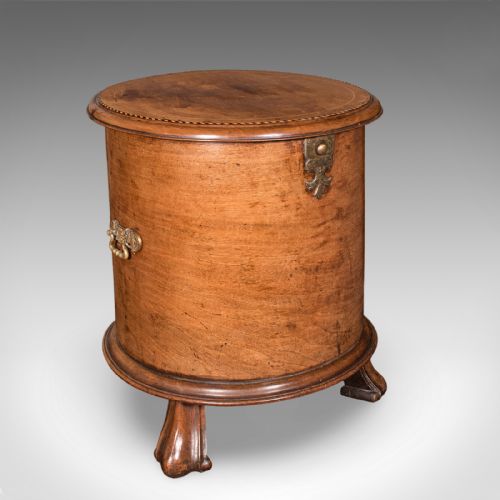
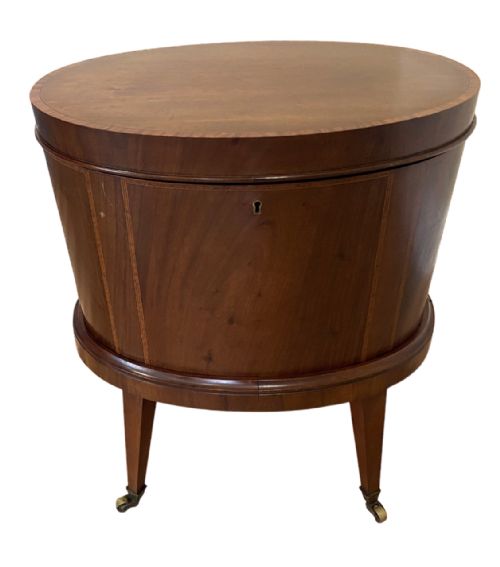


Mahogany Inlay Cellarette
A mahogany inlay cellarette is a dedicated timber container for holding bottles, bringing period character to dining rooms.
Mahogany Inlay Cellarette
A mahogany inlay cellarette serves as a traditional bottle container, originating primarily from the Georgian, Regency, and Victorian periods. Buyers search for this phrase to find authentic wine coolers, boxes, and pedestals designed for formal dining spaces.
The pieces on this page appear in various timber forms, including octagonal, oval, and serpentine wine coolers alongside related sideboards and drinks cabinets. George III and Regency examples dominate the selection, often incorporating satinwood or boxwood banding.
Makers such as Edwards and Roberts, Gillows, and Freemans of Norwich represent the finer cabinet-making traditions seen in these listings. These items span from the late eighteenth century through the Edwardian era and into twentieth-century revivals.
Materials and technique
Cabinet-makers constructed these containers using solid mahogany and flame mahogany veneers over secondary timbers. The dark grain provides the principal body for boxes, coolers, and sideboards alike.
Inlay work relies on contrasting lighter woods such as satinwood and boxwood, creating geometric stringing, shell motifs, or decorative banding. Metal elements including brass handles and castors appear frequently on stands and coolers.
Several items include built-in games compartments, ensuring guests remained entertained long after the wine ran dry.
Craftsmanship and distinction
Quality in a mahogany inlay cellarette depends on the precision of the timber matching and the intricacy of the contrasting wood details. Crisp satinwood and boxwood banding indicate higher levels of artisan skill compared to simpler line work.
Original mounts, such as brass handles and castors, elevate an example above those altered or replaced later. The presence of documented makers' signatures or attributions adds significant weight to the piece's provenance.
Proportion and form dictate the visual success of the cooler, with balanced serpentine, oval, or octagonal shapes achieving greater elegance. Interior completeness, including original section dividers and crystal decanters, distinguishes superior survivals.
Edwards and Roberts·Gillows·Freemans of Norwich
The Mahogany Inlay Cellarette Glossary
- Cellarette
- A lockable container used historically for storing bottles of wine beneath a dining table or sideboard. These vessels often feature fitted interior compartments and carrying handles.
- Satinwood
- A durable tropical timber with a lustrous yellowish grain utilised for contrasting inlay work and banding. Cabinet-makers paired it with darker mahogany to create decorative borders.
- Stringing
- Thin lines of contrasting wood inlay inserted into grooves on cabinet surfaces to outline panels and drawers. This technique defines the linear patterns on Regency and Georgian pieces.
- Serpentine
- A curved furniture front characterised by a convex centre flanked by concave ends. This undulating profile appears frequently on finer Georgian sideboards and wine coolers.
- Tantalus
- A locking wooden stand holding decanters visible behind a security bar to prevent unauthorized access to the contents. They often incorporate games compartments or brass fittings.
Mahogany Inlay Cellarette: Frequently Asked Questions
What is a cellarette used for?
A cellarette served as a secure, movable container for storing wine bottles near the dining table before permanent cellars became common.
Interior partitions kept individual bottles separated and protected during storage and service.
How do I identify a Georgian cellarette?
Georgian examples typically feature rich mahogany construction with subtle boxwood or satinwood stringing and classical proportions.
Details like tapered legs, brass carrying handles, and segmented wooden interiors point directly to late eighteenth or early nineteenth-century manufacture.
Where should I place a wine cooler?
These pieces sit comfortably in dining rooms, serving as decorative side tables or independent focal points.
They function well alongside sideboards to display glassware or hold bottles during formal gatherings.
What distinguishes Regency pieces?
Regency designs often incorporate bolder flame mahogany veneers, classical brass mounts, and robust feet or castors.
The style leans toward architectural restraint combined with striking timber grains and precise geometric inlay.