

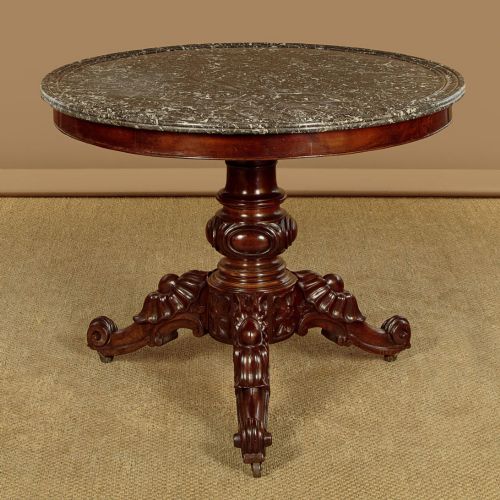
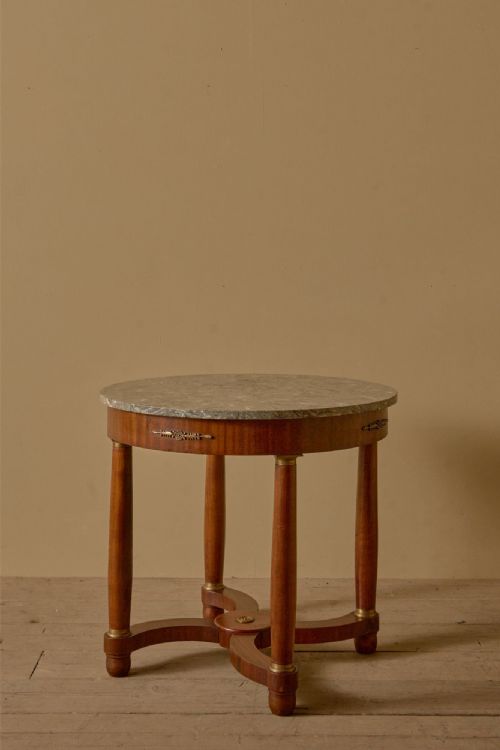
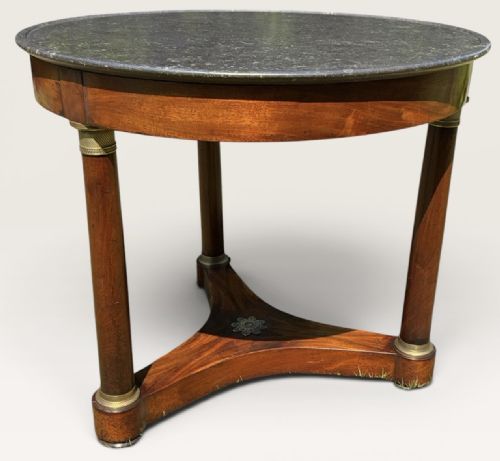
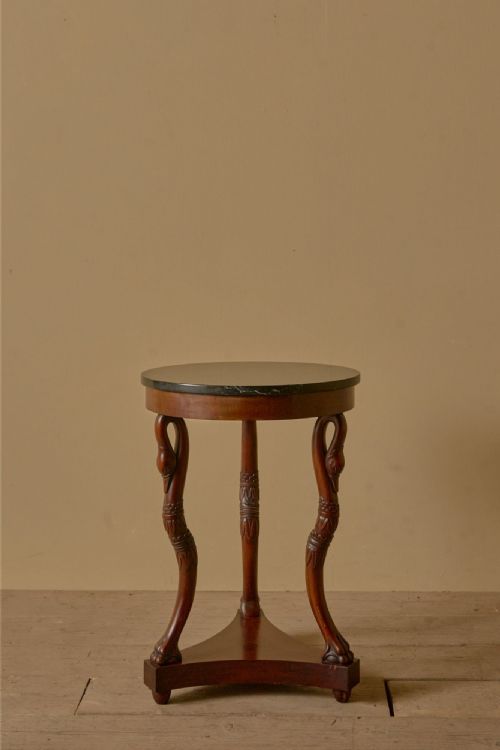
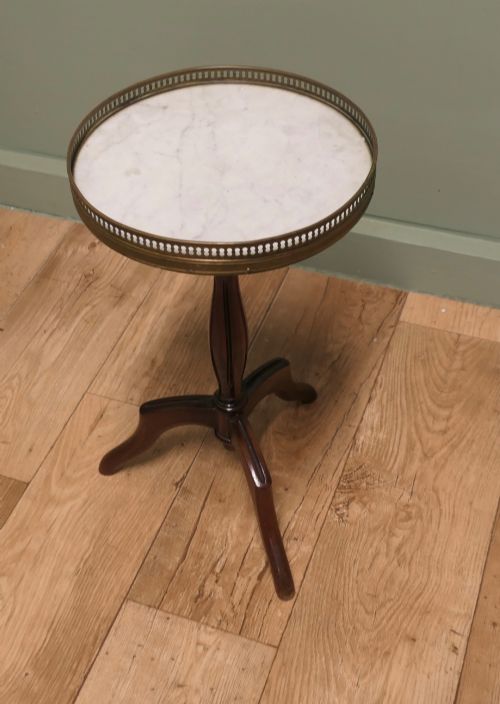
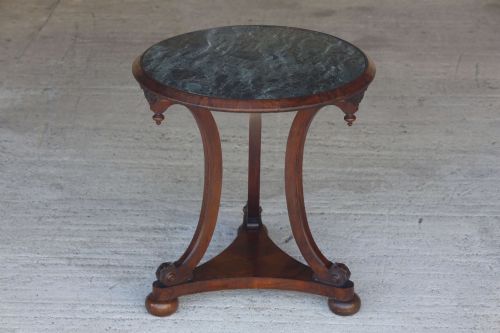
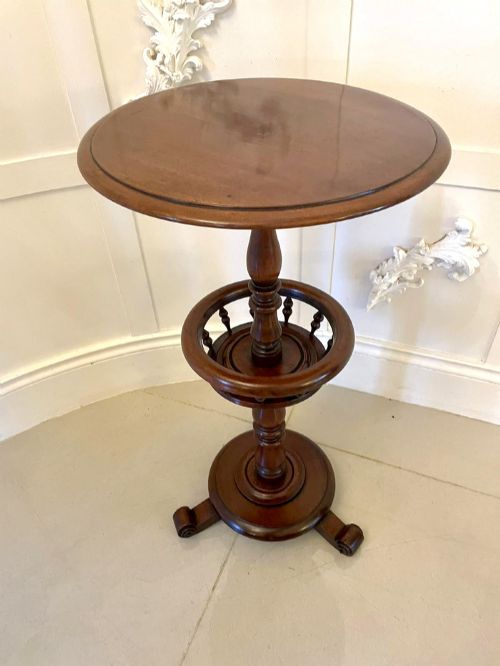
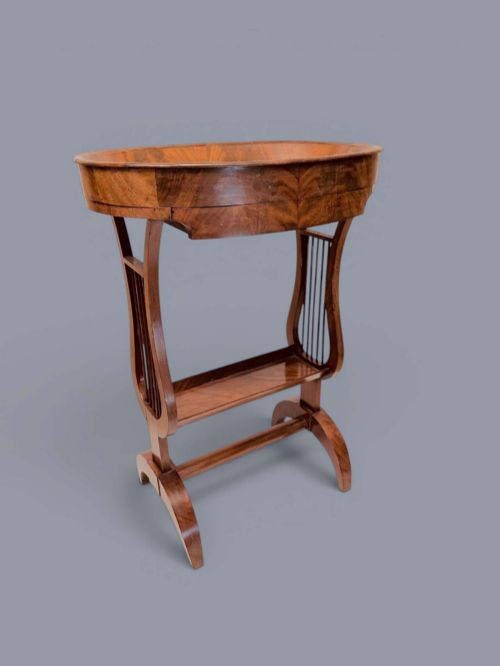
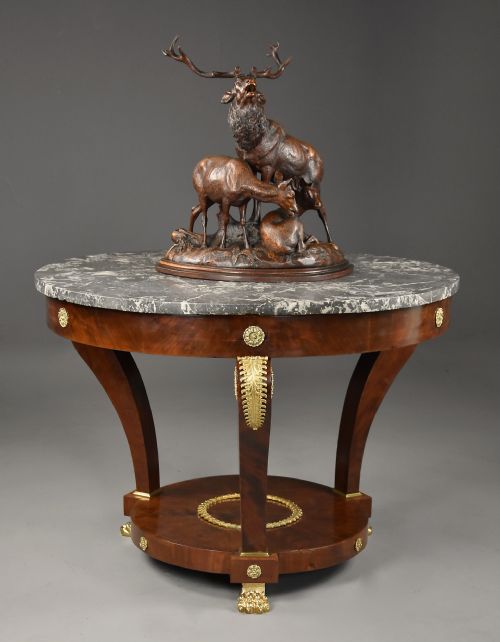
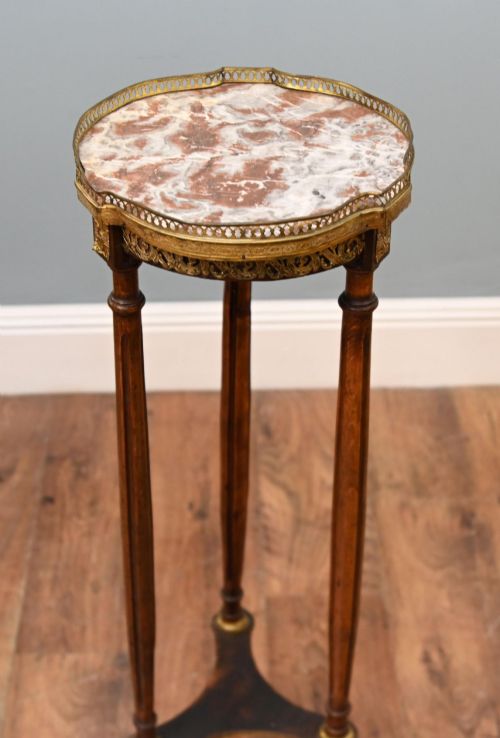
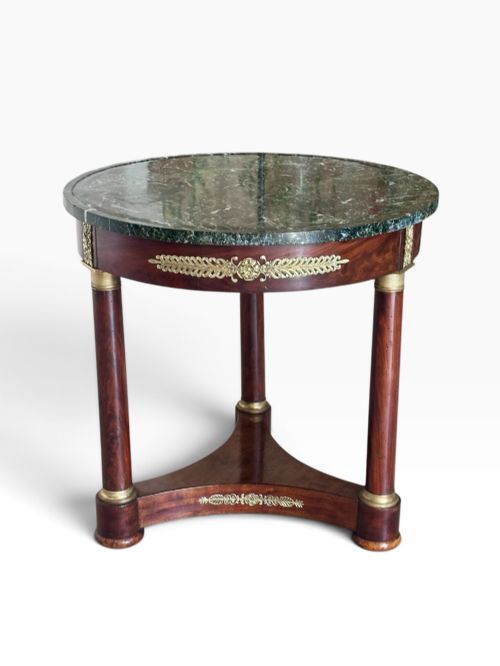
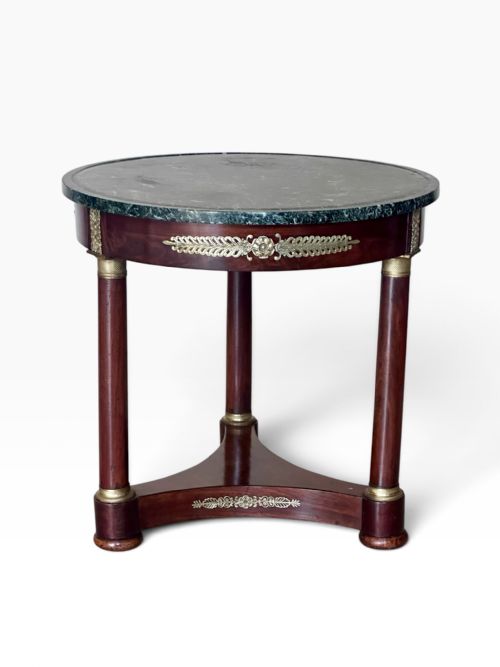

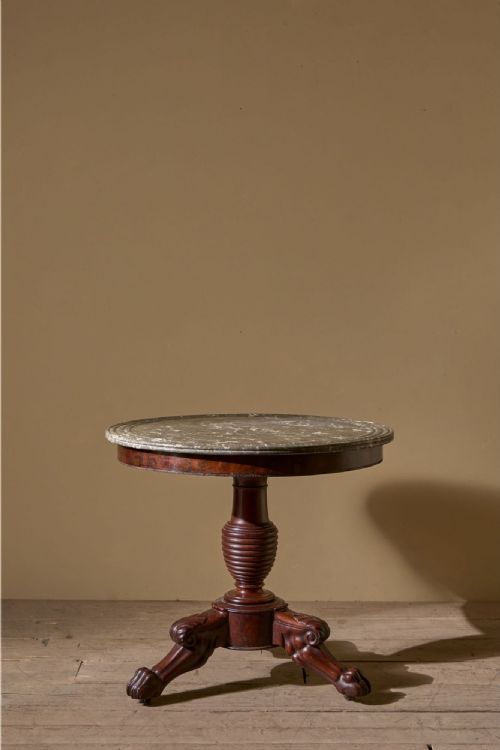
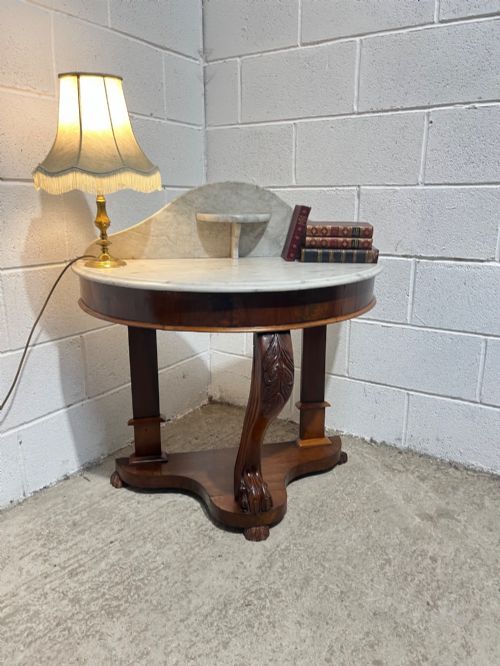
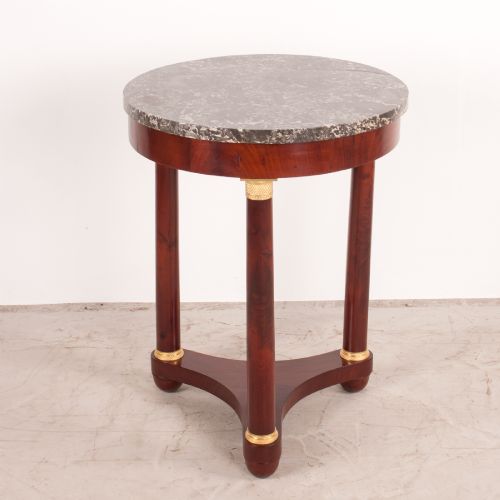
Mahogany Gueridon Side Table
These mahogany gueridon side table pieces combine circular timber tops with slender pillar supports, bringing classical French proportion and surface utility to smaller rooms.
How they were made
Cabinet makers constructed the circular tops from solid mahogany or applied flame mahogany veneers over secondary timbers, mounting them onto robust central pedestals. Marble inserts in white, grey, black or rouge varieties provide a heavy, cool surface set directly into the timber frame.
Brass, ormolu and gilded bronze mounts accent the timber structures, appearing as capitals, feet, or figurative details like swans and rams heads. Joinery relies on traditional turning for the central columns and stable multi-legged or platform bases.
What varies in quality
The sophistication of the cast bronze or ormolu mounts separates standard production from exceptional examples, with chased details showing sharper definition and deeper relief. The quality of the marble top and its exact fit within the mahogany rim dictates the finesse of the piece.
Timber selection plays a major role, as highly figured flame mahogany veneer or intricate marquetry inlay demands greater skill from the cabinet maker than plain stock. The structural stability of the central pedestal and its junction with the base determine the longevity of the table.
Mahogany Gueridon Side Table Retail Price Guide 2026
Typical asking prices for mahogany gueridon side table among the pieces listed under this phrase on Sellingantiques today, from the lower quarter to the upper quarter. They describe what is for sale here now, not the wider market.
Listings feature periods from the eighteenth century through to nineteen twenty, alongside materials including flame mahogany, ormolu and grey marble.
A Hugnet Paris·François Linke
The Mahogany Gueridon Side Table Glossary
- Gueridon
- A small circular table supported by a central pillar, originating in seventeenth-century France. These tables evolved from candle stands into versatile occasional and centre furniture.
- Ormolu
- Gilt bronze mounted on furniture, created through a process of mercury gilding in historical pieces. This decorative metalwork adds bright metallic highlights to dark mahogany surfaces.
- Flame mahogany
- A veneer cut from timber where the branch meets the trunk, producing a rippling flame pattern. Cabinet makers prized this wood for visible table tops.
- Marquetry
- Inlaid wood pieces arranged to form decorative patterns on a surface. This technique appears on revival style tables alongside metal mounts.
- Console table
- A wall-mounted or freestanding table designed to sit against a flat surface. Some variants share stylistic details with pedestal tables.
Mahogany Gueridon Side Table: Frequently Asked Questions
Where do I put a gueridon?
These tables fit easily beside a chair or sofa, or stand alone in the centre of a hallway to hold a lamp or vase. Their circular footprint takes up minimal floor space while offering a useful surface.
Because the design incorporates a central column rather than corner legs, chairs tuck underneath them cleanly when used in tighter spaces.
Are the marble tops original?
Many tables retain their original inset marble slabs, which match the precise rebate and period weight of the timber frame. Veined white, grey and rouge marble types were standard choices for nineteenth-century French workshops.
Close inspection of the edge where the stone meets the mahogany reveals whether the top belongs to the original construction.
How do I care for the timber?
Mahogany responds best to occasional applications of beeswax and gentle dusting with a soft cloth. Keeping the timber away from direct heat sources prevents the veneer from drying or lifting.
Marble inserts require simple wiping with a damp cloth, avoiding acidic cleaners that might etch the polished stone surface.
How do I identify French Empire style?
Empire style pieces feature dark mahogany surfaces contrasted with bright brass or ormolu mounts, often incorporating classical motifs such as swans, rams heads or claw feet. The overall silhouette prioritises architectural mass and symmetry.
These designs date primarily from the early nineteenth century, drawing inspiration from classical Roman and Greek antiquity.