
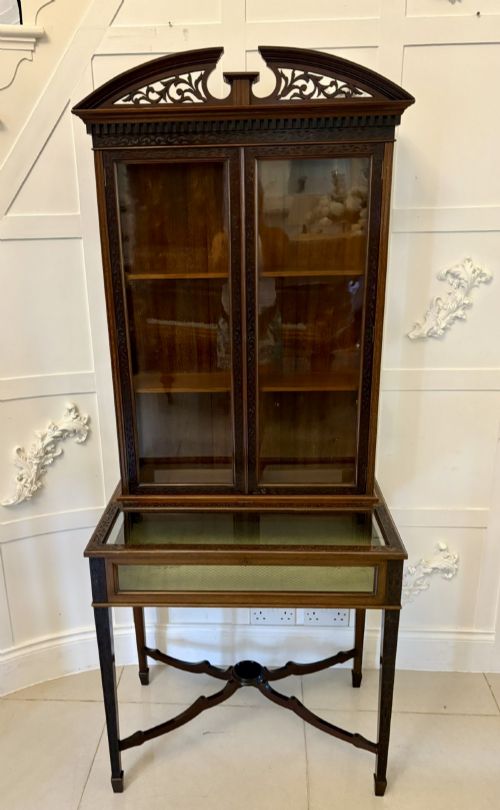
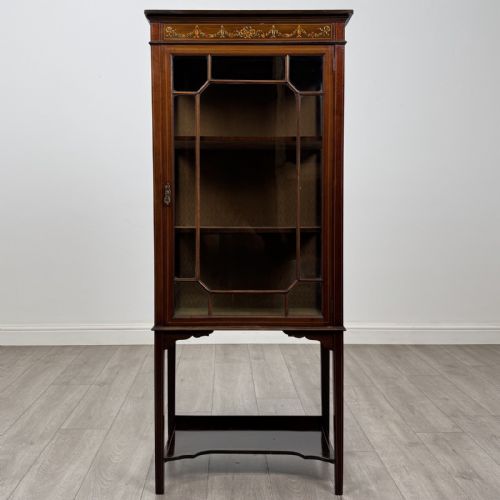
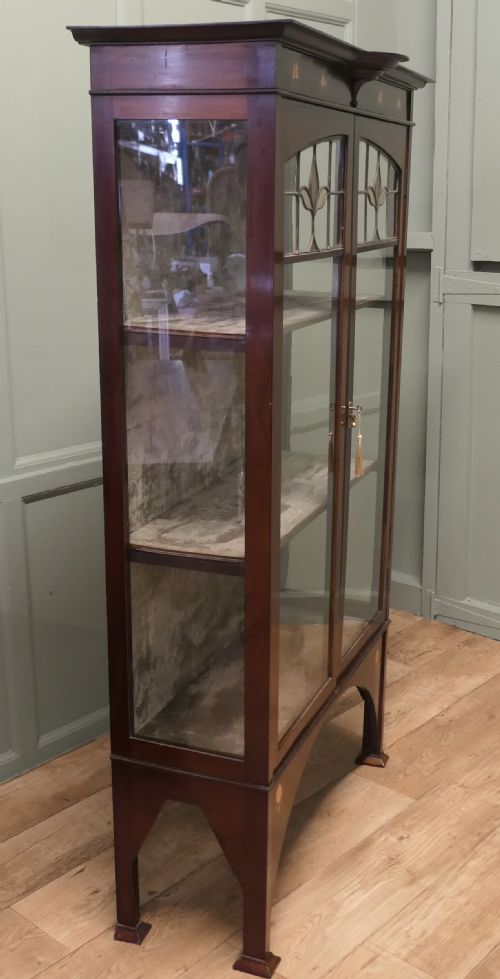
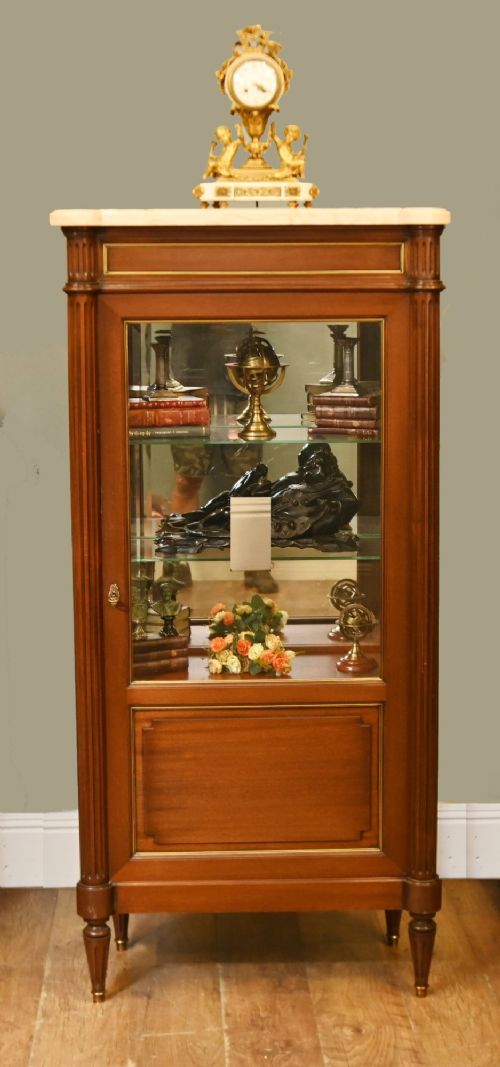
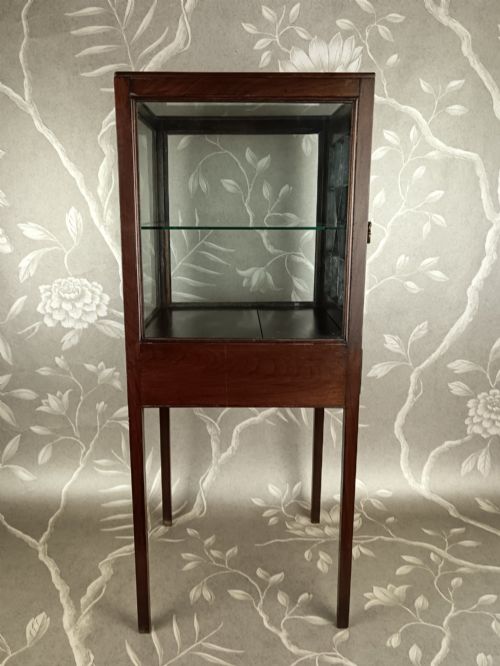
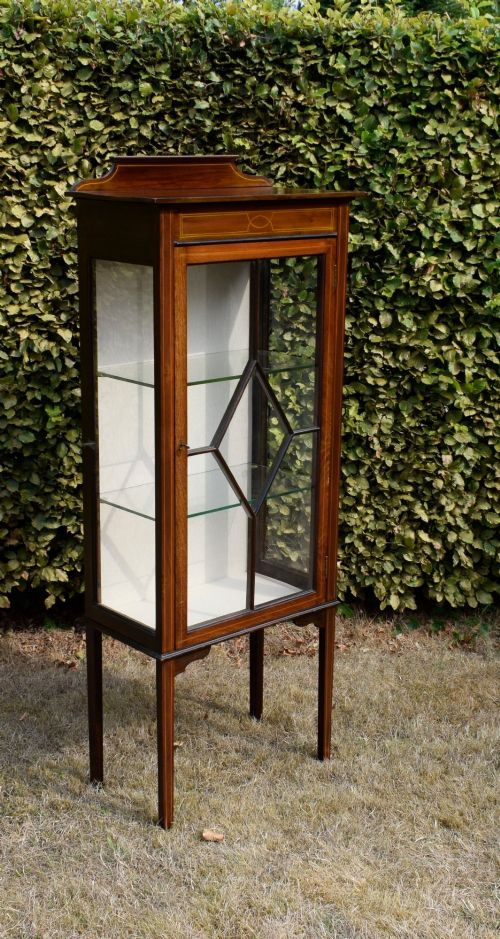
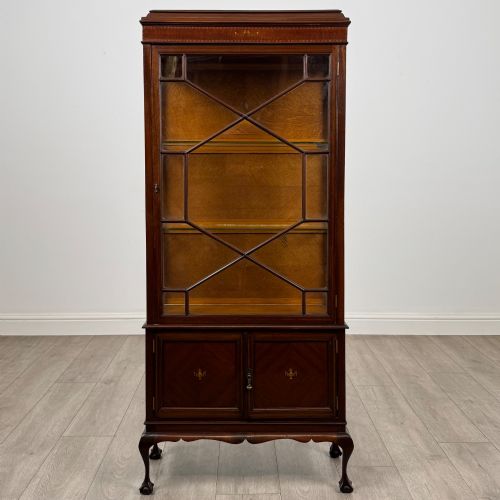
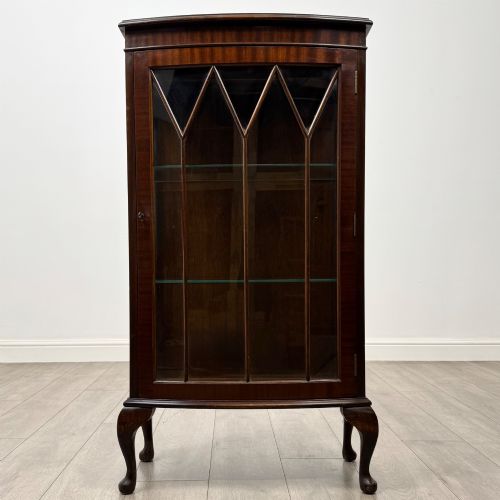
Mahogany Glass Curio Cabinet
Mahogany glass curio cabinets bring together polished timber and transparent panes to display treasured objects, spanning Edwardian, Victorian and Georgian eras.
Mahogany Glass Curio Cabinet
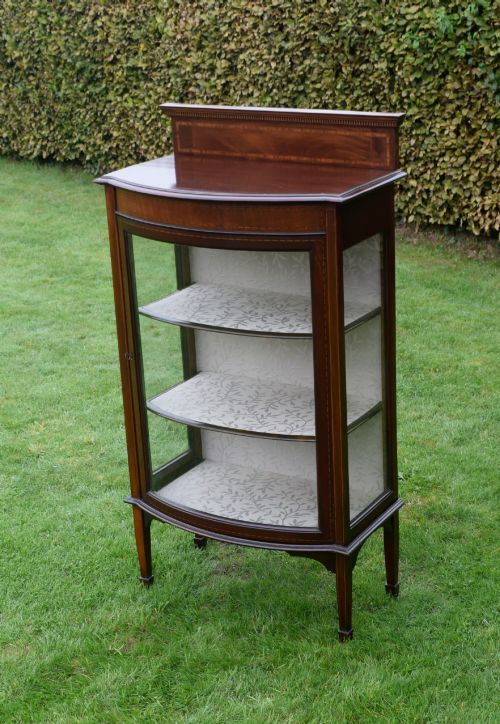
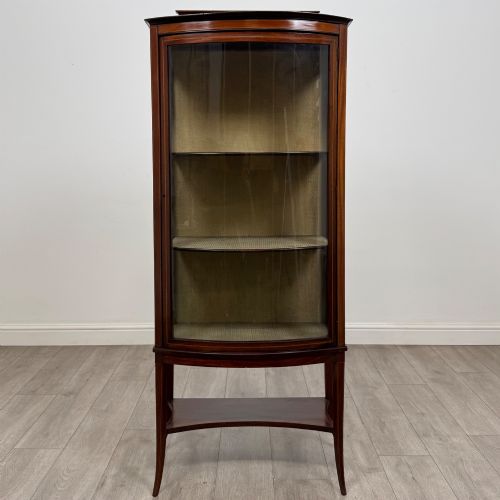
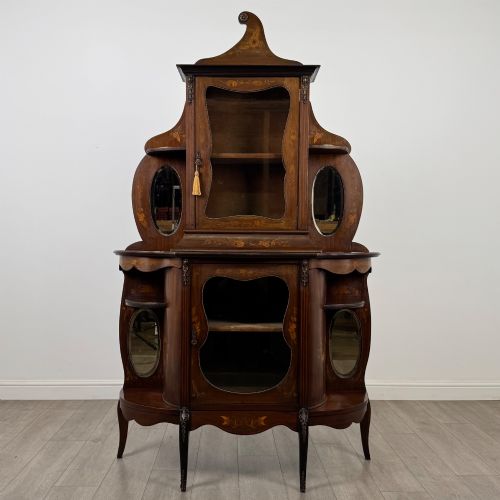
A mahogany glass curio cabinet serves to exhibit small collectables and decorative items safely behind glazed doors or panels. These pieces appear most frequently in Edwardian and Victorian designs, alongside earlier Georgian examples.
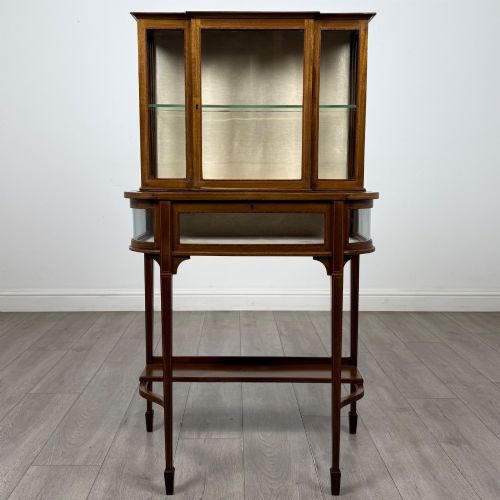
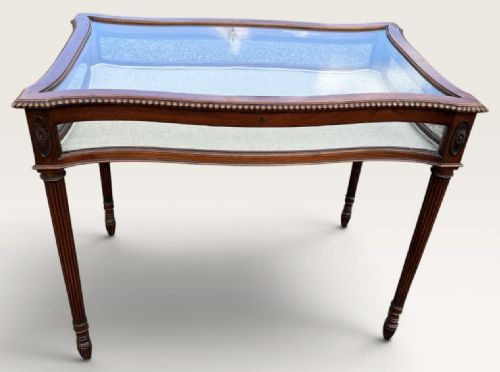
The selection ranges from upright vitrines and display cabinets to low-profile bijouterie tables with glass tops. Many incorporate serpentine fronts, bow ends or pedestal forms shaped from solid timber.
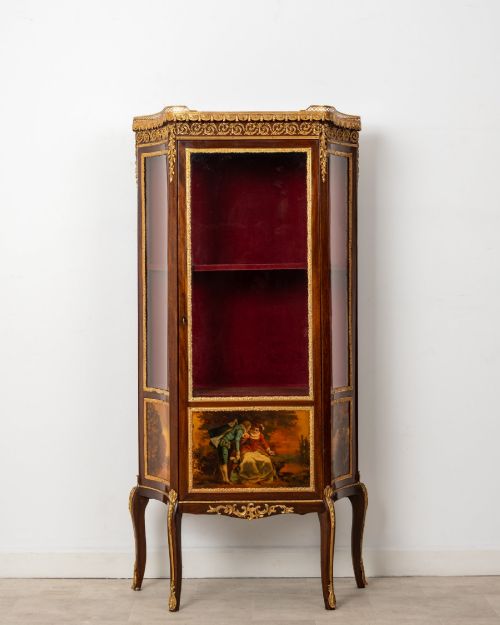
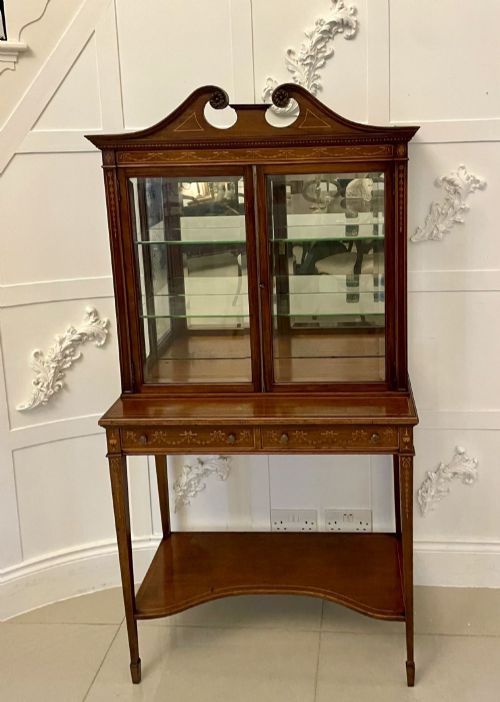
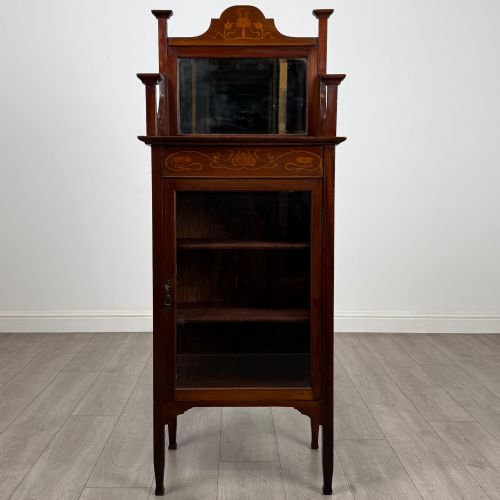
Makers drew on diverse decorative traditions, producing Louis XV and XVI revivals, French Rococo pieces, Art Nouveau cabinets and Sheraton Revival work.
Craftsmanship and Proportion
Quality rests in the crispness of carved details, the precision of marquetry inlay and the harmony of proportions. Superior examples display carefully selected mahogany grain matched across the doors and panels.
The refinement of cast ormolu and gilt bronze mounts, alongside the execution of curved glass panes, distinguishes standard production from exceptional cabinet-making.
Cabinet makers ensured your curios had velvet beds softer than a duke's slippers.
Edwards and Roberts·Shapland and Petter·François Linke
The Mahogany Glass Curio Cabinet Glossary
- Vitrine
- A glass-fronted cabinet designed for displaying fine porcelain or curiosities. These upright pieces typically feature glazed sides to let light reach the interior.
- Bijouterie table
- A glass-topped table constructed specifically for displaying jewellery, medals and small ornaments. They often include a velvet-lined interior tray.
- Marquetry
- Decorative woodwork where pieces of contrasting veneer form pictorial patterns or floral motifs. Craftsmen apply these veneers directly onto the mahogany carcase.
- Vernis Martin
- A decorative furniture-finishing technique mimicking East Asian lacquer. It uses multiple translucent layers of varnish over painted scenes.
- Ormolu
- Gilt bronze mounts applied to furniture for decorative enrichment. The technique involves treating brass or bronze with a gold amalgam.
Mahogany Glass Curio Cabinet: Frequently Asked Questions
What is a bijouterie table?
A bijouterie table is a specialised display case featuring a glazed top and a shallow compartment. It was designed for examining small valuables at close quarters.
These tables frequently stand on slender legs and often incorporate velvet or fabric lining inside the display well.
How do I date a mahogany display cabinet?
Dating relies on observing structural characteristics, timber preparation and stylistic traits. Edwardian pieces often show delicate satinwood inlay, whereas Georgian cabinets display simpler, heavier architectural lines.
Hardware, hinges and the method of glass manufacture also provide clear chronological indicators.
Where were these cabinets placed in a home?
These cabinets sat in drawing rooms, reception spaces and parlours where guests gathered. They functioned as conversation pieces for displaying travel souvenirs and collected curios.
Table-top and pedestal versions suited smaller rooms where upright wall space was limited.
What is the difference between a vitrine and a curio cabinet?
The terms describe similar glazed display furniture, with vitrine frequently denoting a French or continental influence. Both terms refer to cases built primarily to protect and exhibit decorative objects.
Differences lie mainly in stylistic vocabulary, such as the inclusion of cabriole legs or ormolu mounts.