
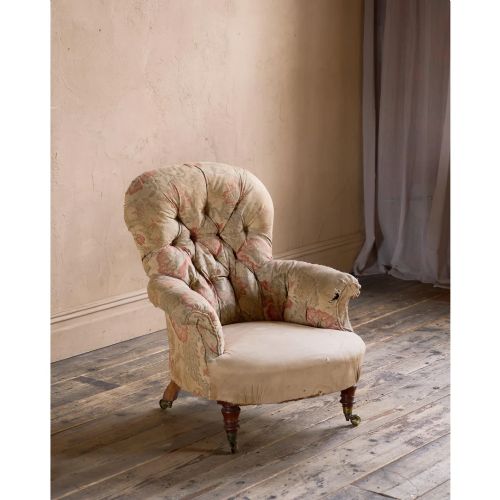
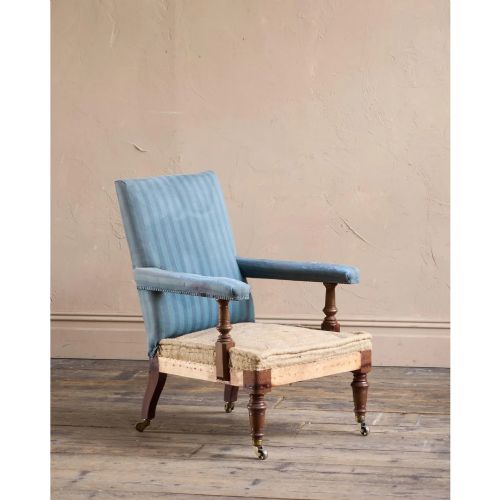
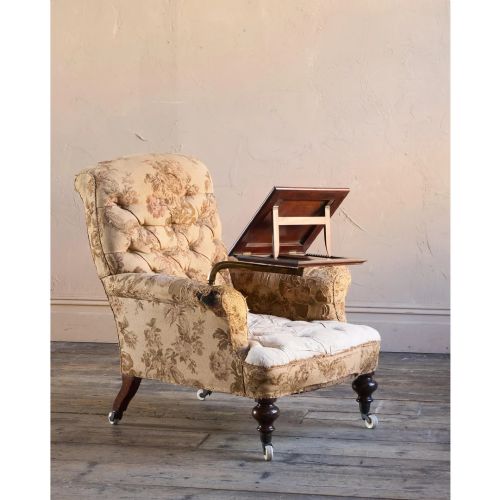
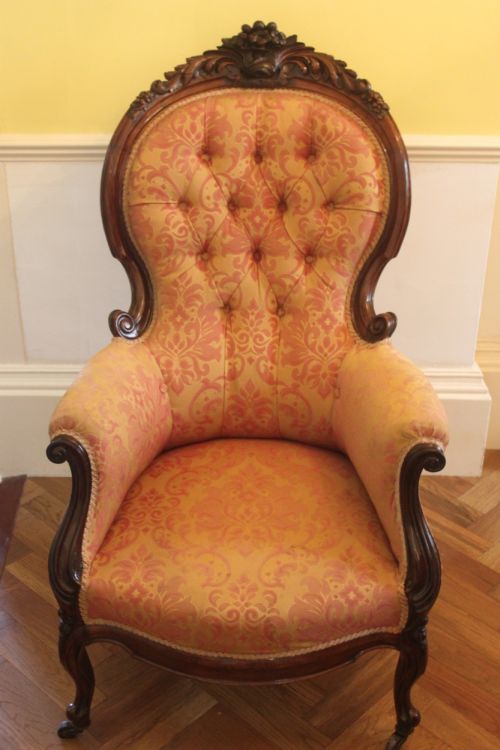
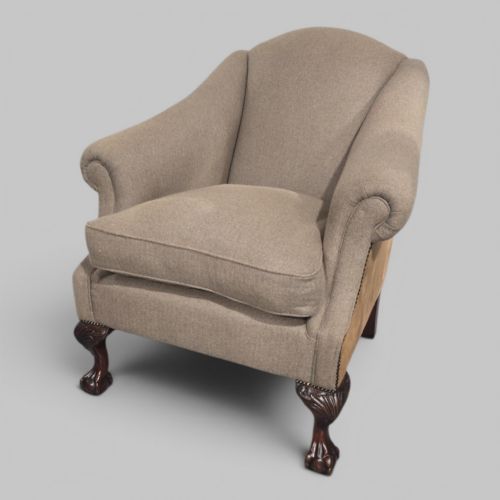
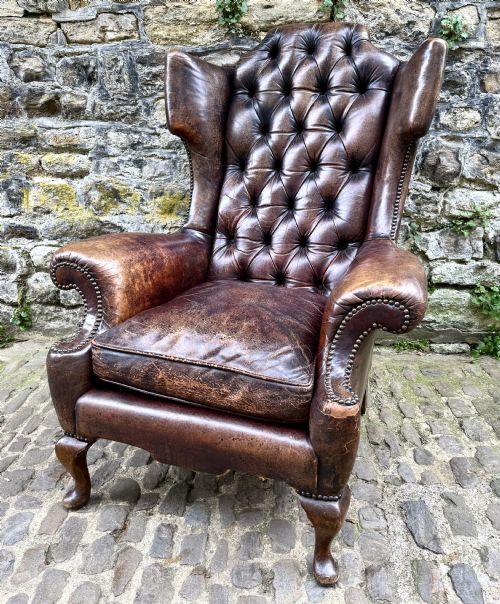
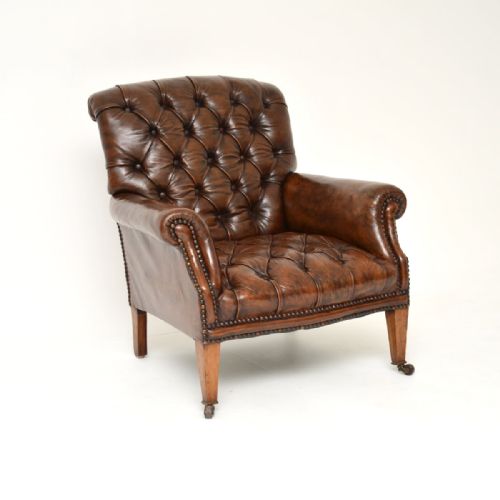


Mahogany Gentleman Armchair
A mahogany gentleman armchair offers deep seat comfort and robust timber framing, anchoring a study or parlour with nineteenth-century presence.
Mahogany Gentleman Armchair
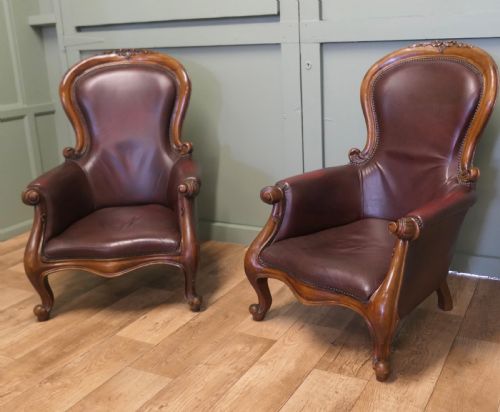
A mahogany gentleman armchair represents a sturdy seating form designed for domestic parlours, libraries, and morning rooms during the nineteenth century. Buyers searching this phrase encounter substantial timber frames built to accommodate relaxed seating, frequently upholstered in leather, velvet, or fabric.
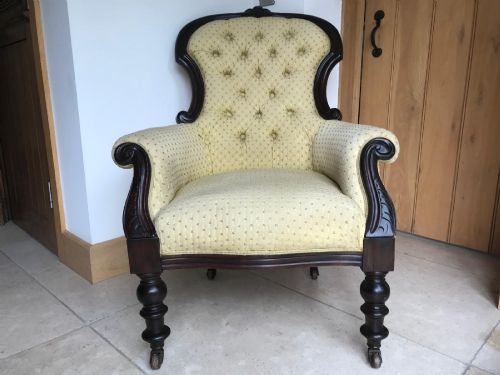
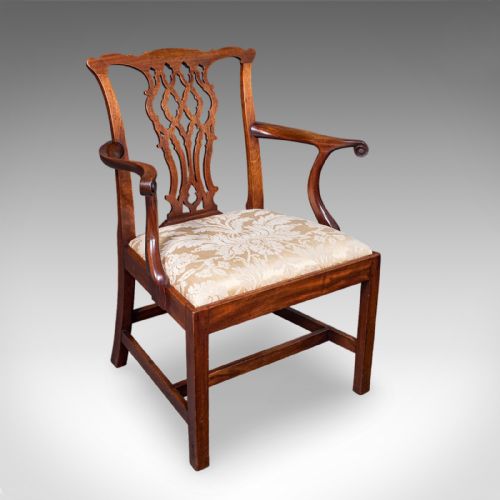
Victorian examples dominate the selection, spanning styles from simple open armchairs to spoon back chairs and library seating with reading stands. Earlier Georgian and Regency models appear alongside later revival pieces, maintaining timber frames of solid mahogany.
The form typically includes padded armrests, sprung or stuffed seats, and supportive backs tailored for long periods of reading or conversation. Makers constructed these chairs to serve as principal seating in private studies and drawing rooms.
Materials and construction methods
Cabinet makers utilised dense mahogany for the primary structural frames, shaping scroll arms, cabriole legs, and barley twist supports from the solid timber. Joinery relied on traditional mortise and tenon methods to ensure the heavy frames remained rigid under daily use.
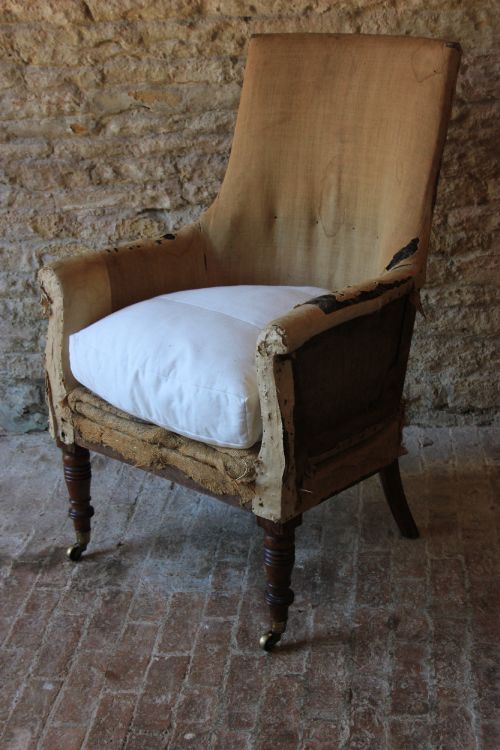
Internal stuffing involved traditional materials such as horsehair, hessian, and calico beneath top coverings of leather, wool, or velvet. Brass castors and decorative tacks frequently finished the lower framework and upholstery borders.
Listings feature mahogany gentleman armchairs spanning the Georgian, Regency, William IV, and Victorian periods, alongside Edwardian and revival interpretations.
Judging quality and proportion
Quality rests upon the crispness of the timber carving and the architectural balance of the frame, where superior examples exhibit clean scrollwork and well-proportioned armrests. Plain or poorly proportioned frames lack the sculptural depth found in pieces produced by established cabinet makers.
The integrity of the internal joinery dictates structural longevity, distinguishing robust library chairs from lighter parlour seating. Original timber surfaces with honest patination hold greater appeal than heavily stripped or over-polished frames.
Holland & Sons·Morison and Co·C. Hindley & Sons
The Mahogany Gentleman Armchair Glossary
- Spoon back
- An upholstered chair back shaped in a concave oval resembling the bowl of a spoon, designed to fit the human spine. This profile appears frequently on Victorian parlour and drawing room seats.
- Library chair
- A heavy, durable armchair intended for reading rooms, often fitted with wide arms or integrated reading stands. These pieces prioritize sustained comfort and structural stability.
- Gentleman's armchair
- A generously proportioned seat featuring padded arms and a supportive back, built for domestic studies and smoking rooms. The designation denotes a sturdy nineteenth-century form.
- Cabriole leg
- A furniture leg that curves outward at the knee and tapers inward toward the foot, inspired by animal limbs. Makers utilised this shape on mid-Victorian mahogany frames.
- Open armchair
- A seat without upholstered side panels, exposing the carved wooden framework along the arms. This style maintains a lighter visual presence in smaller rooms.
Mahogany Gentleman Armchair: Frequently Asked Questions
What defines a mahogany gentleman armchair?
A mahogany gentleman armchair is a nineteenth-century timber seat built with generous proportions, padded armrests, and a supportive upholstered back.
These chairs served primarily in libraries, studies, and morning rooms where comfort and durability were essential.
How do I identify the period of the chair?
Period identification relies on carved details, leg shapes, and framing styles that shifted from Georgian restraint to ornate Victorian curves. Examining the under-frame and timber grain also helps establish the approximate decade of manufacture.
Earlier pieces show crisp hand-carving in the Chippendale manner, while mid-century examples feature spoon backs and scroll arms.
Were these chairs used in libraries?
Library chairs formed a significant subset of this seating category, often incorporating reading stands or heavy leather upholstery for sustained study. They provided stable, robust seating for long hours among book collections.
Libraries required sturdy timber frames that could withstand frequent movement across reading tables and desks.
What upholstery materials are authentic?
Original upholstery typically utilised leather, velvet, calico, or heavy fabric over traditional stuffing like horsehair and hessian. Many surviving frames have been recovered over time to suit modern interiors.
Leather remains the preferred choice for library and desk armchairs due to its hard-wearing nature.