
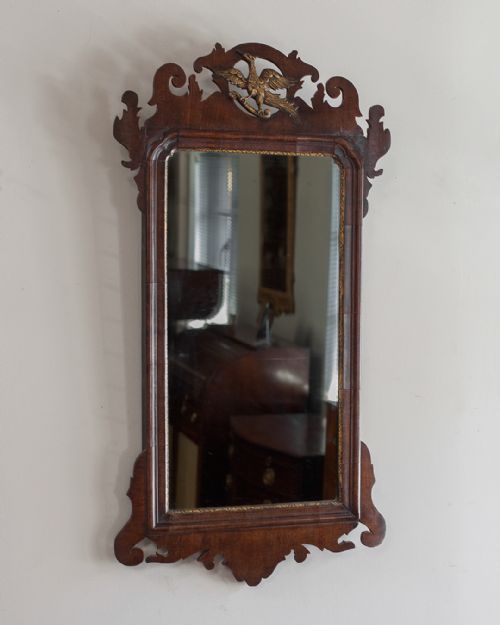
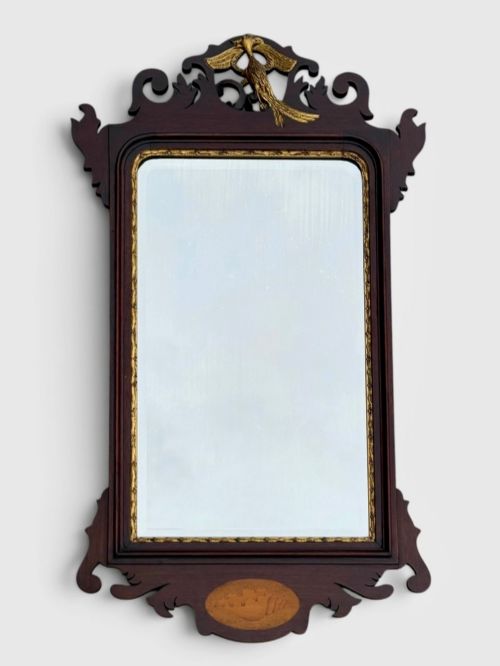
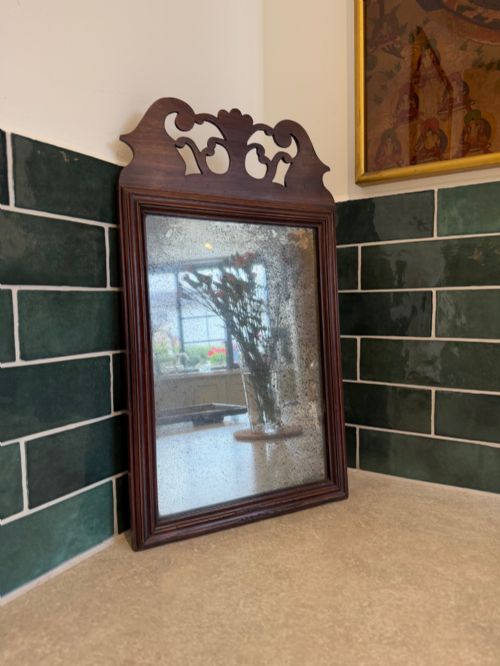
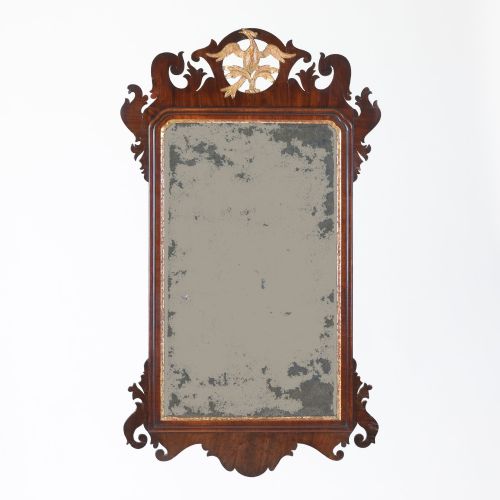




Mahogany Fret Mirror
Mahogany fret mirrors are wall-hung pieces defined by pierced wooden frames, sought for their architectural silhouette and Georgian character.
Mahogany Fret Mirror
A mahogany fret mirror is a wall-hung glass plate set within a pierced wooden frame shaped by scrollwork and brackets. These pieces emerge primarily from the Georgian and Edwardian periods, carrying historical styles through the nineteenth century and into later revivals.
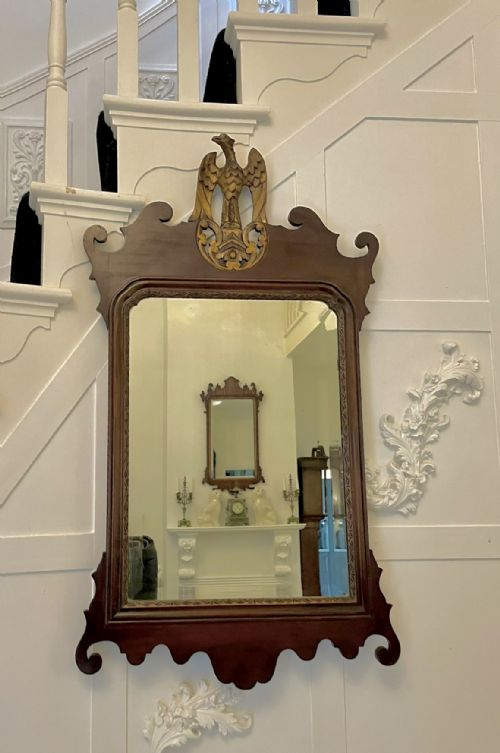
The version most commonly met on this page is the eighteenth-century or Georgian style wall mirror, often incorporating a giltwood motif at the crest or base. Pieces span from compact wall mirrors up to larger overmantel proportions designed for principal rooms.
How they were made
Makers utilised solid mahogany boards, sawing the distinct pierced outlines of the frame by hand through fretwork techniques. Giltwood accents, parcel-gilt details, and occasional satinwood inlay were integrated to highlight the carved scrollwork.
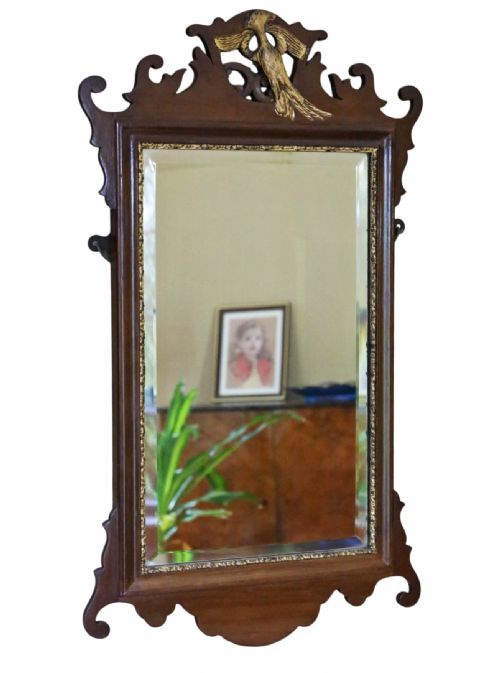
Mirror glass was set into the rebated back of the wooden frame, frequently accompanied by bevel-edged plates in later Edwardian and revival examples. Frames were joined at the corners and finished with traditional polishing methods to bring out the grain of the wood.
Listings feature periods spanning from the eighteenth-century Georgian era through Victorian times and into Edwardian revivals, utilising mahogany, giltwood, and inlay.
What varies in quality
The crispness of the fret-cut piercing defines the standard of the frame, separating sharp, deeply carved scrollwork from softer, blunter contours. Finer examples retain proportional balance across the ears and apron, alongside well-preserved gilding on applied crests.
The choice of mahogany timber and the retention of original mirror glass plates influence the integrity of the piece. Superior execution shows in the precision of the joinery and the harmonious integration of inlay or parcel-gilt details.
The Mahogany Fret Mirror Glossary
- Fretwork
- Pierced decorative woodworking created by cutting patterns through thin boards. This technique gives the frame its characteristic scrolled outline.
- Parcel-gilt
- Partially gilded woodwork where gold leaf highlights specific carved details such as a crest or moulding. It contrasts against the dark tone of the mahogany.
- Pier glass
- A tall wall mirror designed to hang on the wall space between windows. These mirrors reflect additional light into the room.
- Overmantel mirror
- A wide mirror intended for placement above a fireplace mantel. Examples here include triptych configurations spanning larger wall sections.
- Ho-ho bird
- A mythical Chinese bird motif frequently carved into the crest of eighteenth-century frames. It forms a focal point at the top of the fretwork.
Mahogany Fret Mirror: Frequently Asked Questions
Where should I hang a mahogany fret mirror?
These mirrors suit principal reception rooms, hallways, or above a fireplace mantel where their vertical proportions draw the eye upward.
Ensure the wall fixings support the weight of the timber frame and glass safely without straining the structure.
How do I date a mahogany fret mirror?
Dating relies on examining the timber density, the sharpness of the fretwork, and the construction methods used at the back of the frame.
Edwardian and later Georgian Revival pieces often display machine-sawn precision and newer mirror plates compared to eighteenth-century originals.
Are these mirrors fragile?
The projecting scrolled ears of the fretwork require careful handling during transport and cleaning to prevent accidental chips or breaks.
Wall placement should avoid areas prone to heavy vibrations or fluctuating humidity that might affect the timber joints.
What is a Ho-ho bird?
The Ho-ho bird is a stylized phoenix figure adapted from Asian design motifs popular during the Georgian period.
It perches at the top crest of many fret mirrors, often rendered in gilded wood above the mahogany frame.