

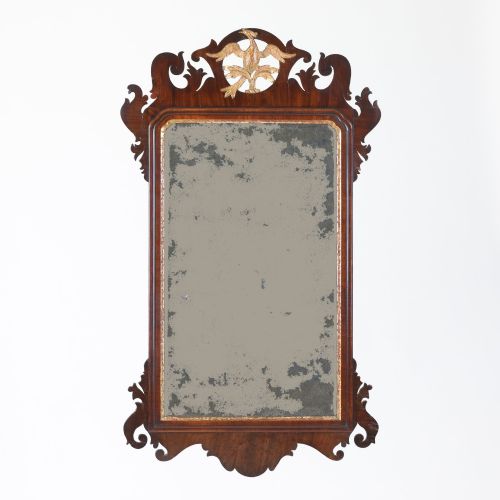


Mahogany Fret Frame
A mahogany fret frame brings crisp pierced woodwork and warm timber tones to any interior.
Mahogany Fret Frame
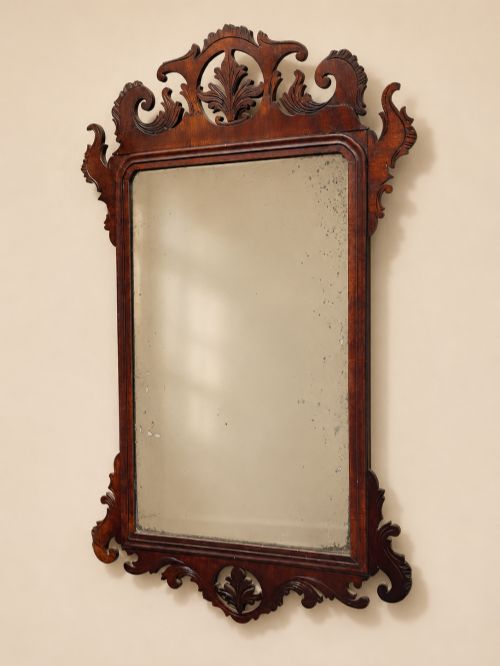
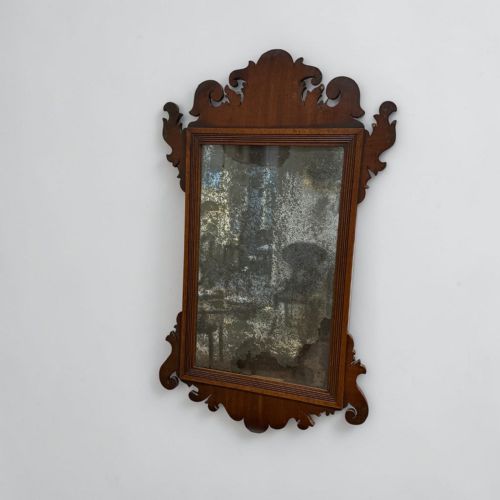
When someone searches for a mahogany fret frame, they are looking at wall mirrors framed in timber with pierced, jigsaw-cut borders. These pieces primarily date from the Georgian and Edwardian periods, appearing in forms shaped by 18th century aesthetics and later revivals.
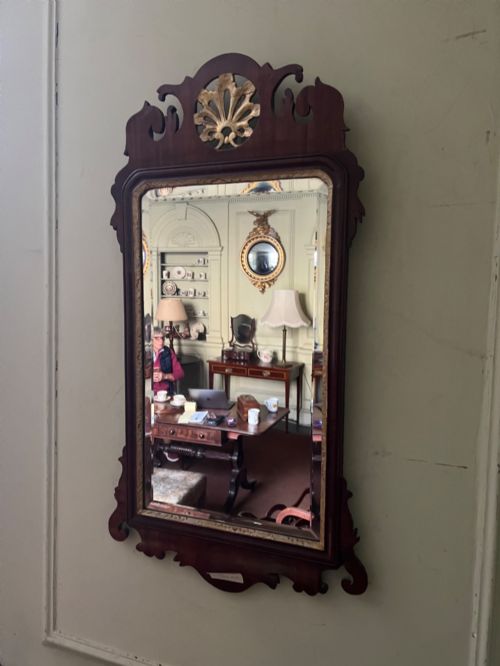
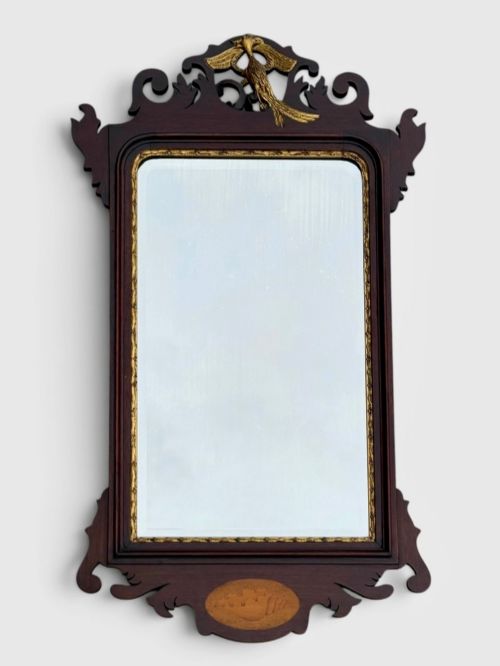
The most common version to meet on this page is the wall mirror featuring fret-cut mahogany edges, often ornamented with giltwood details or a carved crest. They range from compact examples to large formats incorporating inlay and mirror glass.
How they were made
Cabinet makers constructed these frames using rich mahogany timbers, sometimes embellished with walnut, satinwood inlay, or applied giltwood accents. The distinct outline was achieved through meticulous fret-cutting, yielding intricate scrollwork and silhouette patterns.
Many examples integrate bevelled or flat mirror glass held securely within the timber rebate, accompanied by carved crests such as the ho-ho bird. Gilt highlights were applied to accentuate specific carved motifs against the dark grain of the wood.
Mahogany Fret Frame Retail Price Guide 2026
Typical asking prices for mahogany fret frame among the pieces listed under this phrase on Sellingantiques today, from the lower quarter to the upper quarter. They describe what is for sale here now, not the wider market.
What varies in quality
The distinction between ordinary and exceptional work lies in the crispness of the fret-cutting and the depth of the mahogany grain. Finer examples display sharp, well-defined pierced scrolls without splintering, whilst lesser pieces show blunt edges and simplified contours.
Proportion and the handling of decorative elements like giltwood or inlaid panels separate standard production from superior craftsmanship. The integration of the carved crest relative to the main frame dictates the visual balance of the piece.
The Mahogany Fret Frame Glossary
- Fret-cut
- Woodwork pierced with a fine fretsaw to create decorative patterns and openwork silhouettes. This technique defines the distinct outline of the frame.
- Giltwood
- Timber carved and coated with gold leaf or gold paint. It frequently highlights crests and mouldings on the frame.
- Inlay
- Contrasting woods or materials set flush into the surface of the primary timber to form decorative patterns. Satinwood and walnut are typical choices.
- Ho-ho bird
- A stylized Chinese phoenix motif frequently carved onto the crest of 18th century mirrors. It remains a key decorative feature of the style.
Mahogany Fret Frame: Frequently Asked Questions
What is a mahogany fret frame?
It is a wall mirror enclosed in timber featuring pierced, jigsaw-cut scrollwork along the borders. These pieces draw on 18th century designs and later Edwardian interpretations.
The style emphasises linear silhouette and timber grain, often finished with a carved crest at the top.
How do I date a fret mirror?
Dating relies on timber selection, construction methods, and the sharpness of the fret-cut patterns. Georgian examples display different secondary woods and wear patterns compared to Edwardian revivals.
Examining the glass plates and the backboards provides further clues regarding the age of the piece.
Where should I hang a wall mirror?
These mirrors suit principal reception rooms, hallways, and above mantelpieces where the timber tones complement surrounding furniture. Their vertical orientation works well on narrower wall spaces.
Ensure the wall fixings match the weight of the timber and glass assembly.
What features define the Chippendale style?
Chippendale style incorporates robust mahogany construction, elaborate fretwork, and carved motifs such as birds or foliage. The influence stems from mid 18th century cabinet making design books.
Later revivals in the Edwardian era successfully replicated these classical proportions and ornamental details.