






Mahogany Framed Footstool
A mahogany framed footstool brings warmth and sturdy seating to a room, ranging from compact Victorian dressing stools to large upholstered ottomans.
Mahogany Framed Footstool
A mahogany framed footstool is a low seating piece built with a rich timber frame and topped with various textiles, leather, or needlework. These items appear across the nineteenth century, including Victorian, William IV, and Regency periods, alongside later revival styles such as Chippendale and Queen Anne.
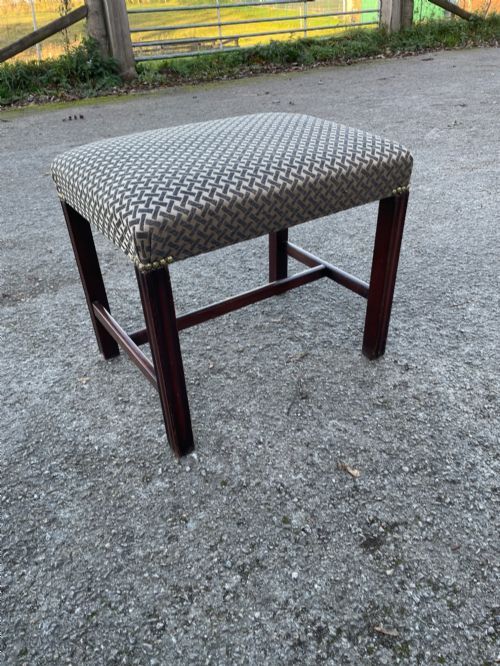
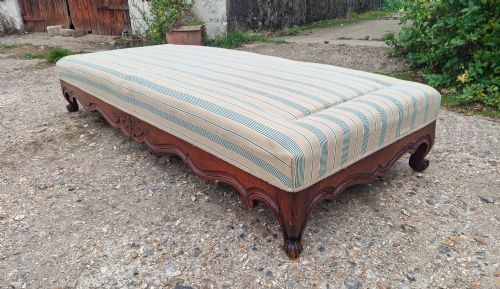
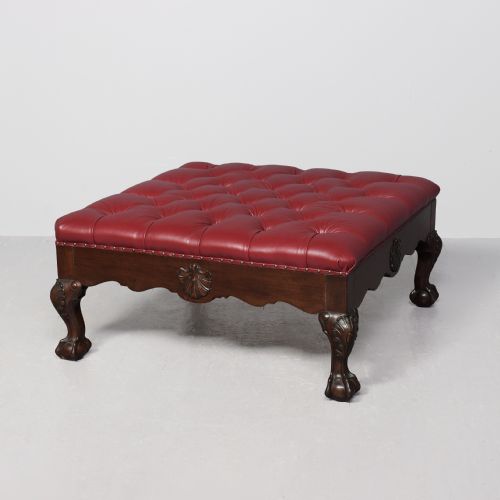
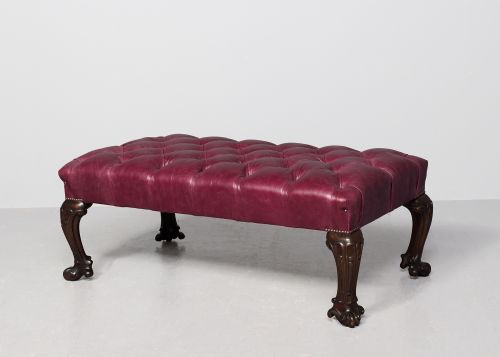
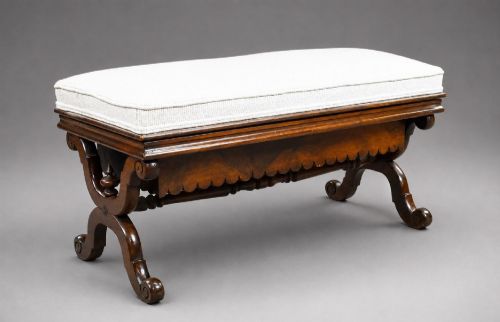
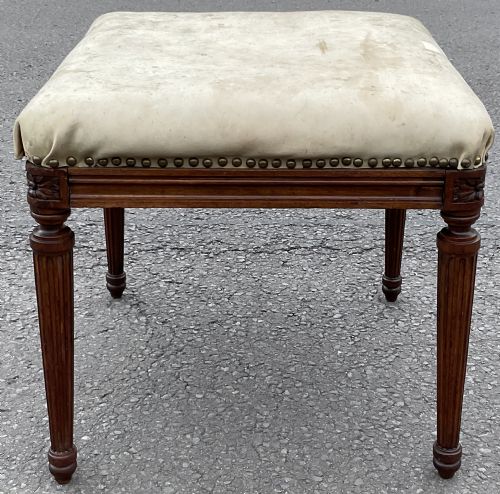
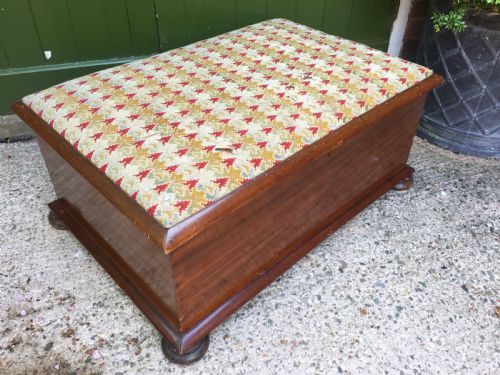
The assortment on this page spans from small dressing stools and x-frame stools to large ottomans and long footstools. You will encounter pieces featuring exposed mahogany frames alongside others covered entirely in upholstery fabric, wool, damask, or hide.
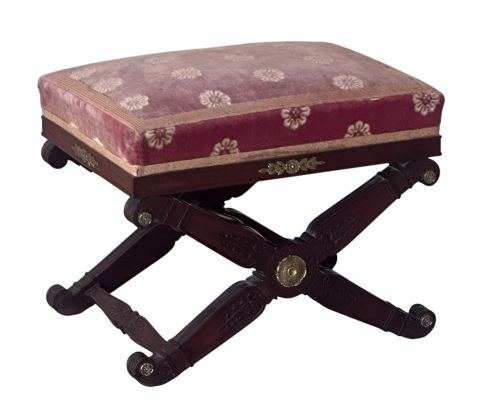
Forms vary from simple rectangular frames to classic x-frame designs supported by brass accents or carved woodwork. Origins trace through nineteenth-century workshops and later revival eras, giving buyers a wide choice of period characteristics.
Materials and construction methods
Makers utilised solid mahogany for the structural frames, valued for its deep reddish-brown grain and durability. This timber allowed craftsmen to carve intricate details into legs and stretchers while maintaining structural integrity.
Upholstery materials included wool, leather, textiles, and damask, often secured with buttoning or finished with needlework such as gros-point. Brass details occasionally appeared as structural or decorative elements on x-frame models.
Mahogany Framed Footstool Retail Price Guide 2026
Typical asking prices for mahogany framed footstool among the pieces listed under this phrase on Sellingantiques today, from the lower quarter to the upper quarter. They describe what is for sale here now, not the wider market.
Several x-frame stools survive alongside generous buttoned ottomans, proving that nineteenth-century feet rarely lacked proper architectural support.
Judging quality and execution
Quality rests in the crispness of the mahogany carving and the joinery of the frame. Superior examples demonstrate tight timber joints and well-defined decorative motifs rather than plain, unarticulated shaping.
The standard of the upholstery also dictates the piece's standing, particularly where original needlework, buttoned hide, or traditional textile covers remain intact and properly tensioned across the frame.
The Mahogany Framed Footstool Glossary
- X-frame
- A structural design where intersecting legs form an X shape when viewed from the side. This folding-style silhouette dates back to classical antiquity and appeared frequently during the Regency and Victorian periods.
- Gros-point
- A type of heavy needlepoint embroidery stitched on canvas with wool yarn. It provides a durable, textured surface frequently found on nineteenth-century footstools and ottomans.
- Buttoned hide
- Leather upholstery secured with deep tufting and buttons that pull the material into a geometric diamond pattern. This technique adds both padding structure and visual depth to larger footstools.
- William IV
- A British design period spanning the 1830s characterised by robust proportions and heavy mahogany framing. Pieces from this era often display bold architectural lines.
- Chippendale Revival
- A late nineteenth and early twentieth-century style resurrecting eighteenth-century mahogany furniture designs. These pieces emulate the carved cabriole legs and classical motifs of Thomas Chippendale's original workshop output.
Mahogany Framed Footstool: Frequently Asked Questions
How do I date a mahogany footstool?
Dating relies on identifying the prevailing style and timber characteristics associated with specific nineteenth-century reigns or revival periods. Regency and William IV pieces often display heavier architectural forms, while Victorian examples frequently incorporate turned legs or elaborate carving.
Examining the construction methods underneath the upholstery reveals how the frame was joined. Hand-cut joints and secondary timbers help narrow down whether a piece originates from the mid-nineteenth century or a later Edwardian revival workshop.
What is an x-frame stool used for?
An x-frame stool served as a movable seat or a dressing stool in nineteenth-century bedrooms and drawing rooms. Their compact footprint made them easy to reposition near firesides or dressing tables as needed.
Due to their sturdy cross-braced construction, these stools also functioned as footrests for larger armchairs and sofas. Today, they fit easily into small spaces as occasional seats.
Are leather and fabric upholstery original?
Upholstery on nineteenth-century footstools is frequently replaced to maintain usability over generations. Fabric covers wear out through regular contact, meaning most surviving pieces have undergone reupholstery at some point.
Some items retain older needlework tops or period hide coverings, but buyers should generally expect modern fabric updates. The timber frame beneath remains the primary indicator of age and origin.
Where should I place a long footstool?
Long footstools and ottomans suit placement directly in front of large sofas or spacious armchairs. Their extended proportions provide ample surface area for resting feet or serving as casual seating.
In bedrooms, long dressing stools fit well at the foot of a bed or beneath a window. Their low profile ensures they do not obstruct sightlines in smaller rooms.