




Mahogany Eagle Wall Mirror
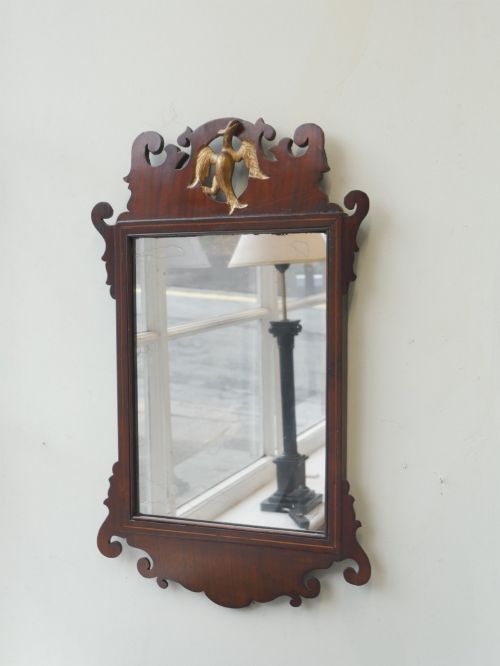
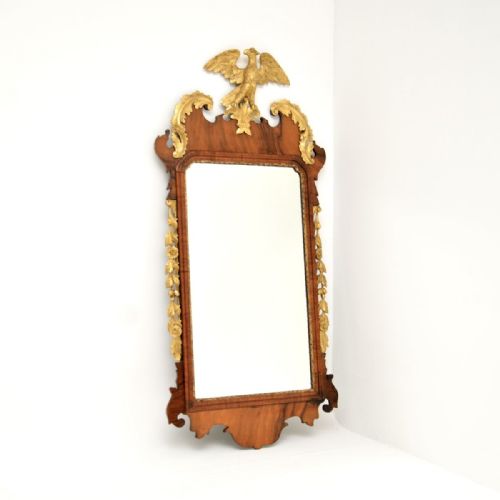
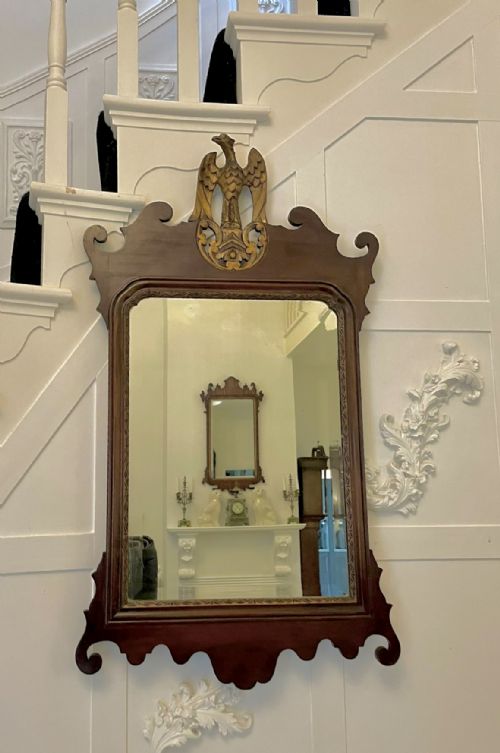
A mahogany eagle wall mirror brings depth and warmth to a room through dark timber framing, gilt accents and carved bird crests.
Mahogany Eagle Wall Mirror
A mahogany eagle wall mirror unites dark hardwood framing with carved and gilded detailing, often featuring a distinctive bird crest at the top of the plate. These pieces draw on Georgian design traditions, spanning the nineteenth and twentieth centuries through original items and later revivals.
The most frequent examples found in these listings combine mahogany with parcel gilt elements, mirror glass, and occasionally satinwood inlay. They appear in varied forms from fretted wall mirrors to convex plates and pier mirrors.
Originating in stylistic revivals and earlier periods including the Georgian era, these mirrors serve as prominent focal points on domestic walls. Their presence reflects enduring craftsmanship through styles such as Chippendale and George II revival.
How they were made
Cabinetmakers constructed the primary structures from solid mahogany, frequently shaping the outer borders into intricate fretwork outlines or scrolling pediments. Carpenters applied thin layers of gold leaf or gesso to carved wooden details to create the parcel gilt contrast characteristic of these pieces.
Makers utilised mirror glass, sometimes incorporating Vauxhall plates with bevelled edges, secured within the timber rabbets. Inlaid sections employ contrasting timbers like satinwood to introduce decorative banding around the central glass.
Mahogany Eagle Wall Mirror Retail Price Guide 2026
Typical asking prices for mahogany eagle wall mirror among the pieces listed under this phrase on Sellingantiques today, from the lower quarter to the upper quarter. They describe what is for sale here now, not the wider market.
Listings feature mahogany, giltwood, and satinwood inlay across pieces dated from the Georgian era through the Edwardian period.
What varies in quality
The sophistication of the carved eagle crest and the precision of the fretwork outline set finer examples apart from simpler productions. Deep relief carving in the wood and crisp application of gold leaf indicate superior workshop output.
The clarity and age of the mirror glass contribute significantly to the character of the piece, alongside the preservation of the original mahogany timber surfaces. Subtle variations in the grain and the integrity of the joinery distinguish robust construction from standard commercial work.
The Mahogany Eagle Wall Mirror Glossary
- Parcel Gilt
- Partially gilded decoration where gold leaf is applied only to specific carved elements, such as the eagle crest or inner moulding, leaving the underlying mahogany exposed.
- Fretwork
- Openwork ornamentation cut from thin boards of timber using a fretsaw, creating geometric or scrolling patterns around the frame border.
- Vauxhall Plate
- Mirror glass characterised by a bevelled edge, historically associated with the famous London glasshouse and prized for its optical clarity.
- Gesso
- A plaster-like mixture applied to wood surfaces as a preparatory layer for gilding, allowing carvers to achieve sharp relief details.
- Pier Mirror
- A tall mirror designed specifically to hang on the narrow wall space between windows, often reflecting additional light into a room.
Mahogany Eagle Wall Mirror: Frequently Asked Questions
Where should I hang a mahogany eagle wall mirror?
These mirrors suit principal reception rooms, hallways, or above a fireplace mantel where their vertical proportions and reflective qualities can command the space. Placing them opposite a window helps maximise natural light.
Ensure the wall structure can support the combined weight of the hardwood frame and glass plate, using appropriate fixings secured firmly into masonry or studs.
How do I identify a revival piece from an earlier one?
Examination of the timber construction, backboards, and secondary woods often reveals the manufacturing period. Tool marks and the ageing of the gesso provide physical clues.
Stylistic cues also help, as Edwardian and later revivals frequently combine Georgian fretwork patterns with distinct nineteenth or twentieth-century joinery techniques.
What is the significance of the eagle on these mirrors?
The eagle motif draws on classical iconography, symbolising strength, majesty, and freedom within British decorative arts. Carvers placed the bird at the crest to dominate the composition.
This sculptural element anchors the design, drawing the eye upward and balancing the architectural weight of the mahogany frame below.
How do I care for the gilt and mahogany surfaces?
Dust the timber and carved elements regularly with a soft, dry cloth to prevent particulate accumulation. Avoid chemical sprays or moisture on the gilded areas.
Keep the mirror away from direct sunlight and fluctuating humidity to protect the joinery, the fragile gold leaf, and the stability of the wood.