
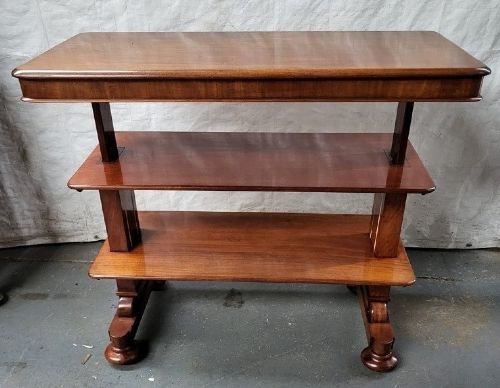

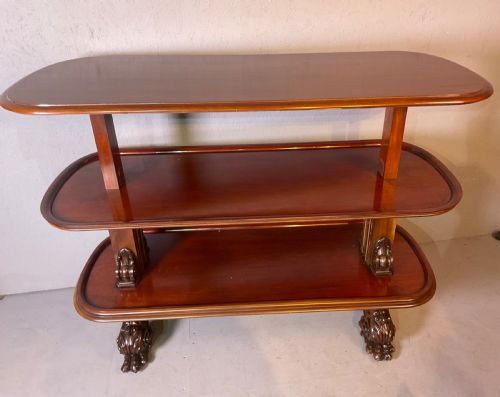


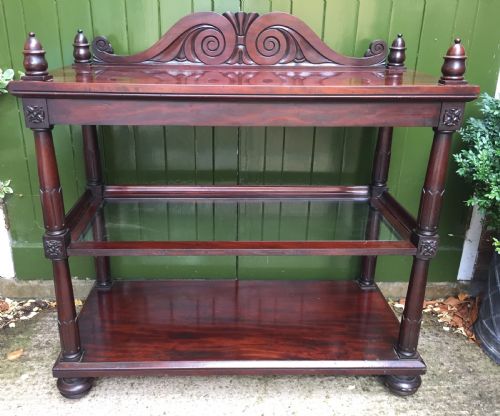


Mahogany Dumbwaiter Sideboard
These mahogany dumbwaiter sideboard pieces are multi-tiered dining room servers built for heavy service, and a buyer wants one for practical display.
Mahogany Dumbwaiter Sideboard
When you search for a mahogany dumbwaiter sideboard, you are looking at multi-tiered serving furniture designed to hold dishes and drinks during large meals. The pieces on this page span the Regency, George IV, William IV, and Victorian periods, taking forms such as serving tables, tiered stands, and metamorphic buffets. Most examples feature two or three graduated tiers supported by turned columns or uprights.
Originating largely from the nineteenth century, these items range from simple three-tier stands to grand, heavy serving pieces with gallery backs. The smaller dumb waiters served drinks or side dishes near the table, while larger buffet servers stood against the wall. Each variation shares a heavy reliance on timber construction and structural utility.
How they were made
Makers built these pieces primarily using solid mahogany and Cuban mahogany, selected for deep grain patterns and structural strength. Timber sections were joined with traditional cabinetry methods to bear the weight of heavy ceramics and glassware across multiple tiers.
Metal and ceramic components appear frequently as functional details, including brass castors for mobility and ceramic elements in the hardware. Turning lathes shaped the central columns and upright supports, while hand-carved galleries and mouldings finished the edges of the serving shelves.
Listings feature 19th Century, Victorian, Regency, George IV, and William IV periods using mahogany, brass, ceramic, and glass.
What varies in quality
Quality in these servers rests on the choice of timber and the depth of the mahogany grain. Finer examples utilise Cuban mahogany with rich figuring, whereas standard pieces employ simpler straight-grained stock.
The sophistication of the mechanism dictates the upper tier of the market. Metamorphic designs, telescopic actions, and branded maker stamps distinguish exceptional workshop output from everyday dining room furniture.
Maple & Co·Gillows·Gillow·Oetzmann & Co
The Mahogany Dumbwaiter Sideboard Glossary
- Metamorphic
- Furniture designed to change form or function through folding or lifting mechanisms. This allowed a single serving piece to adapt between a compact stand and an extended tiered server.
- Etagere
- An open tiered piece of furniture intended for the display of small items or serving pieces. These usually feature two or three shelves supported by slender columns.
- Castor
- A small wheel fitted to the legs or base of furniture to allow easy rolling across floors. Most period examples utilise brass mountings.
- Gallery back
- A raised rail or border running along the rear edge of a shelf or serving surface. This kept dishes and bottles from sliding off during service.
- Cuban mahogany
- A dense, highly figured timber imported from the Caribbean during the eighteenth and nineteenth centuries. Cabinetmakers prized it for deep colour and durability.
Mahogany Dumbwaiter Sideboard: Frequently Asked Questions
What is a mahogany dumbwaiter sideboard?
It is a multi-tiered nineteenth-century serving piece designed to hold food, glassware, and bottles in the dining room.
These items range from mobile two-tier drink trolleys to large stationary buffet servers with gallery backs.
How were they used originally?
Servants placed extra dishes, wine bottles, and tableware on the multiple tiers during long formal meals.
This kept items close at hand near the dining table without crowding the main dining surface.
How do I tell Regency from Victorian pieces?
Regency pieces often display cleaner classical lines, lighter proportions, and rich Cuban mahogany timbers.
Victorian versions tend to be heavier, sometimes incorporating elaborate turnings, telescopic columns, or mechanical folding elements.
Where should I place one at home?
They fit naturally in a dining room or large hallway as functional display surfaces for ceramics and glassware.
Ensure the floor is level so that items placed on the upper tiers remain stable during daily use.