



Mahogany Dresser Mirror
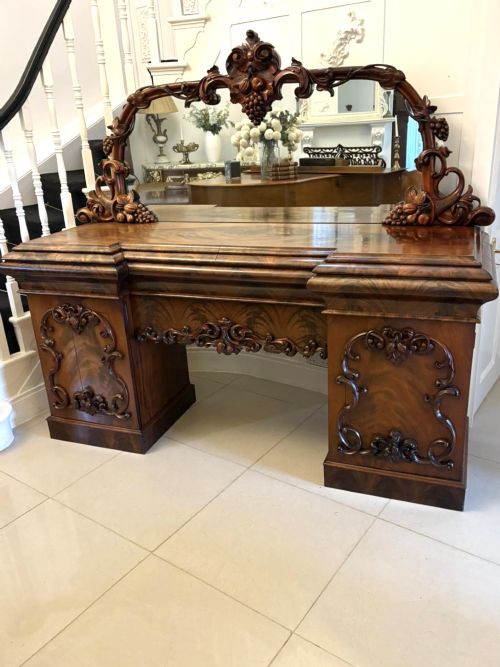
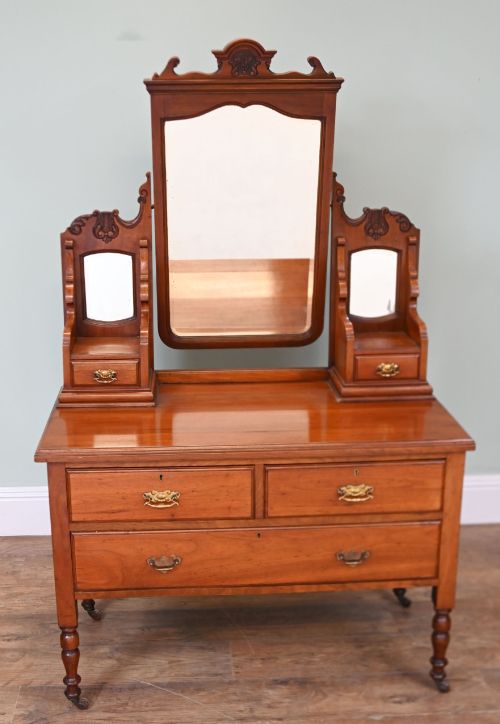
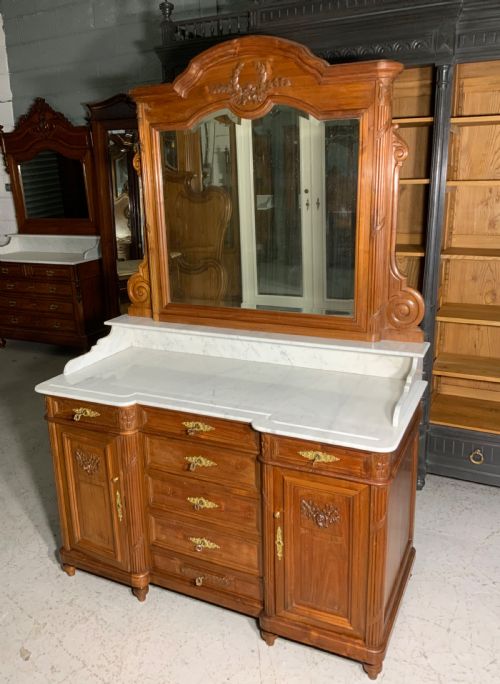
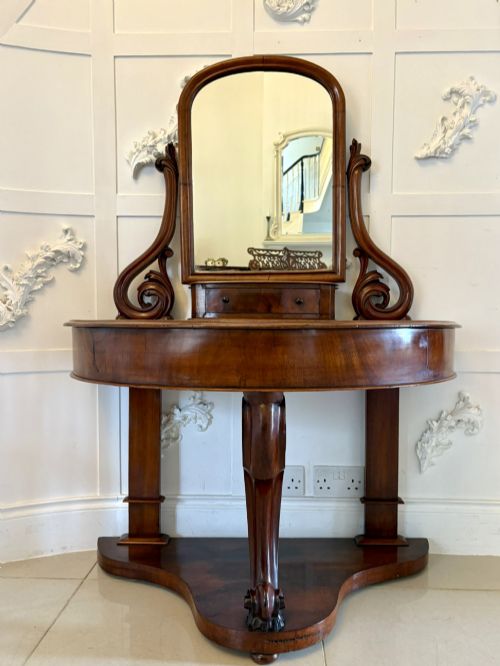
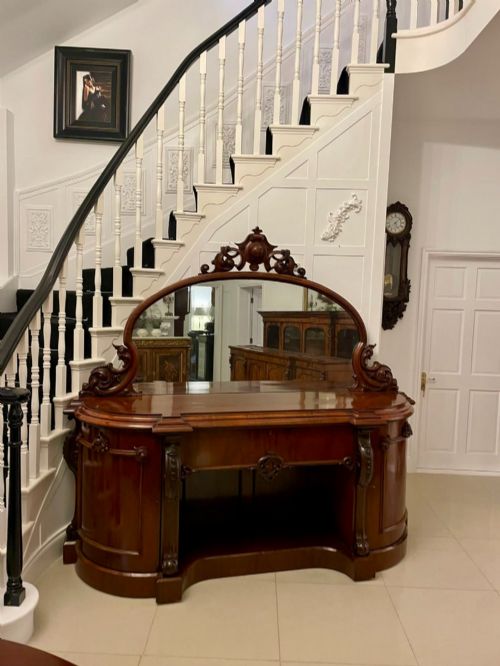
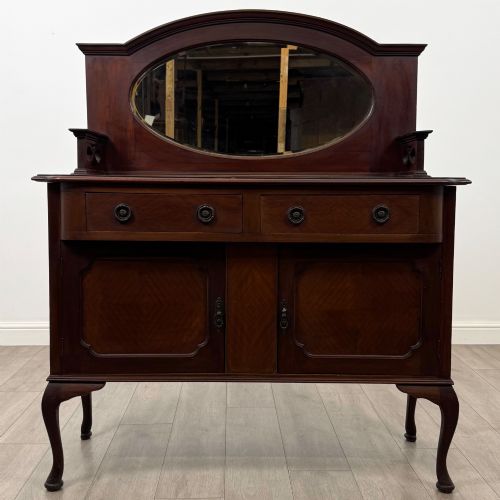
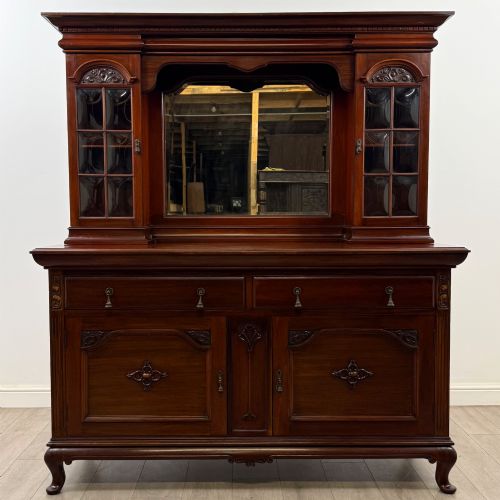
These mahogany dresser mirror pieces are substantial antique furnishings built to sit atop sideboards or dressing tables, offering practical reflection and rich timber grain.
Mahogany Dresser Mirror
A mahogany dresser mirror stands as a classic addition to period interiors, combining useful glass with handsome timber frames. When buyers search for a mahogany dresser mirror, they encounter furniture spanning the Victorian and Edwardian eras, often integrated into larger sideboards or dressing tables.
The pieces appearing here lean heavily toward Victorian and Edwardian examples, alongside Arts and Crafts and Art Nouveau variations. You will find mirror back sideboards, pedestal dressing tables, and washstands rather than standalone tabletop glasses.
How they were made
Cabinet makers built these pieces using solid mahogany and flame mahogany veneer over secondary timbers, applying glass plates for the mirror sections. Brass fittings and copper details appear as functional hardware or decorative accents.
Construction techniques include carved ornamentation, inlaid marquetry, and glazed cupboard doors. The glass is held within stable wooden frames designed to tilt or remain fixed upon pedestals.
Mahogany Dresser Mirror Retail Price Guide 2026
Typical asking prices for mahogany dresser mirror among the pieces listed under this phrase on Sellingantiques today, from the lower quarter to the upper quarter. They describe what is for sale here now, not the wider market.
Object types include sideboards, dressing tables, washstands, and display cabinets originating from the nineteenth and early twentieth centuries.
What varies in quality
The quality of a mahogany dresser mirror is defined by the selection of the timber, particularly figured or flame mahogany veneer, and the crispness of any carved detailing. Better examples demonstrate superior cabinet making with tight joinery and balanced proportions.
The integration of the mirror into the larger structure also dictates the tier of the piece. Superior items feature heavy cast brass hardware, clear mirror glass, and refined stylistic touches from specific design movements.
Shapland & Petter·Maple & Co
The Mahogany Dresser Mirror Glossary
- Flame mahogany
- A veneer cut from timber where the grain creates a distinctive flickering pattern resembling flames. It was chosen for high-status furniture fronts and mirror surrounds.
- Mirror back sideboard
- A large base cabinet surmounted by a tall wooden frame holding a mirror plate. This form dominated dining rooms during the nineteenth century.
- Pedestal dressing table
- A dressing table featuring banks of small drawers on either side supporting a central mirror. These units provide dedicated space for grooming.
- Marquetry
- The art of applying pieces of veneer to a structure to form decorative patterns. Dutch examples often display floral designs using contrasting woods.
Mahogany Dresser Mirror: Frequently Asked Questions
How do I identify a Victorian mirror?
Victorian mirrors often feature rich mahogany timbers, deep carved details, and heavier proportions compared to later designs.
They frequently form part of large mirror back sideboards or duchess dressing tables from the mid to late nineteenth century.
Where were these pieces used?
These furnishings historically occupied dining rooms, bedrooms, and halls in substantial homes.
Sideboard mirrors served dining spaces, whilst pedestal dressing tables and washstands were placed in bedrooms.
What styles are common?
The available selection spans Victorian, Edwardian, Arts and Crafts, Art Nouveau, and French Empire styles.
Each style brings distinct decorative elements, from linear craftsmanship to organic curves and floral inlay.