

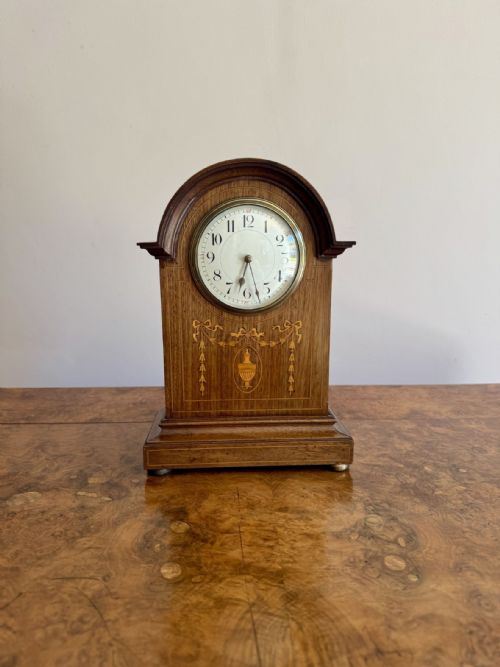


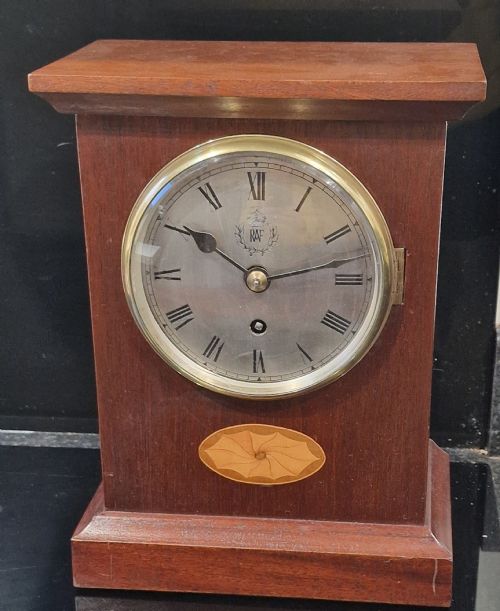
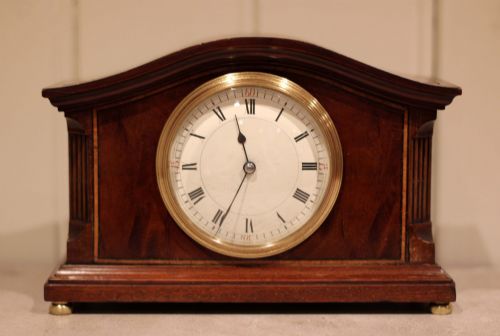
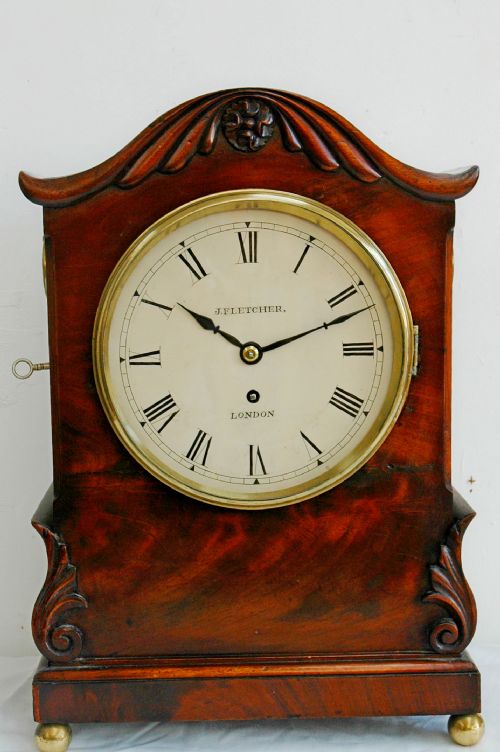

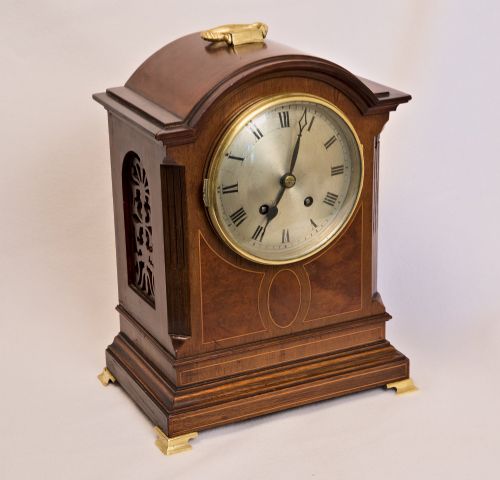


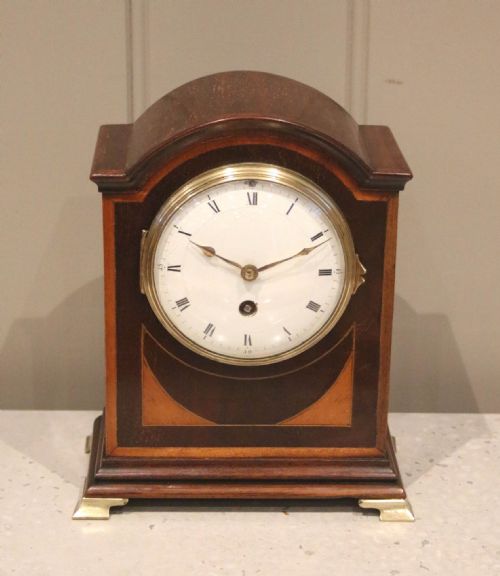
Mahogany Desk Timepiece
A mahogany desk timepiece is a compact cabinet clock designed for surface placement, bringing traditional timber warmth and mechanical precision to any room.
Mahogany Desk Timepiece
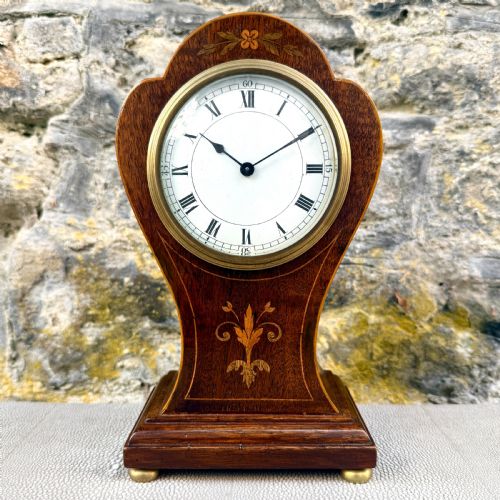
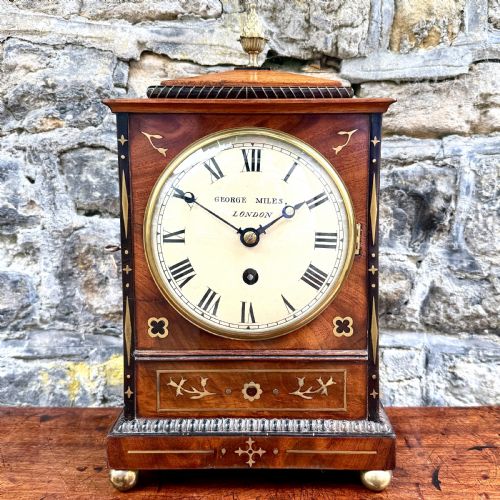
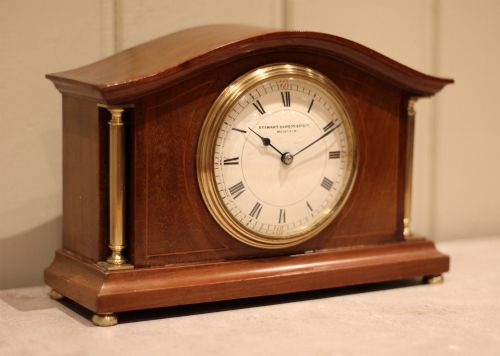
A mahogany desk timepiece is a compact time-keeping device housed in timber, frequently encountered in Edwardian, Regency, and Victorian formats across these listings. These pieces function both as practical timepieces and decorative mantel or desk furnishings.
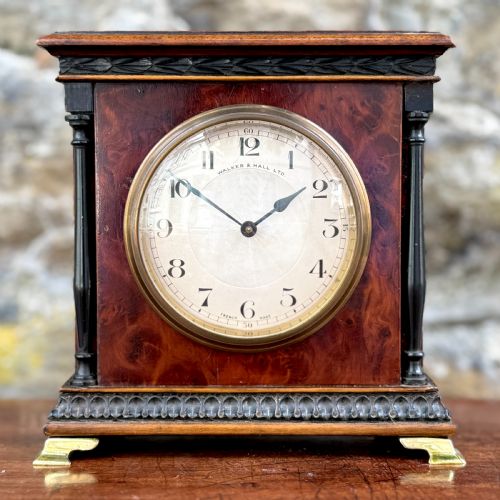
The selection ranges from simple Edwardian solid mahogany mantel clocks to ornate Regency library clocks and inlaid examples featuring satinwood or burr walnut details. Most specimens date from the nineteenth and early twentieth centuries, reflecting the classic cabinet-making traditions of those periods.
Materials and construction
Makers constructed these timepiece bodies primarily using solid or veneered mahogany, frequently accented with satinwood stringing, brass bezels, and cast feet. Interior movements relied on brass gear trains, while dials were typically finished in white enamel with paper or metal chapters beneath protective glass covers.
Cabinet work involved traditional joinery techniques suited to housing delicate clockwork securely within timber cases. Selected pieces incorporated ebonised wood details or specialised bracket designs to achieve distinct architectural silhouettes.
Mahogany Desk Timepiece Retail Price Guide 2026
Typical asking prices for mahogany desk timepiece among the pieces listed under this phrase on Sellingantiques today, from the lower quarter to the upper quarter. They describe what is for sale here now, not the wider market.
Some Edwardian examples double as barometers, ensuring owners could monitor both the hours and the impending rain.
Judging quality in a timepiece
Quality separates simple mass-produced items from finer workshop output through the crispness of the timber carving, the precision of brass fitments, and the sophistication of the internal movement. Well-executed stringing, balanced proportions, and signed dials indicate higher atelier standards.
The choice of secondary timbers, such as burr walnut or satinwood for inlay, alongside robust glass bevels and solid brass carrying handles, distinguishes superior examples. The integration of movement types, including fusée mechanisms, further marks the upper tier of construction.
Walker and Hall·Winterhalder and Hofmeier·McCabe London·Malecot of Paris·Bush of London
The Mahogany Desk Timepiece Glossary
- Timepiece
- A clock that indicates the time without a striking mechanism for hours or quarters. These models focus purely on accurate time-keeping.
- Fusée
- A conical pulley used in better mechanical clocks to maintain even tension on the gear train as the mainspring unwinds. This mechanism improves timekeeping consistency throughout the winding cycle.
- Bracket clock
- A portable spring-driven clock originally designed to sit on a wall bracket or desk. They often feature robust brass handles and heavy timber cases.
- Inlay
- A decorative technique where contrasting woods like satinwood are embedded into the mahogany surface. This creates geometric patterns or floral motifs.
- Bezel
- The metal ring that holds the glass face protecting the dial. It usually hinges open for hands adjustment and winding.
Mahogany Desk Timepiece: Frequently Asked Questions
How do I wind a mahogany desk timepiece?
Most mechanical timepieces require a key inserted into the dial face to tension the internal spring. Care must be taken not to over-wind the mechanism.
Consulting the specific movement instructions ensures the longevity of older gear trains and maintains accurate timekeeping.
Where should I place a desk timepiece?
These clocks suit flat surfaces such as writing desks, mantelpieces, and library tables where they remain stable. Keeping them away from direct sunlight and drafts preserves the wood and finish.
Level placement ensures the pendulum or balance wheel operates with consistent rhythm.
How do I identify an Edwardian timepiece?
Edwardian models frequently display lighter mahogany tones, often enhanced with subtle satinwood inlay or brass feet. The styling leans towards restrained elegance characteristic of the early twentieth century.
Proportions tend to be compact, reflecting their intended use on domestic mantels and bedroom desks.
What is the difference between a clock and a timepiece?
A timepiece simply tells the time and lacks any striking train or chiming mechanism. Traditional clocks include additional gear trains to sound the hours.
Timepieces generally require less mechanical maintenance due to their simpler interior construction.