




Mahogany Credenza Unit
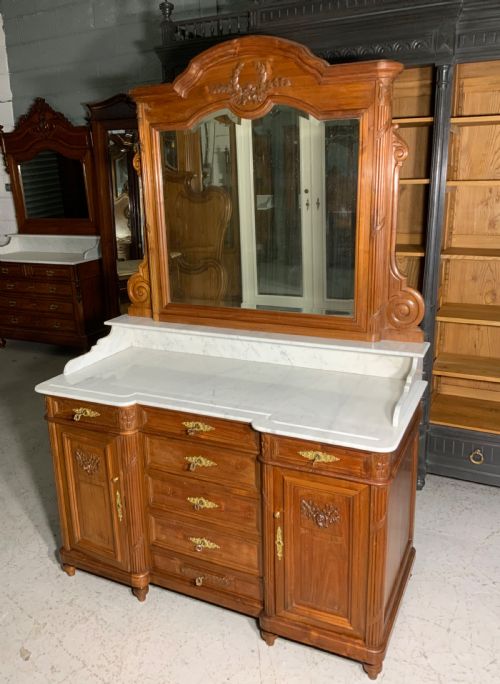
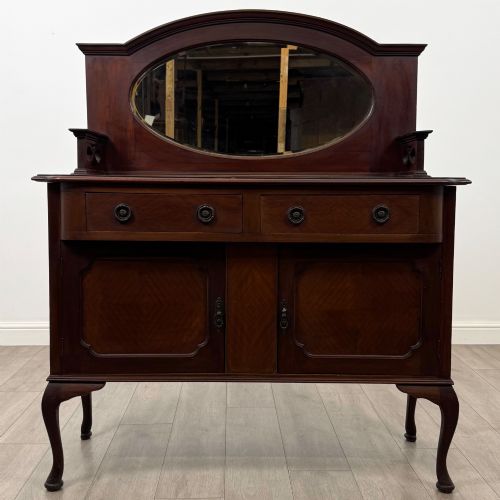
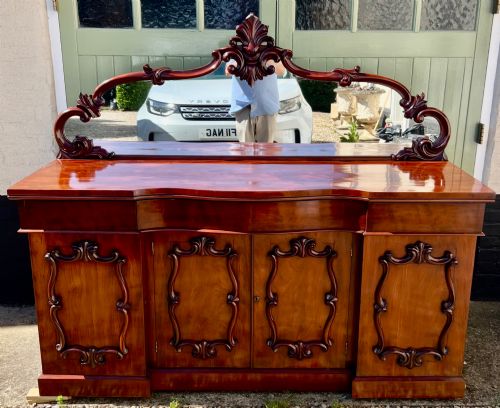
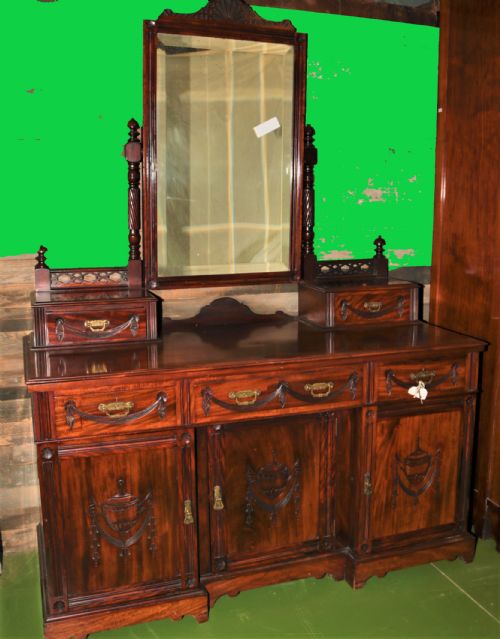
A mahogany credenza unit brings solid timber cabinetry and rich grain into a room, offering both display space and concealed storage.
Mahogany Credenza Unit
A mahogany credenza unit encompasses the larger sideboards, side cabinets, and cupboards found across the nineteenth and early twentieth centuries. These items serve primarily to store dining wares or organise living spaces, drawing on forms from the Victorian, Edwardian, and Regency eras.
The versions most commonly met on this page date from the Victorian period through to nineteen-ten, spanning styles like French Rococo Revival and Arts and Crafts. Pieces often include fitted internal shelving, glass doors, or mirrored backs designed to brighten domestic interiors.
How they were made
Makers utilised solid mahogany alongside flame mahogany veneer to create striking figured surfaces on doors and drawer fronts. Cabinet bodies rely on traditional joinery methods to house timber panels securely over decades of use.
Details such as brass mounts, copper hardware, and inset marble tops finish the structures, while glass and mirror panes are integrated into doors and backboards for decorative effect.
Mahogany Credenza Unit Retail Price Guide 2026
Typical asking prices for mahogany credenza unit among the pieces listed under this phrase on Sellingantiques today, from the lower quarter to the upper quarter. They describe what is for sale here now, not the wider market.
Design styles represented across the inventory include French Rococo Revival, Arts and Crafts, Regency, and Art Nouveau.
What varies in quality
The depth of figure in the mahogany timber and the crispness of carved ornamentation distinguish superior examples from standard workshop production. Selected veneer work requires precise alignment across drawer banks and cupboard doors.
Secondary materials like the quality of the marble top or the weight of brass and copper hardware signal the original investment in the piece. Well-balanced proportions and refined structural joins elevate a cabinet above utility furniture.
Robert Strahan·Shapland & Petter
The Mahogany Credenza Unit Glossary
- Mahogany
- A durable tropical hardwood known for its reddish-brown colour and stability in furniture construction.
- Flame mahogany veneer
- A thin slice of timber cut from the fork of the tree to produce a flickering, fiery grain pattern. It is laid over a secondary wood base.
- Credenza unit
- A low storage cabinet traditionally utilised for serving food or displaying household objects in formal rooms.
- Arts and Crafts
- A design movement prioritising honest construction, plain surfaces, and simple materials over heavy historical ornamentation.
Mahogany Credenza Unit: Frequently Asked Questions
What is a mahogany credenza unit used for?
These cabinets provide surface display area and enclosed shelving for dining rooms or living spaces. They function well for storing books, glassware, or household linens.
Larger sideboard and cupboard formats allow users to organise items efficiently while adding traditional timber character to a room.
How do I date a mahogany cabinet?
Dating relies on observing structural characteristics, timber preparation, and decorative styles associated with periods like the Regency or Edwardian era. Details such as mirror backs and brass hardware offer further clues.
Comparing construction methods with known nineteenth-century workshop practices helps narrow down the decade of manufacture.
How do I care for mahogany furniture?
Keep wooden surfaces away from direct sunlight and strong heat sources to prevent the mahogany timber and veneer from drying out. Regular dusting with a soft, dry cloth preserves the polished finish.
Avoid using silicone-based polishes, as they build up over time and dull the natural warmth of the grain.
Are these units suitable for modern homes?
The rich reddish tones of mahogany fit easily into contemporary interiors that mix old and new furnishings. Their storage capacity makes them practical for everyday use.
Lower side cabinets and sideboards work particularly well beneath wall-mounted televisions or artwork.